Key takeaways
- Most craft tables are laminated particleboard, so keep them dry and avoid dragging heavy items across the top.
- Drawer slides are usually the first part to wear. Do not overload them.
- Assembly can take one to three hours for a drawer-based table. Plan for two people on large pieces.
- Casters are convenient but can leave marks on soft floors. Lock them when working.
- A cutting mat protects the top and extends the life of the finish.
The best craft table with storage depends on the space you have. The Sauder Craft Pro Series is the strongest dedicated worktable for a craft room, the Sauder Sewing Craft Cart is the better pick for most small homes, the Sew Ready Foldable Hobby and Cutting Grid Table is best for cutting and quilting, and a Sauder craft armoire is the choice when you want everything hidden behind doors. Decide first whether the table must fold away, then compare surface size, drawers and weight capacity.
Our top picks


As an Amazon Associate we earn from qualifying purchases at no extra cost to you.
Storage Style Decides the Table
Craft tables fall into four groups. Drawer-based worktables, like the Sauder Craft Pro, keep supplies at hand. Mobile carts add casters so the table can move. Folding tables with mesh drawers and shelves save space but offer less capacity. Armoires hide everything behind doors but have a smaller work surface. The right group depends on how often you craft and how much space you have to dedicate.
Quick Comparison
| Pick | Best for | Key specs | Price range |
|---|---|---|---|
| Sauder Craft Pro Series Work Table | Dedicated craft room | About 60 x 30 inch top, about 36 inch height, 6 drawers, about 270 lb capacity per reviews | Premium |
| Sauder Sewing Craft Cart | Most small homes | Drop-leaf top, lockable wheels, shelves and cabinet | Mid-range |
| Sew Ready Foldable Hobby and Cutting Grid Table | Cutting, quilting, height adjusting | About 58.75 inch surface, printed grid, mesh drawers, height about 30 to 39 inches | Mid-range |
| Sauder Craft and Sewing Armoire | Hidden storage in small rooms | Fold-out table, adjustable shelves, power strip | Upper mid |
| Best Choice Products folding craft station | Budget | Folding frame, hidden bins, casters | Budget |
| Armocity folding desk | Small spaces | Compact folding design | Budget |
Dimensions and capacities come from manufacturers’ pages and published buyer guides; exact specs vary by finish, so check the listing.
Best Dedicated Worktable: Sauder Craft Pro Series
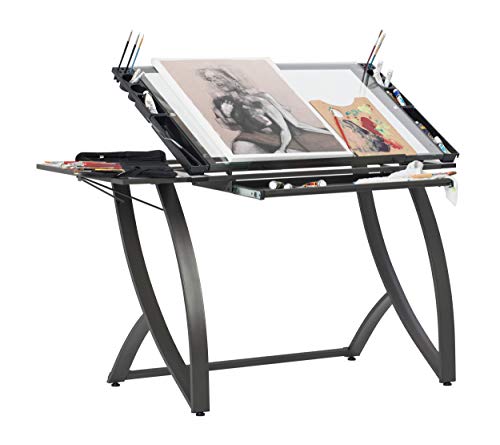
The Craft Pro Series is a large, drawer-based table with a roughly 60 by 30 inch surface, which is big enough for Cricut machines, cutting mats and paper projects. It stands about 36 inches tall, a comfortable standing height for cutting. It is heavy, around 174 pounds assembled per published specs, so it works best if you set it up once. Reviews note that the smooth top can scratch, so use a cutting mat, and that drawers have no stoppers.
Best for Most Small Homes: Sauder Sewing Craft Cart
The Sewing Craft Cart combines a drop-leaf workspace with shelves and lockable wheels. It folds down when not in use and rolls out of the way. It is a good choice if you share a room and need the table to disappear. The surface is smaller than the Craft Pro, which limits large projects.
Best for Cutting and Quilting: Sew Ready Foldable Hobby and Cutting Grid Table
This table has a printed grid for measuring fabric and paper, mesh drawers and a lower shelf. Its height adjusts roughly from the low 30s to the high 30s in inches, which helps with back comfort when cutting. It folds flat, so it can live behind a door. The trade-off is lighter construction than a cabinet-style table.
Best Hidden Storage: Sauder Craft and Sewing Armoire
An armoire folds out a table from a cabinet with adjustable shelves and a power strip. It suits people who want a craft area that closes up to look like furniture. Its work surface is smaller and its footprint is deeper than that of a simple table.
Best Budget and Compact Options
Best Choice Products and Armocity make folding stations with hidden bins and casters at lower prices. They suit beginners and occasional crafters. Expect lighter frames, thinner surfaces and lower weight limits than a cabinet table.
Space and Surface Calculation
A 60 by 30 inch top gives 1,800 square inches of surface, or 12.5 square feet. A standard 12 by 12 inch cutting mat covers 144 square inches, and a 24 by 36 inch mat covers 864 square inches. That means the Craft Pro can hold a large mat plus a machine and supplies, while a 36 by 20 inch fold-out surface (720 square inches) cannot hold a large mat at all. Measure your biggest project and add 6 inches of working room on each side.
| Project type | Minimum surface | Suitable pick |
|---|---|---|
| Cricut and small paper crafts | About 36 x 20 inches | Cart or compact folding table |
| Quilting and fabric cutting | About 58 x 24 inches | Sew Ready cutting table |
| Mixed media, large layouts | About 60 x 30 inches | Sauder Craft Pro |
How to Choose
Check Height and Posture
Standing height around 36 inches suits cutting. Sitting height around 29 to 30 inches suits sewing and drawing. Adjustable tables serve both.
Look at Drawer Quality
Metal glides and stops last longer than plastic. If drawers lack stoppers, they can slide out when loaded.
Consider Weight Capacity
Heavy machines need strong tabletops. Check the listed capacity, and remember that sewing machines concentrate weight in one spot.
Check the Surface
Melamine tops resist spills but can scratch. Use cutting mats to protect the surface.
Pick by Situation
| Your situation | Best choice | Reason |
|---|---|---|
| Dedicated craft room, heavy supplies | Sauder Craft Pro Series | Large top, six drawers, high capacity |
| Shared living space | Sauder Sewing Craft Cart | Folds and rolls away |
| Quilting and fabric cutting | Sew Ready cutting grid table | Grid surface and adjustable height |
| Want everything hidden | Sauder craft armoire | Doors close over supplies |
| Starter budget | Best Choice folding station | Low cost, hidden bins |
Storage Planning Worked Example
Suppose your supplies fill about 12 plastic bins of 6 quarts each. That is roughly 72 quarts of storage. Six drawers of moderate depth hold about half of that, so you would pair a drawer table with a shelf or a rolling cart for the rest. If you only own paper, vinyl and a handful of tools, a cart with two shelves and a cabinet is enough. Count bins before you buy, because a table that looks roomy online often holds less than you expect.
Ownership Realities
- Most craft tables are laminated particleboard, so keep them dry and avoid dragging heavy items across the top.
- Drawer slides are usually the first part to wear. Do not overload them.
- Assembly can take one to three hours for a drawer-based table. Plan for two people on large pieces.
- Casters are convenient but can leave marks on soft floors. Lock them when working.
- A cutting mat protects the top and extends the life of the finish.
Frequently Asked Questions
What size craft table do I need?
For most paper crafts, about 36 by 20 inches is enough. For quilting or large layouts, aim for 58 to 60 inches wide.
What is the best height for a craft table?
Around 36 inches works well for standing tasks like cutting, and 29 to 30 inches for sitting. Adjustable tables cover both.
Are folding craft tables sturdy enough?
Quality folding tables are fine for most crafts, but heavy machines may wobble on light frames. Check capacity and lock the legs.
Can I use a craft table for sewing?
Yes, if the surface is stable and the height suits seated use. A sewing machine needs a flat, vibration-resistant top.
How should I organize craft supplies?
Group supplies by project type, label drawers and keep daily tools at arm’s reach on the table or cart.