Our Top Picks
- Top Pick: PEET Original 2-Shoe Electric Shoe and Boot Dryer
- Runner-up: DryGuy Force Dry DX Boot and Garment Dryer
- Also consider: Everlasting Comfort Boot Dryer for Work Boots (2 Pair)
A pair of boots left by the door rarely dries where it matters most. The outside may feel dry by morning while the toe box and insole are still holding moisture, and that trapped dampness feeds odor, mildew and stiff, cracked linings over a season. An electric shoe dryer solves the problem from the inside out, moving warmed air through the footwear so the whole shoe dries evenly.
The five dryers below cover the main designs: silent convection towers that work overnight, fan-driven units that finish in a couple of hours, a two-pair model with an ozone deodorizer, a portable travel dryer and a pair of in-shoe inserts with a timer. The right choice depends mostly on how fast you need footwear back in service.
As an Amazon Associate, we earn from qualifying purchases.
Quick Answer
For most homes, the PEET Original is the default choice: it is silent, uses very little power and dries a pair of boots or shoes overnight with gentle convection heat. If you need footwear dry in one to two hours, the DryGuy Force Dry DX adds a fan, a heat switch and a timer. Households drying two pairs at once should look at the Everlasting Comfort two-pair model.
Why Wet Footwear Stays Wet
Footwear is built to keep water out, which also means it keeps water in. Waterproof membranes, padded collars and thick insoles slow evaporation to a crawl, and the toe box has almost no airflow on a mat. The result is a lining that can stay damp for days after the outer leather or mesh feels dry.
That lingering moisture does real damage. It feeds the bacteria and fungi that cause persistent odor, it can mildew fabric linings, and repeated wet-dry cycles stiffen leather and break down insole foams. Newspaper helps a little, and a radiator dries unevenly while concentrating heat in one spot. A shoe dryer takes a different approach: low, controlled warmth delivered inside the shoe, where the moisture actually is, at temperatures safe for adhesives, foams and leather.
Convection vs Forced Air: The Decision That Sets Drying Time
Every electric shoe dryer uses one of two methods, and the method matters more than any single feature.
Convection dryers warm the air inside a vertical tube or insert and let it rise naturally through the boot. There is no fan and no motor, so they run in complete silence and draw very little power, often less than a household light bulb. The trade-off is speed: a damp pair typically needs most of a night, and a soaked pair can take up to half a day. In exchange, the gentle, even warmth is the kindest option for leather and delicate liners.
Forced-air dryers use a fan or blower to push heated air through the footwear, cutting drying times to roughly one to three hours. They usually add a timer, a heat or no-heat switch and higher wattage. The better designs cap the air temperature at about 105 degrees F, warm enough to dry quickly without harming liners, glues or membranes. If boots need to be ready the same evening, forced air is the practical choice; if they can sit overnight, convection is simpler and quieter.
The Picks
PEET Original 2-Shoe Dryer: The Silent Overnight Standard
The PEET Original is the design most other convection dryers are measured against. Two upright DryPorts hold one pair of shoes or boots, and warmed air rises through them continuously. There is no switch, no timer and no fan: the unit is made to stay plugged in around the clock, so footwear goes on it when you walk in and comes off dry in the morning. At 36 watts it uses less electricity than a standard light bulb, and PEET rates it for leather, rubber, vinyl, neoprene, canvas, synthetics, fleece and microfiber. Boots taller than about 11 inches need extension attachments, sold separately. The 25-year warranty is the longest in this group by a wide margin.
Specs:
– Drying method: Thermal convection, no fan
– Power draw: 36 watts
– Capacity: One pair of shoes or boots
– Typical dry time: About 3 to 8 hours
– Controls: None; designed to stay plugged in
– Warranty: 25 years
DryGuy Force Dry DX: The Fast Turnaround Pick
The Force Dry DX is built for people who cannot wait overnight. A rotary blower pushes air through four ports, enough for two pairs of shoes or one pair plus gloves, and the included extension tubes reach into boots up to 16 inches tall. Air temperature tops out at 105 degrees F, and a switch lets you run the fan with or without heat, the setting to use for heat-molded liners. A three-hour timer dial shuts the unit off on its own. Most damp footwear dries in about one to two hours. It is still a fan, so it suits a mudroom or garage better than a bedside.
Specs:
– Drying method: Forced air with rotary blower
– Maximum temperature: 105 degrees F
– Capacity: Four ports, up to two pairs
– Timer: 3-hour automatic shut-off
– Heat control: Heat or no-heat switch
– Extensions: Two tubes for boots up to 16 inches
– Typical dry time: About 1 to 2 hours for most items
Everlasting Comfort Boot Dryer: Two Pairs Plus an Ozone Deodorizer
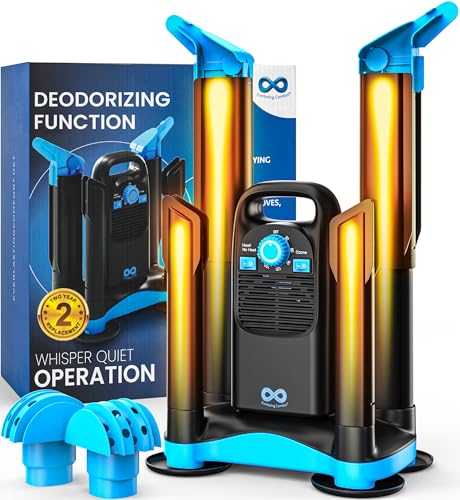
This is the high-capacity option for households where several people come home with wet gear. Four extendable, removable tubes dry two pairs of boots, shoes or gloves at once, and a built-in fan circulates heated air for faster results than convection alone. The brand rates most items dry in 80 minutes or less, with an adjustable timer running up to 180 minutes for soaked loads. Its distinguishing feature is a switchable ozone generator that works on odor while the air dries, aimed at gear that already smells. Drip trays keep meltwater off the floor, and it is the largest and heaviest unit in this roundup.
Specs:
– Drying method: Hybrid forced air with built-in fan
– Power draw: 250 watts
– Capacity: Four extendable tubes, up to two pairs
– Timer: Adjustable up to 180 minutes
– Deodorizing: Switchable ozone generator
– Typical dry time: Most items in 80 minutes or less, per the brand
– Warranty: 2 years
LLWAN Portable Shoe Dryer: The Travel Pick
The LLWAN dryer takes the opposite approach to the big towers: a compact, portable unit sized for a suitcase, gym bag or hotel room. Extendable tubes reach into shoes, boots, gloves and socks, and the controls combine an intelligent timer with temperature control, so the cycle matches how wet the gear is instead of running one fixed program. The housing uses fireproof materials, sensible for a heater that runs unattended in small spaces. Capacity is one pair at a time, and on speed it sits between the two main methods: faster than a basic overnight insert, slower than a full-size forced-air tower. For skiers and field workers drying gear away from home, that trade-off is the point.
Specs:
– Form factor: Compact portable unit with extendable tubes
– Controls: Intelligent timer with temperature control
– Housing: Fireproof materials
– Capacity: One pair, plus gloves or socks
Home Care Wholesale Shoe Dryer PM20: In-Shoe Inserts With a Timer
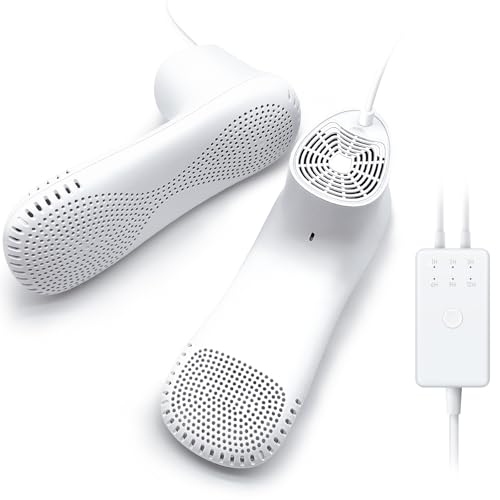
The PM20 skips the tower entirely. It is a pair of foot-shaped inserts that slide directly inside the shoes, so gentle heat is delivered where moisture collects, and the pair takes up almost no storage space. A built-in timer lets the inserts run for a set period and shut off by themselves, something most basic insert dryers leave out. There is no fan, so operation is silent, and the durable wire frame holds its shape inside boots, shoes, socks and gloves. Output is modest, which makes this a maintainer rather than a rescue tool: it keeps a daily pair dry and fresh on a routine, but a fully soaked pair of work boots will dry faster on a forced-air model.
Specs:
– Form factor: Pair of foot-shaped in-shoe inserts
– Timer: Built-in timer with automatic shut-off
– Noise: Silent, no fan
– Frame: Durable wire construction
– Suitable for: Shoes, boots, socks and gloves
How to Choose
Start with your turnaround time, because it decides the method. If footwear always has overnight to dry, a silent convection model is simpler, cheaper to run and easier on materials. If you regularly need boots back the same day, only a forced-air model with a timer will keep up.
Next, count pairs. One pair at a time covers most single users, but families and anyone drying gloves alongside boots should step up to a four-port model. Check boot height as well: tall boots and ski boots need long tubes or included extensions, while low shoes work on any design.
Then consider the material. Leather, custom footbeds and heat-molded ski or snowboard liners call for low temperatures and ideally a no-heat fan setting; never use high heat on liners a fitter has molded to your feet. If odor is the main complaint, thorough drying alone fixes most of it, and an ozone model adds a deodorizing cycle. Finally, where the dryer will live matters: towers need floor space near an outlet, while inserts and portables suit small apartments and luggage.
Who Should Skip an Electric Shoe Dryer
Skip one if your footwear genuinely dries on its own between uses, as with breathable mesh trainers in a heated home. A dryer also will not rescue shoes that are already delaminating or mildewed through; it prevents those problems rather than reversing them. Occasional hikers who get boots wet twice a year will get more value from a rental shop’s drying rack than from owning a unit. And if your only wet footwear is a pair of tall waders, a standard dryer without long extensions is the wrong tool; look for a wader-specific model instead.
Frequently Asked Questions
How long does an electric shoe dryer take to dry soaked boots?
It depends on the method. Forced-air models typically dry damp footwear in about one to two hours and soaked boots in roughly three. Fanless convection dryers work overnight: about eight hours for a damp pair and up to twelve for a pair wet through. Removing the insoles speeds up either method.
Is an electric shoe dryer safe for leather boots?
Yes, when the dryer uses low, controlled heat. Convection models and forced-air models capped near 105 degrees F are designed to dry leather without cracking or shrinking it, and both types here list leather as a supported material. What damages leather is concentrated high heat, so keep boots off radiators instead.
Can a shoe dryer damage ski boot liners?
Only if the heat is too high. Heat-moldable liners can lose their custom shape when exposed to strong heat, so for molded liners use a no-heat fan setting or a gentle convection dryer, and follow the liner maker’s guidance. Standard non-molded liners are fine on the normal heated settings of the dryers listed here.
Do shoe dryers really help with odor?
Yes, because odor starts with moisture. The bacteria and fungi that make footwear smell need a damp environment, and drying the lining fully after each use removes it, which keeps smells from taking hold. Models with an ozone cycle go further on gear that already smells, but consistent drying is the main fix.
Final Verdict
Most people should start with the PEET Original: it is silent, sips power, carries a 25-year warranty and asks nothing beyond putting boots on it. Choose the DryGuy Force Dry DX when same-day drying matters, the Everlasting Comfort when two pairs and serious odor are the problem, the LLWAN when the dryer has to travel, and the Home Care Wholesale inserts when space is tight and one daily pair is all you need to maintain.



FAQ
How long does an electric shoe dryer take to dry soaked boots?
Is an electric shoe dryer safe for leather boots?
Can a shoe dryer damage ski boot liners?
Do shoe dryers really help with odor?
More from Amazon
Programs that pair well with the guide above. Offers and eligibility are set by Amazon and may change.
Free shipping on eligible items, Prime Video and more. Eligible new members can start with a free trial.
Start a Prime free trialAudiobooks and podcasts to listen to on the go. Eligible new members can start with a free trial.
Try Audible freeAd-free music streaming. Eligible new subscribers can start with a free trial.
Try Music Unlimited freeA free business account with business pricing and bulk-buying tools for work, shop or home office.
Create a business accountAs an Amazon Associate we earn from qualifying purchases.