Our Top Picks
Pros & cons
- 700-watt motor crushes ice and frozen ingredients effectively
- Includes two 16-ounce cups with spout lids for on-the-go use
- Compact design fits easily on any countertop
- Single-serve cup sizes limit larger batch blending
- Push-to-blend control requires holding the cup down to operate
Pros & cons
- 700 peak watt motor powers through fruit and ice
- Simple push, twist, and blend operation
- Cups and lid are top-rack dishwasher safe
- Single-serve cup size limits larger batch blending
- Blades need hand rinsing, not fully dishwasher safe
Pros & cons
- Compact size takes up minimal counter space
- Comes with multiple cups, lids, and a to-go lid
- Dishwasher-safe cups simplify everyday cleanup
- 250-watt motor is modest next to full-size blenders
- Single-serve cup sizes limit larger batch blending
 Hamilton Beach Portable Blender for Smoothies With 1414 oz.3.94 x 3.94 x 11.9 inches1 poundsCheck on Amazon
Introduction
Finding the best blender for small spaces 2 starts with one question: how much room do you actually have? A full-size blender can dominate a small kitchen, crowd the countertop, and refuse to fit in a standard cabinet. A compact blender is built for exactly this situation. It takes up a small patch of counter, blends a single serving at a time, and tucks away in a cupboard or on a shelf when the job is done.

The quick answer is that the Ninja Fit Compact Personal Blender is the strongest all-round choice for most small kitchens. It pairs a 700-watt motor with two 16-ounce cups, so it handles everyday smoothies, protein shakes, and frozen fruit without demanding the footprint of a full-size machine. If you want more power for ice and frozen ingredients, the KOIOS 900W model is the stronger pick. If you want the smallest possible footprint, the Hamilton Beach Portable Blender is hard to beat.
This guide weighs footprint, height, cup size, storage, noise, and cleaning alongside blending power. A blender that blends beautifully but never fits in your cabinet is not a good blender for a small kitchen. The five models below are all genuinely compact, and each suits a different small kitchen, from a studio apartment to a dorm room. Before you buy, measure your counter space, the height under your wall cabinets, and the shelf where it will live between uses.
Quick Picks
Our Short List of 3
All 5 Picks at a Glance
| Product | Specs | Action |
|---|---|---|
| Ninja Fit Compact Personal Blender (B01FHOWYA2) | Check price on Amazon | |
| NutriBullet Personal Blender, 600 Watt (B07CTBHQZK) | Check price on Amazon | |
 Magic Bullet Blender, 11-Piece Set (B012T634SM) | Check price on Amazon | |
 KOIOS Smoothie Blender, 900W (B0CDW6J1W8) | Check price on Amazon | |
| Hamilton Beach Portable Blender, 14 Oz (B00QNUCRW0) | Check price on Amazon |
How to Choose the Best Blender for Small Spaces 2
Measure the Footprint First
Footprint matters more than any other specification in a small kitchen. A personal blender base is usually only a few inches across, which leaves room beside it for a chopping board, a kettle, or a drying rack. Before you commit, mark out the base size on your counter with a tea towel. Make sure you can still open cupboards and drawers around it, and that the power cord reaches an outlet without trailing across a work surface. Also think about storage: a blender kept in a cabinet should be light enough to lift with one hand and easy to take apart into a base and a cup.
Check the Height Under Your Cabinets
Height is the measurement most buyers forget, and it causes the most frustration in small kitchens. A personal blender with its cup locked onto the base can be taller than the gap between a countertop and a wall cabinet, which means it cannot stay assembled on the counter. Look for an assembled height that clears your cabinet gap, or store the cup separately from the base and assemble the blender in seconds.
Match the Cup Size to One Serving
Personal blenders are designed around single servings, and that is exactly what makes them right for small spaces. A 14-ounce cup suits a light breakfast shake or a post-workout drink. A 16-ounce cup covers most smoothies. A 24-ounce cup suits a larger breakfast or a smoothie you want to sip slowly through the morning. Bigger is not automatically better: a larger cup means a taller blender, more storage space, and more to wash. If two people blend at different times, two cups mean nobody has to wash a cup before blending.
Balance Power Against Noise and Size
Power, noise, and size travel together in compact blenders. A 250-watt motor is quieter and lighter, and it handles soft fruit, yogurt, milk, and protein powder with ease. A 600-watt or 700-watt motor handles frozen fruit and small amounts of ice more confidently, and it produces a smoother texture with leafy greens. A 900-watt motor is the strongest option here, and it is the best choice if frozen ingredients are a daily habit. In a small kitchen, noise matters more, because there is nowhere for the sound to go. If you blend frozen ingredients daily, accept the noise and choose the power; an underpowered motor will leave chunks and force you to blend for longer.
Look for Simple Cleaning and Storage
A blender that is hard to clean will not get used, however good it is at blending. In a small kitchen, where the sink may also be small, cleaning needs to be quick. The simplest designs have a cup, a blade assembly, and a base, with no extra jars or attachments to wash. Rinse the cup and blade straight after use, and most residue comes away with warm water and a little washing-up liquid. Many cups and lids are dishwasher safe, but check the care instructions for each part before you assume. Avoid a long list of accessories unless you will use them, because every extra part is something to store. Look for a narrow base, straight-sided cups, and a short, manageable cord.
Decide What You Will Actually Blend
Be honest about your daily routine. A blender bought for green smoothies, frozen berries, and ice will need more power than a blender bought for banana shakes and protein drinks. A blender bought for sauces, dips, and small batches of pesto will benefit from a set with smaller cups and extra blades. A blender bought mainly for travel or the office needs a secure travel lid more than it needs raw power. Write down the three drinks you will make most often, then match them to the picks below. The goal is not the most powerful blender available, but the smallest blender that still handles your daily list without strain.
The Best Blender for Small Spaces 2 Reviewed
Ninja Fit Compact Personal Blender (B01FHOWYA2)
The Ninja Fit Compact Personal Blender is the best overall pick for most small kitchens. Its 700-watt motor is strong enough for frozen fruit, ice, and leafy greens, while its base stays narrow enough to sit beside a kettle without crowding the counter. It comes with two 16-ounce cups, so one person can blend a smoothie while the other cup is in the wash, or two people can each have a cup ready for the morning. The push-to-blend design is simple: fill the cup, twist on the blade, turn the cup upside down onto the base, and press down to blend. There are no speed settings to learn, which keeps the morning routine short. The cups are made for drinking on the go, with lids that seal well enough to carry in a bag. Cleaning is straightforward: the cups and blade rinse clean quickly. It suits someone who wants one compact machine for everyday jobs, without a shelf of accessories. It is less suited to large batches, and less suited to anyone who wants the quietest machine, because a 700-watt motor makes itself heard.
NutriBullet Personal Blender, 600 Watt (B07CTBHQZK)
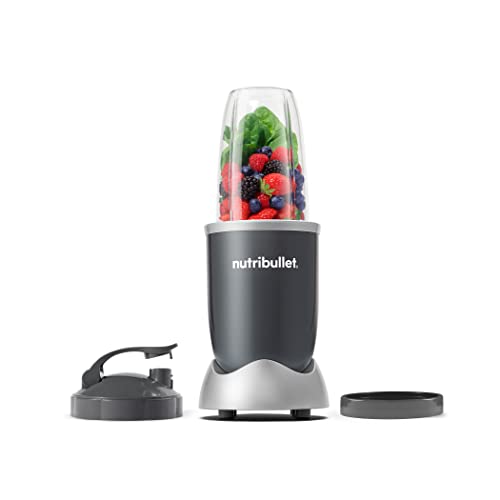
The NutriBullet Personal Blender is the classic single-serve blender, and its shape explains why it has lasted so long in small kitchens. The base is compact, the 24-ounce cup is tall rather than wide, and the whole machine occupies a small patch of counter. The 600-watt motor and extractor blade break down leafy greens, soft frozen fruit, and nuts and seeds into a smooth drink, and the twist-to-blend action is as simple as any blender gets. The larger cup is the main reason to choose this model over a 16-ounce rival. A 24-ounce serving suits a full breakfast smoothie, a smoothie with oats or nut butter, or a drink you want to last through a slow morning. The cup has a lip ring that makes it comfortable to drink from directly, and the blender also handles small batches of sauces and dressings. It suits someone who drinks a full breakfast smoothie daily and wants more capacity without a full-size machine. It is less suited to very low wall cabinets, where the tall cup may not clear the gap, and less suited to heavy ice work.
Magic Bullet Blender, 11-Piece Set (B012T634SM)
The Magic Bullet Blender, 11-Piece Set, is the most versatile compact blender in this guide, and the set is the point. Alongside the motor base, it includes tall and short cups, a party mug, lids, and more than one blade, so the same small base can make a smoothie, chop vegetables, mix a dip, or blend a sauce. The 250-watt motor is the gentlest in this guide, which means it is best for soft ingredients, but the range of cups and blades makes it the most flexible choice for a small kitchen that needs one tool to do several jobs. The footprint is tiny: the base is short and narrow, and the set can be stored in a single cupboard if the cups are nested. The cups double as drinking vessels, so there is no extra jug to wash or store. It suits a first kitchen, a dorm room, or a household that wants a low-cost, low-fuss blender for smoothies, sauces, and small food-prep jobs. It is less suited to daily frozen fruit and ice, because the 250-watt motor will struggle with large frozen chunks. If your smoothies are built on fresh fruit, yogurt, and milk, it is a sensible choice.
KOIOS Smoothie Blender, 900W (B0CDW6J1W8)
The KOIOS Smoothie Blender is the power pick for small kitchens. Its 900-watt motor is the strongest in this guide, and it shows in the texture it produces with frozen fruit and ice. Where a lighter blender leaves small chunks, this one produces a smoother drink with less stopping and shaking. It comes with multiple to-go cups, so it works for a household where two people blend at different times, or for someone who likes to prepare ingredients the night before and blend in the morning. Despite the power, the design stays compact: the base is upright and narrow, the cups are single-serve, and the motor handles thicker shakes with oats, nut butter, or frozen banana. It suits someone whose daily smoothie starts in the freezer. It is less suited to someone who only blends soft fruit and yogurt, or to a household that wants the lightest machine to lift in and out of a cabinet daily. For frozen-ingredient routines, it is the most capable compact choice here.
Hamilton Beach Portable Blender, 14 Oz (B00QNUCRW0)
The Hamilton Beach Portable Blender is the smallest blender in this guide, and that is its main advantage. The 14-ounce cup is the blending jar and the drinking cup in one, so there is no separate jug, no extra container, and almost nothing to store. Fill the cup, twist on the blade, blend, and carry the same cup out of the door. The base is light and narrow, and the whole machine fits in a space that would be too small for almost any other blender. The motor is modest, which is the trade-off for the size. It handles fresh fruit, yogurt, milk, and protein powder well, and it produces a smooth shake for everyday use. It is not the right tool for large amounts of ice or very fibrous ingredients, and the 14-ounce capacity means it is strictly a single-serving machine. This blender suits the smallest kitchens of all: a studio apartment, a dorm room, an office kitchen, or a kitchen with a single short stretch of counter. It is less suited to a household that blends for two people, because the small cup means blending twice, and less suited to anyone whose smoothies depend on frozen fruit and ice. If your kitchen is genuinely tiny and your routine is simple, this is the blender that will actually fit, and actually get used.
What to Check Before You Buy
Check the assembled height against your cabinet gap, and check the base footprint against the clear counter space you have. These two numbers decide whether the blender will live on your counter or in a cabinet, and whether you will enjoy using it every day. Check the cup size against your usual serving: a 14-ounce cup suits a light shake, a 16-ounce cup suits a standard smoothie, and a 24-ounce cup suits a full breakfast. Check the power against your ingredients. Soft fruit, yogurt, and milk need very little power, while frozen fruit, ice, and leafy greens need more. Match the motor to the ingredients you already buy, not the ingredients you hope to buy one day. Rinse the cup and blade immediately after blending, and most compact blenders clean in under a minute. A travel lid that seals well turns a blender into a commuter cup. Finally, every pick here is the same type of product: a compact personal blender for single servings.
Frequently Asked Questions
What size blender is best for a small kitchen?
A personal blender with a single-serve cup is usually the best size for a small kitchen. A 14-ounce to 24-ounce cup covers a single serving, the base is only a few inches across, and the whole machine can be stored in a cabinet or on a small stretch of counter. A full-size blender takes up far more room, so it is rarely the right choice when space is the main constraint.
Can a compact blender crush ice?
Some compact blenders can handle ice, and some cannot, and the difference is mainly power. A 700-watt or 900-watt model handles small amounts of ice and frozen fruit with a smoother result than a 250-watt model. Even a powerful compact blender works best with small ice cubes, a little liquid in the cup, and short blending bursts. If ice is a daily ingredient, choose the highest-wattage compact model you are comfortable storing.
How do I store a blender in a very small kitchen?
Store the base and the cups separately if the assembled blender is too tall for a shelf. Keep the base in a cabinet, the cups on a shelf or in a drawer, and the lids together in a small container. A narrow base slides into a gap between other appliances, and straight-sided cups stand neatly without wasting space. If you use it daily, keeping it on the counter may be simpler, if it leaves room for food preparation beside it.
Is a personal blender enough for a family?
A personal blender is designed for one serving at a time, so it suits a single person or a couple who blend at different times. For a family that wants several smoothies at once, a personal blender means blending in turns, which takes longer. A model with two cups helps, but a household that blends large batches every morning may be better served by a larger machine if space allows.
How long should a compact blender last?
A compact blender that is used for suitable ingredients and cleaned promptly can last for several years. The motor lasts longer when it is not overloaded, and the cups last longer when acidic ingredients are not left sitting in them for hours. Rinse the blade and cup straight after use, avoid overfilling, and let the motor rest between long cycles.
Bottom Line
The best blender for small spaces 2 is the one that fits your kitchen as well as it fits your routine. The Ninja Fit Compact Personal Blender is the strongest all-round choice, because it combines a 700-watt motor, two 16-ounce cups, and a narrow base that earns its place on a small counter. The NutriBullet Personal Blender suits a larger daily smoothie, the Magic Bullet 11-Piece Set suits a kitchen that needs one small tool for several jobs, the KOIOS 900W suits frozen ingredients and ice, and the Hamilton Beach Portable Blender suits the very smallest kitchens where simplicity and size matter most. Measure your counter and cabinet height, and match the cup and motor to the drinks you actually make. The right blender for a small space is the smallest machine that still blends your daily list smoothly, stores easily, and gets used every morning.
Disclosure: As an Amazon Associate, we may earn from qualifying purchases.
FAQ
What size blender is best for a small kitchen?
Can a compact blender crush ice?
How do I store a blender in a very small kitchen?
Is a personal blender enough for a family?
How long should a compact blender last?
More from Amazon
Programs that pair well with the guide above. Offers and eligibility are set by Amazon and may change.
Free shipping on eligible items, Prime Video and more. Eligible new members can start with a free trial.
Start a Prime free trialAudiobooks and podcasts to listen to on the go. Eligible new members can start with a free trial.
Try Audible freeAd-free music streaming. Eligible new subscribers can start with a free trial.
Try Music Unlimited freeA free business account with business pricing and bulk-buying tools for work, shop or home office.
Create a business accountAs an Amazon Associate we earn from qualifying purchases.