Our Short List of 3
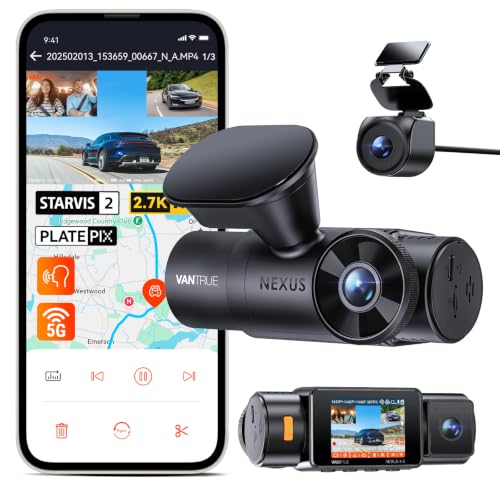
- Best for: Owner-operators and pickup drivers who want front, cabin and rear evidence from one system with a long rear cable.
- Recording: 2.7K+1440P+1440P front, inside and rear, from the Amazon listing
- Sensor: IMX675 with STARVIS 2, HDR and IR night vision, as listed
- Viewing angles: 158 degrees front, 165 degrees inside, 160 degrees rear, as listed
- Connectivity and control: built-in Wi-Fi, built-in GPS and voice control, as listed
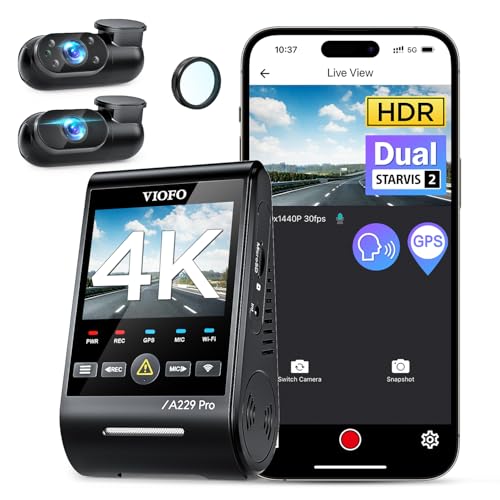
- Best for: Drivers who want the highest listed front and rear resolution across a three-channel system.
- Recording: 4K+2K+1080P front, rear and inside, from the Amazon listing title
- Sensors: dual STARVIS 2 sensors IMX678 and IMX675, as listed
- Video capture resolution: 2160P+1440P+1080P, as listed in product information
- Connectivity and control: 5GHz Wi-Fi, GPS and voice control, as listed

- Best for: Truck and pickup drivers who want straightforward front-and-rear coverage with a card included in the box.
- Recording: 4K front and 1080P rear, from the Amazon listing
- Sensor and lens: STARVIS 2 sensor, F1.5 aperture and 6-layer optical lens, as listed
- Viewing angles: 170 degrees front and 140 degrees rear, as listed
- Connectivity: built-in 5.8GHz Wi-Fi with downloads up to 20MB/s and GPS, as listed
All 3 Picks at a Glance
| Product | Specs | Action |
|---|---|---|
| Vantrue N4S 3 Channel Dash Cam |
| Check price on Amazon |
| VIOFO A229 Pro 3 Channel Dash Cam |
| Check price on Amazon |
| REDTIGER F7NP 4K Dash Cam |
| Check price on Amazon |
Our Top Picks

Choosing a dashboard camera for a truck is a different decision from choosing one for a small car, and the difference is mostly physical. A tall cab puts the lens higher and further from the action, a long vehicle needs a rear camera cable that can actually reach, and a driver who spends whole days on the road needs footage that stays readable at highway speed, in darkness, and after hours in a hot, vibrating cab. Resolution headlines matter, but cable length, channel count and how parking mode is powered decide whether the system still works a month after installation.
This shortlist is for owner-operators fitting their own rig, pickup drivers who tow and reverse with a trailer, and fleet drivers who need front, cabin and rear evidence from one unit. Every option below was selected from its name and specifications on its Amazon listing, with the details that matter most to truck buyers — recording channels, listed cable lengths, GPS, Wi-Fi and parking behaviour — taken from that listing rather than from general category claims.
Quick Picks
As an Amazon Associate we earn from qualifying purchases
| Product | Best for | Key spec from title |
|---|---|---|
| Vantrue N4S 3 Channel Dash Cam | Drivers wanting front, cabin and rear in one system | 2.7K+1440P+1440P with STARVIS 2, HDR and IR night vision |
| VIOFO A229 Pro 3 Channel Dash Cam | Highest listed front resolution with three channels | 4K+2K+1080P with dual STARVIS 2 sensors IMX678 and IMX675 |
| REDTIGER F7NP 4K Dash Cam | Simpler front-and-rear coverage with a card included | 4K front and 1080P rear with STARVIS 2 and free card included |
How to Choose
A truck installation exposes weaknesses that a short car commute hides. Cables are longer, days are longer, the cab gets hotter, and footage is more likely to be needed for a dispute about a loading dock, a lane change or a night-time incident. Work through the four checks below in order — channels, cable reach, night and parking behaviour, then storage — before comparing headline resolution.
Count Channels Against the Evidence You Actually Need
Decide first whether you need one, two or three views. A front-only camera cannot show what happened behind a long vehicle or inside the cab. A front-and-rear system adds the view that matters when someone runs into the back of a truck or when reversing and loading are part of the job. A three-channel system adds a cabin camera, which some owner-operators want as evidence about their own conduct during an incident, and others will not want recording them all day.
Be honest about that trade-off, because it affects storage use and installation work. Three channels fill a card faster and mean more cable to route through a large cab, while a dual system is simpler to fit and manage. Here, the Vantrue and VIOFO systems record three channels and the REDTIGER records front and rear. The right count is the smallest one that covers the situations you genuinely expect to need evidence for.
Measure Cable Reach Before You Trust a Rear Camera
Rear coverage is only real if the cable reaches. Truck cabs sit high, windscreens are large, and the route from a dashboard unit to a rear mounting point can run along headliners, down pillars and across the back of the cab, using up length that a headline figure does not suggest. The Amazon listings state a 20ft rear camera cable for the Vantrue N4S and a 6m rear cable for the VIOFO A229 Pro, and those figures are worth comparing against a tape-measure run through your own cab before ordering, including slack for routing around trim rather than a straight line through the air.
Also check where the rear camera will sit. A camera inside a pickup cab looking through a rear window sees a different scene from one mounted to view a trailer or loading area. If your vehicle is unusually long, confirm extension options from the listing information rather than assuming a standard cable will stretch, because a system whose rear camera never gets fitted is simply a front camera bought for rear-evidence money.
Check Night Vision, Heat Design and Parking Power Together
Truck cameras work long hours in difficult light: unlit yards, early starts, night motorway driving and glare from low sun across a big windscreen. Listings describe the tools for that work in specific terms — STARVIS 2 sensors, HDR, infrared cabin illumination and wide apertures — so compare those stated items rather than a general claim about night performance. A cabin camera that relies on infrared, such as the Vantrue listing describes, addresses a different problem from a front camera with HDR, and a working truck may need both.
Then look at how the camera survives the cab and the parked hours. Supercapacitor designs, which the REDTIGER listing states for the F7NP, are commonly chosen for hot cabins instead of internal batteries. Parking modes across all three listings come with a condition worth reading twice: continuous or buffered parking recording generally needs a hardwire kit, often sold separately, and that kit needs correct installation with low-voltage protection so a parked truck still starts in the morning. Budget the kit and the fitting as part of the system, not as an afterthought, if parked coverage is a reason you are buying.
Size Storage and Retrieval for Long Days on the Road
A multi-channel truck camera recording through a full working day produces a lot of footage, and loop recording will overwrite the oldest files once the card fills. The listings state maximum card support of up to 1TB for the Vantrue N4S and up to 512GB for the VIOFO A229 Pro, while the REDTIGER F7NP includes a free card in the box, and those differences change how soon you must retrieve a clip before it disappears. If an incident matters, save or download that file promptly rather than assuming it will still be there next week.
Retrieval matters almost as much. Built-in Wi-Fi and an app, listed for all three systems here, let a driver pull a clip to a phone at a rest stop without removing a tiny card in a dark cab, and GPS adds route, speed and location context. Confirm whether a card is included or bought separately — the VIOFO listing notes no SD card is included — and plan card size around your longest typical day.
The 3 Best Options
Each system below orders its priorities differently: the Vantrue leads on cabin coverage and stated rear cable, the VIOFO on listed resolution, and the REDTIGER on a simpler two-channel installation with a card in the box. Read each watch-out line carefully, because it names the extra purchase or measurement that decides whether the headline specification becomes a working installation.
Vantrue N4S 3 Channel Dash Cam
- Best for: Owner-operators and pickup drivers who want front, cabin and rear evidence from one system with a long rear cable.
- Recording: 2.7K+1440P+1440P front, inside and rear, from the Amazon listing
- Sensor: IMX675 with STARVIS 2, HDR and IR night vision, as listed
- Viewing angles: 158 degrees front, 165 degrees inside, 160 degrees rear, as listed
- Connectivity and control: built-in Wi-Fi, built-in GPS and voice control, as listed
Owner-operators and pickup drivers who want front, cabin and rear evidence from one system with a long rear cable.
The memory card and the hardwire kit for parking mode are separate purchases, so confirm both before fitting day.
For a truck driver who wants the road, the cab and the view behind recorded together, the N4S is the most complete single-unit answer in this shortlist. Its listing describes three channels recording at 2.7K plus 1440P plus 1440P through a wide combined angle, with an infrared cabin view for night work and a waterproof rear camera on a long stated cable — a combination aimed squarely at drivers whose evidence needs include loading areas and their own conduct in the cab, not just the motorway ahead. Voice control and built-in GPS add practicality for long days.
VIOFO A229 Pro 3 Channel Dash Cam
- Best for: Drivers who want the highest listed front and rear resolution across a three-channel system.
- Recording: 4K+2K+1080P front, rear and inside, from the Amazon listing title
- Sensors: dual STARVIS 2 sensors IMX678 and IMX675, as listed
- Video capture resolution: 2160P+1440P+1080P, as listed in product information
- Connectivity and control: 5GHz Wi-Fi, GPS and voice control, as listed
Drivers who want the highest listed front and rear resolution across a three-channel system.
No memory card is included and the parking hardwire kit is separate, so the box alone is not a complete installation.
Drivers who put maximum listed detail first should start with the A229 Pro, whose Amazon title states 4K front, 2K rear and 1080P cabin recording with two named STARVIS 2 sensors. That rear resolution is the differentiator in this group: in a truck, the rear camera is often the one asked to identify a vehicle, a plate or a loading incident at distance, and this listing gives that channel more resolution than the other systems here. Voice control, 5GHz Wi-Fi and GPS round out a specification built for a driver who retrieves footage often and wants the strongest stated numbers on the channels that carry disputes.
REDTIGER F7NP 4K Dash Cam
- Best for: Truck and pickup drivers who want straightforward front-and-rear coverage with a card included in the box.
- Recording: 4K front and 1080P rear, from the Amazon listing
- Sensor and lens: STARVIS 2 sensor, F1.5 aperture and 6-layer optical lens, as listed
- Viewing angles: 170 degrees front and 140 degrees rear, as listed
- Connectivity: built-in 5.8GHz Wi-Fi with downloads up to 20MB/s and GPS, as listed
Truck and pickup drivers who want straightforward front-and-rear coverage with a card included in the box.
There is no cabin channel, and parking mode needs a hardwire kit, so check both points against your evidence needs before ordering.
The F7NP suits a truck buyer who has decided that front and rear coverage is enough and would rather keep the system simpler. Its listing pairs a 4K front camera with a wide stated front angle and a 1080P rear camera, adds GPS and fast stated Wi-Fi downloads, and includes a memory card, which removes one of the extra purchases the other systems require. A supercapacitor design is stated on the listing, a practical detail for cabs that sit in the sun between shifts. For a company pickup, a day-cab truck or a driver moving a camera into a vehicle quickly, that simpler two-channel brief is a legitimate choice rather than a compromise.
Which One Fits Your Situation
Match the system to the dispute you most expect to face and the vehicle you drive daily. The right channels, cables that reach and a card large enough for your longest day matter more than a higher headline resolution attached to an installation that never quite gets finished.
You Drive Your Own Rig and Want Cab Coverage Too
Choose the Vantrue N4S. Its three channels record your driving from the front, the cabin and the rear at once, and the infrared cabin view keeps that middle channel useful at night. The stated 20ft rear cable gives the most listed reach in this group for routing through a larger cab. Remember that the card and hardwire kit are separate, and decide honestly whether you are comfortable with a cabin camera recording your working day before committing to it.
You Want the Strongest Rear Evidence for Towing and Loading
Choose the VIOFO A229 Pro. Its listing gives the rear channel 2K recording, the highest rear figure here, alongside 4K at the front, which suits a driver whose riskiest moments happen behind the vehicle — reversing, coupling, loading and being approached in yards. Measure your cable route against the stated 6m rear cable, buy a suitably sized card since none is included, and add the hardwire kit if parked-yard coverage is part of the plan.
You Need a Camera Fitted Quickly in a Work Pickup
Choose the REDTIGER F7NP. Two channels mean less cable to route, the included card means one less item to source, and GPS plus app retrieval cover the everyday needs of a working pickup without a cabin channel to manage. Its stated wide front angle suits large windscreens and wide roads. If the truck is regularly left loaded overnight, factor in the hardwire kit for parking mode rather than assuming the standard power lead covers parked hours.
You Split Driving Between More Than One Vehicle
Start with the REDTIGER F7NP for the vehicle that does most miles, and reconsider three channels only for the vehicle you own outright. Moving any hardwired, multi-cable system between cabs is slow work, so a simpler two-channel installation is the realistic choice for a driver rotating through pool vehicles. Whichever system you choose, keep its mounts, cables and card together as one kit, because a camera separated from its rear cable or its card is not a working system on the day you need it.
Common Mistakes
- Ordering a rear camera system without measuring the cable route through the cab, then discovering the stated cable length does not reach the intended mounting point.
- Buying a three-channel camera for cabin evidence without checking how quickly three channels fill a card, so an important clip is overwritten before it is saved.
- Assuming parking mode works from the standard power lead, when the listings state that a hardwire kit is needed and that kit is usually sold separately.
- Forgetting that some systems include no memory card, arriving at fitting day with a camera that cannot record until a suitable card is bought.
- Mounting the front unit where wipers do not clear the glass or where it blocks the driver’s view, instead of testing the position from the driving seat first.
Frequently Asked Questions
Do truck dash cameras need three channels?
Not always. Front and rear channels cover the road ahead and behind, which answers most collision and loading disputes, and that is why a two-channel system such as the REDTIGER F7NP suits many work trucks. A third, cabin-facing channel adds evidence about the driver and the inside of the cab, which some owner-operators value and others prefer not to record. Decide from the situations you expect to dispute, not from channel count as a status symbol.
Will a standard rear camera cable reach in a truck?
It depends on the vehicle and the route, which is why the listings’ stated lengths matter: 20ft for the Vantrue N4S rear camera and 6m for the VIOFO A229 Pro rear camera in this shortlist. Measure your own route along the headliner and pillars, with slack for trim, before ordering. A straight-line distance across the cab understates the real run, and a cable under tension across a vibrating truck cab will not stay tidy or reliable.
How does parking mode work when the truck is parked overnight?
The listings describe parking modes that watch for collisions or record at a low rate while the vehicle is off, and they state that a hardwire kit is needed to power that behaviour. A correctly fitted kit with low-voltage protection lets the camera monitor a parked, loaded truck while protecting the battery the truck needs to start in the morning. Without the kit, assume the camera sleeps when the engine stops, whatever the headline parking claim says.
What size memory card does a truck dash camera need?
Size the card to your longest working day and your channel count, within the maximum the listing states — up to 1TB for the Vantrue N4S and up to 512GB for the VIOFO A229 Pro here, while the REDTIGER F7NP includes a card. More channels and higher resolution fill space faster, and loop recording overwrites the oldest footage. Whatever size you choose, download any clip that matters as soon as you can rather than trusting the loop to keep it.
FAQ
Do truck dash cameras need three channels?
Will a standard rear camera cable reach in a truck?
How does parking mode work when the truck is parked overnight?
What size memory card does a truck dash camera need?
More from Amazon
Programs that pair well with the guide above. Offers and eligibility are set by Amazon and may change.
Free shipping on eligible items, Prime Video and more. Eligible new members can start with a free trial.
Start a Prime free trialAudiobooks and podcasts to listen to on the go. Eligible new members can start with a free trial.
Try Audible freeAd-free music streaming. Eligible new subscribers can start with a free trial.
Try Music Unlimited freeA free business account with business pricing and bulk-buying tools for work, shop or home office.
Create a business accountAs an Amazon Associate we earn from qualifying purchases.