Our Short List of 3

- Type: 3-axis handheld camera gimbal
- Tested payload: 4.5 kg (10 lbs)
- LiDAR autofocus: 76,800 ranging points, up to 20 m, with Focus Pro LiDAR and Focus Pro Motor
- Gimbal weight: approx. 1,242 g
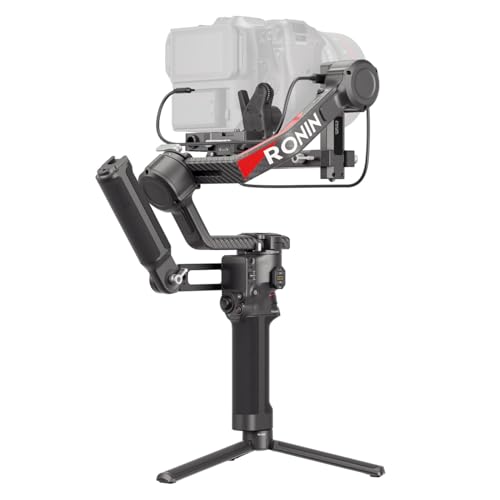
- Type: 3-axis handheld camera gimbal combo kit
- Tested payload: 4.5 kg (10 lbs)
- LiDAR autofocus: 76,800 ranging points, up to 20 m, with Focus Pro LiDAR and Focus Pro Motor
- Gimbal weight: approx. 1,242 g

- Type: 3-axis handheld camera gimbal
- Tested payload: 4.5 kg (10 lbs)
- LiDAR autofocus: 43,200 ranging points, up to 14 m, with LiDAR Range Finder and focus motor
- Weight: approx. 1.5 kg including gimbal, battery grip, and quick-release plates
All 4 Picks at a Glance
| Product | Specs | Action |
|---|---|---|
| DJI RS 4 Pro |
| Check price on Amazon |
| DJI RS 4 Pro Combo |
| Check price on Amazon |
| DJI RS 3 Pro |
| Check price on Amazon |
 DJI RS 3 Pro Combo |
| Check price on Amazon |
Key takeaways
- Compare the best camera gimbals with LiDAR autofocus for sharp solo footage. Payload, ranging points, battery life, and which bundle fits your rig.
Keeping a moving subject in sharp focus while the camera glides is one of the hardest parts of solo filmmaking. A camera gimbal with LiDAR autofocus solves it by measuring distance with a laser sensor and driving the lens focus motor for you, so the subject stays crisp even when you are walking, circling, or pulling back. This guide compares the gimbals that genuinely support that system, so you can pick the right rig for your camera, your lenses, and your shooting style.
As an Amazon Associate, we earn from qualifying purchases.
Table of Contents
- Quick Answer
- Our Top Picks
- How to Choose
- Who Should Skip
- Frequently Asked Questions
- Final Verdict
- Product and ASIN Reference
Quick Answer
The best camera gimbal with LiDAR autofocus for most creators is the DJI RS 4 Pro, which pairs with the DJI Focus Pro LiDAR unit to deliver autofocus with 76,800 ranging points out to 20 meters. If you want the transmitter and focus motor included, step up to the RS 4 Pro Combo, while the RS 3 Pro remains a strong lower-cost route into the same LiDAR focusing system.
Our Top Picks
DJI RS 4 Pro
- Type: 3-axis handheld camera gimbal
- Tested payload: 4.5 kg (10 lbs)
- LiDAR autofocus: 76,800 ranging points, up to 20 m, with Focus Pro LiDAR and Focus Pro Motor
- Gimbal weight: approx. 1,242 g
The DJI RS 4 Pro is the current flagship of the Ronin line and the strongest all-round choice for LiDAR autofocus. Paired with the DJI Focus Pro LiDAR and Focus Pro Motor, it turns manual lenses into autofocus lenses and keeps subjects locked on while you move. The gimbal carries mainstream mirrorless and cinema camera setups with ease, and second-generation native vertical shooting lets you switch to vertical framing without extra accessories. Automated axis locks speed up setup and pack-down, and the bright touchscreen gives quick access to balancing, calibration, and follow settings.
For solo operators, the combination of LiDAR focus and ActiveTrack-style subject tracking is the main draw: the sensor reads the scene in three dimensions, so focus holds on people even at distance or in low contrast. The carbon fiber axis arms keep the rig light for its class, and the gimbal connects with the wider DJI ecosystem for remote monitoring and control. One honest note: the Focus Pro LiDAR unit is sold separately and is not in the box, so budget for it if autofocus is the reason you are buying.
DJI RS 4 Pro Combo
- Type: 3-axis handheld camera gimbal combo kit
- Tested payload: 4.5 kg (10 lbs)
- LiDAR autofocus: 76,800 ranging points, up to 20 m, with Focus Pro LiDAR and Focus Pro Motor
- Gimbal weight: approx. 1,242 g
The DJI RS 4 Pro Combo takes the same flagship gimbal and adds the accessories that turn it into a complete production kit. The Ronin Image Transmitter enables wireless monitoring on a phone or monitor, and the Focus Pro Motor drives focus and zoom on manual lenses when paired with the LiDAR unit. A briefcase handle, carrying case, and extended lens support round out a package built for creators who shoot client work and need the full workflow in one case.
Everything that makes the standalone RS 4 Pro strong applies here: the 4.5 kg tested payload, carbon fiber arms, automated axis locks, native vertical shooting, and the 76,800-point LiDAR focusing system. The Combo simply removes the extra shopping trips. If you already own a transmitter or a focus motor, the standalone gimbal may be the better buy, but for a first professional rig the Combo covers the bases in one purchase. As with the standalone version, the Focus Pro LiDAR unit itself is a separate accessory.
DJI RS 4 Pro With SDR Transmission Combo
This bundle builds on the RS 4 Pro with a transmission-focused kit aimed at crews who monitor and pull focus away from the camera. The SDR transmission setup supports remote viewing and control, while the dual focus and zoom motor arrangement gives a dedicated focus puller precise control over manual lenses. Combined with the LiDAR unit, the system can hold focus on a moving subject while the operator concentrates on framing and movement.
The core gimbal is the same RS 4 Pro, so you get the same 4.5 kg tested payload, carbon fiber arms, automated axis locks, and native vertical shooting. This bundle makes the most sense when you regularly work with a second person monitoring the shot or when your shoots demand wireless video alongside LiDAR autofocus. Solo shooters who monitor on the camera screen may find the standard Combo a simpler fit.
Specs
- Type: 3-axis handheld camera gimbal transmission bundle
- Tested payload: 4.5 kg (10 lbs)
- LiDAR autofocus: 76,800 ranging points, up to 20 m, with Focus Pro LiDAR and Focus Pro Motor
- Gimbal weight: approx. 1,242 g
- Folded dimensions: 271 x 283 x 75 mm
- Unfolded dimensions: 416 x 223 x 202 mm
- Battery: BG30 grip, 1950 mAh, up to 13 hours runtime, up to 29 hours with optional BG70 grip
- Transmission: SDR transmission for remote monitoring
- Focus control: Dual focus and zoom motor support
- Display: 1.8-inch touchscreen
- Axis locks: Automated on all three axes
- Tier: Premium
- ASIN: B0DMVDR28G
DJI RS 3 Pro
- Type: 3-axis handheld camera gimbal
- Tested payload: 4.5 kg (10 lbs)
- LiDAR autofocus: 43,200 ranging points, up to 14 m, with LiDAR Range Finder and focus motor
- Weight: approx. 1.5 kg including gimbal, battery grip, and quick-release plates
The DJI RS 3 Pro is the previous flagship and remains the most affordable way into genuine LiDAR autofocus. Its LiDAR Range Finder projects 43,200 ranging points and holds focus out to 14 meters, which covers the vast majority of interview, event, and narrative distances. The gimbal shares the 4.5 kg tested payload of its successor, so it balances the same class of mirrorless and cinema cameras, and its extended carbon fiber arms give plenty of room for larger camera and lens combinations.
Long-range O3 Pro video transmission reaches up to 6 km for remote monitoring, and automated axis locks make setup fast. The 1.8-inch touchscreen and the Ronin app handle tuning and calibration. The trade-offs against the RS 4 Pro are real but narrow: fewer ranging points, a shorter LiDAR range, and first-generation vertical shooting that needs an extra plate. For creators whose work sits inside 14 meters and who value the lower entry cost, those trade-offs rarely matter in practice. The LiDAR Range Finder is an optional accessory for this model, so confirm which accessories are included in the listing you choose.
DJI RS 3 Pro Combo
- Type: 3-axis handheld camera gimbal combo kit
- Tested payload: 4.5 kg (10 lbs)
- LiDAR autofocus: 43,200 ranging points, up to 14 m, with LiDAR Range Finder and focus motor
- Weight: approx. 1.5 kg including gimbal, battery grip, and quick-release plates
The DJI RS 3 Pro Combo bundles the previous flagship with the accessories that make LiDAR autofocus practical on set. The Ronin Image Transmitter brings wireless monitoring, the Focus Motor (2022) drives manual lenses, and the extended lower quick-release plate and carrying case complete a kit that is ready for professional work straight out of the box. It is the natural pick if you want the RS 3 Pro platform with the focusing and transmission extras included rather than sourced separately.
Performance matches the standalone RS 3 Pro: a 4.5 kg tested payload, 43,200-point LiDAR focusing out to 14 meters, automated axis locks, and O3 Pro transmission. The Combo costs more than the standalone gimbal, but the included transmitter and focus motor would cost more bought on their own, so it is the better value when you need both. Note that the LiDAR Range Finder itself is not part of the Combo box, so it remains a separate purchase for full LiDAR autofocus.
How to Choose
Start with the LiDAR unit itself. Every gimbal in this guide supports LiDAR autofocus, but the sensor is a separate accessory on the standalone models and on the Combos, so confirm the listing contents before you buy. The Focus Pro LiDAR pairs with the RS 4 Pro, and the earlier LiDAR Range Finder pairs with the RS 3 Pro. Without the sensor and a focus motor, you get excellent stabilization but no LiDAR autofocus.
Next, match payload to your rig. All five gimbals here are rated for a 4.5 kg tested payload, which covers most mirrorless cameras with a 24-70mm lens and many compact cinema cameras. Add the weight of your camera, lens, monitor, microphone, and any cage before comparing to the rating, and leave headroom: a gimbal loaded near its limit balances poorly and drains the battery faster.
Consider ranging points and distance. The RS 4 Pro system reads 76,800 points out to 20 meters, while the RS 3 Pro system reads 43,200 points out to 14 meters. More points mean finer edge detection and less focus hunting, and the extra range matters for telephoto work and large venues. For interviews, events, and run-and-gun shooting inside 14 meters, the RS 3 Pro system is already strong.
Think about how you monitor and pull focus. If you work alone and watch the camera screen, the standalone gimbal plus the LiDAR unit is enough. If a client or director watches a separate monitor, the Combo kits with their image transmitters earn their place. If a dedicated focus puller works your set, the SDR Transmission Combo gives that person remote control.
Battery life deserves a check too. The RS 4 Pro runs up to 13 hours on its standard grip and up to 29 hours with the optional high-capacity grip, while the RS 3 Pro runs up to 12 hours. Long event days and travel shoots benefit from the extra headroom, and both lines charge over USB-C.
Finally, check camera compatibility. DJI publishes a camera compatibility list for each gimbal, and features such as start and stop recording, autofocus triggering, and zoom control vary by camera brand and model. Confirm your camera is on the list and that the control cable for your model is included or available.
Who Should Skip
Skip a LiDAR autofocus gimbal if your camera already focuses reliably on its own. Modern mirrorless cameras with strong subject detection often track people well without any add-on, and in that case a simpler gimbal without the LiDAR system saves money and weight.
Skip this category if you shoot only static, locked-off shots. LiDAR autofocus earns its keep on moving subjects and moving cameras; on a tripod or a slider with a stationary subject, manual focus or the camera’s own autofocus is usually enough.
Skip the heavier flagship rigs if you shoot with a small mirrorless camera and a single prime lens. A 4.5 kg payload gimbal is overbuilt for a compact setup, and a lighter gimbal will be easier to carry all day. The RS 3 Pro and RS 4 Pro are built for mid-size rigs, not pocket cameras.
Skip the Combo kits if you already own a wireless transmitter and a focus motor. The bundles only save money when you need the included accessories, and the standalone gimbals deliver the same stabilization and LiDAR support.
Frequently Asked Questions
Does the DJI RS 4 Pro include the LiDAR unit in the box?
No. The Focus Pro LiDAR is sold separately for the RS 4 Pro, including the Combo version. The gimbal is built to work with it, and the Combo includes the Focus Pro Motor, but the LiDAR sensor itself is an additional purchase.
What is the difference between the RS 3 Pro and RS 4 Pro LiDAR systems?
The RS 4 Pro pairs with the Focus Pro LiDAR, which projects 76,800 ranging points out to 20 meters. The RS 3 Pro pairs with the earlier LiDAR Range Finder, which projects 43,200 points out to 14 meters. Both deliver LiDAR autofocus, but the newer system reads finer detail at greater distance.
Can LiDAR autofocus work with manual lenses?
Yes. When the LiDAR unit is paired with a focus motor, the system measures distance and drives the motor, which gives autofocus behavior to lenses that have no autofocus of their own. The lens needs to be calibrated in the app first, and a focus gear ring is used to connect the motor to the lens.
Do I need the Combo version to use LiDAR autofocus?
No. The standalone RS 3 Pro and RS 4 Pro both support LiDAR autofocus once the sensor and a focus motor are added. The Combo versions bundle a transmitter and a focus motor, which is convenient, but they are not required for the LiDAR system to work.
Final Verdict
The DJI RS 4 Pro is the best camera gimbal with LiDAR autofocus for most creators, thanks to its 76,800-point ranging, 20-meter reach, and deep integration with the Focus Pro system. The RS 4 Pro Combo is the better buy when you also need wireless monitoring and a focus motor, and the SDR Transmission Combo suits crews with a dedicated focus puller. The RS 3 Pro and RS 3 Pro Combo remain strong choices for creators who shoot inside 14 meters and want the same LiDAR focusing idea at a lower entry cost. Whichever you choose, remember to add the LiDAR unit itself: it is the part that turns a great stabilizer into a true autofocus gimbal.
Product and ASIN Reference
| Product | ASIN |
|---|---|
| DJI RS 4 Pro | B0CS6J2648 |
| DJI RS 4 Pro Combo | B0CS6LY1V7 |
| DJI RS 4 Pro With SDR Transmission Combo | B0DMVDR28G |
| DJI RS 3 Pro | B09ZPL5H5G |
| DJI RS 3 Pro Combo | B09ZPN7G95 |
More from Amazon
Programs that pair well with the guide above. Offers and eligibility are set by Amazon and may change.
Free shipping on eligible items, Prime Video and more. Eligible new members can start with a free trial.
Start a Prime free trialAudiobooks and podcasts to listen to on the go. Eligible new members can start with a free trial.
Try Audible freeAd-free music streaming. Eligible new subscribers can start with a free trial.
Try Music Unlimited freeA free business account with business pricing and bulk-buying tools for work, shop or home office.
Create a business accountAs an Amazon Associate we earn from qualifying purchases.