Key takeaways
- Two 2-ohm 6x9 car speakers for factory head units — legacy JBL and Infinity models, specs, impedance notes and what to check before you order either one.
A 2-ohm 6×9 speaker exists for one specific job: drawing more power from a factory head unit or a small amplifier that is built for a low-impedance load. Most aftermarket car speakers are 4-ohm, so they ask less of the amplifier and play quieter on factory power. A 2-ohm speaker pulls more current from the same head unit, which usually means noticeably louder sound without adding an amplifier. The catch is that the choice is narrow: very few 6×9 models were ever made at 2 ohms, and the ones that were are now older designs long out of production.
This guide covers the two 2-ohm 6×9 models with verifiable Amazon listings: a JBL and an Infinity, both three-way coaxials from the early 2010s. Both are legacy models, so neither is a current-generation design, and both need a careful check of the listing before ordering. What follows is what their listings actually state, including one disagreement between a listing and the maker’s own spec sheet.
Quick Picks
As an Amazon Associate we earn from qualifying purchases
| Product | Best for | Key spec from title |
|---|---|---|
| JBL GTO939 6×9 3-Way | Louder sound on factory power | 300W peak, 100W RMS each, 94 dB |
| Infinity Reference 9633cf 6×9 3-Way | A confirmed 2-ohm match | 2-ohm impedance, 100W RMS, 94 dB |
How to Choose
Why 2 ohms matters
Impedance is the load your speaker presents to the amplifier, and a lower load draws more power from the same head unit. A 2-ohm speaker on a factory radio typically plays louder than a 4-ohm speaker on the same radio, because the amplifier delivers more watts into the lower load. That is the whole reason to hunt for a 2-ohm 6×9: you get more volume without fitting an amplifier. The trade-off is heat and current, so the head unit must be stable at 2 ohms; a radio built only for 4-ohm loads can overheat or shut down. Check your head unit or amplifier manual first, because the wrong load is a real risk, not a theory.
Three-way design and tweeter material
A three-way 6×9 carries a woofer, a midrange, and a tweeter on one frame, so one speaker covers bass, voices, and treble without a separate component set. The woofer cone decides the low end: a Plus One cone has more surface area than a standard cone of the same frame size, which helps bass and efficiency. The tweeter material decides the top end: a Mylar-titanium tweeter sounds bright and detailed, while a textile-dome tweeter sounds softer and less fatiguing on long drives. Neither is better in every car; a bright tweeter suits a noisy cabin, while a soft dome suits a quiet one with the treble turned up.
Power handling and sensitivity
Power handling tells you how much amplifier power a speaker can take, and sensitivity tells you how loud it plays on a given watt. Both picks here are rated 100 watts RMS and 300 watts peak per speaker, with 94 dB sensitivity, which is efficient for a coaxial. Sensitivity matters more than peak power on a factory head unit, because a 94 dB speaker needs far less power to reach the same volume as an 88 dB speaker. Ignore peak figures when comparing: RMS is the sustained rating, and a speaker rated 100 watts RMS on a 20-watt factory radio will never see its limit. Match the speaker to the power you actually have, not the power on the box.
Legacy models and listing checks
Both speakers in this guide are legacy models from the early 2010s, so the listings are old and the stock picture is mixed. A listing can show a price in one place and no offers in another, and a third-party seller can list a pair that is actually a single speaker, so read the listing title and the quantity field together. Check the model number letter by letter: a GTO939 is not a GTO938, and a 9633cf is not a 9633ix, and the successor models carry different impedance ratings. Confirm the listing is still selling before ordering, because a dead listing on a legacy model will not come back.
The 2 Best Options
JBL GTO939 6×9 3-Way
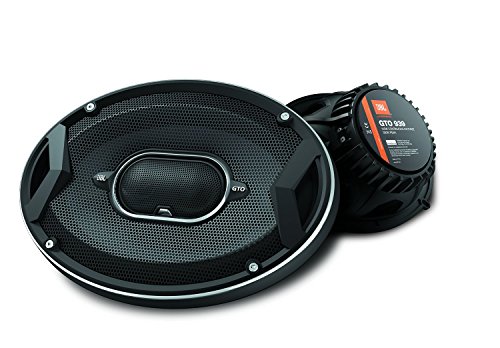
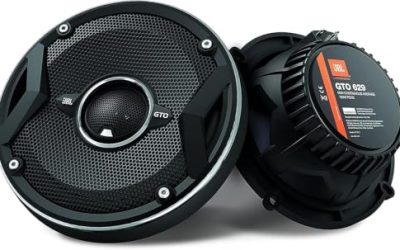
The JBL GTO939 is the louder pick, a 6×9 three-way coaxial rated at 300 watts peak and 100 watts RMS with 94 dB sensitivity. Its Plus One woofer cone gives it more surface area than a standard cone, and the Mylar-titanium tweeters keep the top end bright and detailed. The Amazon listing describes the impedance as 2 ohms, while JBL’s own spec sheet lists the nominal impedance as 3 ohms, so no single impedance figure is stated here as fact — check what your amplifier expects before ordering. The GTO939 was made from 2012 to 2018, so it is a legacy model; confirm the listing is live before you buy.
Specs
- 300W peak power handling, 100W RMS each
- 94 dB sensitivity
- Plus One woofer cone
- Mylar-titanium tweeters
- Frequency range 45 to 21,000 Hz per the Amazon listing
Best for: Louder sound on factory power, where a bright top end and a high-sensitivity design matter most.
Watch out for: The listing and JBL’s own spec sheet disagree on impedance, and the stock picture is conflicting, so confirm both on the product page before ordering.
Infinity Reference 9633cf 6×9 3-Way
The Infinity Reference 9633cf is the confirmed 2-ohm pick, with the 2-ohm rating backed by Infinity’s own period spec sheet. It is rated at 100 watts RMS and 300 watts peak with 94 dB sensitivity, and its Plus One woofer cone and edge-driven textile-dome midrange and tweeter give it a softer top end. The mounting depth of 3-1/16 inches suits most factory 6×9 openings, and the pair is sold as a set of two. No frequency range is stated here, because the listing, a blog, and a fitment table each give a different figure. Do not use the successor REF-9633ix specifications, which are 3-ohm and belong to a different model.
Specs
- 2-ohm impedance per Infinity’s period spec sheet
- 100W RMS, 300W peak power handling
- 94 dB sensitivity
- Plus One woofer cone
- Edge-driven textile-dome midrange and tweeter
- Mounting depth 3-1/16 inches
- Sold as a pair
Best for: A confirmed 2-ohm match for a factory head unit or a small amplifier built for a low-impedance load.
Watch out for: A legacy model from the early 2010s, so confirm the listing is still selling, and do not confuse it with the 3-ohm successor REF-9633ix.
Which One Fits Your Situation
You want the loudest option on factory power
The JBL GTO939 is the pick when volume is the goal. Its 94 dB sensitivity and Plus One cone make the most of a factory head unit, and the Mylar-titanium tweeters cut through road noise at highway speed. The trade-off is the impedance question: the listing and JBL’s sheet disagree, so confirm what your amplifier expects before ordering, and treat the listing as a starting point rather than a guarantee. Confirm the impedance question first.
You want the clearest 2-ohm match
The Infinity Reference 9633cf is the pick when the 2-ohm rating itself is the point. Infinity’s own period spec sheet confirms the 2-ohm impedance, so there is no disagreement to resolve, and the textile-dome tweeter suits a quieter cabin. Choose it when you are matching a specific amplifier load and want the rating in writing from the maker, not only from a listing. The textile-dome tweeter also suits long drives, where a bright top end can tire your ears.
You run a small amplifier
Either speaker works with a small amplifier rated for a 2-ohm load, because both are rated 100 watts RMS and 94 dB sensitivity. The JBL suits an amplifier that needs a bright top end to balance a bass-heavy cabin, while the Infinity suits one that already runs hot in the treble. Check the amplifier manual for its minimum load first, because a 2-ohm speaker on an amplifier built for 4 ohms can overheat and shut down. Check the manual first.
You are replacing a blown factory 6×9
The Infinity 9633cf is the safer replacement pick, because its 2-ohm rating is confirmed by the maker’s spec sheet and its mounting depth of 3-1/16 inches fits most factory openings. Measure your factory speaker depth and the mounting hole pattern before ordering, and check whether the factory wiring uses a plug or bare terminals. The JBL fits the same openings, but its impedance disagreement means one more thing to confirm before you buy. Check the door seals too.
Common Mistakes
- Treating a listing impedance figure as settled fact. The JBL listing says 2 ohms while JBL’s own spec sheet says 3 ohms, so a buyer who trusts one source without checking the other can match the wrong load to an amplifier that is not built for it. A quick check of the amplifier manual settles the question in a minute.
- Confusing successor models with the originals. The Infinity REF-9633ix is a 3-ohm speaker, the JBL GTO938 is a different model from the GTO939, and a single wrong letter in the model number changes the impedance, the power rating, and the fit.
- Buying on peak power alone. Both picks are rated 300 watts peak and 100 watts RMS, and the peak figure says nothing about how loud the speaker plays on a 20-watt factory radio — sensitivity is the number that matters there.
- Assuming a legacy listing is still selling. Both models are from the early 2010s, and a listing can show a price in one place and no offers in another, so confirm the buy box is live before ordering rather than after the box arrives empty.
- Ignoring mounting depth. A 6×9 that fits the hole but not the depth will hit the window mechanism or the door panel, so measure the factory opening depth and compare it with the 3-1/16-inch depth stated for the Infinity before you order.
Frequently Asked Questions
Do 2-ohm speakers work with any head unit?
No. A 2-ohm speaker draws more current than a 4-ohm speaker, so the head unit or amplifier must be rated stable at 2 ohms. Most factory head units handle 2-ohm loads, but some aftermarket radios are built for 4 ohms only and can overheat or shut down on a lower load. Check the manual for the minimum load rating before ordering.
Will a 2-ohm speaker damage my factory radio?
It can, if the radio is not built for a 2-ohm load. A radio rated for 4 ohms minimum will run hotter and may shut down or fail when asked to drive a lower load. Most factory radios are designed with 2-ohm speakers in mind, because car makers use low-impedance speakers to get volume from small amplifiers. Check the radio manual or the car maker’s speaker specification before buying.
What is the difference between the GTO939 and the 9633cf?
Both are 6×9 three-way coaxials rated 100 watts RMS and 300 watts peak with 94 dB sensitivity, so their power handling is the same. The JBL uses Mylar-titanium tweeters for a brighter top end, while the Infinity uses textile-dome tweeters for a softer sound. The bigger difference is the impedance record: the Infinity 2-ohm rating is confirmed by the maker’s spec sheet, while the JBL listing and JBL’s sheet disagree.
Why are both picks older models?
Very few 6×9 speakers were ever made at 2 ohms, and the models that were are from the early 2010s, when car makers still used low-impedance speakers to get volume from small factory amplifiers. Newer aftermarket speakers are almost all 4-ohm, because most buyers now add an amplifier. That leaves legacy models as the only verifiable 2-ohm 6×9 listings.
FAQ
Do 2-ohm speakers work with any head unit?
Will a 2-ohm speaker damage my factory radio?
What is the difference between the GTO939 and the 9633cf?
Why are both picks older models?
More from Amazon
Programs that pair well with the guide above. Offers and eligibility are set by Amazon and may change.
Free shipping on eligible items, Prime Video and more. Eligible new members can start with a free trial.
Start a Prime free trialAudiobooks and podcasts to listen to on the go. Eligible new members can start with a free trial.
Try Audible freeAd-free music streaming. Eligible new subscribers can start with a free trial.
Try Music Unlimited freeA free business account with business pricing and bulk-buying tools for work, shop or home office.
Create a business accountAs an Amazon Associate we earn from qualifying purchases.