
Key takeaways
- Finding the right high lumen everyday carry flashlight can feel overwhelming given the sheer volume of options available on the market today. When shopping in 2026, manufacturers continue to push the boundaries of what pocket-sized illumination can achieve, cramming incredible…
What's inside
Finding the right high lumen everyday carry flashlight can feel overwhelming given the sheer volume of options available on the market today. When shopping in 2026, manufacturers continue to push the boundaries of what pocket-sized illumination can achieve, cramming incredible output into increasingly compact chassis. However, raw specifications often mask real-world performance limitations that can leave you frustrated if you do not know what to look for beyond the marketing claims.
This guide cuts through the noise to focus on the technical details that genuinely impact your daily usage. Whether you need a reliable light for professional inspections, outdoor adventures, or everyday preparedness, understanding core principles like sustained output, battery types, and thermal regulation will help you make an informed investment that suits your specific lifestyle.
As an Amazon Associate we earn from qualifying purchases at no extra cost to you. Product prices and availability are accurate as of the date shown and are subject to change.
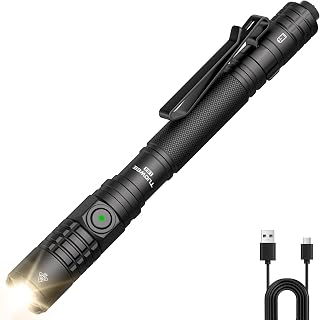
Understanding Lumens Versus Usable Brightness
The most common trap buyers fall into is chasing the highest lumen count possible without considering how that light is actually used. A pocket-sized light boasting thousands of lumens is undeniably impressive, but that peak output is typically a temporary burst mode that the device can only sustain for a brief period before generating excessive heat. In everyday scenarios, you will spend most of your time operating in much lower modes—ranging from a few dozen to a few hundred lumens—which offer more than enough illumination for tasks like finding keys, navigating a dark hallway, or checking a fuse box. Prioritize a flashlight that offers a well-spaced range of lower outputs rather than fixating solely on the maximum turbo rating.
Battery Chemistry and Built-In Versus Removable Cells
Modern high output lights rely heavily on lithium-ion chemistry, most notably standard sizes like 18650 and 21700 cells, which provide the high discharge currents necessary to drive powerful LEDs. When evaluating power systems, you must decide between models with built-in USB-C charging ports and those that require removing the battery to charge it externally. Built-in charging offers unmatched convenience for daily top-ups without needing extra gear, while removable batteries allow you to carry spare cells for extended trips and ensure the light remains functional long-term even if the internal battery eventually degrades. Avoid proprietary batteries whenever possible, as they lock you into a single manufacturer for replacements and limit your long-term flexibility.
Thermal Management and Sustained Output
Physics dictates that high power creates heat, and physics is especially unforgiving inside the confined aluminum body of an everyday carry flashlight. Advanced lights feature active or passive thermal regulation—often called step-down technology—that automatically reduces brightness when internal temperatures climb too high to protect the LED and battery. A poorly designed light will plummet from high output to an unusable dim glow within seconds, while a well-engineered model will maintain a stable, higher sustained output without scorching your hand. Look for reviews or manufacturer specs that detail the sustained output curve rather than just the initial burst performance.
User Interface and Switch Types
How you control your flashlight is just as important as how bright it gets. Tailcap switches are generally preferred for tactical or straightforward on-off applications because they allow for secure cigar grips and prevent accidental activation in a pocket. Side switches, on the other hand, are often more ergonomic for everyday grip styles and make it easier to cycle through multiple brightness levels. Additionally, examine the user interface software: some lights feature simple stepped modes that cycle through low, medium, and high, while others utilize smooth ramping interfaces that let you precisely dial in your preferred illumination level. Ensure the UI allows quick access to moonlight mode or turbo directly from off so you are never caught fumbling in an emergency.
Beam Profiles: Flood Versus Throw
The internal reflector or total internal reflection (TIR) optic dictates how the light is distributed across your field of view. A flood-oriented beam profile spreads light out widely, creating a smooth wall of illumination that is ideal for close-up tasks, indoor use, and general walking. Conversely, a throw-oriented profile uses a deep reflector to focus the beam into a tight, intense hotspot that pierces the darkness over long distances, making it better for outdoor spotting. For a true everyday carry tool, a balanced beam with a decent hotspot and a wide spill offers the greatest versatility across diverse environments.
Avoiding Pocketability and Sizing Mistakes
No matter how powerful or feature-rich a flashlight is, it serves zero purpose if you leave it at home because it is too bulky to carry comfortably. Consider the physical dimensions, weight, and clip design before purchasing. A light with a wide head might create an awkward bulge in your pocket, while a flimsy pocket clip can result in losing an expensive piece of gear during active movement. Look for deep-carry clips that allow the light to sit flush inside your pocket, and evaluate whether the knurling or body texturing provides a secure grip without aggressively tearing up your clothing fabric over time.
Related Guides
If you are ready to compare specific models based on these criteria, take a look at our comprehensive best high lumen edc flashlights with rechargeable batteries roundup to see how top contenders perform in real-world testing.
FAQ
Do I really need thousands of lumens for everyday carry tasks?
No, most daily tasks like walking at night or reading require fewer than one hundred lumens. High lumens are primarily useful for temporarily illuminating large areas, signaling, or spotting distant objects outdoors.
Can I use standard alkaline batteries in a high lumen rechargeable flashlight?
No, standard alkaline batteries cannot deliver the high electrical current required by powerful LEDs and may leak or rupture. You must use the specific rechargeable lithium-ion cells recommended by the manufacturer.
Why does my flashlight automatically dim after a few minutes of use?
This is a safety feature called thermal step-down, which prevents the internal components and battery from overheating. High-output LEDs generate intense heat, and the light lowers its brightness to protect itself from damage.
Are built-in USB-C charging ports waterproof?
Many modern lights feature waterproof USB-C ports with internal sealing or rubber port covers that maintain ingress protection ratings. However, you must ensure the cover is fully seated before exposing the light to heavy moisture or submersion.


