Key takeaways
What's inside
- Understanding PSI and GPM: The Cleaning Power Equation
- Induction Versus Universal Motors: Durability and Lifespan
- Hose Quality, Reel Design, and Reach
- Quick-Connect Nozzle Tips and Spray Patterns
- Water Inlet Filtration and Thermal Relief Protection
- Matching the Machine to Your Typical Cleaning Tasks
- When to Spend More Versus When to Save
- Related Guides
- FAQ
- Related Guides
Shopping for an electric pressure washer can feel overwhelming when every manufacturer boasts massive PSI and GPM numbers. In reality, most consumer models operate within a reliable threshold designed for typical residential chores like washing vehicles, clearing patios, and refreshing siding. Understanding how these machines actually deliver power will save you from buying an underpowered unit or overspending on commercial-grade features you do not need.
- Understanding PSI and GPM: The Cleaning Power Equation
- Induction Versus Universal Motors: Durability and Lifespan
- Hose Quality, Reel Design, and Reach
- Quick-Connect Nozzle Tips and Spray Patterns
- Water Inlet Filtration and Thermal Relief Protection
- Matching the Machine to Your Typical Cleaning Tasks
- When to Spend More Versus When to Save
- Related Guides
- FAQ
- Related Guides
This guide cuts through the marketing hype to focus on the performance metrics that genuinely impact your cleaning efficiency. By evaluating your specific cleaning projects, motor types, and water flow dynamics, you can select a reliable machine built to last. Whether you are upgrading your cleaning arsenal for 2026 or buying your first pressure washer, knowing what specifications matter ensures you get the right tool for the job.
As an Amazon Associate we earn from qualifying purchases at no extra cost to you. Product prices and availability are accurate as of the date shown and are subject to change.
Understanding PSI and GPM: The Cleaning Power Equation
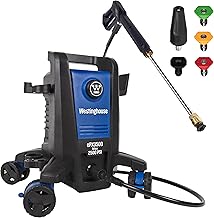
When evaluating electric models, buyers often fixate entirely on Pounds per Square Inch (PSI), assuming higher is always better. However, PSI only measures water pressure or how hard the water hits the surface. Gallons Per Minute (GPM), which measures water volume, is equally critical because volume is what actually rinses away loosened dirt and soap. Multiplying PSI by GPM gives you your Cleaning Units, a much more accurate metric for comparing overall performance.
Electric pressure washers typically range from a modest PSI for delicate surfaces to higher thresholds for stubborn grime. Because standard household electrical outlets limit how much power an electric motor can draw, electric units generally top out in flow volume compared to gas engines. Focus on finding a balanced ratio rather than chasing the highest single number on the box.
Induction Versus Universal Motors: Durability and Lifespan
The motor is the heart of any electric pressure washer, and manufacturers generally use one of two types: universal or induction. Universal motors are lighter, louder, and found in entry-level machines. They generate high RPMs through carbon brushes that eventually wear down, making these units ideal for occasional weekend warriors who use the machine a few times a year.
Induction motors, on the other hand, are heavier, quieter, and operate at lower RPMs without brushes. They run cooler and last significantly longer, making them the preferred choice for frequent users. If you plan to wash multiple vehicles every weekend or tackle massive patio cleaning projects regularly, investing in an induction motor pays off in long-term reliability and less overall maintenance.
Hose Quality, Reel Design, and Reach
Nothing frustrates a user faster than a stiff, kinky high-pressure hose that fights you every time you move. Cheap plastic hoses curl up and retain memory loops, while flexible rubber or steel-braided hoses lay flat and move smoothly across driveways. When choosing a model, pay close attention to the hose material and whether the unit features a functional hose reel.
Additionally, consider your power cord length and overall reach. An integrated GFCI plug is mandatory for safety, but a short power cord combined with a short high-pressure hose will force you to constantly drag extension cords and move the heavy unit. Look for generous reach specifications or plan to invest in compatible, high-quality extension hoses.
Quick-Connect Nozzle Tips and Spray Patterns
The nozzle tip dictates how the pressurized water is delivered to your cleaning surface. Most quality electric pressure washers come with a set of interchangeable quick-connect nozzles ranging from zero degrees to wide fan patterns, along with a dedicated soap nozzle. Using the wrong tip can easily damage wooden decks, peel car paint, or fail to clean concrete effectively.
A zero-degree tip concentrates all water into a razor-thin, highly destructive stream that should rarely be used around the home. Wide spray tips distribute the force safely across a broader area, making them perfect for rinsing vehicles and siding. Ensure the unit you choose stores these tips securely on the body so you do not lose them between uses.
Water Inlet Filtration and Thermal Relief Protection
Protecting the internal pump from debris and overheating is essential for longevity. Most pressure washers include a small mesh filter inside the water inlet connector. Inspecting and cleaning this filter regularly prevents microscopic sediment from scoring the brass or aluminum pump head, which leads to pressure loss and leaks.
Thermal relief valves are another crucial safety feature to look for in specifications. When you pull the trigger, water flows through the pump to keep it cool. If you leave the motor running while the trigger is released, the trapped water can rapidly overheat and destroy the pump seals. A thermal relief valve automatically vents hot water to protect the internal components, saving your investment from accidental user error.
Matching the Machine to Your Typical Cleaning Tasks
Before making a purchase, audit the exact jobs you intend to perform. If your primary goals are washing a compact sedan, cleaning patio furniture, and rinsing dust off a small balcony, a lightweight, entry-level machine is more than sufficient. Trying to force a small unit to clean a massive concrete driveway will only lead to frustration and premature motor burnout.
Conversely, buying a heavy-duty, commercial-style electric unit just to wash your bicycle once a month creates unnecessary storage headaches and heavy lifting. Assess your heaviest expected chore, add a small margin of capability for safety, and select the machine that fits that specific operational sweet spot.
When to Spend More Versus When to Save
Price points vary dramatically in the electric pressure washer market, and higher costs do not always translate to better cleaning results. You should spend more if you require an induction motor, a durable brass pump head, commercial-grade hoses, and robust frame construction that withstands being tossed into a truck bed.
You can safely save money if you only need a seasonal tool for light duties, do not mind a universal motor that creates more noise, and are willing to carefully manage a standard plastic hose. Knowing your usage frequency prevents you from overpaying for features you will never utilize.
Related Guides
To explore specific product recommendations and market options, check out our comprehensive top consumer picks for everyday cleaning, compare heavy-duty options in our guide to professional-grade units, or browse alternative selections featured in our expert-tested lineup.
FAQ
Can I use an extension cord with an electric pressure washer?
Using an extension cord is generally discouraged unless it is a heavy-gauge cord rated specifically for outdoor heavy-duty appliances. Standard household cords can cause voltage drops, leading to motor overheating and premature failure.
Do electric pressure washers require a detergent tank?
An onboard detergent tank is convenient for applying soap quickly, but it is not strictly necessary. Many models feature a siphon tube that draws soap directly from an external bucket, which is often easier to flush and clean after use.
Can I connect an electric pressure washer to a rain barrel?
Most electric pressure washers require pressurized water from a household spigot or utility faucet to feed the pump properly. Pulling water from a non-pressurized source like a rain barrel can starve the pump of water and cause immediate cavitation damage.
How do I store my pressure washer for the winter?
To prevent freezing damage, you must completely drain all remaining water from the pump and hoses before storing the unit in a cold garage or shed. Using a pump saver or antifreeze formula helps coat the internal seals and keeps the components lubricated during the off-season.