
Key takeaways
- Finding the right drinkware set for your kitchen often feels deceptively simple until you are standing in front of a sprawling aisle or scrolling through endless online catalogs. Whether you are stocking a newly renovated kitchen in 2026 or simply…
What's inside
Finding the right drinkware set for your kitchen often feels deceptively simple until you are standing in front of a sprawling aisle or scrolling through endless online catalogs. Whether you are stocking a newly renovated kitchen in 2026 or simply replacing a mismatched collection of promotional mugs and chipped tumblers, the choices can quickly become overwhelming. Beyond basic aesthetics, a great set of glasses must balance daily durability, ergonomic comfort, and functional versatility.
Too many buyers focus entirely on initial visual appeal, only to realize later that the glasses are too top-heavy, too tall for standard dishwasher racks, or prone to cracking under thermal shock. This guide cuts through the marketing noise to focus on the objective specifications, material differences, and practical considerations that genuinely impact your everyday drinking experience.
As an Amazon Associate we earn from qualifying purchases at no extra cost to you. Product prices and availability are accurate as of the date shown and are subject to change.
Material Matters: Glass, Crystal, and Tritan Copolyester
The foundation of any drinkware set is the material composition, which directly dictates weight, clarity, and resilience. Standard soda-lime glass is the most common and budget-friendly option, offering a neutral taste profile and decent everyday durability. However, it tends to be thicker at the rim to compensate for lower impact resistance.
If you prefer a lighter, more refined feel, lead-free crystal is worth considering. Contrary to popular belief, modern crystal substitutes lead oxide with minerals like barium or zinc, achieving exceptional brilliance and a thinner rim without heavy toxicity concerns. On the other hand, if you have an active outdoor space, young children, or simply want unbreakable peace of mind, high-grade Tritan copolyester mimics the clarity of glass while offering shatterproof performance.
Evaluating Daily Utility Versus Formal Entertaining
Before purchasing a massive twelve-piece or twenty-four-piece set, carefully evaluate your lifestyle habits. If your household primarily drinks water, iced tea, and casual weeknight beverages, prioritize a sturdy, comfortable highball or tumbler shape. Overly ornate, stemmed glassware often sits gathering dust because it requires hand-washing and delicate storage.
Conversely, if you regularly host dinner parties or craft cocktail evenings, a tiered approach works best. Look for versatile hybrid designs that can comfortably transition from a casual juice glass at breakfast to an Old Fashioned glass during evening gatherings. Purchasing matching sets of core tumblers alongside a smaller set of specialized stemware prevents your cabinets from becoming overcrowded with single-use vessels.
Dimensions, Weight, and Ergonomic Balance
Specifications on a box rarely convey how a glass actually feels in the hand. Ergonomics matter immensely because you interact with drinkware physically multiple times a day. A heavy, weighted base provides stability and prevents accidental tipping, which is particularly useful for tall highball glasses filled with ice.
Pay close attention to the diameter of the glass. Wider tumblers can be difficult to grip securely for individuals with smaller hands, leading to drops. Conversely, narrow cylinders are easier to hold but can be notoriously difficult to clean properly with a standard sponge or dish brush. Aim for a balanced center of gravity where the weight is evenly distributed rather than heavily concentrated at the very bottom or top.
Dishwasher and Cabinet Compatibility
One of the most common post-purchase regrets involves spatial conflicts between new drinkware and existing household appliances. Always measure the interior height of your dishwasher’s top rack before buying tall pilsner or water glasses. If a glass is too tall, it will either block the rotating spray arm or force you to place it precariously on the bottom rack where intense heat can cause thermal fracturing.
Similarly, check your kitchen cabinet clearance. Modern cabinets often feature fixed shelving heights that cannot accommodate oversized stemware or extra-tall tumblers upright. If your storage space is vertical-limited, stacking glasses becomes necessary, which brings us to the importance of specialized stackable rims and reinforced sidewalls.
Rim Finish and the Drinking Experience
The rim of a glass has a surprisingly profound impact on flavor perception and drinking comfort. Cheaply manufactured glasses often feature a rolled, thickened bead of glass around the rim, which can feel bulky against the lips and interfere with the smooth flow of liquid.
Higher-end manufacturers utilize cold-cut and laser-polished rims, creating an ultra-thin, seamless edge. This minimalist approach allows the beverage to hit your palate naturally without any physical barrier. While thin rims can theoretically be more vulnerable to chipping, modern tempering processes have made contemporary thin-rim glass remarkably resilient against minor bumps.
Thermal Shock and Temperature Retention
If you enjoy switching between piping hot beverages and ice-cold refreshments, thermal shock resistance is a critical spec to verify. Standard glass expands rapidly when exposed to sudden temperature changes, frequently resulting in hairline cracks or complete shattering.
Look for terms like tempered glass or borosilicate glass if you plan to pour boiling water over ice or use your drinkware in extreme temperature environments. Tempered glass undergoes a controlled thermal or chemical cooling process that places outer surfaces in compression and inner surfaces in tension, vastly increasing its ability to handle sudden thermal swings without structural failure.
Related Guides
To round out your kitchen organization and home goods upgrade projects, explore our other expert roundups. If you are replacing your glassware, check out the top picks in our drinkware sets guide. For sewing enthusiasts looking to upgrade their precision equipment, our sewing machine presser feet sets article offers comprehensive testing insights. Finally, if you enjoy classic table games during family nights, take a look at our recommendations in the cribbage boards and peg sets review.
FAQ
How many glasses should a standard household drinkware set include?
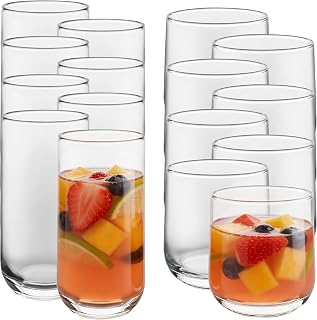
A standard starter set typically includes eight to twelve pieces, usually split evenly between tall highball glasses and shorter double old-fashioned tumblers. This provides enough capacity for daily family use and small casual gatherings without overwhelming your cabinet space.
Is it safe to put crystal drinkware in the dishwasher?
Most modern lead-free crystal is technically dishwasher-safe, but hand-washing is still strongly recommended to prevent clouding, scratching, and chipping from rack vibrations. If you must use a dishwasher, always select a gentle, low-temperature cycle with mild detergent.
What causes cloudy film to form on glass drinkware?
Cloudiness is usually caused by mineral buildup from hard water or etching from dishwasher detergents that are too abrasive combined with excessively high water temperatures. Using a rinse aid and lowering the wash temperature can significantly reduce this chemical wear.
Are heavier glasses always more durable than lightweight ones?
Not necessarily. While thick, heavy glasses resist blunt impact well, they are often more susceptible to thermal shock because thick glass retains heat unevenly. High-durability lightweight glasses made of tempered glass or high-grade polymers can easily outperform heavy traditional glassware.


