Key takeaways
- Wipe the starting zone with a dry microfiber. Dust breaks the vacuum seal and causes mid-pane stalls.
- Attach the safety tether to a fixed indoor anchor, not the window handle. Test the knot with a firm pull. The rope should have slack but never touch the robot path.
- Connect power, wait for the suction tone, then tug lightly before letting go. If it shifts, re-seat the pad.
- For frameless glass, enable frameless mode or place the unit at least 20 cm from the edge. Never start a frame-only model on frameless glass.
- Spray lightly. One mist per 0.5 sq m is enough. If water beads run down, pause and wring or swap pads.
- Stay in the room for exterior cleans. If power cuts, the UPS holds suction for 20 to 30 minutes, but heat and wind shorten that window.
What's inside
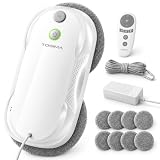
The best window cleaning robot for most homes in 2026 is the ECOVACS WINBOT W2 Omni for large and tall glass, while the HOBOT-S6 Pro is better for frameless panes and faster daily touch-ups, and the Gladwell Gecko Robot Window Cleaner makes sense as a budget robotic window cleaner for small framed windows and glass doors.
That split exists because suction hold, edge coverage, and safety tethering behave very differently on framed versus frameless glass. A square-track robot with strong edge sensors cleans corners better but needs a frame or bumper detection to avoid driving off. A round or compact pad-type robot turns tighter on patio doors but leaves a wider uncleaned border.
As an Amazon Associate we earn from qualifying purchases at no extra cost to you.



What actually decides performance on real windows
Suction is not just power. Most current models use 2,500 to 4,000 Pa of suction combined with a vacuum seal and microfiber pads. What matters is sustained hold when the pad gets damp, when the glass is dusty, and when the power cord tugs at the top of a tall pane. Models with a portable power station, such as the WINBOT W2 Omni, keep suction and movement stable because the robot carries no heavy battery and draws power through a short cable from the base.
Edge cleaning depends on shape and navigation. Square-front robots reach 5 to 15 mm closer to frames than round robots in corner tests reported by manufacturers. Round robots compensate with rotating pads that scrub well in the center but typically leave a 30 to 50 mm border. For French panes, shower glass, and divided lights, smaller footprints win. For floor-to-ceiling glass, straight-line path planning and automatic water spray matter more than shape.
Safety tethers are mandatory for exterior use above ground floor. Look for three layers: vacuum loss detection with auto-return, a physical safety rope rated for at least 3 times the robot weight, and battery backup that holds suction for 20 to 30 minutes after power loss. Frameless glass adds a fourth requirement: frameless edge detection or a manual boundary setting, otherwise the robot can overrun the edge.
Best window cleaning robot comparison in 2026
This comparison focuses on the specs that change buying decisions: weight on glass, minimum pane size, frameless support, power and tether length, and water handling.
| Model | Robot weight | Size / shape | Min. pane size | Frameless support | Power / safety system | Water tank / spray |
|---|---|---|---|---|---|---|
| ECOVACS WINBOT W2 Omni | 1.44 kg | 243 x 143 x 72 mm, wide track | ~500 x 500 mm | Yes, with edge detection | Base station with 110-min battery, 1.1 m robot cable + 1.9 m base cable, safety rope included | Auto spray from base, 60 ml onboard |
| HOBOT-S6 Pro | 1.25 kg | 234 x 122 x 72 mm, square front | ~400 x 400 mm | Yes, laser edge control | 5 m power cord, 4.5 m safety rope, 20-min UPS hold | Dual ultrasonic spray, 80 ml tank |
| ECOVACS WINBOT MINI | 0.85 kg | 195 x 195 x 55 mm, compact square | ~350 x 350 mm | Limited, framed preferred | Rechargeable onboard, ~50 min runtime, safety rope included | 40 ml tank, manual pre-wet recommended |
| Mamibot W120-T | 0.95 kg | 220 x 220 x 65 mm, round pads | ~400 x 400 mm | No, framed windows only | 4 m power cord, safety rope, 20-min UPS hold | 80 ml tank, gravity feed |
| Gladwell Gecko Robot Window Cleaner | 0.90 kg | ~230 x 130 x 70 mm, low profile | ~450 x 450 mm | No, framed windows only | 4 m power cord, safety tether, 30-min UPS hold | Manual spray, no auto tank on base version |
General market ranges in 2026: compact corded models like the Gladwell Gecko type sell for roughly $120 to $200, mid-range spray models with edge sensing for $250 to $400, and station-based systems like the W2 Omni for $400 to $600 depending on bundles and pads.
Which one to buy for your situation
Tall windows, second-story glass, and large sliders: WINBOT W2 Omni
Choose a base-station robotic window cleaner when the drop risk is high and outlets are far from the glass. The W2 Omni solves two ownership problems: it eliminates a long power cord dragging across the pane, and its winch-like tether plus cord management reduces snagging on tall curtains or handles. It is slower per square meter than HOBOT models, but path overlap is tighter at edges, which matters on 2 to 3 meter high panes where re-running is inconvenient.
Frameless balcony panels, office glass, and mirrors: HOBOT-S6 Pro
Frameless panes need active edge retention, not just suction. The S6 Pro uses distance sensing to slow before the edge rather than bumping a frame. It also sprays finer mist from two nozzles, which prevents drips that cause the robot to slip on frameless shower glass. Expect a 10 to 20 mm uncleaned border; wipe that final strip by hand rather than running a second cycle.
Small framed windows, French doors, and apartments: Gladwell Gecko or WINBOT MINI
The Gladwell Gecko Robot Window Cleaner is a simple suction crawler with interchangeable pads and remote control. It does not map rooms or auto-spray like premium models, so you must pre-mist the glass and start it 15 cm from the frame. That is acceptable for a 1 x 1.5 m bedroom window or interior glass door. Pick the WINBOT MINI if you want cordless convenience for interior glass, mirrors, and tile; pick the Gecko type if you want the lowest consumable cost and easiest pad washing.
Decision matrix
| Your situation | Prioritize | Best fit |
|---|---|---|
| Exterior 2nd floor, large panes over 2 m high | Battery base, long tether, edge detection | WINBOT W2 Omni |
| Frameless railing or frameless office partition | Laser edge control, fine spray | HOBOT-S6 Pro |
| Rental with framed sliders and small windows | Low weight, low price, washable pads | Gladwell Gecko Robot Window Cleaner |
| Many mirrors, tile, and interior glass doors | Compact size, cordless interior use | WINBOT MINI |
| Dusty exterior cleaned monthly | Large tank, strong scrub pads | HOBOT-S6 Pro or W2 Omni |
How much time and solution does it really take
Use this simple coverage calculation before you buy. Most robots clean 1 square meter in 3 to 5 minutes including edge passes and turns.
Example: a standard sliding door with two 0.9 x 2.0 m panes equals 3.6 sq m total, both sides equals 7.2 sq m. At 4 minutes per sq m, one full inside-outside clean takes about 29 minutes plus 5 minutes to move the tether, change pads, and refill spray. A three-bedroom house with 12 sq m of glass takes roughly 50 to 60 minutes per side.
Solution use is low: 60 to 80 ml covers 10 to 15 sq m when using auto-spray. Over-wetting is the most common cause of slips and streaks. Use distilled water with a few drops of window concentrate or the brand solution; tap water leaves mineral arcs that force a second pass.
Setup and safety checklist that prevents falls
Most drops come from setup errors, not motor failure. Follow this order because each step protects suction:
- Wipe the starting zone with a dry microfiber. Dust breaks the vacuum seal and causes mid-pane stalls.
- Attach the safety tether to a fixed indoor anchor, not the window handle. Test the knot with a firm pull. The rope should have slack but never touch the robot path.
- Connect power, wait for the suction tone, then tug lightly before letting go. If it shifts, re-seat the pad.
- For frameless glass, enable frameless mode or place the unit at least 20 cm from the edge. Never start a frame-only model on frameless glass.
- Spray lightly. One mist per 0.5 sq m is enough. If water beads run down, pause and wring or swap pads.
- Stay in the room for exterior cleans. If power cuts, the UPS holds suction for 20 to 30 minutes, but heat and wind shorten that window.
Durability and ownership realities
Pads wear first. Microfiber cleaning pads glaze after 20 to 30 uses if washed with fabric softener or dried on high heat. Keep two sets and rotate: one in use, one air-drying. Wash in warm water with mild detergent only. Replace when the edge frays or the robot starts spinning without moving forward.
Spray nozzles clog second. Hard water and concentrated soap crystallize in ultrasonic nozzles on models like the HOBOT-S6 Pro and Mamibot W120-T. Run 10 ml of distilled water through the tank after dusty exterior jobs and empty the tank before storage.
Cords and tethers fray at anchors. Inspect the safety rope monthly for glazing or flat spots. Do not wrap the power cord tightly around the robot; loose loops prevent internal wire fatigue.
Common mistakes: starting on hot sunlit glass, which evaporates spray and leaves haze; using paper towels to pre-clean, which leaves lint under the pads; and running exterior jobs in wind above 25 km/h, which increases tether load and dust streaking. Clean early morning or late afternoon, dry-clean dusty panes first with a dry pad run, then do a wet pass.
Frequently asked follow-ups
Can a robotic window cleaner clean framed versus frameless panes equally well?
No. Framed windows are safer and cleaner at edges because the robot can bump and turn. Frameless panes require electronic edge detection and leave a wider safety margin. If most of your glass is frameless, avoid basic round models without a frameless mode.
Is the Gladwell Gecko Robot Window Cleaner good enough?
For small framed windows and interior doors, yes, provided you accept manual spraying and remote steering. It cleans center glass well but needs help at corners and struggles on heavily soiled exterior glass where auto-spray and mapping save time.
Do they work on double-pane, tinted, or coated glass?
Generally yes on sealed double-pane and filmed tint, but avoid abrasive pads and ammonia cleaners on low-E coatings and aftermarket tint. Check the window manufacturer guidance first, use the softest pad, and test a corner before a full cycle.