
Key takeaways
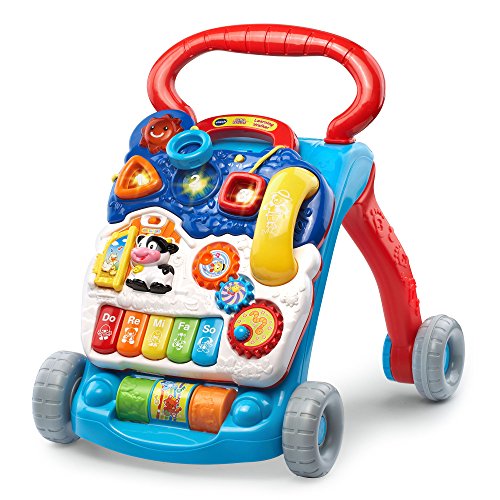
- VTech Sit-to-Stand Learning Walker. A widely sold two-in-one that works first as a sit-down activity panel and then as a push walker. The maker describes adjustable wheel resistance on some versions, which is a useful feature when you want slower movement.
- Hape Wonder Walker. A wooden push toy with a cleaner, simpler look and no electronics. Reviewers like the sturdy feel, while noting there are fewer features to engage the baby.
- Radio Flyer Classic Walker Wagon. A wagon-style push toy with a bed for toys that adds weight and stability. The maker presents it as a toddler and baby push toy that doubles as a play wagon.
For most families the safest answer to “best baby walker” is not a wheeled seated walker at all: a stationary activity center suits babies who like to bounce and play upright, a push-along walker suits a baby who is already pulling up and cruising, and a play yard suits parents who need a safe place to put the baby down. The American Academy of Pediatrics has called for a ban on the manufacture and sale of baby walkers with wheels, so this guide ranks the safer categories first and explains what to look for in each.
Our top picks


As an Amazon Associate we earn from qualifying purchases at no extra cost to you.
Why the Seated Wheeled Walker Is Controversial
The AAP states that walkers provide no developmental benefit and may delay walking, and that injuries happen even with adult supervision because a baby in a walker can travel more than three feet in a second. Reported hazards include stair falls, reaching hot or heavy items from a higher height, drowning risk near water, and poisoning from items previously out of reach. Current safety standards require features such as brakes or designs that stop a walker from passing through a standard doorway, but the AAP notes that these rules do not remove the core risk. For this reason the AAP suggests alternatives such as stationary activity centers, play yards and high chairs. If you are considering a wheeled seated walker, talk to your pediatrician first.
Categories at a Glance
| Category | Best for | How it works | Limits |
|---|---|---|---|
| Stationary activity center (Evenflo ExerSaucer, Skip Hop Explore and More) | Babies who can hold their head up and enjoy upright play | Seat rotates or bounces in place with a toy tray; no wheels | Time in the seat should be limited; larger footprint; not a walking tool |
| Bouncing activity jumper (Fisher-Price Jumperoo style) | Babies who like to bounce and spin | Seat on springs inside a fixed frame with toys | Bulky, needs floor space, babies outgrow it by height or weight limits |
| Push-along walker (VTech Sit-to-Stand, Hape Wonder Walker, Radio Flyer Classic Walker Wagon) | Babies already pulling up and cruising | Baby stands behind and pushes it; some have adjustable resistance | Can still tip or slide on slippery floors; needs supervision |
| Play yard (Graco Pack n Play, Baby Bjorn Playpen style) | Parents who need a safe, enclosed play space | Mesh-sided pen with a firm floor | Not a developmental tool; babies outgrow it |
| Floor play mat with gym | Newborns and early tummy-time | Soft mat and hanging toys | Little help for standing or cruising stages |
Stationary Activity Centers
A stationary activity center keeps the baby in one spot while giving them a seat, a toy tray and sometimes a spinning base. Evenflo’s ExerSaucer line is a well-known example, and Skip Hop’s Explore and More activity centers are another frequently mentioned option. The makers list age or developmental ranges and weight limits, which is the first thing to read: most are intended for babies who hold their head up steadily and sit with some support, and they are outgrown when the baby reaches the stated weight or height or starts to try to climb out. Reviewers commonly advise limiting time in these seats and not using them as a place to leave a baby unattended.
Look for a stable, wide base, a seat that adjusts as the baby grows, easy-to-wipe fabric, and toys that can be removed or reconfigured. Folding or compact designs are available, though many models still take up a good amount of floor space, so measure before buying. Battery-powered sounds and lights are common. They can be entertaining but also loud, so check whether the volume can be reduced or the toys detached.
Bouncing Activity Jumpers
Fisher-Price’s Jumperoo-style jumpers combine a spring-supported seat with an array of toys. Parents often find that babies enjoy the bouncing. As with other activity seats, they are not intended for long periods of use. The maker states a minimum age or developmental stage, which usually relates to head and neck control, and a maximum weight. A stable frame, a seat with leg openings that fit comfortably, and surfaces that clean easily are the main points to consider. Jumpers typically have a larger footprint than simple activity centers.
Push-Along Walkers for Cruising Babies
When a baby is already pulling up and taking supported steps along furniture, a push-along walker can give something sturdy to hold. The baby stands behind the toy rather than sitting inside it, which the AAP position makes a different matter from the seated wheeled design. Still, these toys can slide faster than a baby can manage on smooth floors, so supervision and a rug or carpet help.
- VTech Sit-to-Stand Learning Walker. A widely sold two-in-one that works first as a sit-down activity panel and then as a push walker. The maker describes adjustable wheel resistance on some versions, which is a useful feature when you want slower movement.
- Hape Wonder Walker. A wooden push toy with a cleaner, simpler look and no electronics. Reviewers like the sturdy feel, while noting there are fewer features to engage the baby.
- Radio Flyer Classic Walker Wagon. A wagon-style push toy with a bed for toys that adds weight and stability. The maker presents it as a toddler and baby push toy that doubles as a play wagon.
Whichever you choose, read the age range and weight limit the maker states, consider whether the wheels have adjustable resistance, and test stability on your own floors. If the toy tips or slides quickly, it may not suit your home.
Play Yards as a Safe Alternative
For parents whose goal is simply to put the baby somewhere safe while cooking or answering the door, a play yard is a more direct fit. Graco’s Pack n Play line is among the most commonly seen, and other makers offer mesh-sided pens with a firm floor and sometimes a changer or bassinet attachment. Follow the maker’s instructions for assembly and use, never add extra padding or mattresses beyond what the maker supplies, and remember that the maker sets height and weight limits. Pens are not a place for long unattended periods, but they remove the stair and reach hazards associated with wheeled walkers.
Safety Checklist Before You Buy
- Read the maker’s stated age, weight and height limits and treat them as hard limits.
- Look for compliance with current juvenile product safety standards in your country, as stated by the maker.
- Choose a model with a wide base and non-tipping design.
- Block stairs with a hardware-mounted gate, regardless of which product you use.
- Keep the baby away from hot items, cords, blind pulls and anything that can be pulled down.
- Limit time in any seat that holds the baby upright, and never leave the baby alone in it.
- Check recall notices for any used product before using it.
- Talk with your pediatrician if you have questions about your baby’s development or when to start standing practice.
Budget Tiers
| Tier | What to expect | Trade-offs |
|---|---|---|
| Budget | Simple push walkers, basic activity centers, plain play yards | Fewer features, plainer fabric, lighter plastics |
| Mid-range | VTech and Evenflo style activity centers, Fisher-Price jumpers, sturdier push toys | More toys and adjustable parts, but larger and noisier |
| Premium | Design-led activity centers, solid-wood push toys, premium play yards | Higher cost, not necessarily more developmental value |
Pick X If… Decision Table
| If you | Pick |
|---|---|
| Have a baby who sits with support and loves upright play | Stationary activity center such as an Evenflo ExerSaucer or Skip Hop Explore and More |
| Have a bouncy baby and plenty of space | Fisher-Price jumper |
| Have a baby who is pulling up and cruising | VTech Sit-to-Stand or Hape Wonder Walker |
| Want a simple, low-tech toy | Hape Wonder Walker |
| Need a safe place to set the baby down | Play yard |
| Live in a home with stairs and hard floors | Skip the wheeled walker and use a stationary option or play yard |
Alternatives to Any Walker
- Tummy time and floor play. Pediatric guidance generally encourages supervised floor time to build strength for rolling, crawling and standing.
- Sturdy furniture to cruise along. Low, stable furniture with soft corners and cushions underneath is a free option.
- Baby-proofed floor space. A cleared, gated room with a play mat lets the baby practice at their own pace.
- Holding hands. A caregiver’s hands are still the most adjustable support for early steps.
Frequently Asked Questions
Do baby walkers help babies walk sooner?
The AAP states that walkers do not help babies walk and may delay walking. Babies learn to walk by crawling, pulling up and cruising on their own. Floor play is generally seen as more useful than a seated walker.
What is the difference between a walker and an activity center?
A walker has wheels and lets the baby move around the room while seated. An activity center stays in one spot, with a seat that may spin or bounce. The AAP raises serious concerns about wheeled walkers and suggests stationary centers as the alternative.
At what age can a baby use an activity center?
Makers state minimum ages or developmental stages, usually relating to steady head control and the ability to sit with some support. Read the manual for the specific model. If you are unsure whether your baby is ready, ask your pediatrician.
How long can a baby stay in a stationary activity center?
Makers and pediatric sources suggest limiting time in any seat that holds a baby upright, and the baby should always be supervised. Follow the time guidance in the manual, and give plenty of floor time each day.
Are push walkers safe?
They are generally viewed as a lower-risk choice than seated wheeled walkers because the baby stands behind the toy, but they can still slide or tip. Use them on a suitable surface with an adult nearby, and choose a model with a stable base and adjustable resistance if available.
Is a play yard a good substitute?
A play yard provides a safe enclosed space and is a common alternative recommended by pediatric sources. Use it according to the maker’s instructions and weight limits. It is not a replacement for time spent on the floor with a caregiver.
FAQ
Do baby walkers help babies walk sooner?
What is the difference between a walker and an activity center?
At what age can a baby use an activity center?
How long can a baby stay in a stationary activity center?
Are push walkers safe?
Is a play yard a good substitute?
More from Amazon
Programs that pair well with the guide above. Offers and eligibility are set by Amazon and may change.
Free shipping on eligible items, Prime Video and more. Eligible new members can start with a free trial.
Start a Prime free trialAudiobooks and podcasts to listen to on the go. Eligible new members can start with a free trial.
Try Audible freeAd-free music streaming. Eligible new subscribers can start with a free trial.
Try Music Unlimited freeA free business account with business pricing and bulk-buying tools for work, shop or home office.
Create a business accountAs an Amazon Associate we earn from qualifying purchases.







