Key takeaways
- A standard 750-milliliter bottle is roughly 3 inches in diameter and 10–13 inches tall.
- A wine bottle needs approximately 4 inches of width and may need to lie flat if the shelf is low.
- A cocktail shaker, ice bucket, or decanter can use as much horizontal space as two bottles.
- Allow at least 2 inches of clearance above bottles so they can be lifted out without tilting.
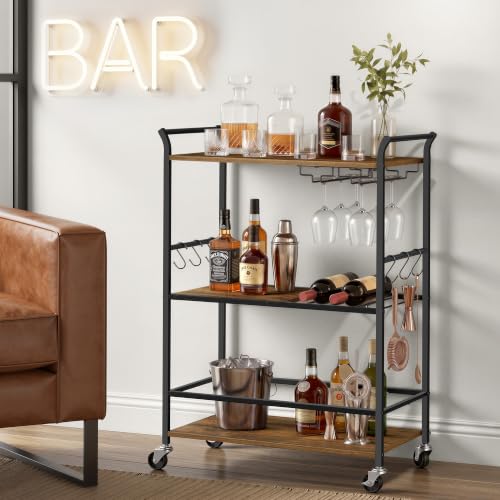
The best bar carts for home entertaining are the ones that match your available floor space, bottle capacity, and hosting habits: choose a compact two-tier cart for apartments, a locking-wheel metal cart for frequent parties, or a larger wood-and-metal trolley when you need glassware and serving space in one place.
Our top picks



As an Amazon Associate we earn from qualifying purchases at no extra cost to you. Ratings are shown as listed on Amazon.
Quick picks by room and hosting style
| Best for | Recommended cart type | Typical dimensions | Useful capacity | Expected market range |
|---|---|---|---|---|
| Small apartment or dining nook | Compact two-tier metal cart | 18–24 in. wide × 12–16 in. deep | 6–8 bottles plus mixers and glassware | $50–$130 |
| Weekly cocktails or dinner parties | Reinforced metal cart with raised edges | 24–30 in. wide × 16–20 in. deep | 10–14 bottles, tools, ice bucket, and glasses | $120–$300 |
| Large dining room or open-plan home | Wood-and-metal serving trolley | 30–38 in. wide × 18–22 in. deep | 14–20 bottles and extensive glassware | $250–$700 |
| Occasional entertaining on a budget | Utility cart with removable trays | 17–22 in. wide × 13–17 in. deep | 5–8 bottles and basic bar tools | $35–$100 |
Best bar carts for home entertaining
Best overall: a two-tier metal cart with a handle and locking casters
For most homes, this is the most useful configuration. A 24- to 30-inch-wide cart provides enough room for a spirits selection, mixers, an ice bucket, and everyday glassware without becoming difficult to park. Look for two shelves with raised lips, a dedicated handle, and four casters, with at least two casters locking.
Steel or aluminum frames are easier to clean than porous wood and generally cope better with condensation and occasional spills. A powder-coated finish also hides fingerprints and small scratches better than highly polished chrome. The trade-off is visual warmth: metal carts can look utilitarian unless you add a wood tray, linen napkins, or matching glassware.
Best for small spaces: a compact utility-style cart
A narrow cart measuring about 18 to 22 inches wide is easier to fit beside a sofa, against a kitchen wall, or beneath a window. IKEA’s NISSAFORS is a well-known example of this compact utility-cart format, while similar three-tier carts are sold in steel, bamboo, and plastic versions.
Its advantage is footprint rather than capacity. The top shelf is usually suitable for two or three bottles and a mixing glass; the lower shelves can hold mixers, bar towels, and unopened supplies. Before buying, measure both the storage position and the route to the entertaining area. A cart that fits beside a cabinet may still fail at a 28-inch doorway or a tight corner.
Best for a polished dining room: a wood-and-metal serving trolley
Wood shelves and a metal frame make a cart look more like furniture than equipment. This style suits formal dining rooms and homes where the cart remains visible between parties. It is also the better choice when you want a stable surface for decanters, serving bowls, and a small lamp or floral arrangement.
Choose sealed wood, veneer with a protective finish, or a removable tray that can be wiped independently. Unsealed wood absorbs colored spirits and sticky liqueurs, and repeated wet-glass marks can eventually leave rings. A wood-and-metal cart usually costs more and may weigh 20–40 pounds, so verify that the wheels can support both the cart and its load.
Best for frequent entertaining: a heavy-duty commercial-style trolley
If the cart moves between the kitchen, patio, and dining room every week, prioritize wheel quality and frame rigidity over decorative details. A commercial-style trolley typically has larger casters, a higher weight rating, and shelves that resist flexing when loaded with bottles.
Look for casters at least 2.5 inches in diameter, two locking wheels, and a published capacity of at least 40 pounds per shelf or 80 pounds overall. Larger wheels roll more easily over thresholds and grout lines. This style is less discreet in a living room, but it is safer and more practical for repeated use.
What to compare before buying
Dimensions and usable shelf area
External dimensions do not tell the whole story. A cart advertised as 30 inches wide may have only 27 inches of usable shelf space after the frame and raised edge are counted. Measure the inside length and depth of each shelf, then estimate the footprint of your largest items.
- A standard 750-milliliter bottle is roughly 3 inches in diameter and 10–13 inches tall.
- A wine bottle needs approximately 4 inches of width and may need to lie flat if the shelf is low.
- A cocktail shaker, ice bucket, or decanter can use as much horizontal space as two bottles.
- Allow at least 2 inches of clearance above bottles so they can be lifted out without tilting.
For a practical estimate, a 24-inch shelf rarely holds eight bottles in a useful arrangement once mixers and tools are included. Plan on four to six bottles per shelf if the cart is meant to remain easy to use.
Materials and liquid resistance
Powder-coated steel offers the best balance of durability, price, and spill resistance. Stainless steel is easier to keep bright but can show fingerprints. Solid wood feels substantial, although its finish requires more care. Tempered glass shelves create a lighter appearance but show smears and can be stressful around crowded parties.
Avoid untreated particleboard for a cart that will regularly carry wet glasses. Swollen shelf edges are difficult to repair, and replacement parts may not be available.
Wheels and stability
Small plastic casters are acceptable when a cart stays on smooth flooring. They become frustrating on thick rugs, uneven tile, and thresholds. Rubber or polyurethane wheels roll more quietly and provide better grip. Two locking casters are the minimum; four locks are useful if guests will lean lightly against the cart while serving themselves.
Test the handle height against your posture. A handle that is too low encourages lifting rather than pushing, while a very tall cart can feel unstable when turning. A broad wheelbase and a low bottom shelf improve stability more than decorative crossbars do.
Storage features
Raised shelf rails prevent bottles from sliding during movement. Stemware racks are convenient but reduce vertical clearance and can make the cart top-heavy. A drawer is useful for corkscrews, picks, coasters, and napkins, but it should have a stop so it cannot pull the cart forward when opened.
Removable trays are especially valuable: they let you carry prepared drinks to a table without moving the entire cart. Bottle dividers, a towel rail, and a lower shelf designed for an ice bucket are also more useful than built-in bottle holders that only fit one bottle shape.
Decision matrix: match the cart to your situation
| Your situation | Prioritize | Avoid | Best fit |
|---|---|---|---|
| Under 24 inches of available width | Narrow frame, raised rails, compact handle | Fixed stemware racks and deep shelves | Two-tier compact metal cart |
| First bar-cart purchase | Simple assembly, removable tray, washable shelves | Specialized bottle slots | Three-tier utility cart |
| Frequent parties | Large rubber wheels, locking casters, 80-pound overall rating | Small decorative casters | Heavy-duty metal trolley |
| Mostly wine and sparkling wine | Deep shelves and horizontal bottle storage | Shallow rails that only fit spirits | Wood-and-metal serving cart |
| Cart remains on display | Sealed wood, concealed drawer, coordinated finish | Bright utility styling | Furniture-style bar cart |
Assembly and ownership details that matter
Most home bar carts require 20 to 60 minutes of assembly. The main risk is not complexity but alignment: over-tightening one corner before the frame is square can make the wheels wobble. Loosely attach all bolts first, place the cart on a level floor, then tighten gradually in alternating corners. Install the locking casters on the side nearest the handle if the design allows it; this makes parking more predictable.
After assembly, load the heaviest bottles on the lowest shelf. Keep frequently used items between waist and chest height and reserve the top shelf for lighter glassware or unopened mixers. A fully loaded top shelf makes turns less stable and increases the chance of tipping.
Wipe spills promptly, especially sugary liqueurs and citrus juice. Use a damp cloth and mild detergent on metal, then dry the surface. Do not leave standing water on wood or in caster bearings. Check wheel screws every few months, and replace a caster if it begins dragging, squeaking continuously, or swiveling unevenly.
Common buying mistakes
- Choosing by bottle count alone: advertised capacity often excludes mixers, tools, and glassware.
- Ignoring doorway clearance: compare the cart’s diagonal width with the narrowest route to its storage position.
- Buying a top-heavy design: tall carts with tiny bases are less stable when pushed over thresholds.
- Assuming every shelf is waterproof: wood veneer and unfinished bamboo need prompt drying.
- Skipping wheel locks: a cart can move when someone reaches for a bottle, even on apparently level flooring.
Final recommendation
For most households, choose a 24- to 30-inch powder-coated metal cart with two raised shelves, two locking casters, a removable tray, and a published capacity of at least 60 pounds. Downsize to an 18- to 22-inch utility cart when floor space is limited, or upgrade to a wood-and-metal trolley with larger rubber wheels when the cart will stay visible and serve as furniture. The right balance of usable shelf area, stable wheels, spill-resistant materials, and manageable assembly matters more than decorative bottle racks or a higher nominal bottle count.