
Key takeaways
- Damp and wet ratings. Bathrooms, covered porches and laundry rooms need a fixture rated for damp or wet locations. The rating appears on the fixture or its listing. Do not use a dry-rated fixture where moisture is present.
- Insulation and enclosed spaces. Recessed fixtures that touch insulation need the correct rating. Follow the maker’s manual and local code.
- Box and weight. A ceiling electrical box must support the weight of the fixture. Heavier pendants and ceiling fans need a box specifically rated for the load. Do not hang a heavy fixture from a standard light-duty box.
- Turn off power at the breaker. Before replacing any fixture, shut off the circuit at the breaker, not just the wall switch, and confirm power is off with a tester. If you are unsure about wiring, a missing ground, aluminum wiring or a crowded box, hire a licensed electrician. Local codes may require a permit or a licensed professional for new wiring.
- Certification. Look for a recognised safety listing, such as a UL or ETL mark, on the fixture and use only the parts the maker provides.
- Heat and enclosed bulbs. If a fixture uses replaceable bulbs, stay within the maximum wattage on the label, and use bulbs rated for enclosed fixtures where required.
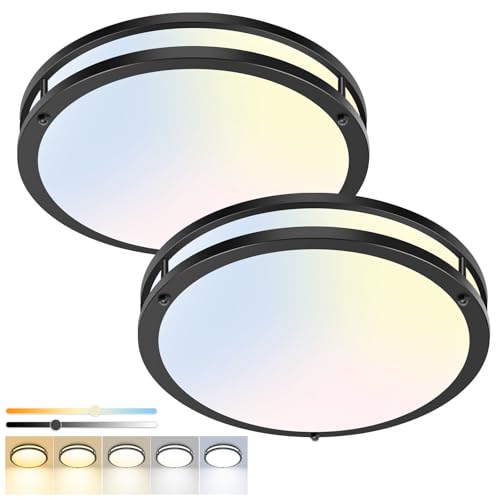
The best ceiling light for most rooms is an integrated LED flush-mount fixture with a stated colour temperature or adjustable white, such as the Kichler, Hampton Bay or Lithonia Lighting style units at the budget and mid-range tiers, while buyers who want app control and colour options usually look at the Philips Hue ceiling lights, and buyers with high ceilings or open living areas look at semi-flush fixtures or chandeliers. This guide compares the main fixture types, explains the specs makers list, and covers the sizing, rating and electrical points that decide which fixture suits a room.
Our top picks



As an Amazon Associate we earn from qualifying purchases at no extra cost to you.
Ceiling Light Types at a Glance
| Type (example brands) | Best for | Key stated features | Limits |
|---|---|---|---|
| LED flush mount (Hampton Bay, Kichler, Lithonia Lighting, Globe Electric) | Bedrooms, hallways, kitchens, standard 8-foot ceilings | Integrated LED, a lumen output and colour temperature on the box, and dimming on some models | Integrated LEDs mean the whole fixture is replaced at end of life |
| Smart ceiling light (Philips Hue) | Living rooms and bedrooms where you want scenes, schedules or voice control | The maker lists app control, a range of white tones and, on some models, colour | Premium tier; some features need a hub or bridge |
| Semi-flush or pendant fixtures | Higher ceilings, dining areas, entries | Hangs below the ceiling; wide style choice | Needs enough clearance below for head height |
| Recessed or disc lights (slim LED discs from Lithonia Lighting and others) | Low-profile lighting, kitchens, basements | Slim profile, often with junction-box mounts | Needs correct ceiling cavity and box type |
| Ceiling fan with light | Rooms that need air movement and light together | Combined fan and LED kit | Needs a box rated for fan weight |
Specs That Matter
Brightness in lumens
Lumens measure brightness. A bedroom or hallway commonly does well with a moderate output, while a kitchen or home office benefits from more. Fixture makers often print a recommended room size, so compare that with your room’s square footage. Plan for layers: a ceiling light plus lamps gives better control than a single very bright fixture.
Colour temperature
Colour temperature in kelvins describes how warm or cool the light looks. Lower values, around the warm white range, feel cosy and suit bedrooms and living rooms. Higher values look crisper and suit kitchens, workshops and offices. Some fixtures list a selectable setting so you can switch between warm and cool, and smart models like Philips Hue offer a wider range of whites.
Colour rendering
The colour rendering index, or CRI, describes how accurately a light shows colours. Makers sometimes list it on the packaging, and a higher figure is generally better in kitchens, bathrooms and makeup areas.
Dimming
Not every LED fixture dims, and those that do may need a compatible dimmer switch. Check that the fixture states dimmable operation and look at the maker’s dimmer compatibility notes. A mismatch can cause flicker or buzzing.
Size and style
A common rule of thumb in lighting guidance is to choose a fixture diameter in line with the room’s size. Small rooms and hallways suit compact fixtures, while larger living spaces suit bigger or multiple fixtures. For a dining table, a fixture that is noticeably narrower than the table usually looks balanced. Treat this as a style guide rather than a code requirement.
Ratings, Fit and Electrical Safety
- Damp and wet ratings. Bathrooms, covered porches and laundry rooms need a fixture rated for damp or wet locations. The rating appears on the fixture or its listing. Do not use a dry-rated fixture where moisture is present.
- Insulation and enclosed spaces. Recessed fixtures that touch insulation need the correct rating. Follow the maker’s manual and local code.
- Box and weight. A ceiling electrical box must support the weight of the fixture. Heavier pendants and ceiling fans need a box specifically rated for the load. Do not hang a heavy fixture from a standard light-duty box.
- Turn off power at the breaker. Before replacing any fixture, shut off the circuit at the breaker, not just the wall switch, and confirm power is off with a tester. If you are unsure about wiring, a missing ground, aluminum wiring or a crowded box, hire a licensed electrician. Local codes may require a permit or a licensed professional for new wiring.
- Certification. Look for a recognised safety listing, such as a UL or ETL mark, on the fixture and use only the parts the maker provides.
- Heat and enclosed bulbs. If a fixture uses replaceable bulbs, stay within the maximum wattage on the label, and use bulbs rated for enclosed fixtures where required.
Budget Tiers
Budget tier
Basic LED flush mounts from brands such as Hampton Bay, Globe Electric and Lithonia Lighting offer simple designs and a single colour temperature. They work well for closets, hallways and spare rooms.
Mid-range tier
Kichler and similar makers offer a wider range of finishes, selectable colour temperature and dimming. This tier suits main living areas where appearance matters.
Premium tier
Philips Hue ceiling lights and designer semi-flush or pendant fixtures are here. You pay for smart control, finishes and design, which matters most in rooms where lighting is a main feature.
Pick Table: Which Ceiling Light for Which Room
| Pick this if you… | Choose | Why |
|---|---|---|
| Need a simple light for a hallway or closet | Basic LED flush mount | Low profile and low cost |
| Want warm or cool white you can switch | Selectable-colour LED flush mount | One fixture suits different moods |
| Want scenes, schedules and voice control | Philips Hue ceiling light | Smart features and a range of whites |
| Have a high ceiling or open plan | Semi-flush or pendant fixture | Hangs lower, adds style |
| Need light in a bathroom | Damp or wet-rated fixture | Rating matches moisture exposure |
| Want airflow and light together | Ceiling fan with light kit | One fixture for both needs, with a fan-rated box |
Alternatives to Consider
- Track lighting. Adjustable heads let you aim light at specific spots and suit galleries, kitchens and home offices.
- Recessed can lights. A grid of recessed lights gives even, low-profile light but needs access above the ceiling and proper installation.
- Plug-in lamps and sconces. In rentals or rooms with no ceiling wiring, plug-in fixtures can provide comfortable lighting without electrical work.
Planning Lighting Beyond One Fixture
- Layer your light. Combine ceiling lighting with table lamps, floor lamps or wall sconces so you can match the light to the activity.
- Think about glare. Very bright fixtures with exposed diodes can cause glare. Diffused covers soften light and are friendlier to eyes in bedrooms and living rooms.
- Match bulbs and fixtures across rooms. Using similar colour temperatures in connected spaces avoids a patchwork look.
- Consider switches. A dimmer or smart switch can add flexibility to any compatible fixture. Check the fixture’s notes before installing one.
- Plan for ceiling height. Standard 8-foot ceilings usually suit flush mounts, while higher ceilings give room for semi-flush fixtures, pendants and chandeliers.
Smart Lighting Notes
Smart ceiling lights offer scheduling, scenes and voice control. Some need a separate hub or bridge, and some work directly with your home network or a smart-home standard, as the maker states. Consider whether you want a system that keeps working if the internet goes down, and whether the fixture also works with a regular wall switch. For rental homes, a smart bulb in an existing fixture may be simpler than replacing the fixture.
Frequently Asked Questions
How bright should a ceiling light be?
It depends on the room size and use. Kitchens and offices need more light than bedrooms. Many makers print a suggested room size on the packaging, which is a useful starting point, and you can add lamps for layered lighting.
What colour temperature is best?
Warm white suits bedrooms and living rooms, while cooler white suits kitchens, garages and workspaces. Selectable fixtures let you switch between them if you are unsure.
Can I replace a ceiling light myself?
Many people do swap a like-for-like fixture, but turn the power off at the breaker first and follow the instructions. If the wiring is old, unfamiliar or there is no ground, or if you are adding a new fixture, hire a licensed electrician.
Are integrated LED fixtures worth it?
They are energy-efficient and low-maintenance, and makers list long rated lifespans. The trade-off is that you replace the whole fixture when the LED board fails, rather than swapping a bulb.
Do I need a special dimmer for LED ceiling lights?
Often yes. Use a dimmer rated for LED loads and check the fixture maker’s compatibility notes. A mismatched dimmer can cause flicker or buzzing.
Can I use any ceiling light in a bathroom?
No. Fixtures near showers and tubs need a damp or wet rating, depending on the location. Check the fixture’s rating and local electrical code, and ask an electrician if you are unsure.
FAQ
How bright should a ceiling light be?
What colour temperature is best?
Can I replace a ceiling light myself?
Are integrated LED fixtures worth it?
Do I need a special dimmer for LED ceiling lights?
Can I use any ceiling light in a bathroom?
More from Amazon
Programs that pair well with the guide above. Offers and eligibility are set by Amazon and may change.
Free shipping on eligible items, Prime Video and more. Eligible new members can start with a free trial.
Start a Prime free trialAudiobooks and podcasts to listen to on the go. Eligible new members can start with a free trial.
Try Audible freeAd-free music streaming. Eligible new subscribers can start with a free trial.
Try Music Unlimited freeA free business account with business pricing and bulk-buying tools for work, shop or home office.
Create a business accountAs an Amazon Associate we earn from qualifying purchases.







