The best clipless pedals for most road riders are Shimano SPD-SL pedals, for gravel and cross-country MTB the Shimano GRX PD-M8100 or Shimano PD-M520 are the safest all-round choices, and for muddy trail riding with easy entry and exit, Crankbrothers Candy or Eggbeater pedals are stronger alternatives.
The right choice depends less on the pedal’s headline weight than on four practical questions: which cleat system your shoes accept, how much float your knees need, how easily the mechanism releases under pressure, and whether you must walk in the shoes after the ride.
Our top picks
 SHIMANO PD-RS500 Recreational Road Bike Pedal
- The PD-RS500 is a User-friendly Road Bike Pedal:…
- Easy Engagement and Release: Lighter spring tension and…
- Improve Your Pedaling Performance: Extra-wide platform for efficient…
 Shimano PDM520 Clipless SPD Bicycle Cycling Pedals
- Shimano PDM520 SPD Cycling Pedals without Clip -…
- Product type: bicycle pedal
- Brand: SHIMANO
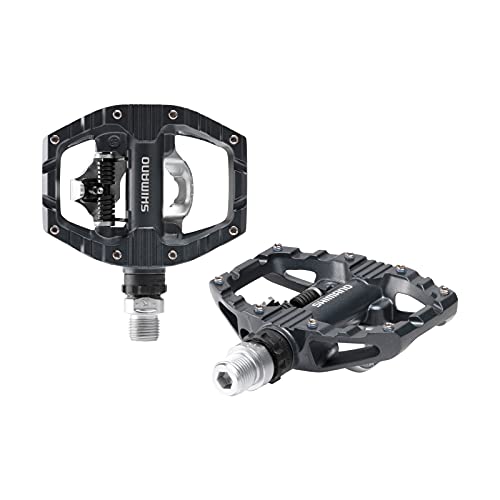 SHIMANO PD-EH500 SPD & Flat Dual Sided
- A pedal with a flat surface on one…
- Dual-sided for use with SPD / 2-hole cleat…
- hole clip-in on one side
| Product | Key specs | |
|---|---|---|
| SHIMANO PD-RS500 Recreational Road Bike Pedal | The PD-RS500 is a User-friendly Road Bike Pedal:… Easy Engagement and Release: Lighter spring tension and… Improve Your Pedaling Performance: Extra-wide platform for efficient… | Check price |
| Shimano PDM520 Clipless SPD Bicycle Cycling Pedals | Shimano PDM520 SPD Cycling Pedals without Clip -… Product type: bicycle pedal Brand: SHIMANO | Check price |
| SHIMANO PD-EH500 SPD & Flat Dual Sided | A pedal with a flat surface on one… Dual-sided for use with SPD / 2-hole cleat… hole clip-in on one side | Check price |
 ROCKBROS SPD MTB Pedals Dual Function Clipless | These bike pedals not only can ride with… The pedals are enlarged and widened to increase… There are 8 non-slip screws on the flat… | Check price |
As an Amazon Associate we earn from qualifying purchases at no extra cost to you.
Best clipless pedals by riding situation
| Riding situation | Best starting point | Why it fits | Main compromise |
|---|---|---|---|
| Road racing and fast group rides | Shimano PD-R8000 Ultegra | Wide platform, efficient SPD-SL cleat and adjustable release tension | Three-bolt shoes are awkward to walk in |
| Budget road riding | Shimano PD-R550 | Stable platform and the same basic SPD-SL cleat family | Heavier than premium road pedals |
| Gravel, touring and mixed surfaces | Shimano PD-M8100 GRX | Two-sided entry, compact cage and mud-clearing SPD mechanism | Less broad foot support than a road pedal |
| First clipless MTB setup | Shimano PD-M520 | Inexpensive, durable, dual-sided and easy to service | Basic bearings and a relatively small platform |
| Very muddy trail conditions | Crankbrothers Eggbeater 3 | Four-sided entry and an open body that sheds mud well | Minimal platform and proprietary cleat adjustment |
| Trail riding with extra shoe support | Crankbrothers Candy 2 or Candy 3 | Eggbeater mechanism with a surrounding platform | More parts and a different cleat system from Shimano SPD |
| Road-style shoes with walkable cleats | Wahoo Speedplay Comp or Zero | Dual-sided road entry and a small, recessed cleat | Cleat covers and regular cleaning matter more |
Road: SPD-SL stability versus Speedplay convenience
Shimano SPD-SL
Shimano SPD-SL pedals use a three-bolt cleat with a broad contact area. The PD-R550 is the value choice, while the PD-R8000 reduces weight and uses a more refined body and bearing arrangement. Both use the same general yellow, blue or red SPD-SL cleat family, although the cleats differ in their built-in float and release characteristics.
Yellow Shimano cleats provide approximately 6 degrees of float and are the sensible default for many riders because the foot can rotate slightly while clipped in. Blue cleats offer about 2 degrees, while red cleats are effectively fixed. Less float can feel precise, but it also leaves less room for cleat-position errors. A bike fitter or experienced mechanic can help if a fixed or low-float setup causes discomfort.
SPD-SL release tension is adjusted with a small screw on each pedal. Start near the low end, practise clipping out on both sides, and increase tension only when accidental release is a problem. Release direction is usually a deliberate outward heel movement; pulling upward is not a dependable way to disengage.
Wahoo Speedplay
Speedplay pedals place the engagement mechanism in the cleat and allow entry from either side of the pedal. This can be useful in racing, frequent stop-start riding and situations where turning the pedal to find the top surface is inconvenient. The cleat also offers independent adjustment of heel-in and heel-out limits, rather than relying only on the pedal’s release spring.
The trade-off is ownership discipline. Dirt can prevent the cleat from engaging cleanly, and the cleat’s small moving parts need lubrication and inspection. Walking is better than with exposed SPD-SL cleats when compatible covers are used, but the covers are another consumable to replace.
Gravel and MTB: why two-bolt SPD pedals usually win
Two-bolt MTB cleats sit inside a recessed sole, so shoes are substantially easier to walk in. The system is also tolerant of grit and repeated dismounts. Shimano SPD pedals use a familiar metal cleat, and their release tension can be adjusted with a screw on each side.
The Shimano PD-M8100 GRX is a strong gravel choice because its compact body gives two-sided entry without a large cage catching on rocks. It suits riders who spend most of their time pedalling but still need to put a foot down on loose climbs. The PD-M520 is less elegant and heavier, yet its low price, replaceable cleats and widespread service parts make it one of the lowest-risk purchases for beginners and commuters.
A larger platform, such as that around Shimano’s trail-oriented PD-M8120, gives more support when using softer shoes or riding steep, rough ground. It adds weight and can collect more mud, but the difference is worthwhile for technical descending and riders who do not want the sensation of standing on a small spindle.
Crankbrothers: easier entry in mud, different adjustment logic
Crankbrothers Eggbeater pedals have an open, four-sided mechanism. That design gives several possible entry points and leaves fewer surfaces for wet soil to pack against. They are particularly appealing for cyclocross-style conditions, muddy MTB trails and riders who value fast re-entry after a dab.
Candy pedals add a small platform around the same general mechanism. The platform offers more support and makes them a better compromise for trail riding, while Eggbeaters remain the lighter and more minimalist option. Crankbrothers cleats normally provide 6 degrees of float, with release angle options commonly associated with the cleat orientation. That is convenient, but it means cleat installation deserves attention: changing orientation can alter release behaviour.
Unlike Shimano SPD, Crankbrothers pedals do not use the same simple release-tension adjustment range. Release feel is influenced mainly by the cleat and mechanism design. This is not automatically better or worse, but riders who want to fine-tune spring tension should choose an adjustable system such as SPD.
Comparison of the main systems
| System | Typical cleat float | Entry | Release adjustment | Walkability | Typical pedal weight |
|---|---|---|---|---|---|
| Shimano SPD-SL yellow | 6° | Single-sided | Spring tension screw | Low | About 310–380 g per pair |
| Shimano SPD-SL blue | 2° | Single-sided | Spring tension screw | Low | About 310–380 g per pair |
| Shimano SPD MTB | Usually several degrees, depending on cleat | Two-sided | Spring tension screw | High | About 370–440 g per pair |
| Crankbrothers Eggbeater/Candy | About 6° | Four-sided | Mostly cleat-based | High | About 280–360 g per pair |
| Wahoo Speedplay | Adjustable, up to about 15° total range | Two-sided | Cleat-based limit adjustment | Medium to high with covers | About 170–330 g per pair, model dependent |
Weights are approximate claimed or typical pair weights and can vary with model, spindle length and included hardware. Float figures describe the system’s intended movement, not a guarantee that every rider will feel the same resistance.
Setup details that matter more than a few grams
- Choose shoes before pedals. Two-bolt MTB shoes accept SPD-style cleats. Three-bolt road shoes accept SPD-SL-style cleats. Speedplay requires its specific four-hole-compatible arrangement or an adapter.
- Begin with cleats centred fore and aft. Mark the original shoe position with masking tape, then adjust in small increments. A cleat that is too far forward can feel unstable; too far back can change the leverage and pedalling sensation.
- Set low release tension first. Lean against a wall and practise clipping in and out 20–30 times per side. Increase tension one small increment if the foot releases unintentionally.
- Check both sides before riding outdoors. A common mistake is setting one pedal tighter than the other or fitting a cleat with loose bolts. Tighten bolts to the shoe-maker’s specified torque and recheck after the first ride.
- Clean before adjusting. Mud or grit can make a pedal seem too tight, when the real problem is contamination around the spring or cleat.
Durability, maintenance and replacement costs
Cleats usually wear before the pedal body. Replace them when engagement becomes loose, release becomes inconsistent, the walking surfaces are visibly rounded, or the shoe can twist more than it used to while clipped in. Walking on exposed road cleats accelerates wear, which is another reason MTB-style recessed cleats suit café stops and hike-a-bike sections.
Rinse mud with low-pressure water, brush the mechanism, dry it, and apply the lubricant specified for the pedal or cleat. Avoid directing a pressure washer at the bearings. Shimano SPD and SPD-SL pedal bodies generally have serviceable bearing assemblies; Crankbrothers and Speedplay models also have model-specific service parts, but their seals, cleats and small hardware should be checked more carefully.
For a simple ownership calculation, a rider who replaces a pair of $25–$35 cleats every 2,000 miles spends roughly 1.25–1.75 cents per mile on cleats alone. A rider who walks frequently on road cleats may halve that distance, making a nominally cheaper pedal system more expensive over time than recessed MTB shoes and SPD cleats.
Final choice
Choose Shimano PD-R8000 or PD-R550 for a conventional road setup with a broad, stable platform. Choose Shimano PD-M8100 GRX for fast gravel and Shimano PD-M520 for an affordable, durable first pair. Choose Crankbrothers Eggbeater for maximum mud clearance and Candy for more trail support. Choose Speedplay when dual-sided road entry and finely adjustable cleat limits matter more to you than the simplest maintenance routine.