Key takeaways
- Follow the manual for submersion depth and placement; do not run a pump dry, which can damage it.
- Use a GFCI-protected outdoor outlet and weatherproof connections.
- Unplug the pump before touching the water or the unit.
- Clean intake screens and impellers regularly, particularly in the leaf season.
- Remove or protect pumps in freezing weather as the maker advises, since ice can crack housings.
- Keep cords away from foot traffic and lawn equipment.
- If fish live in the pond, keep the pump’s flow and intake suited to them, and consult a pond professional if unsure.
For a small garden pond or decorative fountain, a submersible pump rated for the height and flow your fountain needs, such as the Little Giant, Beckett or Tetra Pond lines, is the practical choice; larger ponds and waterfalls call for higher-flow units like Danner Pondmaster or Little Giant models with a stated lift of several feet. Match the pump to the head height (how high it must lift water) rather than only the gallons-per-hour number on the box.
Our top picks

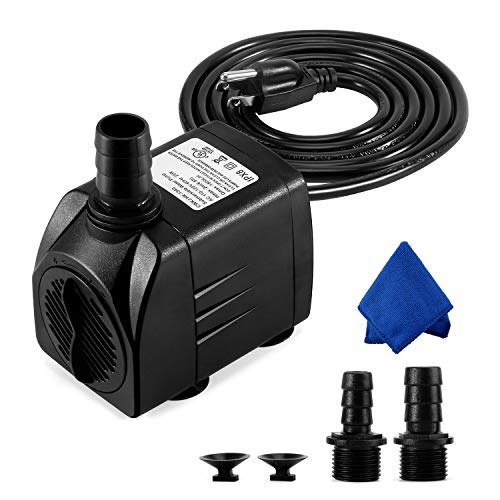

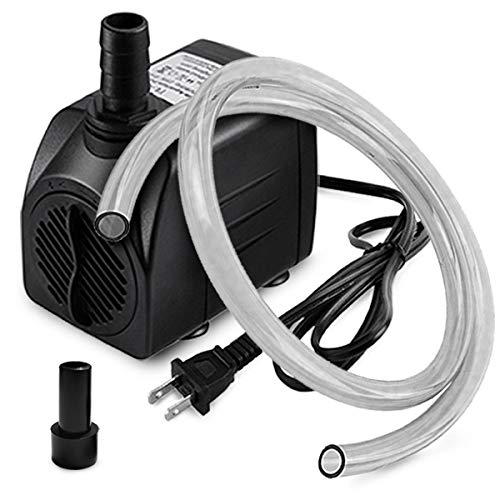
As an Amazon Associate we earn from qualifying purchases at no extra cost to you.
At a Glance: Fountain Pumps Compared
| Brand and line | Best for | Key stated traits (per makers) | Limits |
|---|---|---|---|
| Little Giant (various submersible models) | Small to mid-size ponds and fountains | Range of flow ratings, long-established brand, fountain heads on some kits | Check max head for your model |
| Beckett submersible pumps | Small garden fountains and basins | Compact housings, adjustable flow on many models | Smaller flow capacity |
| Tetra Pond (Water Garden pump series) | Backyard ponds, easy setup | Multiple flow sizes, accessories, fountain nozzle options | Strainer needs regular cleaning |
| Danner Pondmaster | Larger ponds and waterfalls | Higher flow capacity, durable build, mag-drive design | Heavier, higher cost |
| Rio (Hydrofarm) pumps | Low-cost indoor and outdoor fountains | Small sizes, simple operation | Lower-lift ratings |
| Solar fountain pumps | Birdbaths and small decorative basins | No cord run, daytime-only operation | Weak lift and cloudy-day performance |
Flow and head ratings are the manufacturers’ stated figures and depend on the exact model, nozzle and plumbing. Consult the pump curve in the manual.
How to Pick the Right Pump
Understand flow and head
Pump packaging lists flow in gallons per hour (GPH) at a given height. A pump rated at a large number at zero height will deliver far less when pushing water up several feet. Look for the maker’s chart showing flow at different heights. Choose a pump whose flow at your required head matches the effect you want: a gentle bubbling sprinkle needs less than a tall spray or waterfall.
Sizing for a waterfall
Waterfall and stream setups need enough flow to carry water across the weir. A common rule from pond builders is to allow a certain number of gallons per hour for each inch of spillway width, but figures vary, so rely on the maker or a pond retailer’s guidance for your design. Leave some margin because tubing, bends and filters reduce flow.
Pond turnover
If the pump also runs a filter, many pond guides suggest circulating the pond volume roughly once an hour. That means a 500-gallon pond would need a pump delivering about 500 GPH at the actual operating height. Fish and plant ponds have different needs, so consult a local pond professional.
Submersible versus external
Submersible pumps sit underwater and are simple to install. External pumps sit outside the pond, can be quieter and are common on larger systems, but they need plumbing and priming. Most home fountains use submersible pumps.
Direct drive versus magnetic drive
Mag-drive pumps are common in ponds because they are sealed and relatively efficient. Direct-drive pumps can produce more pressure for high-lift uses but may use more energy. The manual explains the design and recommended use.
Debris handling
Pumps with large intake screens or pre-filters resist clogging from leaves and algae. A clogged intake reduces flow and can overheat the motor. Plan for regular cleaning of the intake and the impeller.
Cord length and placement
Check the cord length against the distance to the outlet. Do not cut or extend the cord unless the maker allows it. Outdoor pumps should be plugged into a ground-fault circuit interrupter (GFCI) outlet, and any new outdoor wiring should be done by a licensed electrician.
Budget Tiers
Budget
Rio, small Beckett and basic Tetra pumps are inexpensive and good for birdbaths, bowls and small basins. They have limited lift and sometimes shorter life spans, so they suit simple installations.
Mid-range
Little Giant and Tetra Pond units in the mid-range offer more flow options and reliable parts support. They fit many backyard ponds and fountains.
Premium
Danner Pondmaster and similar premium pumps offer higher flow, more durable materials and long warranties that makers list. They are best for large ponds, long waterfalls and installations run constantly.
Installation, Safety and Care
- Follow the manual for submersion depth and placement; do not run a pump dry, which can damage it.
- Use a GFCI-protected outdoor outlet and weatherproof connections.
- Unplug the pump before touching the water or the unit.
- Clean intake screens and impellers regularly, particularly in the leaf season.
- Remove or protect pumps in freezing weather as the maker advises, since ice can crack housings.
- Keep cords away from foot traffic and lawn equipment.
- If fish live in the pond, keep the pump’s flow and intake suited to them, and consult a pond professional if unsure.
If you are unsure about the electrical installation, hire a licensed electrician. Mixing water and electricity is dangerous.
Pick X If You Want Y
| Pick this | If you want |
|---|---|
| Little Giant | A dependable all-rounder for small to mid-size ponds |
| Beckett | A compact pump for a basin or tabletop fountain |
| Tetra Pond | An easy backyard pond setup with accessories |
| Danner Pondmaster | Big flow for large ponds and waterfalls |
| Rio | A low-cost pump for a small decorative piece |
| Solar pump | A cord-free birdbath fountain |
Alternatives Worth Considering
- Air pump and diffuser: Oxygenates water without a visible fountain and can suit fish ponds.
- Pump and filter combo kits: Sold as a package for small ponds, reducing the need to match parts.
- Hiring a pond installer: For large water features, a professional can size the pump and plumbing.
Common Mistakes to Avoid
The most common mistake is buying on the headline GPH figure. That number is typically measured at zero height, so a pump that looks powerful on the label may deliver only a fraction of that when lifting water to a fountain head several feet up. Another is forgetting that tubing length, bends and filters all reduce flow. People also place pumps directly on muddy pond floors, where the intake clogs quickly; resting the pump on a brick or in a basket helps. Finally, running a pump with a low water level can cause damage, so check levels regularly in hot weather.
A Short Buying Checklist
- Measure the vertical lift from the water surface to the top of the fountain or waterfall.
- Read the maker’s flow chart for the flow at that height, not the maximum figure.
- Check the outlet size and which fittings or nozzles are included.
- Confirm the cord length reaches a GFCI-protected outlet without an extension.
- Look at the intake screen design and how easy it is to remove for cleaning.
- Check whether the pump is rated for continuous operation and for use with fish.
- Note the warranty period and availability of replacement impellers.
Pond suppliers often suggest choosing a pump slightly above your calculated need and then reducing flow with a valve, which tends to be easier than discovering the pump is too weak after installation.
Planning the Layout
Decide where the pump will sit, how the tubing will run and how you will reach it for maintenance. Place the pump on a level base in the deepest part of the pond or basin, away from direct debris. Use tubing sized to the pump outlet, since narrow tubing restricts flow. Add a union or valve so you can disconnect the pump without draining the system. Leave a little slack in the cord and secure it above the waterline. For decorative fountains, a flow-control valve lets you tune the spray height after installation. Keep a spare impeller handy if the maker sells one, as it is often the first part to wear.
Frequently Asked Questions
What size fountain pump do I need?
Work out the height the water must be lifted and the effect you want, then check the manufacturer’s flow chart at that height. For ponds, the volume of water and any filter or waterfall add requirements.
Can I run a fountain pump all day?
Many pumps are designed for continuous use, but follow the manual. Constant running keeps water moving, though it uses power and wears the pump, so some owners use a timer.
Why has my pump lost pressure?
The most common cause is a clogged intake or impeller. Unplug the pump and clean the screen and housing as the manual describes. Check tubing for kinks or blockages.
Do I need to bring the pump inside for winter?
In freezing climates, many makers advise removing and storing pumps, or keeping them from freezing solid, since ice can crack the housing. Follow the instructions and local pond guidance.
Can I use a fountain pump indoors?
Yes, if it is rated for the purpose. Small submersible pumps suit tabletop fountains. Keep the water level above the pump and keep cords and outlets safe from splashes.
Is a solar pump good enough?
For birdbaths and small basins, yes. Solar pumps have limited lift and only work in sunlight, so larger fountains and waterfalls need a mains-powered pump.
FAQ
What size fountain pump do I need?
Can I run a fountain pump all day?
Why has my pump lost pressure?
Do I need to bring the pump inside for winter?
Can I use a fountain pump indoors?
Is a solar pump good enough?
More from Amazon
Programs that pair well with the guide above. Offers and eligibility are set by Amazon and may change.
Free shipping on eligible items, Prime Video and more. Eligible new members can start with a free trial.
Start a Prime free trialAudiobooks and podcasts to listen to on the go. Eligible new members can start with a free trial.
Try Audible freeAd-free music streaming. Eligible new subscribers can start with a free trial.
Try Music Unlimited freeA free business account with business pricing and bulk-buying tools for work, shop or home office.
Create a business accountAs an Amazon Associate we earn from qualifying purchases.