Key takeaways
- Find the best inexpensive trail camera for wildlife, home security, and scouting. Compare low-cost picks for night vision, trigger speed, and battery life.
The best inexpensive trail camera is the one that keeps working through rain, cold nights, and long weeks on a tree while asking very little from your budget. A low-cost trail camera does not need to do everything. It needs to wake up quickly when an animal moves, capture a clear still image or a short video clip in low light, and keep its batteries alive until you return to check the memory card.

That simple job is exactly where inexpensive trail cameras make sense. You can place one camera at a feeder, another near a garden bed, and a third along a fence line, and learn far more from three modest cameras than from one costly camera watching a single spot. The same logic applies to home security use. A trail camera near a shed, a driveway edge, or a back gate can record movement without wiring and without a monthly plan. This guide stays focused on value, with every pick chosen for what it gives you for a low outlay, not for premium extras.
Quick Picks
Our Short List of 3
All 5 Picks at a Glance
| Product | Specs | Action |
|---|---|---|
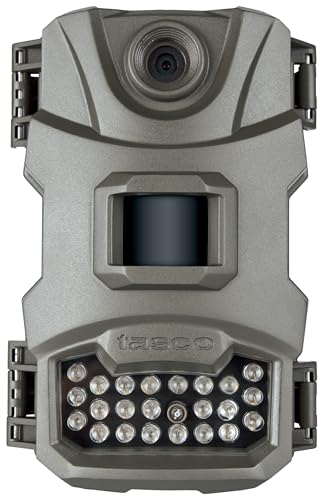
| Tasco 12MP Low Glow Trail Camera (B09H4ZVFDM) | Check price on Amazon | |
| GardePro E5S Trail Camera (B09NDJ6RFH) | Check price on Amazon | |
 GardePro A3 Trail Camera (B0BS2J272S) | Check price on Amazon | |
 Stealth Cam G42NG Trail Camera (B00HMN7H04) | Check price on Amazon | |
 GardePro A50 Trail Camera (B0D6G3QKQF) | Check price on Amazon |
How to Choose
Start With the Total Cost, Not the Camera Alone
An inexpensive trail camera is only inexpensive if the whole setup stays low in cost. A non-cellular camera has no monthly plan, so the running cost is limited to batteries and a memory card. A cellular camera may look close in its first cost, then add a plan for every month it stays in the field. For most first-time buyers, a non-cellular model is the better value choice. Every camera in this guide needs AA batteries and a full-size SD card, and those items are not always included in the box. Keep a spare card for each camera so you can swap cards in the field and leave the camera in place.
Night Vision Matters More Than Daylight Resolution
Most trail camera action happens at dawn, at dusk, or after dark. Daylight images from almost any modern camera look usable. Night images are where low-cost cameras separate from each other. Look for no-glow infrared, which uses 940nm infrared LEDs that stay dark to the eye, or low-glow infrared, which gives a faint red glow. No-glow is the better choice near homes, near public paths, and for shy animals. A range of 80 to 100 feet sounds generous, and in practice the clearest subjects are much closer. A camera mounted 15 to 30 feet from a trail will give sharper night images than the same camera mounted 80 feet away. A Sony Starvis sensor, used in the GardePro A3 and A50, is designed for low-light sensitivity and helps hold detail in dim conditions.
Trigger Speed and Detection Distance Decide What You Catch
Trigger speed is the time between motion detection and the first photo. A trigger of 0.1 seconds catches animals crossing at an angle, while a slower trigger may catch only a tail or an empty trail. All three GardePro models in this guide list a 0.1-second trigger, which is a strong point for the value tier. Detection distance is how far away the sensor can sense heat and movement. A distance of 80 to 90 feet gives you room to mount the camera back from a trail. Aim the camera slightly downward, about knee to chest height for deer, and lower for smaller animals near a garden. Point it north when you can, so low sun does not wash out daytime images or cause false triggers.
Photo Resolution, Video, and What You Will Actually Use
High megapixel numbers look impressive, and they can help when you crop an image to identify an animal at a distance. The GardePro E5S and A50 list 64MP stills, the GardePro A3 lists 48MP, the Stealth Cam G42NG lists 32MP, and the Tasco lists 12MP. In practice, the sensor and the lens matter more than the top number. A clean 32MP image with good exposure is more useful than a noisy image at a higher setting. Video is useful for behavior: how an animal moves, how long it stays, and which direction it came from. The Tasco records 720p video, the Stealth Cam G42NG records 1080p video with audio, the GardePro E5S and A3 record 1296p video with audio, and the GardePro A50 records 4K video with sound. Short clips of 10 to 30 seconds are a good starting point.
Battery Life and Weather Resistance
Battery life decides how often you need to visit the camera. Every camera here runs on AA batteries, and eight AA batteries give a longer run, especially in cold weather. Lithium AA batteries handle cold better than alkaline batteries. Heat, humidity, and rain test the housing. Look for an IP66 rating, which the GardePro models carry, or an IP67 rating, which the Tasco carries. The Stealth Cam G42NG carries an IP54 rating, which is a lower level of protection against dust and water, so it needs a more sheltered mounting spot in heavy rain. Mount the camera under a slight overhang when you can, tilt it a little forward so rain runs off the lens, and check the seal around the door before each long sit.
Simplicity, Mounting, and Home Security Use
A good inexpensive trail camera should be easy to set up in the field. A built-in color screen, simple menu buttons, and a mounting strap are enough for most users. The GardePro models include a built-in 2.4-inch color screen and remote-style buttons, which make setup and playback easier without a phone. Wi-Fi models add app preview, but they also add steps and can drain batteries faster. For a first camera, a simple non-cellular, non-Wi-Fi model is often the best value. Use the included strap around a tree, a post, or a fence rail. For home security use, mount the camera high enough that it is not easy to reach, angle it down toward the area you want to watch, and choose no-glow so it does not give away its position at night.
The Best Best Inexpensive Trail Camera Reviewed
Tasco 12MP Low Glow Trail Camera (B09H4ZVFDM)
The Tasco 12MP Low Glow Trail Camera is the lowest entry point in this guide, and it is the pick for buyers who want to run several cameras at once or who want a first camera without a large outlay. It captures 12MP still images and 720p video, and it uses low-glow infrared for night recording. The housing carries an IP67 rating, which is a strong point for a camera at this end of the range.
Who it suits: first-time buyers, garden watchers, and anyone who wants to cover three or four spots for the cost of one higher-spec camera. It suits a feeder, a compost area, or a garden bed where animals come close and daylight images matter most. Who should skip it: buyers who need strong night vision should look at the GardePro models below. The Tasco has the weakest night performance in this group, and its low-glow flash is more visible at night than a no-glow flash. It is a partial fit for night-heavy scouting.
GardePro E5S Trail Camera (B09NDJ6RFH)
The GardePro E5S Trail Camera is the high-resolution stills pick in the value tier. It captures still images up to 64MP and records 1296p video with audio in MP4 and MOV formats, using H.264 compression to keep file sizes manageable. No-glow infrared reaches 100 feet, the trigger fires in 0.1 seconds with a 0.5-second recovery time, and the detection distance reaches 90 feet. The housing is IP66 waterproof, it takes eight AA batteries, and it supports full-size SD cards up to 512GB.
Who it suits: wildlife watchers, deer scouts, and home users who want sharp stills from a simple SD-card camera. A 64MP still helps when an animal is at the edge of the frame. Who should skip it: buyers who want phone preview should look at a Wi-Fi model instead, because the E5S is non-cellular and non-Wi-Fi, so you check the card when you visit. Buyers who want 4K video should look at the GardePro A50 below.
GardePro A3 Trail Camera (B0BS2J272S)
The GardePro A3 Trail Camera is the night-vision value pick. It uses a Sony Starvis sensor, a large-aperture lens, and smart imaging to hold detail in low light, and it captures still images up to 48MP with 1296p H.264 video and sound. No-glow night vision reaches 100 feet, the trigger fires in 0.1 seconds with a 0.5-second recovery time, and the detection distance reaches 82 feet. The housing is IP66 waterproof, it runs on eight AA batteries, and it supports full-size SD cards up to 512GB.
Who it suits: buyers who watch feeders, gardens, and trails after dark, and buyers who want strong night performance without moving to a higher tier. It suits a first camera for night-heavy use. Who should skip it: buyers who want the highest still resolution should choose the E5S, which lists 64MP stills, and buyers who want 4K video should choose the A50. The A3 has no app or cellular link, so it suits card-check routines rather than remote viewing.
Stealth Cam G42NG Trail Camera (B00HMN7H04)
The Stealth Cam G42NG Trail Camera is the proven classic in this guide. It captures 32MP still images and 1080p HD video with audio, with clips from 5 to 180 seconds. Forty-two no-glow black infrared emitters give an 80-foot night vision range. It has a 2.4-inch color TFT screen, time and date and moon-phase and temperature stamps, password protection, and a USB and video output. It takes eight AA batteries and accepts SD cards up to 32GB.
Who it suits: hunters and landowners who want a dependable no-glow camera for long sits, and buyers who value a known brand and a simple setup over the highest resolution. It suits a food plot, a scrape, or a trail that you check every few weeks. Who should skip it: buyers who need a large memory card should note the 32GB limit, which is lower than the 512GB limit on the GardePro models. Its IP54 rating is also lower than the IP66 rating on the GardePro models, so mount it in a more sheltered spot in heavy rain. It is a partial fit for wet, exposed sites.
GardePro A50 Trail Camera (B0D6G3QKQF)
The GardePro A50 Trail Camera is the top step in this inexpensive group, and it is the pick for buyers who want 4K video without moving to a premium tier. It uses a new-generation Sony 4K Starvis sensor, a top-level optical lens, and smart night vision to capture 64MP still images and 4K H.264 video with sound. No-glow night vision reaches 100 feet, the trigger fires in 0.1 seconds with a 0.5-second recovery time, and the detection distance reaches 90 feet. The housing is IP66 waterproof, it runs on eight AA batteries, and it supports full-size SD cards up to 512GB.
Who it suits: buyers who want 4K video and high-resolution stills in one low-cost camera, and buyers who have one main location where image quality matters most. It suits a primary feeder, a main trail, or a home boundary where a clear video record is useful. Who should skip it: buyers on the strictest budget should choose the Tasco or the GardePro E5S instead, because the A50 sits at the top of the inexpensive range in this guide. It is a partial fit for the lowest-budget buyer.
What to Check Before You Buy
Check the listing title and model number against the ASIN before you order. Trail camera names are close to each other, and a single letter can mean a different sensor, a different video resolution, or a Wi-Fi model instead of a non-Wi-Fi model. The ASIN in each section above is the exact listing to match, and the model number is the second check: Tasco 119274CW, GardePro E5S, GardePro A3, Stealth Cam STC-G42NG, and GardePro A50.
Check the battery count, the memory card type, and the card size limit. All five cameras here need AA batteries and a full-size SD card, and those items are not always in the box. The Stealth Cam G42NG accepts cards up to 32GB, while the GardePro models accept cards up to 512GB. Check the infrared type, too. No-glow is the better choice for shy animals and for home security use, because it stays dark at night. The Tasco is the only low-glow camera in this guide. Check the mounting plan, take a test image, walk through the frame, and check the card before you leave.
FAQ
What is the best inexpensive trail camera for a first-time buyer?
A simple non-cellular camera with no-glow night vision, a fast trigger, and a built-in screen is the best starting point. The GardePro E5S is a strong first choice for stills, while the GardePro A3 is a strong first choice for night vision. The Tasco 12MP is the best choice if you want the lowest entry cost and plan to run several cameras at once.
Do inexpensive trail cameras work for home security?
Yes, for low-cost recording in places where wiring is not practical, such as a garden, a shed, or a back gate. Mount a no-glow camera high, angle it down toward the area you want to watch, and check the card on a regular schedule. A trail camera records movement and keeps a visual record, but it is not a replacement for a wired home security system with live alerts.
How long do batteries last in an inexpensive trail camera?
Battery life depends on temperature, trigger count, video length, and battery type. Eight AA batteries last longer than four, lithium AA batteries hold up better in cold weather than alkaline batteries, and short photo bursts use less power than long video clips. Check the camera after the first week to learn how fast it uses batteries on your ground, then set a regular visit schedule.
Do I need a cellular trail camera?
Most buyers do not. A cellular camera sends images to a phone, which is useful for remote land or for a location you cannot visit often, but it adds a monthly plan for each camera. A non-cellular camera costs less to run, and it is the better value choice when you can visit the camera every week or two to swap the card.
What memory card should I use?
Use a full-size SD card that fits the limit on your camera. The Stealth Cam G42NG accepts cards up to 32GB, while the GardePro models accept cards up to 512GB. A 32GB or 64GB card is enough for most short sits. Keep a spare card for each camera so you can swap cards in the field without taking the camera down.
Bottom Line
The best inexpensive trail camera is not the camera with the highest numbers. It is the camera that matches your ground, your visit schedule, and your budget, and that keeps working through the nights you are not there. Start with a simple non-cellular model, choose no-glow night vision, and put the money you save toward extra cards and good batteries.
If you want the lowest entry cost, start with the Tasco 12MP. If you want sharp stills from a simple SD-card camera, start with the GardePro E5S. If night vision is your main need, start with the GardePro A3. If you want a proven no-glow classic for long sits, start with the Stealth Cam G42NG. If you want 4K video without moving to a premium tier, start with the GardePro A50. Whichever you choose, mount it well, check it often in the first weeks, and let what you learn from the first sit guide where you place the next camera.
Disclosure: As an Amazon Associate, we may earn from qualifying purchases.
FAQ
What is the best inexpensive trail camera for a first-time buyer?
Do inexpensive trail cameras work for home security?
How long do batteries last in an inexpensive trail camera?
Do I need a cellular trail camera?
What memory card should I use?
More from Amazon
Programs that pair well with the guide above. Offers and eligibility are set by Amazon and may change.
Free shipping on eligible items, Prime Video and more. Eligible new members can start with a free trial.
Start a Prime free trialAudiobooks and podcasts to listen to on the go. Eligible new members can start with a free trial.
Try Audible freeAd-free music streaming. Eligible new subscribers can start with a free trial.
Try Music Unlimited freeA free business account with business pricing and bulk-buying tools for work, shop or home office.
Create a business accountAs an Amazon Associate we earn from qualifying purchases.