Key takeaways
- After each busy shift: brush away swarf, empty the tray and wipe the vise faces and guide surfaces.
- Weekly: inspect cutter edges, clamps, belts, bearings and the depth guide for looseness or scoring.
- Monthly or after heavy use: perform a calibration check using a known blank and inspect electrical cables, emergency stops and guards.
- After transport: check that the carriage has not shifted, the jaws are tight and the machine is level before cutting a customer key.
- When software is involved: maintain current databases and keep a documented backup or offline reference for frequently used profiles.
Best Key Cutting Machines for Professional Locksmiths
The best key cutting machine for professional locksmiths is the one that matches your dominant work: a compact duplicator for everyday residential keys, a code machine for precise depths and repeat jobs, a laser or sidewinder machine for automotive work, or an electronic all-in-one platform for mixed mobile and shop-based workloads.
Quick comparison
| Machine or category | Best suited to | Key profiles and capacity | Approx. size and weight | Calibration and maintenance profile |
|---|---|---|---|---|
| Silca Futura Pro | High-volume mixed residential and automotive work | Electronic edge-cut and laser/sidewinder work, depending on cutter, jaws, software and accessories; supports broad vehicle and cylinder coverage | About 51 × 43 × 41 cm; roughly 20 kg, configuration dependent | Guided electronic setup; keep clamps, probes and cutters clean; software and database updates matter |
| Keyline Ninja Total | Mobile locksmiths needing automated automotive capability | Common edge-cut, laser and dimple applications with the correct jaw and cutting tools; coverage depends on software and accessories | About 43 × 32 × 36 cm; roughly 18–20 kg, configuration dependent | Routine jaw cleaning and cutter inspection; calibration should be checked after transport or a collision |
| HPC 1200 Blitz | Shop-based duplication and code cutting | Automotive and standard flat keys using interchangeable jaws and cutters; particularly useful for repeatable code work | About 43 × 36 × 30 cm; roughly 17 kg | Mechanical calibration, brush cleaning and regular inspection of guides, vises and cutter alignment |
| Framon 2 code machine | Accurate traditional code cutting and institutional work | Automotive and specialty code-cut applications with suitable cutters and adapters; not an all-purpose electronic database machine | About 38 × 25 × 25 cm; roughly 14 kg | Manual setup and measurement; durable, but accuracy depends heavily on operator technique and periodic adjustment |
| Manual edge duplicator | Low-cost residential duplication and backup use | Usually standard flat, mortise, warded and selected automotive edge keys; limited by the installed vise and cutter | Typically 35–50 cm wide; 10–25 kg | Simple to service; brushes, belts, cutter wheels and guide bearings are the usual wear points |
Dimensions and weights vary by country, stand, battery, jaw set and accessory package. Treat them as planning figures rather than shipping specifications.
Our top picks
 PakaLife Key Cutting Machine
- 【Enhanced Visibility with LED Lighting】-Featuring an original LED…
- 【Horizontal Key Cutter Machine】-Our advanced key machine cutter…
- 【Precision Cutting】- Equipped with a fine passing needle…
 Electric Manual Dual Mode Key Cutter
- 【Precision Accurate Key Duplication】Engineered with advanced cutting technology…
- 【Intuitive Dual-Mode Operation】It features a front clamping slot…
- 【Heavy-Duty Durable Build】The solid steel base plate enhances…
 Key Copy Machine
- Improved Performance: Thanks to an upgraded DC motor,…
- Flexible Motor Speed: Adjust motor rotation speed based…
- Powerful Voltage Adaptability: With an external transformer, this…
| Product | Key specs | |
|---|---|---|
| PakaLife Key Cutting Machine | 【Enhanced Visibility with LED Lighting】-Featuring an original LED… 【Horizontal Key Cutter Machine】-Our advanced key machine cutter… 【Precision Cutting】- Equipped with a fine passing needle… | Check price |
| Electric Manual Dual Mode Key Cutter | 【Precision Accurate Key Duplication】Engineered with advanced cutting technology… 【Intuitive Dual-Mode Operation】It features a front clamping slot… 【Heavy-Duty Durable Build】The solid steel base plate enhances… | Check price |
| Key Copy Machine | Improved Performance: Thanks to an upgraded DC motor,… Flexible Motor Speed: Adjust motor rotation speed based… Powerful Voltage Adaptability: With an external transformer, this… | Check price |
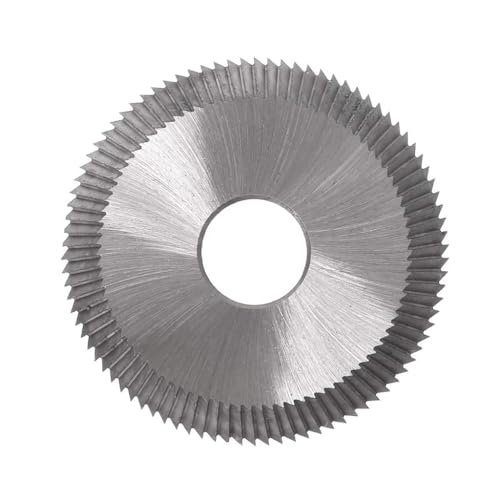 Key Cutting Blade for All Horizontal Key | Dense tooth shape, precision preparation of various copper… Common for the center of the hole for… Blade outer diameter 60MM, blade inner diameter 16MM,… | Check price |
As an Amazon Associate we earn from qualifying purchases at no extra cost to you.
Best choices by locksmith situation
| Your situation | Most sensible choice | Why |
|---|---|---|
| Mostly residential duplicates, several dozen keys per week | Quality manual edge duplicator | Lower purchase cost, quick operation and fewer electronic parts to maintain |
| Frequent automotive jobs with unknown key types | Electronic automotive machine such as Silca Futura Pro or Keyline Ninja Total | Database guidance, multiple jaw options and better support for laser and dimple profiles |
| High volume in a fixed workshop | Dedicated duplicator plus a code or electronic machine | Two operators can work simultaneously, and a simple machine remains available if software is offline |
| Mobile work in a van with limited bench space | Compact electronic machine or portable manual unit | Footprint, vibration resistance and transport weight matter more than maximum theoretical coverage |
| Operator prefers manual control and repeatable code work | HPC 1200 Blitz or Framon 2 | Direct adjustment and tactile feedback can be faster than navigating software for familiar profiles |
| Occasional specialty or institutional work | Code machine with the required adapters | Buying broad automotive capability may be wasteful if only a few restricted or specialty profiles are needed |
What to compare before buying
1. Supported key profiles
Do not judge coverage by the number of vehicle makes shown in a brochure. Ask which physical profiles the machine can cut and which are optional. Edge-cut keys, laser or sidewinder keys, dimple keys, tubular keys, cruciform keys and high-security restricted systems often require different jaws, cutters or adapters.
For automotive work, check whether the machine supports both internal and external laser tracks, two-sided and four-sided blades, Tibbe-style applications where relevant, and the specific dimple systems your market uses. A machine may list a profile in its software while still requiring a separate jaw and cutter package.
For residential work, verify support for the actual blanks sold by local distributors. A machine that accepts standard residential blanks may still need special fixtures for narrow, long-necked, double-sided or unusually thick keys.
2. Cutting capacity and throughput
Capacity is not just the maximum blade width. It includes the range of blade thicknesses, maximum cutting depth, cutter diameter, jaw opening and the number of keys that can be cut before a cutter change. A high-volume shop should also compare setup time: a machine that takes two minutes to clamp and decode a key can lose several hours over a busy week.
Electronic machines are often faster for unfamiliar automotive profiles because the database supplies spacing and depth information. A manual duplicator can be faster for a familiar house key because the operator simply aligns the original and blank. Many professional shops therefore keep both rather than forcing one machine to do every job.
3. Calibration and repeatability
Calibration quality determines whether a new key works smoothly or needs filing and re-cutting. Look for a rigid vise, clear reference marks, controlled depth adjustment and a documented calibration procedure. Electronic machines should provide a repeatable way to set probe height, cutter position and jaw zero points. Mechanical machines should allow accurate adjustment without excessive play in the carriage.
Ask how calibration is verified, not merely how it is performed. A useful procedure cuts a test key or decodes a known sample, measures the result, and checks operation in the lock. Calibration should be repeated after replacing a cutter, changing an adapter, transporting the machine over rough roads or noticing consistent high or low cuts.
4. Portability and power
A mobile machine must fit through the van door, survive vibration and operate from the power available at the job. A 20 kg machine becomes considerably less convenient once its case, inverter, clamps, spare cutters and battery are added. Measure the complete packed footprint, not only the machine body.
For a 12-volt mobile setup, estimate usable energy rather than relying on the battery label. For example, a 100 Ah lithium battery at 12.8 volts stores about 1,280 watt-hours. Allowing for an 85% inverter and battery-system efficiency leaves roughly 1,090 watt-hours. A 500-watt machine could theoretically run for about 2.2 hours continuously, calculated as 1,090 ÷ 500. Actual cutting time is usually much longer because the motor runs intermittently, but lights, chargers and other equipment reduce the margin.
Ownership costs and maintenance
The cutter is normally the first consumable to affect accuracy. Dull cutters create heat, burrs and incorrect shoulder or depth geometry. Replace or sharpen cutters according to the material and workload rather than waiting for complete failure. Brass and nickel-silver blanks are less demanding than hardened or coated automotive materials.
- After each busy shift: brush away swarf, empty the tray and wipe the vise faces and guide surfaces.
- Weekly: inspect cutter edges, clamps, belts, bearings and the depth guide for looseness or scoring.
- Monthly or after heavy use: perform a calibration check using a known blank and inspect electrical cables, emergency stops and guards.
- After transport: check that the carriage has not shifted, the jaws are tight and the machine is level before cutting a customer key.
- When software is involved: maintain current databases and keep a documented backup or offline reference for frequently used profiles.
Avoid spraying general lubricant onto electronic machines or directly into a vise. Swarf mixed with oil can form an abrasive paste and attract more debris. Follow the manufacturer’s lubrication points; many precision guides need only a small amount of the specified product, while some are intended to remain dry.
Common buying mistakes
The most expensive mistake is buying a broad machine without budgeting for the jaws, cutters, adapters and software subscription that make its advertised coverage usable. Request a complete quote for the profiles you expect to cut during the first year.
Another mistake is choosing maximum capability over workflow. If 80% of jobs are standard residential duplicates, an elaborate automotive platform may spend most of its life idle while costing more to maintain. Conversely, a basic duplicator is a poor primary machine for a locksmith whose revenue comes from modern laser and dimple automotive keys.
Also check service arrangements. A machine that needs to be shipped internationally for calibration can create more lost income than a slightly less capable model with local support. Confirm cutter availability, jaw replacement cost, training, warranty exclusions and the procedure for recovering from a failed tablet, controller or software license.
Final recommendation
Choose a manual edge duplicator for economical residential volume, an HPC 1200 Blitz or Framon 2 when controlled mechanical code cutting is central to the business, and a Silca Futura Pro or Keyline Ninja Total when broad automotive coverage and guided electronic operation justify the higher ownership cost. Before committing, list the ten profiles that generate most of your work, verify the required jaws and cutters, measure the complete packed machine, and perform a calibration check on the kind of blanks you actually sell.