Key takeaways
- Fans and dust: Intake vents collect dust. A steady ticking or whine after 6-12 months usually means dust on the fan. Use a bulb blower on vents monthly, never compressed air at close range which can overspin the fan. Keep the rear 6 inches clear during use.
- Bowens mount ears: The three locking ears loosen if you mount heavy modifiers (over 1.2 kg) without support. Support large softboxes with the included yoke tension knob and avoid hanging the light by the modifier.
- Cables and power bricks: The external AC adapter and its DC cable fail before the head does. Strain where the cable exits the brick is the common break point. Velcro the brick to the light stand leg to reduce pull and avoid tight coils when hot.
- Bi-color shift over time: Budget bi-color lights can drift 150-250K over a year of heavy use. Re-white balance with a gray card rather than trusting the dial alone, especially when mixing two different brands.
- Diffusion and softbox wear: Diffusion fabric yellows with heat if placed too close to the COB without the included diffusion frame spacing. Always use the inner baffle if provided and let the modifier cool before packing.
The best lighting equipment under $500 is a 60W to 100W COB LED video light with a Bowens mount, bi-color or daylight-balanced output, and CRI 95+ / TLCI 96+, because it gives you usable output for interviews and product shoots while keeping modifier compatibility and portability within a tight budget.
Under $500 you are not buying the most powerful studio strobe, but you can build a versatile single-light or two-light kit if you prioritize efficiency, color accuracy, and the modifiers you can actually mount. This guide compares what matters at this price point and maps specific types of gear to shooting situations.
Our top picks
 ENDYSHOW LED Stage Wash Light Bar
- ENDYSHOW LED Wash Light Bar with Detachable Cover,…
- Compared with other LED wash lights that only…
- LED wash light bar offers a range of…
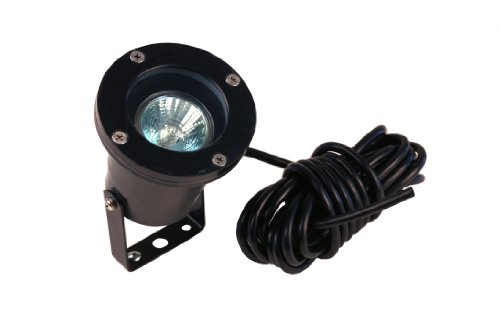 BestPro Lighting Low Voltage Black Fiberglass Landscape
- Heavy Duty Fiberglass in Black, Fiberglass/Clear Glass Top…
- 5 Year Limited Warranty, This fixture requires the…
- Professional grade, Underwater Installation Ok, Landscape Contractor approved
 Telbum LED Stage Lights
- Light Source: The led par light is equipped…
- Lighting Performance: COB stage light with adjustable color…
- Compact and Portable: Measuring 9x6x7 inch and weighing…
| Product | Key specs | |
|---|---|---|
| ENDYSHOW LED Stage Wash Light Bar | ENDYSHOW LED Wash Light Bar with Detachable Cover,… Compared with other LED wash lights that only… LED wash light bar offers a range of… | Check price |
| BestPro Lighting Low Voltage Black Fiberglass Landscape | Heavy Duty Fiberglass in Black, Fiberglass/Clear Glass Top… 5 Year Limited Warranty, This fixture requires the… Professional grade, Underwater Installation Ok, Landscape Contractor approved | Check price |
| Telbum LED Stage Lights | Light Source: The led par light is equipped… Lighting Performance: COB stage light with adjustable color… Compact and Portable: Measuring 9x6x7 inch and weighing… | Check price |
 CyberTech Lighting 8W 3" LED Smooth Trim | The Springs that locks in the can, measure… Adjustable 5CCT: 2700K, 3000K, 3500K, 4000K & 5000K. 500 Lumens & CRI 90 for True Color… | Check price |
As an Amazon Associate we earn from qualifying purchases at no extra cost to you.
What to Compare Before You Buy Under $500
1. Light Output, Not Just Wattage
Wattage is only part of the story. Two 60W COB lights can differ by 30% in usable output due to reflector efficiency and chip design. Look for lux at 1 meter with the included reflector, and check if the number is with or without it. For context, a 60W COB typically delivers 45,000 to 65,000 lux at 1m with its standard reflector, enough for a key light at 4-6 feet at ISO 400-800 and f/2.8-4. A 100W COB pushes that to 65,000 to 90,000 lux, which gives you more headroom to bounce, diffuse, or shoot through a softbox without cranking your camera ISO.
If you shoot video at f/4 in a medium room, prioritize a 100W COB. If you need portability and will shoot at f/1.8-2.8 or use the light at close range for products, headshots, or streaming, a 60W COB is lighter, quieter, and easier to power on location.
2. Color Accuracy
Under $500, color accuracy separates usable lights from frustrating ones. Check for CRI (Color Rendering Index) and TLCI (Television Lighting Consistency Index). Aim for CRI 95+ and TLCI 96+ for skin tones that do not require heavy correction. Cheaper panels often list CRI 95 but drop to 89-92 in deep reds (R9), which shows up as dull skin. Bi-color lights (2700K-6500K) are more versatile than daylight-only (5600K) if you mix with practicals or shoot in warm interiors, though they sacrifice about 10-15% peak output compared to daylight-only models.
3. Modifier Compatibility
The mount dictates your long-term kit cost. Bowens S-mount is the standard for affordable modifiers and gives you access to the widest range of softboxes, lanterns, snoots, and beauty dishes without adapters. Lights that use proprietary small mounts limit you to the brand’s modifiers or require a Bowens adapter that adds length and weight. Also check if the light can collapse its mount or requires a separate adapter to fold flat for travel.
4. Portability and Power Options
Weight, size, and power determine whether you will actually use the light on location. Most 60W COBs weigh 1.4 to 1.9 kg (3.0 to 4.2 lbs) for the head only, while 100W heads are 1.8 to 2.4 kg (4.0 to 5.3 lbs). For power, AC adapter is standard. Battery options matter if you shoot outside or in venues without easy outlets: some 60W lights support 14.4V V-mount or NP-F battery plates, while many 100W lights require a 26V V-mount or AC power only.
5. Included Accessories vs. Hidden Costs
At this budget, what is in the box changes the real cost by $80 to $150. A bare light with only a reflector will require you to add a softbox ($45-$90), a light stand ($30-$60), and possibly a battery solution. Kits that include a softbox, diffusion, grid, and carry bag save money initially but sometimes include smaller 65cm modifiers that are less flattering than an 85cm octabox.
Spec Comparison: Popular Options Under $500
These are the most common categories shoppers compare in 2026. Specifications are manufacturer-rated with included standard reflector unless noted, and may vary slightly by production batch and color temperature setting.
| Model (Type) | Power / Color Temp | Output at 1m (with reflector) | CRI / TLCI | Head Weight | Mount | Power Options |
|---|---|---|---|---|---|---|
| Aputure amaran 60d (Daylight COB) | 65W / 5600K | ~45,600 lux | 96+ / 96+ | 1.48 kg / 3.26 lbs | Bowens S | AC, optional D-Tap battery (14.4V) |
| Aputure amaran 100d S (Daylight COB) | 100W / 5600K | ~76,400 lux | 96+ / 97+ | 1.85 kg / 4.08 lbs | Bowens S | AC only (48V adapter) |
| Nanlite FS-60B (Bi-Color COB) | 70W / 2700K-6500K | ~46,800 lux at 5600K | 96 / 97 | 1.05 kg / 2.31 lbs | Bowens S | AC only |
| Godox SL60IID (Bi-Color COB) | 70W / 2800K-6500K | ~52,500 lux at 5600K | 96+ / 97+ | 1.64 kg / 3.61 lbs | Bowens S | AC, optional V-mount with adapter |
| SmallRig RC 60B (Bi-Color COB) | 60W / 2700K-6500K | ~46,700 lux at 5600K | 96 / 98 | 1.45 kg / 3.20 lbs | Bowens S (mini, with adapter) | AC, NP-F or V-mount with plate |
| Nanlite PavoTube II 6C (RGB Tube) | 6W / 2700K-7500K RGB | ~320 lux at 1m | 97 / 98 | 0.26 kg / 0.57 lbs | 1/4″-20, magnets | Built-in battery, 2.5 hr runtime, USB-C |
Takeaway: If you need a single key light for interviews or YouTube at 5-8 feet through diffusion, the 100W daylight options deliver the most usable output per dollar. If you need bi-color flexibility for mixed lighting or travel weight savings, the 60W-70W bi-color COBs are more practical and still perform well within 4 feet.
Best Lighting Equipment Under $500 by Situation
Best Overall Single Light for Video and Photos: 100W Daylight COB
Represented by the Aputure amaran 100d S and similar Godox LA150Bi when found on sale, this class gives you enough output to shoot through an 85cm softbox at 5 feet and maintain f/4 at ISO 400. Downsides are larger head size, louder fan, and AC-only power in most cases. Ideal for home studios, small product studios, and interviews where you control the location.
Best Portable and Travel-Friendly Option: 60W Bi-Color COB
Models like the SmallRig RC 60B and Nanlite FS-60B weigh less than 1.7 kg and pack into a backpack with a light stand and a collapsible softbox. Bi-color lets you match warm living room lights without gels. Output is lower, but you regain it by working closer: moving a light from 6 feet to 3 feet quadruples intensity. These are the top choice for creators who shoot in apartments, co-working spaces, or on location.
Best for Two-Light Setup on a Tight Budget
Instead of one 100W light, two 60W lights often produce better results for under $500 if you shop carefully. Pair a daylight 60W as key with a bi-color 60W as fill or hair light, both with Bowens mounts. General market ranges in 2026 put a 60W head at $149-$219 and a basic 65cm-85cm Bowens softbox at $45-$85. Two heads plus one softbox and one reflector often lands at $370-$490 before stands.
Best Accent and Practical Light: RGB Tube or Stick
A tube like the Nanlite PavoTube II 6C does not replace a key light but solves problems a COB cannot: hair light in tight spaces, background color wash, car interior accent, or product edge light. Battery-powered and magnet-mounted, it runs for about 2 to 3 hours at full output and recharges via USB-C. Budget about $90-$130 for a single 1-foot tube.
Decision Matrix: Match Your Situation to the Right Setup
| Your Situation | Recommended Setup Under $500 | Why It Fits |
|---|---|---|
| Small room, mostly talking head video, AC power available | 100W daylight COB + 85cm octabox + reflector reflector for fill | Max output through diffusion, daylight matches window light, Bowens ecosystem keeps future costs low |
| Apartment with warm lights, need to match interiors | 60W-70W bi-color COB + lantern or collapsible softbox | Tunable 2700K-6500K avoids gels, lighter head is easier to boom overhead |
| Travel, TikTok/Reels, quick setup alone | 60W COB with NP-F/V-mount option + 65cm softbox with grid | Compact head and battery power let you shoot without searching for outlets |
| Product photography, tabletop, stills | 60W daylight COB + large diffusion panel or 85cm softbox + second small reflector/tube for rim | Color accuracy matters more than raw power at 1-3 feet, second small source adds separation |
| Need background interest on a budget | 60W COB key + RGB tube accent | Tube adds color and depth for less than a second COB, runs on built-in battery |
Worked Example: How Much Light Do You Actually Need?
Use this simple calculation to see if a 60W or 100W light will work through a softbox at your shooting distance.
Scenario: You want to shoot at f/4, ISO 400, 1/50s for video. Your light is rated at 55,000 lux at 1m with reflector. You will use an 85cm softbox that reduces output by about 1.5 stops (roughly 65% loss), and you will place it 1.5m (about 5 feet) from the subject.
Step 1: Inverse square law. Light falls off with distance squared. At 1.5m, intensity = 55,000 / (1.5^2) = 55,000 / 2.25 = ~24,444 lux bare.
Step 2: Softbox loss. 24,444 x 0.35 (remaining after diffusion) = ~8,555 lux on subject.
Step 3: Check exposure. For video, ~800-1000 lux at ISO 400 typically yields f/2.8-f/4 depending on reflectance. 8,555 lux is more than enough, meaning you can dim to 30-40% for quieter fan noise or move the light to 2m for softer falloff. A 100W light at 76,000 lux would give you ~11,850 lux in the same setup, giving you more room to add a second layer of diffusion or a grid.
If your calculation drops below ~1200 lux and you cannot move closer or open your aperture, you need a more powerful light or a more efficient modifier.
Durability and Ownership Realities Under $500
Lights in this range use plastic composite housings with metal Bowens mounts and active fan cooling. What wears first is not the LED chip itself (rated 30,000-50,000 hours) but the surrounding parts.
- Fans and dust: Intake vents collect dust. A steady ticking or whine after 6-12 months usually means dust on the fan. Use a bulb blower on vents monthly, never compressed air at close range which can overspin the fan. Keep the rear 6 inches clear during use.
- Bowens mount ears: The three locking ears loosen if you mount heavy modifiers (over 1.2 kg) without support. Support large softboxes with the included yoke tension knob and avoid hanging the light by the modifier.
- Cables and power bricks: The external AC adapter and its DC cable fail before the head does. Strain where the cable exits the brick is the common break point. Velcro the brick to the light stand leg to reduce pull and avoid tight coils when hot.
- Bi-color shift over time: Budget bi-color lights can drift 150-250K over a year of heavy use. Re-white balance with a gray card rather than trusting the dial alone, especially when mixing two different brands.
- Diffusion and softbox wear: Diffusion fabric yellows with heat if placed too close to the COB without the included diffusion frame spacing. Always use the inner baffle if provided and let the modifier cool before packing.
Common mistakes that cost money: buying a non-Bowens light to save $30 and then paying $50 for an adapter that adds instability, choosing a 65cm softbox to save space and then needing to upgrade to 85cm for softer skin rendering, and expecting battery power from a 100W light that only supports AC without an expensive high-voltage battery.
How to Build a Complete Setup Under $500
For a one-light interview kit: allocate $180-$250 for a 60W or 100W head, $55-$85 for an 85cm Bowens octabox with grid, $35-$55 for a 7-foot air-cushioned stand, and $15-$25 for a 5-in-1 reflector for fill. Total typically lands at $285-$415, leaving budget for a spare diffusion or a small RGB tube later.
For a two-light creator kit: choose two 60W heads ($300-$380 combined) and share one softbox between them depending on the shot, using the second light bare with reflector for fill or background. Add two compact stands. This is more versatile than one expensive light if you interview two people or need separation from the background.
Frequently Asked Questions
Is a 60W light bright enough for a home studio?
Yes for distances under 6 feet through a softbox if you shoot at f/2.8-4 and ISO 400-800. If you need to light a group, shoot at f/5.6-8, or place the light 8-10 feet away, a 100W light or adding a second 60W source is more reliable.
Should I choose bi-color or daylight-only under $500?
Choose bi-color if you shoot in homes, offices, or venues with warm bulbs you cannot replace. Choose daylight-only if you want maximum output for the price and will shoot near windows or add gels when needed. Daylight heads are typically 10-15% brighter than bi-color at the same wattage.
Can I power these lights with batteries?
Some 60W models support NP-F or 14.4V V-mount batteries via optional plates, giving 45-90 minutes runtime at full power depending on battery capacity. Most 100W models under $500 are AC-only and require mains power or a high-capacity power station, not standard camera batteries.
What modifier should I buy first?
An 85cm octabox with both inner and outer diffusion plus a grid. It softens skin, controls spill with the grid, and works for both video and portraits. A 60cm-65cm softbox is more portable but produces harder light at the same distance.