The best professional ultrasound therapy machines for pain relief are the Chattanooga Intelect Mobile 2 for clinics needing the most complete general-purpose platform, the Rich-Mar SoundCare Plus for a durable ultrasound-focused workstation, and the Mettler Sonicator 740 for practices that prefer a long-established, dedicated unit.
Therapeutic ultrasound is a clinical modality, not a universal treatment for every painful condition. Frequency, intensity, duty cycle, treatment area, and patient suitability should be selected by a qualified healthcare professional according to the device’s instructions and local regulations.
Our top picks
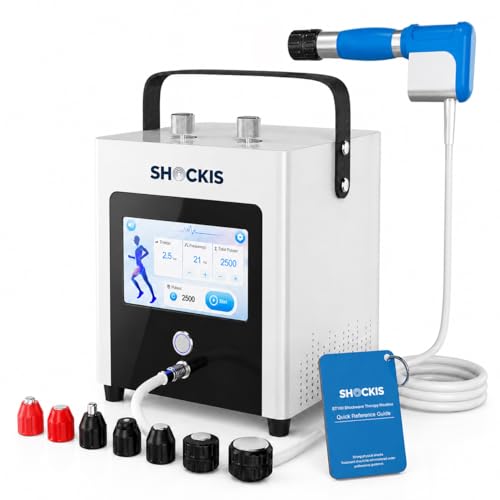 Portable Shockwave Therapy Machine FSA/HSA ESTW Machine
- 𝐄𝐒𝐖𝐓 𝐌𝐚𝐜𝐡𝐢𝐧𝐞 𝐅𝐨𝐫 𝐇𝐨𝐦𝐞 & 𝐏𝐫𝐨𝐟𝐞𝐬𝐬𝐢𝐨𝐧𝐚𝐥 𝐔𝐬𝐞: The…
- 𝐓𝐫𝐮𝐞-𝐑𝐚𝐭𝐞𝐝 𝟏–𝟖 𝐁𝐀𝐑 & 𝟏–𝟐𝟏 𝐇𝐳 𝐎𝐮𝐭𝐩𝐮𝐭: With…
- 𝐃𝐮𝐚𝐥 𝐂𝐨𝐧𝐭𝐫𝐨𝐥 𝐅𝐨𝐫 𝐑𝐞𝐚𝐥-𝐖𝐨𝐫𝐥𝐝 𝐓𝐫𝐞𝐚𝐭𝐦𝐞𝐧𝐭: This shockwave therapy…
 Professional Shockwave ED Therapy Machine for Erectile
- ✔ [Professional Massage Equipment] - This shockwave therapy…
- ✔ [ED Therapy Effect] - ED(Erectile Dysfunction) EDSWT…
- ✔ [High Performance] - This ED therapy machine…
 Shockwave Therapy Machine PSP10
- Compact and Portable: Weighing 9.5 lb and measuring…
- Adjustable Pressure and Frequency: Choose from 1-6 Bar…
- Multi-Area Body Care: Designed for use on the…
| Product | Key specs | |
|---|---|---|
| Portable Shockwave Therapy Machine FSA/HSA ESTW Machine | 𝐄𝐒𝐖𝐓 𝐌𝐚𝐜𝐡𝐢𝐧𝐞 𝐅𝐨𝐫 𝐇𝐨𝐦𝐞 & 𝐏𝐫𝐨𝐟𝐞𝐬𝐬𝐢𝐨𝐧𝐚𝐥 𝐔𝐬𝐞: The… 𝐓𝐫𝐮𝐞-𝐑𝐚𝐭𝐞𝐝 𝟏–𝟖 𝐁𝐀𝐑 & 𝟏–𝟐𝟏 𝐇𝐳 𝐎𝐮𝐭𝐩𝐮𝐭: With… 𝐃𝐮𝐚𝐥 𝐂𝐨𝐧𝐭𝐫𝐨𝐥 𝐅𝐨𝐫 𝐑𝐞𝐚𝐥-𝐖𝐨𝐫𝐥𝐝 𝐓𝐫𝐞𝐚𝐭𝐦𝐞𝐧𝐭: This shockwave therapy… | Check price |
| Professional Shockwave ED Therapy Machine for Erectile | ✔ [Professional Massage Equipment] - This shockwave therapy… ✔ [ED Therapy Effect] - ED(Erectile Dysfunction) EDSWT… ✔ [High Performance] - This ED therapy machine… | Check price |
| Shockwave Therapy Machine PSP10 | Compact and Portable: Weighing 9.5 lb and measuring… Adjustable Pressure and Frequency: Choose from 1-6 Bar… Multi-Area Body Care: Designed for use on the… | Check price |
 Shockwave Therapy Machine for Pain Relief Shockwave Therapy Machine for Pain Relief | Non-Invasive Therapy: Shockwave therapy machine utilizes ESWT technology… HD Touchscreen: Shock wave therapy device featuring an… Multi-Functional: ESWT therapy machine not only enhance blood… | Check price |
As an Amazon Associate we earn from qualifying purchases at no extra cost to you.
Quick comparison of the leading professional options
| Machine | Frequency | Typical intensity range | Treatment heads | Best fit |
|---|---|---|---|---|
| Chattanooga Intelect Mobile 2 Ultrasound | 1 and 3 MHz | Up to approximately 3 W/cm², depending on mode and configuration | Commonly 5 cm² and 10 cm² options | Multi-modality rehabilitation clinics and mobile treatment rooms |
| Rich-Mar SoundCare Plus | 1 and 3 MHz | Approximately 0.1–3 W/cm² | 5 cm² and larger-head configurations are available | Practices prioritizing dedicated ultrasound treatment and simple operation |
| Mettler Sonicator 740 | 1 and 3 MHz configurations | Approximately 0.1–3 W/cm², configuration dependent | Interchangeable treatment-head options | Clinics wanting a conventional, durable professional console |
| Portable professional ultrasound unit | Usually 1 and 3 MHz | Often 0.1–2 or 0.1–3 W/cm² | Usually one 5 cm² head | Home visits, small rooms, and occasional clinical use |
Published specifications can vary by regional model, applicator, and software version, so confirm the exact configuration before purchase. In particular, check whether the advertised intensity is spatial-average temporal-average or another measurement, rather than comparing the headline number alone.
Our picks by clinical situation
Best overall: Chattanooga Intelect Mobile 2
The Intelect Mobile 2 is the strongest all-round choice when ultrasound is one part of a broader rehabilitation setup. It is designed as a professional clinical platform rather than a single-purpose consumer device, and its interface is intended to guide parameter selection, treatment time, and protocol setup.
Its main advantage is workflow flexibility. A clinic can use ultrasound alongside other electrotherapy or rehabilitation modules in the same product family, reducing the need for separate control systems and bench space. A 1 MHz setting is generally selected when treatment is intended for deeper tissues, while 3 MHz is generally used for more superficial targets. The 5 cm² head is easier to control around smaller anatomical areas; a larger head can make broad, even treatment more efficient.
Choose it when several clinicians share equipment, treatments are frequent, and staff value guided controls. It may be more machine than a small practice needs if ultrasound is used only a few times per week.
Best dedicated ultrasound workstation: Rich-Mar SoundCare Plus
The SoundCare Plus is a sensible choice for a practice that wants a focused therapeutic-ultrasound machine without paying for a broad multi-modality ecosystem. Its 1 and 3 MHz operation, continuous and pulsed modes, adjustable intensity, and treatment timer cover the core requirements of routine professional use.
A dedicated unit can be easier to teach and maintain because the controls are centered on one modality. Look for a configuration with a treatment head whose effective radiating area matches the clinic’s typical targets. A 5 cm² applicator is versatile for elbows, wrists, ankles, and other relatively small regions. A larger applicator may reduce passes over broad muscle groups, but it can be awkward around irregular contours.
It is the better fit when ultrasound is used every day but the clinic does not need integrated stimulation, vacuum, or other treatment modules.
Best traditional clinic console: Mettler Sonicator 740
The Sonicator 740 appeals to practices that prefer a conventional professional console with dedicated controls and interchangeable applicators. Mettler’s Sonicator line has long been associated with clinical ultrasound equipment, but buyers should pay particular attention to the condition of the specific unit, warranty coverage, and availability of replacement heads when purchasing an older or refurbished configuration.
The machine makes sense for a busy clinic with established ultrasound protocols and staff who do not need a heavily automated interface. Before committing, verify the output calibration documentation and inspect the treatment-head cable, faceplate, strain relief, and connector. These parts experience more practical wear than the metal cabinet.
How to compare the specifications that affect treatment
Frequency: 1 MHz versus 3 MHz
Frequency is not a simple “higher is better” choice. A 1 MHz setting is typically associated with greater penetration than 3 MHz, while 3 MHz is generally selected for more superficial tissues. The appropriate setting depends on anatomy, tissue depth, treatment goal, and professional assessment.
A machine limited to one frequency may be adequate for a narrowly defined service, but a professional clinic usually benefits from both 1 and 3 MHz. Dual-frequency equipment prevents the need to replace the unit when the practice begins treating a wider range of anatomical sites.
Intensity and duty cycle
Many professional units offer an intensity range of roughly 0.1–3 W/cm². That range is useful only if the controls provide precise, repeatable adjustment. Avoid choosing solely by the maximum output: clinical consistency matters more than an unusually high headline figure.
Continuous mode delivers ultrasound throughout the treatment period. Pulsed mode alternates output and rest periods, commonly expressed as duty cycles such as 20%, 50%, or 80%. A machine with selectable duty cycles gives the clinician more control than one offering only continuous output and a single preset pulse option.
Treatment-head size and contact monitoring
The effective radiating area is more important than the physical size of the applicator. A 5 cm² head offers control over compact or uneven areas, while a 10 cm² head can cover a larger region with fewer overlapping passes. The head should remain in appropriate contact with coupling gel; moving too slowly or holding it stationary can create uneven exposure.
Prefer equipment with a clear contact indicator or coupling warning. This helps identify inadequate gel, poor contact, or an applicator lifted from the skin. It does not replace correct technique, but it can reduce avoidable operator errors.
Decision matrix for buying
| Your situation | Prioritize | Most suitable type | Why |
|---|---|---|---|
| Limited budget and occasional use | 1/3 MHz, reliable timer, service support | Portable professional unit | Avoids paying for unused multi-modality hardware |
| Daily use by several practitioners | Preset protocols, contact monitoring, durable heads | Chattanooga Intelect Mobile 2 | Faster, more consistent shared-clinic workflow |
| Small treatment room | Compact footprint and easy cable storage | Portable or dedicated ultrasound unit | Leaves more room for a plinth and clinician movement |
| Broad anatomical coverage | 5 cm² and 10 cm² applicators | Dual-head professional console | Balances precision on small areas with faster coverage |
| High frequency of use | Replaceable heads, calibration service, robust connectors | Rich-Mar, Mettler, or Chattanooga clinical platform | Downtime and repair access matter more than a small initial saving |
Continuous versus pulsed ultrasound: which controls matter?
For a professional machine, look for independently adjustable frequency, intensity, duty cycle, and time rather than a small collection of locked presets. Presets can speed up routine setup, but the clinician should be able to review and change the underlying parameters.
A useful interface displays output clearly and prevents accidental changes during treatment. Physical dials can be quick with gloves, while touchscreen controls can provide better protocol guidance. The best choice depends on the clinic’s workflow, but neither interface should obscure units, duty cycle, or remaining treatment time.
Durability and ownership costs
The first components to wear are usually the applicator cable, connector, strain relief, treatment-head face, and control switches—not the main enclosure. Repeatedly wrapping a cable tightly, pulling the head by its cord, or allowing gel to dry around the connector can shorten service life.
Budget for coupling gel, periodic output checks, cleaning supplies, and possible applicator replacement. Professional machines commonly cost from roughly $1,000 to several thousand dollars depending on configuration, new-versus-refurbished status, accessories, warranty, and service contract. A replacement head can represent a substantial fraction of the original purchase price.
For a simple ownership calculation, suppose a $2,400 machine is used for four treatments per working day, 250 days per year, over three years. That is 3,000 uses, or about $0.80 of equipment cost per use before gel, labor, servicing, and financing. If the same machine is used only twice weekly for three years—about 312 uses—the equipment cost rises to approximately $7.70 per use. Frequent use makes serviceability and durability especially valuable; occasional use may favor a lower-cost portable model.
Setup and maintenance checklist
- Inspect the applicator face and cable before each session. Do not use a cracked face, damaged cable, or loose connector.
- Confirm frequency, intensity, duty cycle, and time before applying gel. This prevents changing settings while the head is already on the treatment area.
- Apply an adequate layer of manufacturer-approved coupling medium and maintain the movement technique specified in the clinical protocol.
- Wipe gel from the applicator after every use with an approved cleaner. Do not immerse the head unless the manufacturer specifically permits it.
- Keep the connector dry and store the cable with a broad loop rather than a tight bend.
- Arrange periodic output verification according to the manufacturer’s schedule and local clinical-equipment requirements.
Bottom line
Choose the Chattanooga Intelect Mobile 2 for the most adaptable multi-practitioner workflow, the Rich-Mar SoundCare Plus for a dedicated ultrasound-focused clinic, and the Mettler Sonicator 740 when established service support and conventional controls are priorities. Whichever model you select, dual 1/3 MHz capability, adjustable pulsed and continuous modes, appropriately sized heads, contact monitoring, calibration support, and replaceable cables are more important than maximum intensity alone.
This article is general information, not a treatment recommendation. A licensed healthcare professional should determine whether therapeutic ultrasound is appropriate and select safe parameters for an individual patient.