Key takeaways
- Steel size and gauge: common uprights are 2×2, 2×3 or 3×3 inch tubing. Thicker steel (often 11-gauge) is generally considered more rigid. Makers list these numbers on their product pages.
- Hole spacing: tighter spacing (often 1 inch near the bench zone, called Westside spacing) allows more precise bar positions. Wider spacing is fine for general squatting.
- Weight rating: makers state a rated capacity. Choose a number with a good margin above your heaviest planned load, and understand how the maker defines it, for instance whether it includes the safeties and J-hooks.
- Height: check your ceiling. Racks can be 72 to 90 inches tall or more, and a pull-up bar adds clearance needs. Some makers offer shorter versions.
- Footprint: measure the width and depth, including space to load plates at both ends and room for a bench.
- Hole numbering: numbered holes make setting up both sides at the same height easier.
- Attachment compatibility: hole size (5/8 inch or 1 inch) determines what accessories fit. Many ecosystems are tied to one maker’s hole pattern.
For most home gyms, a four-post or two-post power rack with adjustable safety bars from Rep Fitness, Rogue, Titan Fitness or a comparable maker is the right buy, while a half rack or folding rack suits smaller rooms, and a full cage with spotter arms and pull-up bar suits anyone who trains heavy alone. The best squat rack is the one with the right footprint, a stated weight rating that exceeds your lifts, and reliable safeties that match your training style.
Our top picks


As an Amazon Associate we earn from qualifying purchases at no extra cost to you.
At a Glance: Squat Rack Types and Examples
| Option | Best for | Stated features | Limits |
|---|---|---|---|
| Rep Fitness PR-1100 / PR-4000 / PR-5000 | Home gyms wanting a power rack with an attachment ecosystem | Steel uprights in 2×2 or 3×3 tubing depending on model, per the maker | Footprint is large; ceiling height matters |
| Rogue SML-2 / Monster Lite / R-3 | Serious lifters wanting premium finish and options | Heavier-gauge uprights and numbered holes, per the maker | Premium tier |
| Titan Fitness T-3 / X-3 series | Budget-conscious buyers wanting solid frames | Steel uprights with adjustable J-hooks, per the maker | Fit and finish vary by series |
| Fitness Reality 810XLT | Beginners on a tight budget | Entry-level rack with a pull-up bar, per the maker | Lower rated capacity and thinner steel than higher-end racks |
| CAP Barbell / Valor Fitness racks | Entry-level squat stands and half racks | Compact designs, per the makers | Check stated weight rating and stability |
| Foldable wall-mounted racks | Garage or spare-room gyms with limited space | Folds flat to the wall, per the maker | Needs solid wall mounting |
Rack Types Explained
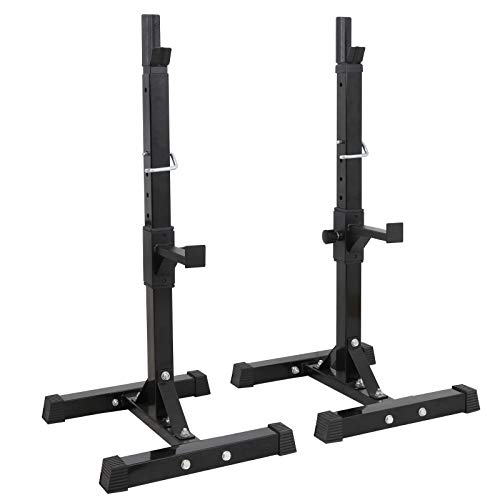
Squat stands
Two free-standing uprights with J-hooks. They take little space and are easy to move, but they offer the least safety, since there are no fixed spotter arms. Many lifters who squat heavy alone avoid them unless they can use a spotter.
Half racks
Two uprights joined by base rails, often with safety arms that extend forward. They are a good compromise for home gyms: more stable than stands and smaller than a full rack.
Power racks and cages
Four uprights forming a cage, with safety bars or straps inside. These are the standard for heavy training because the bar can be dropped safely onto the safeties. They also take attachments such as dip bars, landmine posts and band pegs.
Folding and wall-mounted racks
Useful when floor space is limited. They fold flat when not in use. They must be bolted into structural wall elements, and the manufacturer’s installation requirements should be followed exactly.
Key Specs to Compare
- Steel size and gauge: common uprights are 2×2, 2×3 or 3×3 inch tubing. Thicker steel (often 11-gauge) is generally considered more rigid. Makers list these numbers on their product pages.
- Hole spacing: tighter spacing (often 1 inch near the bench zone, called Westside spacing) allows more precise bar positions. Wider spacing is fine for general squatting.
- Weight rating: makers state a rated capacity. Choose a number with a good margin above your heaviest planned load, and understand how the maker defines it, for instance whether it includes the safeties and J-hooks.
- Height: check your ceiling. Racks can be 72 to 90 inches tall or more, and a pull-up bar adds clearance needs. Some makers offer shorter versions.
- Footprint: measure the width and depth, including space to load plates at both ends and room for a bench.
- Hole numbering: numbered holes make setting up both sides at the same height easier.
- Attachment compatibility: hole size (5/8 inch or 1 inch) determines what accessories fit. Many ecosystems are tied to one maker’s hole pattern.
Safety Features
Squatting without a spotter is only reasonable with safeties set correctly. Safety bars or straps should catch the bar below the lowest point of the lift, so a failed rep ends with the bar on the safeties instead of on the lifter. Spotter arms and strap safeties give different feel: pins are rigid and strong, while straps are gentler on bars and quiet. Set them before every session, and test them with an empty bar.
Follow the maker’s assembly and bolting instructions. Many racks recommend bolting to the floor, especially for dynamic movements such as kipping pull-ups, and they should be assembled on a stable, level surface. If you are new to lifting, a qualified coach can teach squat technique and safe setup. Anyone with a medical condition or injury should talk to a doctor before beginning heavy lifting.
Fit and Space Notes
Ceiling and floor
Measure ceiling height and add clearance for pull-ups or overhead presses. Garages with concrete slabs suit heavy racks best. For upper-floor rooms, consider floor load limits and ask a building professional if unsure.
Bar and plate storage
Some racks include plate storage pegs, which help keep the weight low and increase stability. If you plan to load plates on the base, check that the rack layout leaves sleeve space.
Flooring
Rubber horse-stall mats or gym flooring protect the floor and reduce noise. Place the rack on firm flooring, not thick foam.
Common Buying Mistakes
The most frequent error is buying on price alone and ignoring the stated steel gauge and rated capacity, which leaves little margin once plates, a bench and attachments are involved. Another is overlooking ceiling height, so the rack fits in the room but a pull-up or overhead press hits the ceiling. Buyers also forget that accessories are often tied to one maker’s hole size, so a cheap rack can become costly if the attachments you want need a different pattern. Finally, many people skip flooring. A rack on bare concrete or thin boards can be loud, can damage the surface when a bar is dropped, and can shift under load. Plan the floor, the plate storage and the bench space before choosing a model, and read the assembly manual in full before the first lift. If you are unsure about technique, a qualified coach or trainer can check your form and safeties in a single session.
Setting Up Your Space
Allow clear room on all sides of the rack for loading plates and walking around the bar, and leave space behind the rack for a bench if you plan to press. Keep the bar and plates stored where they cannot roll into the lifting area. Good lighting and a stable, level floor matter as much as the rack itself. Check bolts and fasteners periodically, because vibration from lifting can loosen them over time, and replace any worn safety straps or damaged pins according to the maker’s instructions.
Budget Tiers
Budget tier
Entry squat stands and basic cages from Fitness Reality, CAP Barbell and Valor suit beginners lifting moderate weights. Check the rated capacity and stability carefully, since thinner steel can flex.
Mid-range tier
Rep Fitness PR-series and Titan Fitness cages offer thicker steel and large attachment ecosystems, which reviewers frequently highlight as the best value for home gyms.
Premium tier
Rogue racks, and other commercial-grade makers, offer heavier gauge steel, numbered holes and extensive accessories. They suit serious lifters and commercial-style home gyms.
Pick X If… Decision Table
| Pick this if… | Choose | Why |
|---|---|---|
| You train heavy alone | Power rack with safety bars or straps | Catches failed reps |
| You have limited space | Half rack or foldable wall-mounted rack | Smaller footprint |
| You are on a tight budget | Titan, CAP or Fitness Reality | Lower cost; check ratings |
| You want a large accessory ecosystem | Rep Fitness or Rogue | Many attachments |
| You have a low ceiling | Short-height rack | Fits under the ceiling |
| You want a spotter without a person | Spotter arms or strap safeties | Set below the bottom of the lift |
Alternatives to Consider
- Smith machine: guided bar path and built-in catches, though it changes movement mechanics.
- Squat stands with spotter arms: cheaper and lighter than a full cage.
- Commercial gym membership: access to racks and spotters without space or equipment cost.
Frequently Asked Questions
Do I need a power rack or are squat stands enough?
If you train alone with heavier weights, a power rack with safeties is the safer choice because it catches a failed rep. Squat stands suit lighter training or lifters with a spotter. Choose based on your lifts and how you train.
What steel size should I look for?
Many home racks use 2×2 or 3×3 inch tubing, and 3×3 inch 11-gauge is a common heavy-duty spec. Thicker steel is generally more rigid. Compare the maker’s listed gauge and rated capacity rather than relying on marketing terms.
Should I bolt my rack to the floor?
Makers commonly recommend bolting, especially for racks with pull-up bars or if you do dynamic movements. Follow the manual for your model, and make sure your flooring suits it. If the rack is on a concrete slab, anchor hardware should match the slab.
How much ceiling height do I need?
Check the rack’s listed height and add room for pull-ups and overhead pressing. Many racks need around 8 feet or more. Some makers sell shorter versions for low ceilings.
Are wall-mounted folding racks safe?
They can be, if mounted into structural framing or masonry exactly as the maker specifies. Poor mounting is a serious risk. If unsure, hire a qualified installer.
What safety setup is best for squats?
Set the safeties just below the lowest point of your squat so the bar lands on them if you fail a rep. Test them with an empty bar before loading. A qualified coach can teach safe setup and bailing techniques.
FAQ
Do I need a power rack or are squat stands enough?
What steel size should I look for?
Should I bolt my rack to the floor?
How much ceiling height do I need?
Are wall-mounted folding racks safe?
What safety setup is best for squats?
More from Amazon
Programs that pair well with the guide above. Offers and eligibility are set by Amazon and may change.
Free shipping on eligible items, Prime Video and more. Eligible new members can start with a free trial.
Start a Prime free trialAudiobooks and podcasts to listen to on the go. Eligible new members can start with a free trial.
Try Audible freeAd-free music streaming. Eligible new subscribers can start with a free trial.
Try Music Unlimited freeA free business account with business pricing and bulk-buying tools for work, shop or home office.
Create a business accountAs an Amazon Associate we earn from qualifying purchases.