Shopping for a ride-on motorcycle can feel overwhelming with so many battery sizes, wheel configurations, and styling options on the market. Parents often default to buying the flashiest model or the cheapest option, only to find the toy either tips over too easily or crawls at a painfully slow pace on uneven ground. To find a model that your child will actually enjoy and safely ride for more than a single afternoon, you need to look past the flashy decals and focus on the mechanics.
As a product reviewer who has tested dozens of motorized toys, I have learned that the best purchase depends entirely on your child’s age, physical coordination, and where they plan to ride. In this guide, we will break down the essential specifications, common buying mistakes, and critical features to evaluate so you can make a confident investment that provides lasting value.
As an Amazon Associate we earn from qualifying purchases at no extra cost to you.
Understanding Voltage and Power Options
Voltage dictates the overall power, speed, and capability of a ride-on motorcycle. Entry-level 6V models are typically designed for toddlers aged two to three, offering low speeds that are easy to manage on flat indoor surfaces or smooth outdoor patios. They won’t conquer grass or inclines, but they provide a safe introduction to steering and throttle control without overwhelming a young rider.
For children aged three to six, a 12V system is usually the sweet spot, providing enough torque for slight slopes and short grass without being overly intimidating. If you have an older child, or live on a hilly property, 24V models offer advanced performance, but they require much better balance and reaction times to operate safely. Choosing the right voltage prevents your child from getting bored too quickly or facing a machine that is too fast to handle.
Wheel Configuration and Stability
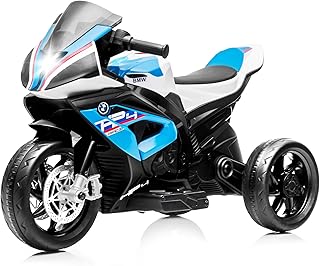
Unlike four-wheeled ATVs or cars, motorcycles inherently require balancing, which changes the safety calculus entirely. Younger riders need training wheels or a wide three-wheel trike design to prevent tipping during sharp turns or sudden stops. Two-wheel models with removable training wheels offer great longevity because they transition seamlessly with your child’s developing motor skills.
Always check how securely the training wheels attach to the frame; flimsy plastic brackets can bend or snap under sideways pressure, leading to sudden spills during cornering. A wider stance on trike designs provides maximum stability for toddlers, while older kids ready for two wheels will benefit from sturdy, adjustable training setups that can be raised as their balance improves.
Weight Capacities and Sizing Realities
Manufacturers often list recommended age ranges, but weight capacity is a far more reliable metric for longevity and long-term performance. If a motorcycle is rated for a maximum weight that your child is already close to, the electric motor will strain, drain the battery rapidly, and burn out prematurely under the heavy load.
Pay close attention to seat height and legroom dimensions as well. A child should be able to place both feet flat on the ground while seated comfortably, with their knees bent at a manageable angle. If their knees ride up too high, steering becomes awkward, and if they cannot reach the ground easily, they will struggle to stabilize the vehicle when coming to a halt.
Tire Material and Surface Traction
The material of the tires dictates traction, noise level, and overall ride comfort across different environments. Cheap models feature solid hard plastic wheels that spin out easily on smooth pavement, slide dangerously on wet grass, and produce a loud clattering noise when driven indoors.
Look for models featuring rubber traction strips down the center of the wheels or full pneumatic tires if available. These premium construction methods provide the necessary grip for reliable acceleration and braking while dampening vibrations, making the ride significantly smoother for the child and much quieter for everyone else in the house.
Safety Mechanics and Speed Controls
Safety mechanisms should never be treated as an afterthought when purchasing motorized ride-ons. Look for motorcycles that feature automatic braking systems—meaning the vehicle decelerates and stops as soon as the child takes their foot off the accelerator pedal.
For faster 12V and 24V models, parental speed lockout switches are invaluable additions. These allow parents to cap the top speed until the child masters basic steering, turning, and stopping mechanics. Additionally, check for a slow-start acceleration feature, which prevents the motorcycle from jerking forward violently the moment the throttle is pressed down.
Battery Maintenance and Charging
Most ride-on toys rely on either standard lead-acid batteries or newer lithium-ion packs. Lead-acid batteries are affordable and reliable, but they are heavy and require strict charging discipline to avoid permanent damage if left uncharged for extended periods. Lithium-ion batteries charge faster and weigh considerably less, though they usually command a higher price tag.
Consider how easy it is to access the charging port on the chassis. If you have to disassemble part of the bodywork or remove the seat with tools every time you plug it in, you will quickly grow frustrated with the routine maintenance required to keep the toy running.
Related Guides
Finding the right motorized vehicle involves balancing power, safety, and durability to match your child’s developmental stage. To explore our top-rated recommendations, check out our guide to best kids ride on motorcycles in 2026: compared and ranked, where we break down the top models currently on the market based on real-world performance metrics.
FAQ
What age is appropriate for a ride-on motorcycle?
Most toddlers can start on low-speed 6V trikes around age two, while true two-wheel balancing motorcycles with training wheels are better suited for ages four and up. Always assess your child’s physical coordination and spatial awareness rather than relying strictly on the manufacturer’s suggested age label.
Can ride-on motorcycles be used in the rain?
Most ride-on toys are not fully waterproof and feature exposed electrical connections around the foot pedal and charging port. Riding through puddles or wet grass can short out the motor or damage the battery system, so it is best to keep them strictly for dry conditions.
How long do the batteries typically last on a single charge?
On average, a healthy battery provides about one to two hours of continuous playtime, depending on the terrain, payload weight, and throttle usage. Charging times vary significantly, often requiring anywhere from eight to twelve hours for a full recharge on standard lead-acid units.
Are replacement parts easy to find if something breaks?
Availability depends heavily on the brand you choose; reputable manufacturers usually sell replacement batteries, chargers, and wheels directly through their customer service channels. Generic budget brands often lack parts support, meaning a broken switch or dead battery can render the entire toy unusable.