Key takeaways
Choosing the right lawn mower oil is one of those maintenance decisions that separates a mower that runs for a decade from one that seizes up by year three. Small engines operate under brutal conditions: short runtimes, high heat cycles, and prolonged exposure to grass clippings, dust, and moisture. The wrong viscosity or a formulation lacking proper detergent and anti-wear additives accelerates piston ring wear, promotes sludge, and can void your engine warranty overnight. What matters most is matching the oil to your engine type, local climate, and manufacturer spec—then picking a formula that stays stable through repeated cold starts and hot afternoons.
We compared these eight options on published specs, price per fluid ounce, and recurring themes in owner feedback to separate genuine performers from budget traps. The results span every use case: a single mower owner who needs a quart at a fair price, a hobbyist with multiple pieces of small engine equipment, and anyone running older Briggs engines that still call for straight SAE 30. Whether you ride a tractor, push a rotary mower, or fire up a generator before a storm, there is a clear pick below.
Our top picks




As an Amazon Associate we earn from qualifying purchases at no extra cost to you. Ratings are shown as listed on Amazon.
Quick Picks
| Product | Best for | Price |
|---|---|---|
| STP Premium Synthetic Blend 10W-30 | General-purpose 4-stroke mowers | under $20 |
| Briggs & Stratton SAE 30 (Pack of 2) | Briggs engines in warm climates | under $30 |
| STP Premium Small Engine (Pack of 2) | Multi-equipment households | under $30 |
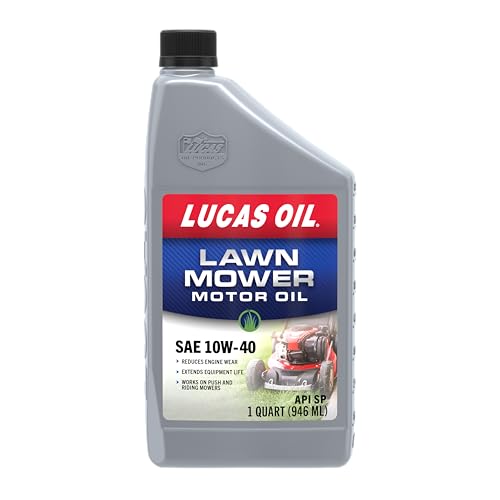
| Lucas Oil 10W-40 | Older or high-heat engines | under $20 |
| Pennzoil 10W-30 | Lowest price per quart | under $10 |
| TRIAX Power 4-Stroke (Gallon) | Full synthetic at bulk value | under $40 |
| TRIAX Power 4-Stroke (Quart) | Single mower, premium protection | under $20 |
| STA-BIL Full Synthetic 2-Cycle | 2-stroke string trimmers and saws | $3.19 |
How We Picked
For this category, four criteria drive the ranking. First, viscosity correctness: 10W-30 suits most modern 4-stroke engines across temperate climates, while straight SAE 30 remains the factory spec for certain older Briggs and Stratton units. Second, base oil quality: full synthetic resists thermal breakdown and cold-start wear better than conventional or blend oils, which matters if you run the mower under load or in temperature swings. Third, additive package: small engine oils need sufficient detergents and anti-wear agents without the friction modifiers found in car oils that can harm wet-clutch tractors. Fourth, value per use: a mower holds roughly 18 to 20 fluid ounces, so packaging size and price per ounce directly affect how often you can maintain the oil on schedule.
The 8 Best Lawn Mower Oil in 2026
STP Premium Synthetic Blend 10W-30
This is the default recommendation for most homeowners with a 4-stroke push mower or small riding tractor. The synthetic blend base offers a meaningful step up from conventional oil in cold-cranking protection and heat resistance, while the 32-ounce bottle covers a full oil change for nearly every walk-behind model without leftover waste. Owners consistently praise the pour spout and the clarity of the oil at the dipstick, which makes it easy to spot when a change is overdue. The main drawback is that STP’s additive package is tuned broadly rather than to a specific OEM spec, so owners of engines with strict viscosity or friction-modifier requirements may want to double-check the manual. Skip this if you need certified full synthetic for extended drain intervals or operate in extreme heat.
Briggs & Stratton SAE 30 (Pack of 2)
Designed specifically for Briggs engines still calling for SAE 30, this two-bottle pack also includes a fuel treatment, which is a thoughtful pairing for anyone who stores equipment seasonally. Using the manufacturer’s own oil keeps warranty paperwork straightforward and avoids the friction-modifier risk that some passenger car oils introduce. The trade-off is temperature limitation: straight SAE 30 thins considerably in warm weather and thickens in cold, making it less forgiving across seasons than a multigrade. You will need to time oil changes around mild conditions or keep a warmer garage. Skip this if your engine manual permits 10W-30 or 5W-30, since those give wider operating range.
STP Premium Small Engine (Pack of 2)
Buying two bottles of the same STP 10W-30 cuts the per-change cost noticeably if you maintain multiple pieces of equipment—mower, generator, log splitter, tiller—each holding a similar oil volume. Owners appreciate the consistency across bottles and the STP care formula’s reported reduction in engine noise after several changes. The packaging is straightforward but not leak-proof for long-term shelf storage, so a few reviewers note small drips around the cap threads if the bottle sits in a truck bed. Skip this if you only run a single mower; the 32-ounce single bottle covers a full change and you will end up with an unused second quart.
Lucas Oil 10W-40
The slightly heavier 40-weight hot viscosity makes this a smart pick for air-cooled engines that run genuinely hot—think small tractors towing attachments in July or pressure washers that cycle under sustained load. Lucas’ reputation in the automotive space translates to a robust additive package that owners credit with noticeable reductions in top-end valvetrain noise. For under $20 for a quart, it sits comfortably between the budget and premium tiers. The one limitation is cold weather: 10W-40 can make first starts sluggish below about 20 degrees Fahrenheit compared to a lighter multigrade. Skip this if you live in a northern climate and do not garage your mower through winter.
Pennzoil 10W-30
For under $10 per quart, Pennzoil is the cheapest path to a reputable 10W-30 for a standard push mower, and Pennzoil’s PurePlus gas-to-liquids base oil performs far better than the price suggests. It is a genuine oil, not a filler product, and it meets API service categories that most small engine manufacturers reference. The gap versus purpose-built small engine oils comes down to additive concentration: Pennzoil includes friction modifiers designed for car clutches that, in theory, could affect wet-clutch riding tractors. For a walk-behind push mower, that is irrelevant. Skip this if your riding mower manual explicitly warns against energy-conserving or friction-modified oils.
TRIAX Power 4-Stroke (1 Gallon)
Full synthetic, small-engine-specific, and priced to undercut most premium blends per ounce, the gallon TRIAX jug is the strongest bulk value for anyone maintaining three or more pieces of equipment. The formulation is engineered for air-cooled four-stroke engines from the start—no automotive clutch concerns, no excess detergent that could interfere with catalytic converter-equipped engines. Owners report cleaner piston faces after several changes and notably stable viscosity through long mowing sessions. The one practical downside is storage: a full gallon bottle is awkward to pour from and occupies considerable shelf space in a small garage. Skip this if you service a single mower and prefer the convenience of a quart.
TRIAX Power 4-Stroke (1 Quart)
The same full synthetic formula in a right-sized quart makes this the easiest premium option for one-mower households. You get every benefit of the gallon version—proper small-engine additive balance, high thermal stability, excellent cold flow—without committing to a container you may not finish before the next season. For under $20 it carries a visible premium over conventional blends, and budget shoppers may question whether their push mower truly needs full synthetic. It does if you run the engine hard, in heat, or for extended sessions; less so for occasional suburban mowing. Skip this if you simply need to top off between changes and already keep a blend on the shelf.
STA-BIL Full Synthetic 2-Cycle
Distinct from everything else on this list, STA-BIL’s 2-cycle oil is not for lawn mower engines at all. It is a precision-formulated synthetic oil for two-stroke equipment like string trimmers, leaf blowers, and chainsaws—the small machines that run on premixed fuel. The 2.6-ounce bottle treats a few gallons of gas, making it ideal for the occasional trimmer owner who does not want to mix and waste half a bottle of fuel. Owners value the clean-burning formula and minimal smoke output. Skip this entirely if your mower has a four-stroke engine; using 2-cycle oil in it will cause immediate damage.
Buying Guide
Viscosity and Climate
Multigrade oils like 10W-30 and 10W-40 perform across a wider temperature band than single-grade SAE 30, making them the practical default in most U.S. regions. If your engine manual permits 10W-30, choose it unless you live somewhere that sees sustained 95-plus degree heat, where 10W-40 adds a cushion against oil film thinning. Straight SAE 30 remains valid only when your manufacturer specifies it and you can reasonably time oil changes for moderate temperatures.
Small Engine Additive Packages Versus Car Oils
Passenger car motor oils increasingly include friction modifiers (the “energy conserving” label) that can cause wet clutch slippage in riding tractors and snow blowers. Purpose-built small engine oils omit or limit these additives. If you own a walk-behind push mower with no transmission clutch, a quality car oil like Pennzoil is functionally fine. For any machine with a wet clutch, use an oil explicitly formulated for small engines.
Conventional, Synthetic Blend, or Full Synthetic
Full synthetic base oils resist oxidation and maintain viscosity at higher temperatures better than conventional or blend options, which directly translates to fewer oil changes and less long-term engine wear. For a mower you run fewer than ten hours per year, a synthetic blend is sufficient. If you mow large acreage, operate in heat, or want the widest possible interval between changes, the small price premium for full synthetic pays off in engine life.
Our Verdict
The best lawn mower oil for most readers is STP Premium Synthetic Blend 10W-30: correct viscosity for the broadest range of modern engines, small-engine-specific formulation, fair packaging, and a price that makes routine changes painless. For the tightest budget, Pennzoil 10W-30 delivers real protection for under $10 a quart—just confirm your engine has no wet clutch before choosing it. And if you run a hot, hard-worked air-cooled engine, Lucas Oil 10W-40 gives you the extra high-temperature margin without the full-synthetic price.
FAQ
Can I use car motor oil in my lawn mower?
You can if the viscosity matches what your engine requires and the oil does not carry an energy-conserving or friction-modified label that would harm a wet clutch. For push mowers without a transmission, a quality car 10W-30 works without issue. For riding equipment, a small-engine-specific formula is safer.
How often should I change lawn mower oil?
Most manufacturers recommend once per mowing season or every 25 to 50 operating hours, whichever comes first. Heavy use, dusty conditions, or prolonged idling shorten that window. Checking the dipstick weekly and changing at the first sign of dark, gritty oil prevents most small engine failures.
Is 5W-30 acceptable instead of 10W-30?
Many modern small engines list 5W-30 as an approved alternative, particularly in colder climates where the lighter cold viscosity improves startup lubrication. Verify your owner’s manual before switching; some older engines specify 10W-30 only, and deviating could affect warranty claims.
Do I need fuel stabilizer when I change the oil?
They solve different problems. Oil protects internal engine surfaces during operation; stabilizer keeps fuel from gumming during storage. If you park your mower for more than a few weeks, use both: fresh oil before winter storage and a stabilizer-treated fuel tank so carburetor jets stay clear until spring.