Key takeaways
- Road rubber: flatter, quieter, and usually more efficient on asphalt. It often lasts well when used on its intended surface but can lose traction on wet roots or loose gravel.
- Trail rubber: deeper lugs and stickier compounds improve grip, but they may wear faster on pavement and feel less smooth during road sections.
- Mixed routes: choose a road-to-trail shoe only when the trail is firm and maintained. A door-to-trail model is not equivalent to a technical trail shoe.
- Wet conditions: mesh uppers rarely keep feet dry for long. Traction and drainage are separate decisions from waterproofing.
The best running shoes depend on where you run, how far you go, and whether you value soft cushioning, stable guidance, low weight, or long outsole life: the Brooks Ghost 16 is the safest everyday road choice, the ASICS Gel-Kayano 31 suits runners wanting structured stability, the Saucony Endorphin Speed 4 is the strongest versatile speed trainer, and the Hoka Speedgoat 6 is the better pick for technical trails.
Our top picks


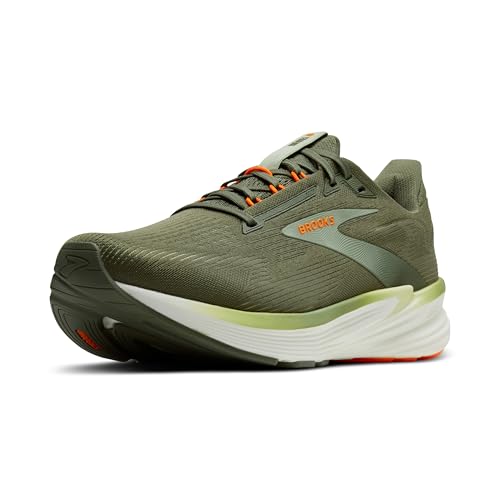
As an Amazon Associate we earn from qualifying purchases at no extra cost to you. Ratings are shown as listed on Amazon.
Best running shoes by runner and situation
| Shoe | Best for | Approx. weight | Heel-to-toe drop | Surface | Typical price range |
|---|---|---|---|---|---|
| Brooks Ghost 16 | Daily road miles and new runners | Approximately 269 g / 9.5 oz | 12 mm | Road, treadmill, light packed paths | $130–$150 |
| ASICS Novablast 5 | Soft, lively daily training | Approximately 255 g / 9.0 oz | 8 mm | Road and treadmill | $135–$150 |
| ASICS Gel-Kayano 31 | Stable long-distance road running | Approximately 305 g / 10.8 oz | 10 mm | Road and treadmill | $160–$170 |
| Saucony Endorphin Speed 4 | Tempo runs, intervals, and racing | Approximately 233 g / 8.2 oz | 8 mm | Road | $170–$180 |
| Hoka Clifton 10 | Lightweight cushioned road mileage | Approximately 278 g / 9.8 oz | 8 mm | Road and treadmill | $145–$165 |
| Hoka Speedgoat 6 | Technical trail running | Approximately 278 g / 9.8 oz | 5 mm | Rocky, muddy, and uneven trails | $155–$170 |
Weights are approximate and generally refer to a men’s US size 9; women’s versions, wide sizes, and different sizes can vary. A shoe that is lighter on paper is not automatically better: foam density, rocker geometry, fit, and outsole rubber affect how it feels over several hours.
Best everyday running shoe: Brooks Ghost 16
The Brooks Ghost 16 is the most uncomplicated recommendation for regular road running. Its balanced cushioning is protective without feeling excessively soft, and its traditional 12 mm drop can feel comfortable to runners who prefer more heel-to-toe elevation. The engineered mesh upper has a familiar, adaptable fit, while the rubber outsole is suitable for repeated pavement and treadmill use.
Choose it for easy runs, commuting by foot, beginner training plans, and weekly mileage that does not require a specialized racing shoe. It is less exciting than a plated racer and not the best option for muddy trails, but that restraint is part of its appeal. The standard width suits many feet, while wide versions are available in common colorways.
Best soft and energetic road shoe: ASICS Novablast 5
The Novablast 5 is a better match for runners who want a softer, more springy ride than the Ghost. Its thick FF BLAST MAX midsole provides substantial cushioning while keeping the shoe lively enough for moderate pace changes. The 8 mm drop is middle-of-the-road and generally easier to adapt to than very low-drop designs.
It works especially well for easy-to-moderate runs, long aerobic sessions, and runners who dislike firm, flat-feeling trainers. The outsole is capable on wet pavement, but this is still a road shoe: shallow gravel and dry park paths are reasonable, whereas loose rock and wet roots are not.
Best stability shoe: ASICS Gel-Kayano 31
The Gel-Kayano 31 is designed for runners who prefer a guided, planted sensation. Its 4D GUIDANCE SYSTEM uses broader platform geometry and structured elements rather than an intrusive medial post, so support feels more gradual than corrective. The high-cushion midsole is appropriate for easy and long road runs, although its roughly 305 g weight is noticeable beside lightweight trainers.
Buy it if your priority is a stable platform, secure upper, and predictable behavior late in a run. Do not choose it solely because you think you “need” stability based on wear patterns or a shoe salesperson’s quick visual assessment. Comfort and a professional gait or foot evaluation matter more if you have persistent pain, recurring injuries, or difficulty finding a stable fit.
Best for speed training: Saucony Endorphin Speed 4
The Endorphin Speed 4 is the most versatile fast option in this group. Its PWRRUN PB foam and flexible nylon plate create a rolling, responsive ride for intervals, tempo efforts, progression runs, and some race distances. It is substantially lighter than traditional daily trainers, but its firmer, more aggressive geometry may feel less relaxed during very slow runs.
The curved profile rewards runners who land smoothly and like to move quickly. The outsole rubber is more substantial than on many delicate racing shoes, making it a practical one-shoe compromise for runners who cannot justify separate training and racing footwear. For purely easy mileage, the Ghost, Clifton, or Novablast is usually easier to live with.
Best lightweight cushioned trainer: Hoka Clifton 10
The Clifton 10 combines high cushioning with a relatively low weight. Its rocker-shaped sole helps transition from landing to toe-off, while the wide base gives the shoe a steadier feel than its weight suggests. The 8 mm drop is moderate, and the upper has a streamlined fit that is secure rather than especially roomy.
It suits runners who want efficient road miles, walking-running plans, and long treadmill sessions without the heavier feel of maximum-stability shoes. The Clifton is not a trail shoe, and its outsole is best preserved for pavement. Runners with broad forefeet should try the wide version or compare the forefoot carefully before buying.
Best trail running shoe: Hoka Speedgoat 6
For technical trails, the Speedgoat 6 is the clear choice among these shoes. Its Vibram Megagrip outsole uses pronounced lugs for traction on dirt, rock, and uneven terrain, while the cushioned platform helps reduce the harshness of long rocky sections. The 5 mm drop and secure upper are suited to varied trail surfaces rather than smooth roads.
It is overbuilt for ordinary pavement: the lugs can feel noisy and inefficient on asphalt, and the firm grip rubber is unnecessary for a daily city run. On trails, inspect the fit around the heel and midfoot first. A secure heel with enough toe room is more important than choosing the same size you wear in casual shoes.
Road versus trail: do not use the outsole as an afterthought
- Road rubber: flatter, quieter, and usually more efficient on asphalt. It often lasts well when used on its intended surface but can lose traction on wet roots or loose gravel.
- Trail rubber: deeper lugs and stickier compounds improve grip, but they may wear faster on pavement and feel less smooth during road sections.
- Mixed routes: choose a road-to-trail shoe only when the trail is firm and maintained. A door-to-trail model is not equivalent to a technical trail shoe.
- Wet conditions: mesh uppers rarely keep feet dry for long. Traction and drainage are separate decisions from waterproofing.
How to choose the right fit and cushioning
1. Measure at the end of the day
Feet often expand during a run. Measure both feet while standing and use the larger foot. Leave roughly 10–15 mm of space in front of the longest toe, enough to avoid contact during descents without letting the foot slide forward.
2. Check the heel before judging the toe box
Tie the shoe firmly and walk downhill or use stairs. The heel should stay mostly in place without painful pressure. If the heel slips, changing to a runner’s-knot lacing pattern may help; if it still slips, a different last or model is safer than buying a smaller size.
3. Match cushioning to use, not marketing
More foam can be useful for long, slow mileage, but a very soft shoe may feel unstable during quick turns or uneven terrain. A firmer, lighter shoe often feels more precise for intervals. The best running shoes are the ones that remain comfortable at the pace and distance you actually run.
4. Transition gradually
When changing from a high-drop shoe to a low-drop shoe, or from a flexible trainer to a plated design, start with short easy runs. Use the new model for approximately 20–30% of weekly running during the first week, then increase only if it remains comfortable. Persistent pain warrants advice from a qualified medical or running professional.
Durability, maintenance, and cost per use
For many road shoes, approximately 500–800 km is a practical inspection range, but body weight, surface, gait, weather, and outsole compound can move that figure substantially. Trail shoes may wear sooner if used on pavement, especially at the heel and toe lugs. Replace or retire a shoe when the outsole is smooth in key areas, the midsole feels permanently compressed, the upper develops structural tears, or comfort changes noticeably—not only when a particular mileage number is reached.
Consider a $150 shoe used for 600 km: its approximate cost is $0.25 per kilometer. If it is used for three 8-kilometer runs each week, that is 24 km weekly, or about 25 weeks before reaching 600 km. This calculation helps compare durability, but it should not justify running in a visibly worn shoe.
- Rotate two pairs when possible so foam and uppers can recover between runs.
- Remove grit and mud with a soft brush, then air-dry at room temperature.
- Do not machine-dry shoes or place them on a radiator; heat can distort foam and adhesives.
- Use trail shoes mainly on trails and road shoes mainly on roads to protect their intended outsole compounds.
- Do not rely on thick socks to fix a fundamentally poor fit; they can create pressure and overheating.
Final recommendations
Choose the Brooks Ghost 16 for dependable everyday road miles, the ASICS Novablast 5 for a softer and more energetic ride, the Gel-Kayano 31 for structured stability, the Endorphin Speed 4 for fast training, the Clifton 10 for lightweight cushioning, and the Speedgoat 6 for technical trails. If two shoes meet your surface and distance needs, choose the one with the more secure heel, sufficient toe room, and comfortable underfoot feel at your normal running pace.