Key takeaways
- Place the bed away from windows, blind cords, heaters and radiators.
- Anchor tall furniture to the wall so that a climbing child cannot pull it over.
- Check that the mattress fits snugly with no more than the maker’s stated gap.
- Check hardware regularly and tighten bolts; stop using the bed if parts are broken.
- Use a baby gate at the bedroom door if the child may wander.
- Register the product with the maker so you are notified of recalls.
- Follow the maker’s manual and ask your pediatrician about safe sleep practices.
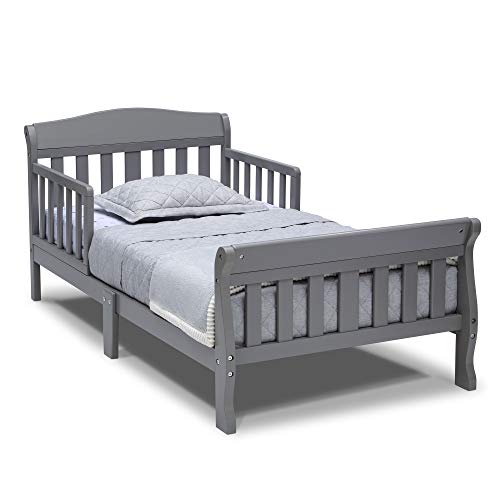
For most families, a low wooden or metal toddler bed that uses a standard crib mattress, such as the Delta Children or Dream On Me toddler beds, is the practical pick for the move out of the crib, while parents who want the bed to last for years should consider a convertible crib that turns into a toddler bed. Parents of children who climb out early or who like the freedom of a floor bed may prefer a Montessori-style floor bed, and travelers can look at inflatable or portable toddler beds. Always check the maker’s stated weight limit, mattress size and safety certification before buying.
Our top picks


As an Amazon Associate we earn from qualifying purchases at no extra cost to you.
Toddler Beds at a Glance
| Type / Example | Best for | Stated features | Limits |
|---|---|---|---|
| Delta Children wood and character toddler beds | Budget-conscious families wanting themes | Makers list low frames with built-in guardrails that accept a standard crib mattress | Short usable life; character designs can be outgrown |
| Dream On Me Classic and similar toddler beds | Simple, low-cost transition | Maker lists a low frame with side rails | Basic styling; assembly quality varies |
| Convertible crib (e.g. Babyletto Hudson with conversion kit) | One purchase from baby to young child | Maker lists a toddler-bed conversion that reuses the crib frame | Conversion kit may be sold separately; higher outlay |
| Montessori floor bed | Children who want independence; open play rooms | Low frame with a rail or house shape; sleeper can get in and out | No cage-like containment; room must be childproofed |
| Inflatable / portable toddler bed (e.g. Regalo My Bed) | Travel, grandparents’ houses | Maker lists a portable bed with bolsters and sometimes a pump | Not a primary bed for long-term use; check weight limits |
| Toddler bed with storage drawer | Small bedrooms | Drawer under the bed for bedding or toys | Heavier; drawer needs clearance |
When Is a Child Ready for a Toddler Bed?
Pediatric groups and safety agencies often suggest keeping a child in a crib until they climb out or reach the crib’s stated height or weight limit, which for many children happens between roughly eighteen months and three years. There is no single right age. Climbing out of a crib is a safety reason to move sooner, because a fall from a crib rail can cause injury. If you have questions about readiness or safe sleep, ask your child’s pediatrician.
What to Look for in a Toddler Bed
Mattress size
Most toddler beds in the US take a standard crib mattress, which is commonly around 52 by 28 inches according to common crib standards. Keep the mattress you already own if the bed’s listing says it fits. A mattress that is too small leaves gaps where a child could become trapped, so the maker’s instructions on mattress size and fit should be followed, and gaps between mattress and frame should be minimal.
Height and guardrails
Toddler beds are designed to be low to the ground, which cuts the height of a fall. Side rails or guardrails help prevent rolling out, though they are not designed to keep a determined climber contained. Look for rail designs without wide openings where heads or limbs could be caught, and follow the maker’s age and weight guidance.
Safety certification
Look for a statement that the bed meets applicable federal safety requirements for toddler beds. In the United States, the Consumer Product Safety Commission has a mandatory standard for toddler beds, and the Juvenile Products Manufacturers Association runs a certification program. A maker’s listing may mention these; check the product’s labeling.
Materials and finish
Solid wood, such as pine, is common and durable, while metal frames are lighter. Engineered wood is cheaper but can be less durable. Check that paints and finishes are described as non-toxic and meet children’s product regulations, and allow new furniture to air out.
Weight limit and lifespan
Toddler beds have weight limits listed by the maker, often in the range of 50 pounds, though it varies. Children who grow quickly may need a twin bed sooner. A convertible crib or a bed that transitions to a daybed or twin can extend the life of the purchase.
Bedding
Safe sleep guidance suggests keeping pillows, heavy comforters and soft toys out of the cot for young infants. For toddlers, check with your pediatrician and the bed’s manual for when a thin blanket or small pillow is appropriate.
Picks by Need
Best budget pick: Delta Children or Dream On Me
These two brands are widely stocked and make low frames with rails in simple finishes. The Delta Children range includes licensed character designs that appeal to young children, while Dream On Me offers plain designs in several colors. Reviewers often say the main trade-off is that quality is adequate rather than premium, and that assembly instructions are worth following carefully. Models change, so check the current range.
Best long-term value: convertible crib
A convertible crib avoids buying a separate bed and keeps the same mattress. Brands such as Babyletto, with the Hudson model, list conversion kits to turn a crib into a toddler bed and sometimes a daybed or full bed. Confirm the kit is included or sold separately for your model, and make sure the bed’s mattress and rail guidelines match.
Best for independence: Montessori floor bed
Floor beds allow a child to get in and out freely. They need a fully childproofed room, with anchored furniture, covered outlets and secured cords, and a closed door or baby gate if you do not want the child roaming at night. They suit calm sleepers and parents who are comfortable with the approach.
Best for travel: portable or inflatable
Inflatable beds such as the Regalo My Bed are designed for trips and short stays. They are lightweight, though reviewers advise checking weight limits and inflating as instructed. They are not intended to replace a primary bed.
Best for small rooms: storage or compact designs
A frame with an under-bed drawer holds bedding and toys. Make sure the drawer’s presence does not alter the bed’s height, mattress fit or stability.
Pick X If …
| Pick this | If you … |
|---|---|
| Delta or Dream On Me toddler bed | Want an affordable, standard-mattress option |
| Convertible crib with kit | Prefer one purchase for many years |
| Montessori floor bed | Have a childproofed room and want independence |
| Inflatable portable bed | Need a travel option |
| Storage toddler bed | Have limited bedroom storage |
| Twin bed with rail | Want to skip the toddler bed stage |
Budget Tiers
| Tier | Typical choice | Trade-offs |
|---|---|---|
| Budget | Basic toddler bed, metal or engineered wood | Short lifespan, plainer finish |
| Mid-range | Solid wood or convertible crib | More expensive upfront, longer use |
| Premium | Designer convertible cribs, solid hardwood floor beds | High outlay for a short transition |
Safety and Setup Notes
- Place the bed away from windows, blind cords, heaters and radiators.
- Anchor tall furniture to the wall so that a climbing child cannot pull it over.
- Check that the mattress fits snugly with no more than the maker’s stated gap.
- Check hardware regularly and tighten bolts; stop using the bed if parts are broken.
- Use a baby gate at the bedroom door if the child may wander.
- Register the product with the maker so you are notified of recalls.
- Follow the maker’s manual and ask your pediatrician about safe sleep practices.
Alternatives
- Staying in the crib longer: If the child is not climbing out, many families keep the crib until the maker’s height limit is reached.
- Twin bed with removable guardrail: Skips the toddler bed stage; check that the rail is rated for young children and that the mattress sits securely.
- Daybed: Works for naps and guest use, but check that guardrails and gaps are suitable for toddlers.
Frequently Asked Questions
What age should I move my child to a toddler bed?
There is no set age, but many children move between about eighteen months and three years. A common trigger is climbing out of the crib, which can be a safety risk. If you are unsure, your pediatrician can advise.
Do toddler beds use a crib mattress?
Most do. A standard crib mattress fits most toddler beds and avoids buying a second one. Check that the mattress fits tightly in the frame according to the maker’s instructions.
Are bed rails necessary?
Many toddler beds come with built-in guardrails, which help reduce rolling out. Some floor beds omit rails because the sleeper is already close to the floor. Choose based on the child and the room setup, and follow the product’s safety guidance.
Is a Montessori floor bed safe?
It can be when the room is childproofed, but it is a different approach from a cot. The child can leave the bed freely, so furniture should be anchored, cords secured and outlets covered. If you have concerns, talk to your pediatrician.
How long will a toddler bed last?
Most children use one for a year or two, until they outgrow the weight or length limit the maker lists. Convertible cribs and floor beds that grow into twin beds can last longer.
What should I check for safety?
Look for labeling that says the bed meets applicable toddler bed safety requirements, check the weight limit and mattress fit, and inspect the bed regularly. Register the product so you receive recall notices if any are issued.