Key takeaways
- Measure the room, door and stairwell before ordering; many storage beds ship in heavy boxes.
- Leave enough pull-out clearance for drawers; check the maker’s dimensions.
- Do not exceed the stated mattress weight or the weight limit for the frame.
- Keep fingers and children away from gas-lift mechanisms.
- Do not store flammable items, such as fuel or aerosols, in under-bed spaces.
- Use breathable containers for textiles and consider moisture protection in humid climates.
- Tighten bolts periodically to reduce squeaks.
For most bedrooms, a storage bed with pull-out drawers suits buyers who need easy access to bedding and clothes, while a lift-up (gas-lift) ottoman bed suits those who want the largest single storage space and can accept moving the mattress up to reach it. If floor space is tight, a platform bed with drawers beats a separate dresser; if you have a small room with limited clearance, drawer beds that need floor space to pull out can be the wrong fit. The right choice depends on room clearance, mattress size, the weight of the mattress and how often you will open the storage.
Our top picks
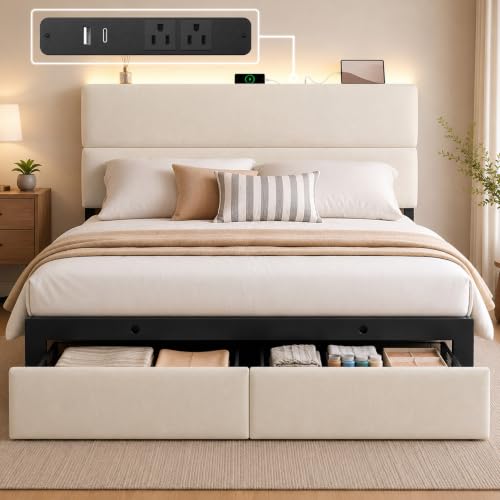

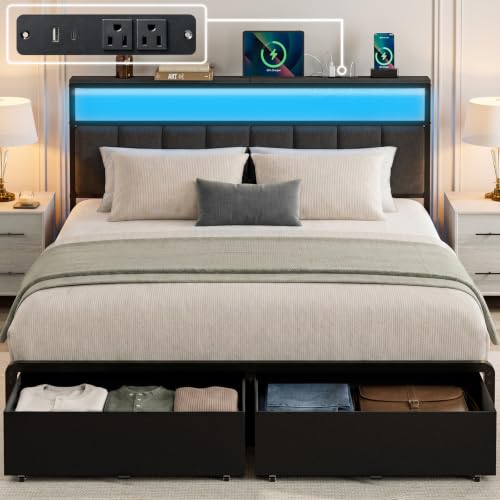

As an Amazon Associate we earn from qualifying purchases at no extra cost to you.
Storage Bed Types at a Glance
| Type | Best for | Stated features | Limits |
|---|---|---|---|
| Drawer platform bed (e.g. IKEA Malm, Prepac Sonoma, Zinus platform models) | Everyday access to clothes and linens | Makers list built-in drawers under the mattress platform and slat or panel support | Needs clearance to pull drawers out; drawer capacity is moderate |
| Lift-up ottoman / gas-lift bed | Bulky items such as duvets, suitcases | Makers list gas struts that raise the base and mattress together | Heavier mattress is awkward to lift; whole bed must be accessible from the foot or side |
| Bed with storage boxes (e.g. IKEA Brimnes, Malm with boxes) | Flexible, add-on storage | Separate boxes or drawers slot into the frame | Boxes are less robust than solid drawers |
| Headboard storage bed | Small rooms where nightstands are tight | Shelves or cabinets built into the headboard | Items are small; headboard may be bulky |
| Divan base with drawers | UK-style bases with a separate mattress | Drawers inside a fabric-covered base | Heavy; lower mattress choice flexibility |
| Trundle or captain’s bed | Kids and guest rooms | Makers list drawers or a pull-out second sleeper | Mattress height and weight limits |
What to Consider When Buying a Storage Bed
Mattress size and thickness
Check the frame’s stated mattress size (twin, full, queen, king) and the maximum mattress height. Many platform storage frames limit thick mattresses because the sides are low or because a gas-lift mechanism must support the extra weight. A very heavy mattress, such as a thick hybrid or latex model, may exceed what the struts are designed to lift. The maker’s listing should state the maximum mattress weight; if it does not, contact them.
Support: slats or solid platform
Mattress makers often require slat spacing within a specific range, commonly a few inches, to keep warranties valid. Solid or closely slatted platforms suit foam mattresses, while wider gaps may sag. Center support legs matter on queen and king frames. If your mattress warranty is a concern, read its foundation requirements and compare to the frame’s description.
Drawer quality and clearance
Look at the drawer hardware: metal glides, rollers and full-extension runners tend to be more durable than simple plastic runners, as reviewers often note. Measure the space on each side or at the foot and allow for the full pull-out depth. Beds with drawers on both sides need clearance on both sides; two-sided access can be impractical against a wall.
Gas-lift mechanisms
Lift-up beds use hydraulic or gas struts to raise the base. Makers state the number of struts and the lift capacity. Use the frame only with mattress types and weights the maker lists, and follow the instructions for closing the base, since a heavy base lowered quickly can trap fingers. Keep children away from the mechanism.
Materials and finish
Solid wood frames are durable but heavy and costly. Engineered wood (particleboard or MDF with a veneer or laminate) is common at the budget and mid-range tiers and works well if assembled carefully. Upholstered bases give a softer look but are harder to clean. If indoor air quality is a priority, look for makers that list low-emission board or certification, and let new furniture air out.
Assembly and weight
Storage beds are heavy and have many parts. Plan for two people and allow a few hours. Check the delivery dimensions of the box and any stairs or narrow hallways. Tighten hardware again after the first few weeks, because joints can loosen as the bed settles.
Picks by Need
Best for everyday storage: a drawer platform bed
IKEA’s Malm, which the maker offers with drawers or storage boxes in various sizes, is a frequent example of a mainstream drawer bed. Prepac’s Sonoma-style platform storage beds and Zinus’s platform frames with drawers are also commonly mentioned by reviewers. These give a clean look and reachable storage but require clearance. Model availability changes, so check the current range and sizes.
Best for bulky items: lift-up ottoman bed
Ottoman beds provide a single large compartment under the mattress, great for seasonal bedding and luggage. Because you lift the whole base, they work best for lighter mattresses and for users comfortable with the lifting motion. They also leave drawers off the floor space, which helps in narrow rooms.
Best flexible option: frame with storage boxes
Frames like IKEA’s Brimnes and Malm-with-boxes designs allow you to add or remove boxes as needs change. They suit rooms where the bed may be moved, and renters who want to adjust over time.
Best for small bedrooms: headboard storage or under-bed rolling bins
If drawer clearance is impossible, a headboard with shelves or cabinets, combined with low rolling bins under a standard frame, can offer storage without needing side clearance.
Best for kids: captain’s or trundle beds
Kids’ storage beds should be rated for the child’s weight and come with guardrails where relevant. Follow the manufacturer’s age and weight limits and check for certification marks, such as JPMA or safety standards that the maker lists, for children’s furniture.
Pick X If …
| Pick this | If you … |
|---|---|
| Drawer platform bed | Want daily access and have floor clearance |
| Lift-up ottoman bed | Store bulky items and have a lighter mattress |
| Bed with storage boxes | Want flexibility and a lower cost of entry |
| Headboard storage | Have no clearance beside the bed |
| Divan with drawers | Prefer a traditional base and a separate mattress |
| Solid wood frame | Prioritize longevity and can budget for it |
Budget Tiers
| Tier | Typical build | Trade-offs |
|---|---|---|
| Budget | Engineered-wood frame, simple drawers or boxes | Lighter runners; careful assembly needed |
| Mid-range | Better hardware, upholstered or veneer options, gas-lift models | Heavier and bulkier |
| Premium | Solid wood, soft-close drawers, custom finishes | Cost and weight; delivery lead time |
Fit, Safety and Care Notes
- Measure the room, door and stairwell before ordering; many storage beds ship in heavy boxes.
- Leave enough pull-out clearance for drawers; check the maker’s dimensions.
- Do not exceed the stated mattress weight or the weight limit for the frame.
- Keep fingers and children away from gas-lift mechanisms.
- Do not store flammable items, such as fuel or aerosols, in under-bed spaces.
- Use breathable containers for textiles and consider moisture protection in humid climates.
- Tighten bolts periodically to reduce squeaks.
Alternatives
- Standard bed frame plus rolling bins: Cheaper and easy to move, but the bins can collect dust and look less tidy.
- Bed risers: Provide height for under-bed storage if the frame supports it and the maker permits.
- Dresser or wardrobe: A separate piece of furniture may offer better access when the room has space.
Frequently Asked Questions
Are storage beds as comfortable as regular beds?
Comfort depends mostly on the mattress and the support beneath it. A well-built storage bed with proper slats or a solid platform supports a mattress just as well as a regular frame. Check that slat spacing meets your mattress maker’s requirements.
Do drawers or lift-up storage hold more?
Lift-up beds generally provide a single large space, so they suit bulky items. Drawers offer easier access to smaller items but can be limited by the frame structure. Capacity varies by model, so compare the stated dimensions.
What mattress works best on a lift-up bed?
Lighter mattresses, such as foam or thinner hybrids, are easier to lift with the base. Makers list a maximum mattress weight, and exceeding it can strain the struts. Follow their guidance.
How much clearance do I need for drawers?
You need at least the full depth of the drawer plus room to stand and reach, which can be roughly the length of the drawer itself. Measure the pull-out depth listed by the maker and compare it with the space beside or at the foot of the bed.
Are storage beds hard to assemble?
They have more parts than a simple frame, and many are heavy, so plan for two people and a few hours. Follow the instructions in order, avoid fully tightening bolts until everything is aligned, and re-tighten after a few weeks.
Can I put a storage bed against a wall?
Yes, but drawers on that side will not open. Choose a design with drawers only on the accessible side or at the foot, or a lift-up bed that opens from the foot or side.