Key takeaways
- Keep the airway clear: the baby’s chin should not rest on the chest, and their face should stay visible and uncovered by fabric. Many baby-wearing educators teach the TICKS checklist: tight, in view, close enough to kiss, keep chin off chest, supported back.
- Position and age: only use a carry position that the maker lists as suitable for your baby’s weight and developmental stage. Front-facing-out is generally listed for older babies with good head control.
- Hip comfort: look for a seat that supports the thighs knee to knee so the baby’s legs sit in a natural, spread position. If you have concerns about hip development, ask your paediatrician.
- Parent fit: check the waistband and strap length range against your own body, especially if two adults of different sizes will share it.
- Temperature: babies can overheat in carriers. Dress them lightly and consider mesh models in hot weather.
- Care: follow the label. Many fabric carriers are machine washable on a gentle cycle and should be air dried, but this varies by model.
- Activities: do not carry a baby while cooking over heat, riding a bike or driving.
For most parents, a structured, adjustable carrier that grows from newborn to toddler, such as the Ergobaby Omni Breeze or the Tula Free-to-Grow, is the safest all-round choice; a stretchy wrap such as the Boba Wrap suits the newborn months and parents who want a soft, compact option; and a budget multi-position carrier such as the Infantino Flip suits occasional use. Which one is best comes down to your baby’s age and weight, how long you carry at a stretch, the climate you live in, and whether two adults of different sizes will share it.
Our top picks


As an Amazon Associate we earn from qualifying purchases at no extra cost to you.
Baby Carriers at a Glance
| Product | Type | Best for | Key stated points | Limits |
|---|---|---|---|---|
| Ergobaby Omni Breeze | Structured, mesh panel | Warm climates, newborn to toddler | The maker lists multiple carry positions and a wide weight range from newborn to toddler | Mid-to-premium tier; more straps to learn |
| Ergobaby Embrace | Soft structured, newborn-focused | Early months, light carrying | The maker lists it as a newborn-oriented, simpler carrier | Shorter use window than all-stage carriers |
| Tula Free-to-Grow | Structured, adjustable seat | Long use through toddlerhood | The maker lists a seat that adjusts as the child grows, with printed fabric options | Bulkier for small babies without an insert |
| BabyBjorn Baby Carrier Mini and Harmony | Structured, front-facing-in focus | Parents who want a clear, simple design | Makers describe fewer positions and a focus on ergonomic inward carrying | Narrower range of carry modes; weight window set by the maker |
| Boba Wrap | Stretchy fabric wrap | Newborns, fourth-trimester carrying | One long piece of stretchy fabric that you tie yourself | Heavier babies can feel harder to support; learning curve |
| Infantino Flip 4-in-1 | Budget structured | Occasional and short outings | The maker lists several carry positions at a lower tier | Less padding for long wear |
Types of Baby Carrier
Structured Carriers
Structured carriers use a padded waistband and shoulder straps with a seat panel that holds the baby. They distribute weight onto the hips and are popular for longer walks and heavier babies. The Ergobaby, Tula and BabyBjorn models above all fall into this family. They are quick to put on once adjusted, but they cost more and take up more room in a bag.
Wraps and Slings
A stretchy wrap, such as the Boba Wrap, is a long piece of knit fabric that you wrap around your torso and tie. Reviewers praise the snug, soft fit for newborns and the low cost compared with structured carriers. The drawbacks are the learning curve, heat in warm weather, and the way the fabric can sag as a baby gets heavier. Makers generally list lower weight limits than structured carriers.
Hybrid and Hip Carriers
Some carriers combine a wrap-style body with buckles, and hip-seat carriers offer a platform for older children. These suit toddlers who like to be carried on a hip and parents who need quick up-and-down transitions, but they are less suited to newborns.
Models Worth Knowing
Ergobaby Omni Breeze
The Omni Breeze is Ergobaby’s mesh-panel carrier. The maker lists four carry positions, including front-facing-in, front-facing-out for older babies, hip and back, and a weight range that begins at newborn size and extends into the toddler years. The breathable mesh makes it a frequent suggestion for warm climates, and reviewers like the lumbar support. Check the maker’s guidance on whether a newborn insert is needed for your baby’s size, and on the minimum age or developmental stage for each position.
Tula Free-to-Grow
Tula’s carrier is known for an adjustable seat that widens as the child grows, plus a wide range of printed fabrics. The maker lists a weight range that spans from baby to toddler. It is popular with parents who plan to carry for a long time, though small babies may need an insert to sit securely.
BabyBjorn Mini and Harmony
BabyBjorn offers simpler carriers with fewer positions. The company describes a design that keeps newborns in an ergonomic position, and the Mini is aimed at the earliest months. If you only want to carry a small baby close for a few months, this narrower option may be all you need, but the limited weight range means it will be outgrown sooner.
Boba Wrap
The Boba Wrap is a stretchy, lightweight option for newborns. It folds into a small package, which helps for travel. Learn the wrapping steps in advance and practise before you need it. The maker’s instructions cover how to position the baby with an open airway.
Infantino Flip 4-in-1
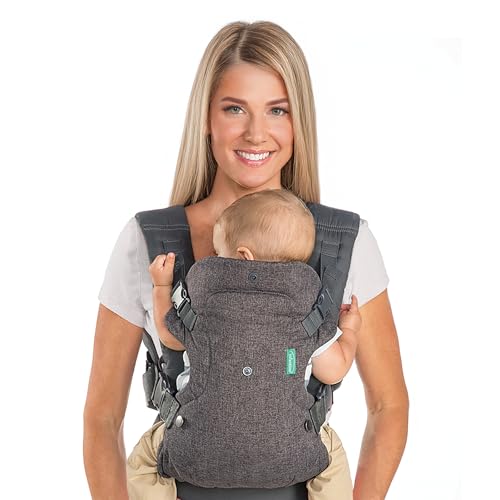
Infantino sits in the budget tier and lists multiple positions. It is a reasonable second carrier for grandparents or short outings, but reviewers note less padding and fewer adjustment points, which can matter on long walks.
Fit, Safety and Comfort Notes
- Keep the airway clear: the baby’s chin should not rest on the chest, and their face should stay visible and uncovered by fabric. Many baby-wearing educators teach the TICKS checklist: tight, in view, close enough to kiss, keep chin off chest, supported back.
- Position and age: only use a carry position that the maker lists as suitable for your baby’s weight and developmental stage. Front-facing-out is generally listed for older babies with good head control.
- Hip comfort: look for a seat that supports the thighs knee to knee so the baby’s legs sit in a natural, spread position. If you have concerns about hip development, ask your paediatrician.
- Parent fit: check the waistband and strap length range against your own body, especially if two adults of different sizes will share it.
- Temperature: babies can overheat in carriers. Dress them lightly and consider mesh models in hot weather.
- Care: follow the label. Many fabric carriers are machine washable on a gentle cycle and should be air dried, but this varies by model.
- Activities: do not carry a baby while cooking over heat, riding a bike or driving.
Budget Tiers
- Budget: Infantino and similar. Good for light, occasional use.
- Mid-range: Boba Wrap, Ergobaby Embrace and some BabyBjorn models. Good for the early months and daily use.
- Premium: Ergobaby Omni Breeze, Tula Free-to-Grow. Good for long-term carrying and heavier children.
Pick X If… Decision Table
| Pick this | If you want… |
|---|---|
| Ergobaby Omni Breeze | One breathable carrier that carries from newborn into toddlerhood |
| Tula Free-to-Grow | An adjustable seat and a long use window for a growing child |
| BabyBjorn Mini or Harmony | A simple, no-fuss design for the early months |
| Boba Wrap | A soft, compact wrap for a newborn and travel |
| Infantino Flip | An inexpensive back-up for short outings |
Alternatives to a Carrier
- Stroller or travel system: better for long outings with a lot of gear and for parents with back or shoulder issues.
- Ring sling: a lightweight fabric sling that adjusts quickly, popular for short, in-and-out trips.
- Hip-seat carrier: a platform worn at the waist for toddlers who want to be lifted frequently.
Practical Buying Considerations
Try before you buy whenever you can. Fit is personal, and a carrier that suits one parent may feel awkward on another. Many baby shops and local baby-wearing groups let you try several models with a doll or a real baby, and they can show you how to adjust straps and position the seat correctly.
Think about the seasons. A padded structured carrier is comfortable in cool weather but warm in summer, so mesh models such as the Omni Breeze earn their place in hot climates. In cold weather, layers go on the parent and a coat designed for babywearing may be needed rather than bulky clothing between you and the baby.
Weigh up the learning curve. Wraps reward patience and practice, while structured carriers are quicker. If you will be sharing between partners, adjustable straps and a simple buckle system will save frustration. Look for a carrier with clear instructions, and watch the maker’s tutorial videos before using it with the baby.
Also consider storage and travel. Wraps pack small, structured carriers take more room, and some models include a pocket or hood. Finally, check the stated weight range carefully. A carrier that starts at newborn but tops out at a modest weight will be outgrown sooner than one listed to the toddler years, so match the range to how long you plan to carry. Inspect buckles, stitching and straps regularly for wear, and stop using any carrier that shows damage.
Frequently Asked Questions
When can a baby go in a carrier?
Many carriers are listed for use from birth when used with the right insert or in a newborn-friendly position, while others start at a minimum weight. Check the maker’s stated range for your model and ask your paediatrician if your baby was born early or has health concerns.
Is a wrap or a structured carrier better for a newborn?
Wraps give a soft, snug fit and are popular for the earliest months, while structured carriers are quicker to put on and often more comfortable for heavier babies. Many parents start with a wrap and later move to a structured model.
Can I breastfeed in a carrier?
Many parents do, and makers of some carriers describe nursing-friendly positions. Make sure the baby’s airway stays clear and their head is supported, and return them to an upright position afterwards.
How do I know the carrier fits me correctly?
The waistband should sit snugly on your hips or waist, the straps should hold the baby high and close enough to kiss, and your back should feel supported rather than strained. Try the carrier with a helper or in a store if you can, and follow the instruction manual.
Can carriers cause hip problems?
A carrier that supports the baby’s thighs in a natural spread-squat position is generally considered a hip-friendly design. If you have a family history or a diagnosis related to hip development, discuss carrier choice with a paediatrician.
How should I wash a baby carrier?
Follow the care label. Many are machine washable on a gentle cycle and air dried, and spot cleaning works for small spills. Avoid harsh detergents and check buckles and straps for wear after washing.