Key takeaways
- Check floor area, not just the “sleeps” or “seats” claim. A 10 by 10 foot footprint seats a camp table and four chairs, while smaller footprints are best for two or three people.
- Compare the peak height: tall adults want enough headroom to move without ducking at the sidewalls.
- Consider the packed dimensions, especially for a small car trunk. Pop-up frames can be long and awkward.
- Count weight if you carry it from a parking area to the site.
- Check whether a floor or a ground tarp is included. Many models have none.
For most campers, a pop-up instant screen house from Clam, Coleman or Eureka is the easiest way to get bug-free shade, a freestanding frame suits patios and campsites with hard ground, and a heavier-duty hub-style or pole-style screen room suits families who leave a shelter up for days. Pick by how fast you want it up, how many people need to fit, and how much wind and rain you expect, because screen houses are built mainly to stop insects and give shade rather than to resist storms.
Our top picks


As an Amazon Associate we earn from qualifying purchases at no extra cost to you.
What a Screen House Actually Does
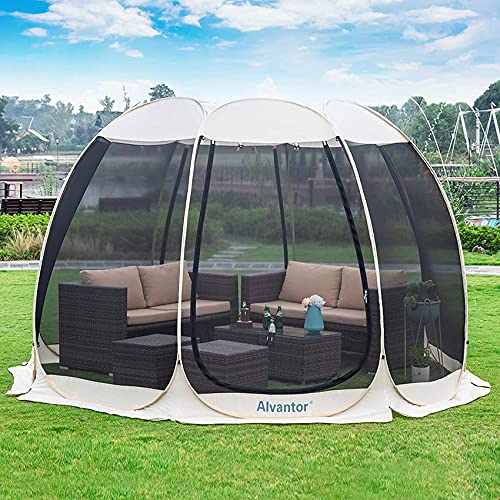
A screen house is a roof with mesh walls. It keeps out mosquitoes, flies and wasps, gives shade, and offers a place to eat and play outside the tent. It is not a tent: it usually has no floor, and the roof is often only light water-resistant fabric. Makers commonly say so in their descriptions, so do not expect full rain protection or storm survival unless the maker explicitly says it is rated for it.
Best Screen Houses at a Glance
| Option | Style | Best for | Limits |
|---|---|---|---|
| Clam Quick-Set Screen Hub | Hub-style, quick-pitch | Fast setup at campgrounds and tailgates | Sized for a handful of people; wind needs staking; fabric is light |
| Coleman instant screen house | Pop-up frame | Budget to mid-range family use | Setup is quick but packed size can be large; thin fabric |
| Eureka Northern Breeze | Pole-style with integrated mesh | Longer stays, bigger groups | Slower setup; heavier pack |
| Core Equipment instant screen house | Instant frame | Mid-range buyers wanting fast setup and bigger floor space | Bulkier when packed |
| Gazebo with mesh netting | Frame with add-on walls | Backyard and patio, permanent-ish use | Not designed for packing or backcountry |
Exact dimensions and fabric ratings vary by model year and by retailer. Compare the “floor area”, “peak height” and “weight” figures on the maker’s own product page for the model you are considering.
Match the Style to the Trip
Instant or pop-up frames
Instant screen houses use a pre-assembled scissor frame that expands in minutes. Reviewers consistently praise the speed, which is the main reason to choose one. The trade-offs are a larger packed bundle and a frame that can bind if bent. Treat the frame gently, and follow the maker’s guidance on collapsing it.
Hub-style systems
Hub-style models, like Clam’s Quick-Set range, use hubs connecting poles to create a dome-style roof. They tend to be lighter than pop-up frames for the same floor area and are widely used on tailgates and campgrounds. They need staking and guy lines to cope with wind, and the maker’s stated capacity is typically a handful of adults.
Traditional pole-style
Pole-style screen rooms are the slowest to set up but are the most adjustable and often the sturdiest in light wind. Choose this style when you plan to leave a shelter up for days and are able to spend time pitching.
Gazebo plus netting
A permanent gazebo or pergola with mesh panels suits a yard or patio rather than a camping trip. It is more comfortable for eating and gatherings but is not portable, and most are rated for light weather only.
Size and Fit
- Check floor area, not just the “sleeps” or “seats” claim. A 10 by 10 foot footprint seats a camp table and four chairs, while smaller footprints are best for two or three people.
- Compare the peak height: tall adults want enough headroom to move without ducking at the sidewalls.
- Consider the packed dimensions, especially for a small car trunk. Pop-up frames can be long and awkward.
- Count weight if you carry it from a parking area to the site.
- Check whether a floor or a ground tarp is included. Many models have none.
Weather, Safety and Care
Treat a screen house as a fair-weather shelter. Stake it down and use the guy lines the maker supplies, even on a calm day, since a gust can lift an unstaked frame. In rain, lightweight roofs can leak or sag, so look for a maker’s description of a water-resistant roof and sealed seams, and do not assume a model is rain-proof unless stated. Take down the shelter in storms, high wind or lightning, as no mesh shelter is safe in lightning. Do not use a stove, grill or heater inside a screen house: combustion gases and fire risk are real, and the fabric may not be fire-rated unless the maker says so. Follow the manual for cleaning, and dry the shelter fully before storing it to avoid mildew.
Budget Tiers in Plain Terms
Budget: basic pop-up screen houses from Coleman and similar brands, intended for occasional use with thin fabric and simple frames. Mid-range: Clam, Core and Eureka hubs and poles with better stitching, more stakes and more floor space. Premium: sturdy larger screen rooms with heavier frames and, in some cases, optional wind panels and floors. If you camp only a few times a year, mid-range often gives the best durability for what you pay.
Pick X If You Want…
| If you want… | Pick | Why |
|---|---|---|
| The fastest setup | An instant pop-up from Coleman or Core | The frame expands in minutes |
| A lighter carry | A hub-style Clam Quick-Set | Hubs and poles pack smaller than pop-up frames |
| A longer stay or bigger group | A pole-style Eureka Northern Breeze | More adjustable and sturdier in light wind |
| A yard or patio setup | A gazebo with mesh netting | Better comfort, no need to pack it |
| Wind and rain add-ons | A model with optional wind panels | Panels add protection without losing the mesh |
| The lowest cost | A budget pop-up | Entry price with basic features |
Setting Up and Using a Screen House Well
Pick a level spot away from dead branches and low-lying areas where water collects. Lay out the ground tarp first, then pitch the shelter and stake every corner before attaching guy lines. Orient the widest wall away from the prevailing wind if you can. Many screen houses have zippered doors on one or more sides; position the door where it is convenient but sheltered from wind-driven rain. If a mesh panel is torn, repair it quickly with the patch tape or sewing kit the maker supplies, because small holes let insects in and can spread.
Think about extras that make a screen house more useful. A lantern hanger, a mesh pocket for small items, and a vestibule-style entry reduce the number of insects that get in each time someone steps inside. Some makers sell optional wind panels, rain flies and floors as separate accessories. Add them only if you camp in conditions that need them, since each adds weight and setup time. For families with young children, a screen house is a handy play space, but keep a close watch on guy lines, which are a trip hazard.
Finally, consider the campsite rules. Some parks limit the size or number of shelters on a site, and some ask that tents and shelters stay on designated pads. Read the park’s rules before you travel so you do not bring a shelter larger than the pad permits. If you camp in bear or wildlife country, follow the park’s food storage rules, and do not store food inside a screen house overnight.
Alternatives
A camping canopy with sidewalls
Canopy shelters with mesh sidewalls are cheaper and easier to carry. They suit picnics and sports events, though they offer less insect protection than a fully enclosed screen house.
A bug-proof tent
If you need to sleep protected from insects, a tent with mesh panels and a floor is a better answer than a screen house. Look for a tent with a rainfly and a vestibule for gear.
Bug nets and head nets
For short stops, headnets, bug-proof clothing and portable repellent devices are a lighter alternative. Follow the product label on any repellent, and check with a clinician if you have a skin condition or are using it on children.
Frequently Asked Questions
Is a screen house waterproof?
Usually not fully. Most screen houses have a light water-resistant roof and mesh walls, so they handle a short shower but not heavy rain. Read the maker’s description and use a tarp or rainfly if the weather is uncertain.
How do I stop a screen house from blowing away?
Stake all corners and attach the guy lines the maker provides. Use stakes suited to the ground, since the thin stakes included may pull out of sand or soft soil. Take the shelter down in strong wind.
Do screen houses have floors?
Most do not. Many owners lay a tarp or an outdoor rug on the ground. If a model includes a floor, the maker usually says so clearly.
Can I use a screen house on a deck or patio?
Yes, but stakes will not penetrate hard surfaces. Use weights on each leg, as the maker advises, and keep the shelter secured in wind.
How many people fit in a screen house?
It depends on the floor area. A common 10 by 10 foot size fits a camp table and several chairs. Look at the maker’s stated floor area and allow space for furniture.
How do I clean and store it?
Brush off dirt, spot-clean with mild soap and water as the care label allows, and dry it fully before packing. Storing it damp can cause mildew and odor.
FAQ
Is a screen house waterproof?
How do I stop a screen house from blowing away?
Do screen houses have floors?
Can I use a screen house on a deck or patio?
How many people fit in a screen house?
How do I clean and store it?
More from Amazon
Programs that pair well with the guide above. Offers and eligibility are set by Amazon and may change.
Free shipping on eligible items, Prime Video and more. Eligible new members can start with a free trial.
Start a Prime free trialAudiobooks and podcasts to listen to on the go. Eligible new members can start with a free trial.
Try Audible freeAd-free music streaming. Eligible new subscribers can start with a free trial.
Try Music Unlimited freeA free business account with business pricing and bulk-buying tools for work, shop or home office.
Create a business accountAs an Amazon Associate we earn from qualifying purchases.