Key takeaways
- Match capacity to your bowl. Measure the container you use for the first rise and the banneton or loaf pan for the final proof. A proofer that holds a standard dough tub and a couple of loaf pans suits most households.
- Humidity. A moist environment helps prevent a dry skin on the dough. Some units include a water tray. If yours does not, cover dough with a damp cloth or a lid.
- Electrical safety. Use heated appliances on a stable, heat-resistant surface, keep the cord clear of water, and follow the manufacturer’s manual. Do not leave heating products running in ways the manual does not allow. If a cord or plug is damaged, stop using it and consult the maker or a qualified electrician.
- Food safety. Warm environments encourage microbial growth as well as yeast. Do not leave dough containing dairy or eggs in a warm space far longer than the recipe states.
- Cleaning. Wipe with a damp cloth when cool and unplugged, and follow the maker’s cleaning guidance. Do not submerge electrical parts.
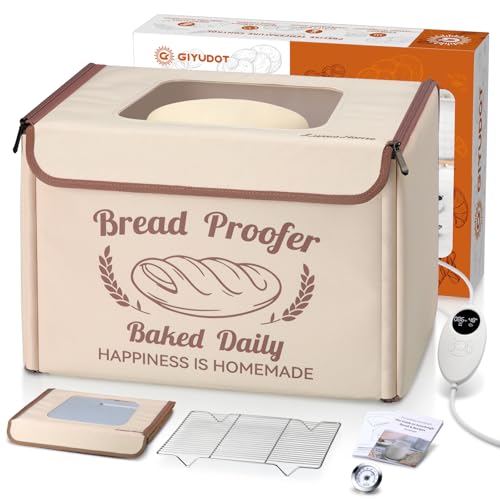
For most home bakers the best dedicated bread proofer is a folding, thermostat-controlled unit such as the Brod & Taylor Folding Proofer, while casual bakers can get by with an oven that has a proof setting, a multicooker with a low-temperature mode, or a DIY warm spot. A proofer holds dough at a steady, warm temperature so yeast works predictably, which matters most in cool kitchens and for long sourdough schedules. This guide explains who actually needs one, compares the main options, and lists the fit and safety points that matter.
Our top picks



As an Amazon Associate we earn from qualifying purchases at no extra cost to you.
Bread Proofer Options at a Glance
| Option | Best for | Key stated features | Limits |
|---|---|---|---|
| Brod & Taylor Folding Proofer and Slow Cooker | Serious home bakers, sourdough, enriched doughs | The maker lists an adjustable thermostat from about 70 to 120 degrees Fahrenheit, a collapsible body, and a use as a slow cooker | Premium tier; takes counter space when open |
| Oven with a built-in proof mode (for example, select Breville and Cuisinart toaster-oven lines) | Bakers who already own a compatible oven | Preset low-temperature proof setting, as makers describe it | Occupies the oven; preset temperature is not adjustable on some models |
| Multicooker with a yogurt or low-temperature function (for example, Instant Pot lines) | Small batches, small kitchens | Gentle low heat in an insulated pot | Small capacity; not designed for proofing, so results vary |
| Bread machine with a dough cycle (for example, Zojirushi models) | Hands-off dough preparation | Kneading and a warm rise in one machine | Dough is shaped after, so proof for the final rise happens elsewhere |
| Oven with only the light on, or a bowl of hot water | Occasional bakers, tight budgets | No extra equipment | Temperature drifts; no control |
Why a Proofer Helps
Yeast activity depends strongly on temperature. A dough left in a 65 degree Fahrenheit kitchen can take far longer than a recipe’s stated time, while a warm kitchen can over-proof it. Bakers use proofers to remove that variable. The practical benefits are predictable timing, better rise in winter, and the ability to run slower, more flavourful fermentations on a schedule. Sourdough, brioche and other enriched doughs often benefit the most because they are slower and more sensitive.
That said, many excellent loaves are made without any proofer. If your kitchen runs between roughly 72 and 78 degrees Fahrenheit and you are comfortable judging dough by touch and volume, a proofer is a convenience rather than a necessity.
Dedicated Proofers
Brod & Taylor Folding Proofer
This is the model most often named in bread-baking guides and roundups. The maker describes a collapsible, insulated body with a heating element and a thermostat, a humidity-friendly design with a water tray for a moist environment, and a range of about 70 to 120 degrees Fahrenheit. The flexible folding body stores flat, and the unit can also serve as a slow cooker according to the maker. Reviewers typically praise even temperature and the sourdough-friendly low settings. Limits are the premium tier and that, fully open, it needs counter space.
Brod & Taylor Sourdough Home
The same company offers a smaller unit designed to keep a sourdough starter at a set temperature. It is a more specialised device for people who bake sourdough often and want consistent starter activity, rather than a general proofing box.
Appliances That Can Double as Proofers
Ovens and toaster ovens with a proof setting
Some ovens and countertop ovens include a proof mode that keeps the cavity at a low temperature. This is a cost-free option if you already have one, but it takes the oven out of use while dough rises, and the temperature may not match what your recipe wants. Check the manual for the proof setting’s temperature range before relying on it.
Multicookers
Multicookers with a yogurt mode can hold a gentle warmth, and many bakers use them for small batches of dough. They are not designed for this, so results depend on the individual unit and on whether dough fits the pot. Do not run the unit with a sealed lid on if the manual says otherwise.
Bread machines
A bread machine with a dough cycle will knead and run the first rise, then you shape the loaf and complete the final proof elsewhere. This suits those who want less manual kneading rather than a pure proofing solution.
Fit, Capacity and Safety Notes
- Match capacity to your bowl. Measure the container you use for the first rise and the banneton or loaf pan for the final proof. A proofer that holds a standard dough tub and a couple of loaf pans suits most households.
- Humidity. A moist environment helps prevent a dry skin on the dough. Some units include a water tray. If yours does not, cover dough with a damp cloth or a lid.
- Electrical safety. Use heated appliances on a stable, heat-resistant surface, keep the cord clear of water, and follow the manufacturer’s manual. Do not leave heating products running in ways the manual does not allow. If a cord or plug is damaged, stop using it and consult the maker or a qualified electrician.
- Food safety. Warm environments encourage microbial growth as well as yeast. Do not leave dough containing dairy or eggs in a warm space far longer than the recipe states.
- Cleaning. Wipe with a damp cloth when cool and unplugged, and follow the maker’s cleaning guidance. Do not submerge electrical parts.
Budget Tiers
Budget tier
The cheapest approach is a warm spot you already own: an oven with only the light on, a cooler with a jar of hot water, or the top of a warm appliance. These work occasionally, but temperature drifts and you cannot hold a specific figure.
Mid-range tier
Appliances you may already own, such as a multicooker or a toaster oven with a proof mode, fall into this bracket in practice. They offer more repeatable results than improvised methods without adding a dedicated device.
Premium tier
A dedicated folding proofer is at this end. It makes sense if you bake weekly, work with sourdough or enriched dough, or live somewhere cool.
Pick Table: Which Option for Which Baker
| Pick this if you… | Choose | Reason |
|---|---|---|
| Bake sourdough or enriched dough every week | Brod & Taylor Folding Proofer | Adjustable, steady temperature |
| Own a toaster oven with a proof setting | That oven’s proof mode | No extra purchase, fast setup |
| Make small batches in a tiny kitchen | Multicooker low mode | Compact and already owned by many |
| Want less kneading work | Bread machine dough cycle | Automates mixing and first rise |
| Bake once in a while | Oven light or warm-water method | No cost, adequate for occasional use |
Alternatives to Consider
- Cold retard in the refrigerator. Slowing the final proof overnight in the refrigerator is a common sourdough technique and removes the need for warmth altogether.
- Seedling heat mat with a thermostat. Some bakers use a thermostat-controlled mat under a tub, but check the product manual for food-adjacent use and keep it dry.
- Proofing baskets and bannetons. These do not provide heat, but they shape and support dough during the final rise and pair well with any proofing method.
Proofing Tips That Apply to Any Method
- Use a thermometer. Dial settings on appliances can be off by several degrees. A small probe thermometer placed beside the dough tells you the real temperature.
- Judge by dough, not the clock. Recipe times assume a specific temperature. Look for the dough to grow in volume, feel airy, and spring back slowly when gently pressed.
- Use a straight-sided tub. A clear container with volume markings makes it easy to see how much the dough has risen during bulk fermentation.
- Do not over-proof. Warm conditions speed up yeast, so a dough left too long can collapse. If your dough rises faster than expected, lower the temperature or shorten the time.
- Keep the water tray clean. If your proofer uses a water tray, empty and dry it after use to avoid odours and mould.
Who Should Skip a Dedicated Proofer
If you bake a few times a month, have a kitchen that stays reasonably warm, and already own an oven with a proof setting, a separate appliance may only add clutter. Many bakers get consistent results by using refrigerated slow proofs, which also add flavour. A dedicated proofer is best treated as a tool for people who bake often or struggle with cold kitchens, not a requirement for good bread.
Frequently Asked Questions
What temperature should I proof bread at?
Many bread recipes call for a range around the high 70s to low 80s degrees Fahrenheit, though sourdough and enriched doughs differ. Follow your recipe, and use a thermometer to confirm the actual temperature inside the proofer.
Do I need a proofer for sourdough?
No, but it helps keep fermentation on schedule, especially in cool kitchens. Many bakers also use refrigerator retarding for flavour and timing flexibility.
Can I use my oven as a proofer?
Yes, if the oven has a proof setting or a safe low-temperature option, or you can simply leave the light on in some ovens. Check the oven manual and make sure nobody preheats it while dough is inside.
Is a bread proofer worth it for occasional baking?
Usually not. For occasional bakers, a warm spot or an existing appliance with a low setting is enough. A dedicated unit pays off for frequent bakers.
How do I keep dough from drying out while proofing?
Cover the dough with a lid, a plastic cover, or a damp cloth, or use a unit with a water tray if the maker includes one. A dry skin can limit the rise and affect the crust.
Can a proofer be used for anything else?
Some units are marketed for other uses. The Brod & Taylor model, for example, is described by the maker as also working as a slow cooker, and people also use warm environments for yogurt. Follow the maker’s manual for permitted uses.
FAQ
What temperature should I proof bread at?
Do I need a proofer for sourdough?
Can I use my oven as a proofer?
Is a bread proofer worth it for occasional baking?
How do I keep dough from drying out while proofing?
Can a proofer be used for anything else?
More from Amazon
Programs that pair well with the guide above. Offers and eligibility are set by Amazon and may change.
Free shipping on eligible items, Prime Video and more. Eligible new members can start with a free trial.
Start a Prime free trialAudiobooks and podcasts to listen to on the go. Eligible new members can start with a free trial.
Try Audible freeAd-free music streaming. Eligible new subscribers can start with a free trial.
Try Music Unlimited freeA free business account with business pricing and bulk-buying tools for work, shop or home office.
Create a business accountAs an Amazon Associate we earn from qualifying purchases.