Key takeaways
- Inflatable spas. Soft-sided tubs with a built-in or external pump and heater. Lay-Z-Spa and Intex are the best-known names. They are the lowest-commitment option and can be packed away, but they are less durable and lose heat faster.
- Plug-and-play acrylic spas. Rigid shell tubs designed to run from a standard household outlet, usually with a reduced heater or jet capacity compared with hard-wired models. Several established makers list such models.
- Hard-wired acrylic spas. Larger, more powerful tubs on a dedicated circuit, installed by a licensed electrician. This is where most of the jet variety and seating options sit.
- Swim spas and wood-fired or rotomolded tubs. Specialist formats for exercise, off-grid use or very low maintenance. They fit a minority of buyers.
Most households are best served by a mid-range, plug-and-play or mid-size acrylic spa from an established maker such as Hot Spring, Bullfrog, Jacuzzi or Cal Spas, while renters and small patios may prefer an inflatable spa from Lay-Z-Spa or Intex, and serious soakers with space and budget should look at premium, jet-rich models. This guide explains the main hot tub types, the specs makers publish, and the trade-offs by budget tier.
Our top picks



As an Amazon Associate we earn from qualifying purchases at no extra cost to you.
The main hot tub types
Hot tubs fall into four broad groups, and choosing the type before the brand removes most of the confusion.
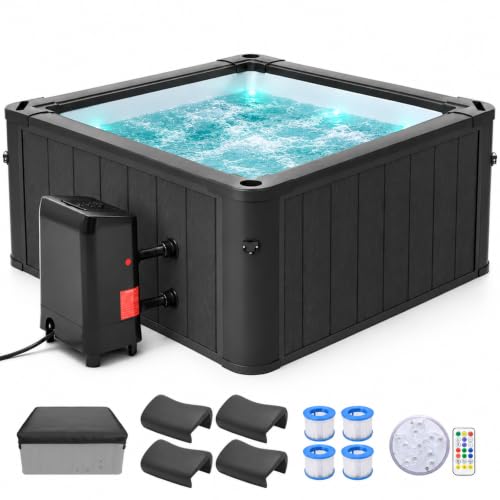
- Inflatable spas. Soft-sided tubs with a built-in or external pump and heater. Lay-Z-Spa and Intex are the best-known names. They are the lowest-commitment option and can be packed away, but they are less durable and lose heat faster.
- Plug-and-play acrylic spas. Rigid shell tubs designed to run from a standard household outlet, usually with a reduced heater or jet capacity compared with hard-wired models. Several established makers list such models.
- Hard-wired acrylic spas. Larger, more powerful tubs on a dedicated circuit, installed by a licensed electrician. This is where most of the jet variety and seating options sit.
- Swim spas and wood-fired or rotomolded tubs. Specialist formats for exercise, off-grid use or very low maintenance. They fit a minority of buyers.
At a glance
| Type | Example makers | Best for | Limits |
|---|---|---|---|
| Inflatable | Lay-Z-Spa, Intex | Trial run, renters, small spaces | Shorter lifespan, slower heating, less insulation |
| Plug-and-play acrylic | Hot Spring, Jacuzzi, Cal Spas, others | Households that want a rigid tub without an electrical upgrade | Heater and jets may not run at the same time, per maker notes |
| Hard-wired acrylic | Hot Spring, Bullfrog, Jacuzzi, Cal Spas | Year-round use and full jet systems | Needs a dedicated circuit and installation |
| Swim spa | Cal Spas, Master Spas, others | Exercise and large gardens | Large footprint and heavy base requirements |
What makers publish and what it means
Spec sheets are the most reliable comparison tool, as long as you compare the same figures across models.
- Seating capacity. Makers state how many adults a tub seats. A tub labeled for four often feels snug for four tall adults, so consider the number you will actually use regularly.
- Dimensions and fill volume. Footprint, height and water capacity determine where the tub fits, how heavy it is when full, and how much water and energy it needs.
- Jet count and pump type. A higher jet count is not automatically better. Jet placement, pump power and whether the pumps are single- or two-speed shape the experience more than the number itself.
- Heater rating and voltage. This tells you whether the tub can run from a standard outlet or needs a dedicated circuit.
- Insulation and cover. Full-foam or perimeter insulation and a locking, insulated cover can make a visible difference to running costs, according to makers and reviewers.
- Filtration and sanitation. Cartridge filters, UV or ozone add-ons and salt systems vary. Read the maker’s maintenance requirements.
Budget tiers
| Tier | What you typically get | Trade-offs |
|---|---|---|
| Budget | Inflatable spas or entry-level plug-and-play shells | Fewer jets, weaker insulation, shorter warranty periods |
| Mid-range | Rigid acrylic shells, better insulation, 4 to 6 seats, plug-and-play or hard-wired | Moderate running costs, installation work for hard-wired models |
| Premium | Large shells, advanced jet layouts, app controls, water-care systems | Higher cost, more complex installation and base requirements |
Brands worth shortlisting
Hot Spring
Hot Spring is among the longest-established acrylic spa makers and offers several lines from compact plug-and-play to large hard-wired models. Reviewers frequently cite its dealer network and its published insulation approach. Specs differ by line, so compare seating, jets and pump power for the exact model.
Bullfrog Spas
Bullfrog is known for its modular jet system, where the buyer picks seat and jet configurations. That customisation suits people with specific therapy preferences, though it can make price comparisons less direct.
Jacuzzi
Jacuzzi offers a broad range of sizes and several plug-and-play models. It is a familiar name that appeals to buyers who want a recognisable brand with a wide selection.
Cal Spas
Cal Spas covers everything from compact tubs to swim spas. It tends to appeal to buyers wanting a large range of sizes and features in one catalogue.
Lay-Z-Spa and Intex
These are the common inflatable choices. They suit buyers who want to try hot-tub ownership without a permanent installation, with the limits noted above.
Site, base and electrical notes
- Base. A filled hot tub is very heavy. The maker’s installation guide states the base requirements, which usually mean a level, reinforced slab or purpose-built pad.
- Electrical. Hard-wired tubs need a dedicated circuit with a ground-fault protection device, installed by a licensed electrician and in line with local codes. Plug-and-play models still need a properly rated outlet.
- Access. Measure gates, steps and doorways before ordering. Large shells sometimes need a crane.
- Permits and rules. Local rules may require permits, fencing or a lockable cover. Check with your local authority.
- Safety. Follow the manual on maximum water temperature and soak times. People with heart conditions, pregnancy or other health concerns, and anyone taking medication, should ask a doctor before using a hot tub. Never let children use the tub unsupervised, and keep the cover locked when not in use.
Running costs and upkeep
Running costs depend on insulation, cover quality, climate and how often you use the tub. Reviewers often note that a tight cover and good insulation matter more over time than a few extra jets. Routine care includes testing and balancing water chemistry, rinsing or replacing filters on the maker’s schedule, and draining and refilling periodically. Follow the maker’s water-care guidance rather than generic advice, since different materials and sanitation systems have different requirements.
Pick X if
| Pick this | If you |
|---|---|
| Inflatable spa | want to try a hot tub with minimal commitment, or rent your home |
| Plug-and-play acrylic | want a rigid tub and prefer to avoid an electrical upgrade |
| Hard-wired mid-size acrylic | use it year-round and want stronger jets and faster heating |
| Customisable jet layout (Bullfrog-style) | have specific seat and jet preferences |
| Swim spa | want exercise as well as soaking and have the space |
Alternatives
- Soaking tub or cold plunge. For a smaller footprint, a soaking tub or cold-plunge tub serves a single purpose with simpler upkeep.
- Portable spa from a rental or showroom. Try a model before buying to check seat comfort.
- Sauna. A barrel or indoor sauna may suit buyers more interested in heat than in water jets.
Questions to ask a dealer or maker
- What is the warranty on the shell, the plumbing, the equipment and the cabinet, and which parts does it exclude?
- Is the heater sized for my climate, and can the tub keep its set temperature in winter with the cover on?
- What does the filtration system need, and how often must cartridges be rinsed or replaced?
- Can the tub run the heater and jets together on my planned electrical supply?
- What service support is available locally, and who handles repairs?
Common mistakes buyers make
The most frequent mistake is buying on jet count alone. Reviewers often point out that seat shape, jet placement and pump power shape comfort more than a headline number. A second mistake is underestimating site work: base preparation, electrical installation and access can add significantly to the project, so plan them before choosing a model. A third is ignoring the cover. A worn or poorly fitting cover is one of the most common reasons a tub loses heat, and many makers sell replacements.
Another common issue is choosing a size that is too small. A tub that seats four on paper can feel crowded with four adults. If you plan to host, look at the stated dimensions and seating layout, ideally in a showroom, and sit in the seats before you decide. Finally, many first-time owners underestimate maintenance. Water testing, filter care and occasional draining are routine tasks, so consider whether you are comfortable with that weekly rhythm.
Frequently Asked Questions
Can a hot tub run on a regular outlet?
Some plug-and-play models are designed to, and makers state this on the spec sheet. They often limit heater or jet use when running together. Hard-wired models need a dedicated circuit installed by an electrician.
How many people does a hot tub seat?
Makers give a seating number, but comfort depends on body size and seat shape. Pick a model one size larger than the group you most often expect if space allows.
Are inflatable hot tubs worth it?
They are a low-commitment way to try hot-tub use and fit small spaces. They typically have a shorter lifespan and lose heat faster than insulated rigid spas, so many buyers treat them as a starter option.
How often must the water be changed?
It depends on use, sanitation system and the maker’s instructions. Many makers recommend a full drain and refill on a regular schedule, so follow the schedule printed in your manual.
What temperature is safe?
Makers and health authorities set maximum temperatures and recommended soak times, so follow the limits in your manual. If you have a medical condition, are pregnant or take medication, ask your doctor first.
Do I need a permit or fence?
Many areas require permits for electrical work and may require barriers or lockable covers. Contact your local building authority before installation.
FAQ
Can a hot tub run on a regular outlet?
How many people does a hot tub seat?
Are inflatable hot tubs worth it?
How often must the water be changed?
What temperature is safe?
Do I need a permit or fence?
More from Amazon
Programs that pair well with the guide above. Offers and eligibility are set by Amazon and may change.
Free shipping on eligible items, Prime Video and more. Eligible new members can start with a free trial.
Start a Prime free trialAudiobooks and podcasts to listen to on the go. Eligible new members can start with a free trial.
Try Audible freeAd-free music streaming. Eligible new subscribers can start with a free trial.
Try Music Unlimited freeA free business account with business pricing and bulk-buying tools for work, shop or home office.
Create a business accountAs an Amazon Associate we earn from qualifying purchases.