Key takeaways
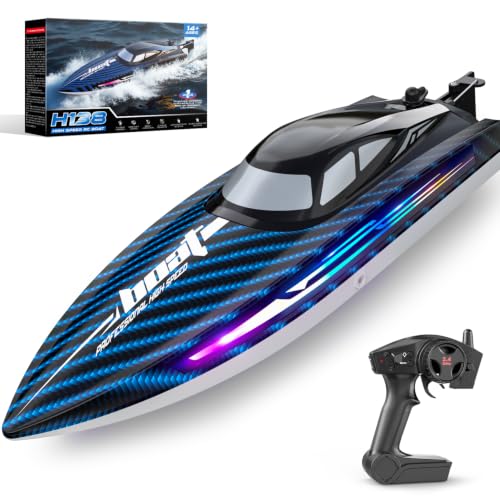
- Deep-vee monohulls. Long, V-shaped hulls that cut through chop and corner predictably. Pro Boat’s Blackjack and Traxxas’s Spartan are well-known examples in this style.
- Catamarans. Twin-hull designs that ride on a cushion of air for speed on calm water. Pro Boat and Traxxas both list catamaran models, such as the Traxxas DCB M41 and Pro Boat Recoil-style hulls.
- Mini and pond boats. Small, lightweight boats for bathtubs, ponds or small lakes. They are slower but more forgiving, and several budget makers sell them.
- Sailboats. Wind-driven models for relaxed, skill-based sailing rather than speed.
- Jet boats and scale boats. Niche formats for hobbyists who want a particular look or handling.
Beginners and families usually do best with a ready-to-run brushless or brushed hull from a mainstream maker such as Pro Boat, Traxxas, Volantex or Aquacraft, while experienced hobbyists chasing speed should look at brushless deep-vee or catamaran hulls with a proper LiPo battery and radio. This guide explains the main RC boat types, what makers state on their spec pages, and the trade-offs by budget tier.
Our top picks


As an Amazon Associate we earn from qualifying purchases at no extra cost to you.
RC boat types in plain terms
- Deep-vee monohulls. Long, V-shaped hulls that cut through chop and corner predictably. Pro Boat’s Blackjack and Traxxas’s Spartan are well-known examples in this style.
- Catamarans. Twin-hull designs that ride on a cushion of air for speed on calm water. Pro Boat and Traxxas both list catamaran models, such as the Traxxas DCB M41 and Pro Boat Recoil-style hulls.
- Mini and pond boats. Small, lightweight boats for bathtubs, ponds or small lakes. They are slower but more forgiving, and several budget makers sell them.
- Sailboats. Wind-driven models for relaxed, skill-based sailing rather than speed.
- Jet boats and scale boats. Niche formats for hobbyists who want a particular look or handling.
At a glance
| Style | Example brands | Best for | Limits |
|---|---|---|---|
| Ready-to-run deep-vee | Pro Boat, Traxxas | First-time buyers wanting stability on open water | Needs a larger pond or lake |
| Brushless catamaran | Traxxas, Pro Boat | Speed on calm water | Can flip in rough water; needs a self-righting design or care |
| Mini or pond boat | Volantex, Aquacraft, others | Kids, small ponds, casual use | Lower speed; short run times |
| RC sailboat | Various makers | Patient hobbyists who enjoy sailing skill | Needs wind and open space |
What to compare on the spec page
- Motor type. Brushed motors are cheaper and simpler. Brushless motors are more efficient and powerful but usually cost more and need compatible electronics.
- Battery type and what is included. Many ready-to-run packages include a battery and charger, but some sell them separately. Look at whether the battery is NiMH or LiPo, since LiPo needs a suitable charger and careful handling.
- Radio system. A 2.4 GHz radio is standard on current models. Check the range the maker states.
- Hull size and weight. Longer hulls are generally more stable. Smaller hulls suit small ponds.
- Water-cooling and sealing. Makers describe which parts are waterproof. Boats still need a post-run wipe-down and dry.
- Self-righting. Some hulls include features to help the boat flip back upright. Where the maker lists it, it is worth having for catamarans.
- Run time and speed claims. Treat top speed numbers as maker figures under ideal conditions, with the right battery and calm water.
Budget tiers
| Tier | What you typically get | Trade-offs |
|---|---|---|
| Budget | Mini hulls, brushed motors, small batteries | Short run time, low speed, limited range from the radio |
| Mid-range | Larger ready-to-run hulls, some brushless options, decent radios | Battery and charger may be separate; need a bigger body of water |
| Premium | Brushless systems, larger hulls, upgrade paths | Higher cost; LiPo handling and tuning knowledge needed |
Where to run an RC boat
Choose water that is calm, free of weeds and large enough for the boat’s turning radius. Fast hulls need a lake or large pond; small boats can work in a pool or pond. Check local rules before running a boat on public water, since some parks and reservoirs restrict motorised model craft. Keep clear of swimmers, wildlife and fishing lines.
Safety and battery care
Battery handling is the main safety topic. LiPo batteries can be hazardous if punctured, overcharged or over-discharged, so use only the charger the battery maker specifies and never leave a charging battery unattended. Store batteries as the maker instructs, and stop using any battery that swells or is damaged. Keep small RC boats away from young children, since propellers and small parts can injure, and follow each maker’s age rating.
After each run, wipe down the hull, remove the battery, open the hatch to let moisture escape, and check the propeller and shaft for tangled weeds. Follow the manual’s lubrication steps for the drive shaft if it lists them.
Brands worth a look
Pro Boat
Pro Boat is a dedicated RC boat brand with deep-vee, catamaran and mini-hull options across several price tiers. Many models are sold ready-to-run, and the range is broad enough to grow with a beginner.
Traxxas
Traxxas is best known for RC cars but also sells boats such as the Spartan and DCB M41. Reviewers frequently cite its parts support and its ready-to-run packaging, which includes a radio and, on many sets, a battery and charger.
Volantex and Aquacraft
These makers appear at the budget and mid-range tiers with smaller hulls and simple controls, which is helpful for first-time buyers testing the hobby.
Pick X if
| Pick this | If you |
|---|---|
| Deep-vee ready-to-run | want stability and a lake-ready boat as your first purchase |
| Brushless catamaran | want speed on calm water and accept more risk of flipping |
| Mini pond boat | need something small for kids or a limited body of water |
| Sailboat | enjoy slow, skill-based hobby time |
| Kit or build-your-own | want to customise and learn the electronics |
Alternatives
- RC cars or trucks. If water access is limited, an RC car covers many of the same skills without needing a lake.
- RC drones. Appeal to those wanting flying rather than boating, with their own rules.
- Kids’ bath-toy boats. Simple, battery-powered toys suit very young children better than a hobby-grade hull.
Getting started checklist
- Pick the body of water first. A small pond rules out fast hulls; a lake opens up the whole range.
- Confirm what is in the box: radio, battery, charger, and whether the radio needs AA cells.
- Read the maker’s break-in and range-test steps. Test the radio on land before the boat touches water.
- Run the boat close to shore for the first few trips so you can retrieve it if the battery dies or the boat stalls.
- Dry the hull and inspect the drive after every session.
Upgrade and parts considerations
Ready-to-run boats are a starting point, and some makers support upgrades such as stronger motors, different propellers, bigger batteries and better radios. Before buying, look at whether spare parts such as propellers, struts, rudders and hatch seals are sold by the maker. Reviewers frequently mention that parts availability matters as much as the first purchase price, because propellers and rudders are the parts most likely to be damaged by weeds, rocks or hard landings.
Think about the second battery too. Run times on small packs are short, and having a spare charged pack roughly doubles your time on the water. Make sure any extra battery is compatible with the boat’s electronics and connector, using the maker’s listed specifications rather than guessing from the plug shape.
Finally, consider support. A maker with clear manuals, published parts diagrams and responsive service makes a first boat far less frustrating, especially for younger users and parents helping them.
Kids, families and supervision
Makers print an age rating on each boat, and it is worth following. Younger children usually do better with slow, small boats that have simple two-stick or pistol-grip controls. Fast hulls can be hard to steer for beginners and can hit swimmers, wildlife or the shore. An adult should always supervise, keep the boat away from people in the water, and handle batteries and charging. Many families keep a pole or net nearby to retrieve a stranded boat from shallow water, rather than wading in.
Frequently Asked Questions
What is the best RC boat for a beginner?
A ready-to-run deep-vee hull from a mainstream brand is a common recommendation among reviewers because it is stable and comes with a radio. A mini pond boat is a gentler option for kids or small spaces.
Are brushless RC boats worth it?
Brushless motors are generally more efficient and powerful, which helps with speed and run time. They cost more and may need compatible batteries and chargers, so beginners can start with a brushed model.
Do RC boats come with batteries?
It varies by model. Some ready-to-run packages include a battery and charger, while others sell them separately, so read the box contents on the maker’s page.
Can an RC boat be used in saltwater?
Only if the maker says so. Saltwater can corrode metal parts and electronics, so follow the manual and rinse with fresh water if the maker allows use in salt environments.
How fast do RC boats go?
Speed ranges widely, from slow pond boats to fast brushless catamarans. Maker top-speed figures are measured under ideal conditions with specific batteries, so real results depend on water, battery and setup.
Why does my boat flip over?
Catamarans and fast hulls can flip in chop or sharp turns. Slowing in corners, avoiding rough water and choosing a hull with a self-righting feature, where listed, can reduce the problem.
FAQ
What is the best RC boat for a beginner?
Are brushless RC boats worth it?
Do RC boats come with batteries?
Can an RC boat be used in saltwater?
How fast do RC boats go?
Why does my boat flip over?
More from Amazon
Programs that pair well with the guide above. Offers and eligibility are set by Amazon and may change.
Free shipping on eligible items, Prime Video and more. Eligible new members can start with a free trial.
Start a Prime free trialAudiobooks and podcasts to listen to on the go. Eligible new members can start with a free trial.
Try Audible freeAd-free music streaming. Eligible new subscribers can start with a free trial.
Try Music Unlimited freeA free business account with business pricing and bulk-buying tools for work, shop or home office.
Create a business accountAs an Amazon Associate we earn from qualifying purchases.