Our Short List of 3

All 3 Picks at a Glance
| Product | Specs | Action |
|---|---|---|
 2. PSIER S18 — Big Storage and a Clear, Bounded IPX8 Claim | Check price on Amazon | |
 3. Nilsinn X7 — 32GB of Music With Nothing in Your Ears | Check price on Amazon | |
| 4. Bxswtu Bone Conduction Headphones — The Straightforward 32GB Option | Check price on Amazon |
Key takeaways
- Four true IPX8 bone conduction headphones for swimming, all with onboard MP3 storage for underwater playback, compared on depth limits, memory, battery and fit.
As an Amazon Associate we earn from qualifying purchases.
Swimming is the one workout where ordinary headphones simply stop working. Sealed earbuds float out, over-ear headphones drown, and Bluetooth, however good it is on land, does not travel through water. The models that actually work in a pool solve all three problems at once, and they share a very specific combination of features. They use bone conduction, so nothing goes inside the ear canal. They carry an IPX8 waterproof rating, so they are built for continuous immersion rather than splashes. And they store music on the headset itself, because the phone stays in a bag on the pool deck.
That combination is rarer than search results suggest. Many headphones marketed to swimmers are rated IPX5 or IPX7, which covers sweat, rain and brief dunking, not lap after lap underwater. Others are rated IP68, a strong rating in its own right, but a different certification from the IPX8 rating this guide is built around. Still others are ordinary in-ear swimming buds, which block the ear canal and behave very differently in the water. Every model below was kept only if it met both halves of the brief at the same time: genuine bone conduction and a stated IPX8 rating, with onboard storage for underwater playback.
Disclosure: This article contains affiliate links. If you buy through a link on this page, we may earn a commission at no additional cost to you.
Quick Comparison
| Model | Storage | Bluetooth | Stated Water Limit | Battery Focus |
|---|---|---|---|---|
| H2O Audio TRI 2 PRO | 8GB | 5.3 | IPX8, submersion to 12 feet | Mixed, Bluetooth and MP3 modes |
| PSIER S18 | 32GB | 5.4 | IPX8, up to 2 metres for one hour | Up to 8 hours playtime |
| Nilsinn X7 | 32GB | 5.4 | IPX8 waterproof design | MP3 and Bluetooth modes |
| Bxswtu Bone Conduction Headphones | 32GB | 5.3 | IPX8 for underwater use | MP3 and Bluetooth modes |
1. H2O Audio TRI 2 PRO Multi-Sport — For Swimmers Who Also Train on Land
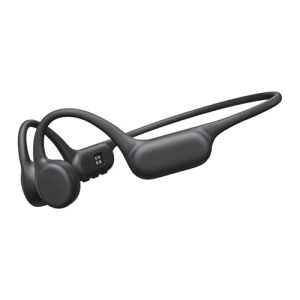
The H2O Audio TRI 2 PRO (ASIN: B0DFQK6Q8R) comes from a brand that builds audio specifically for the water, and its specification reflects that focus. The IPX8 rating is paired with the deepest stated submersion figure in this guide: up to 12 feet underwater, described by the maker without the short time limit that accompanies most waterproof claims. For a lap swimmer, that depth covers anything a pool session involves, including tumble turns, push-offs and dives from the blocks, with headroom to spare.
Storage is 8GB, smaller than the 32GB offered by the other models here, and the TRI 2 PRO answers that gap with its Playlist+ feature. Playlist+ records audio from a Bluetooth stream onto the headset through the companion app, in the way older recording tools captured music as it played, so material from streaming services can be carried into the water without manually managing music files on a computer. For swimmers who live inside streaming apps and own few music files, that workflow is the single most practical difference in this guide. The memory supports formats including MP3, M4A, WMA, FLAC and APE.
Battery figures are quoted by mode, which is honest and useful: around nine hours in Bluetooth mode, around six hours in MP3 mode, and roughly eight and a half hours of mixed use. A full charge takes about two hours. The frame is finished in a soft silicone-type covering, which matters more than it sounds, because the headset has to sit comfortably under goggle straps and a swim cap for an hour at a time. Swimming earplugs, a protective case and a charging cable are included, and the earplugs are worth using: plugging the ears underwater often makes bone conduction sound fuller, because competing water noise in the ear canal is reduced.
Choose the TRI 2 PRO if your training week mixes pool sessions with running and cycling and you want one headset for all of it, and especially if Playlist+ solves your music library problem. Look elsewhere only if you want maximum file storage above all else.
2. PSIER S18 — Big Storage and a Clear, Bounded IPX8 Claim
Inside, the S18 pairs Bluetooth 5.4 for land use with an MP3 mode backed by 32GB of internal memory, described as holding up to 4,000 songs. Switching between the two modes is done with a double click, and the listing is explicit about the rule every swimmer needs to learn: switch to MP3 mode in the water, because Bluetooth cannot connect underwater. On land, the same headset handles calls through its built-in microphone and can connect with more than one device, so it can double as a running and gym headset during the rest of the week.
Sound comes from 14mm bone conduction drivers, and playtime is quoted at up to eight hours. The open-ear fit keeps the ear canal clear, which swimmers tend to appreciate for two reasons: nothing is being pushed into a wet ear, and awareness of the pool around you, lane ropes, other swimmers and the wall, stays intact. As with every model in this guide, expect the character of the sound to change between air and water; bone conduction generally sounds clearer underwater once the ears are plugged, and thinner in a noisy environment on land.
Choose the S18 if you want a large onboard library, a clearly stated depth and time limit, and a newer Bluetooth version for dry-land training, all in one straightforward package.
3. Nilsinn X7 — 32GB of Music With Nothing in Your Ears
That load-it-and-forget-it quality is the real appeal of the big-storage models. There is no phone to protect, no streaming connection to lose, and no subscription check waiting at the pool door. You charge the headset, put it on under your cap, switch to MP3 mode, and swim. For open-water swimmers, the open-ear design has an added benefit: on land and at the surface you can still hear other water users, boats and instructions from a coach or training partner, which sealed earbuds would block out.
The X7 is positioned for swimming first and for running, cycling and gym work second, which is the right order of priorities for this category. A headset that is merely splash-proof can serve a runner; only a genuinely immersion-rated one belongs in the pool. Before your first session, spend a few minutes on land learning the button layout, because controls that feel obvious on a desk become harder to find by touch, mid-set, with wet hands and a cap on.
Choose the X7 if onboard capacity and a simple, swimming-first feature set matter more to you than companion-app extras.
4. Bxswtu Bone Conduction Headphones — The Straightforward 32GB Option
The listing notes that the design accommodates wearing a swim cap and goggles at the same time, a small detail that separates swimming headsets from running headsets with a waterproof label. The band has to sit flat enough for cap and strap to pass over it without lifting the transducers off the cheekbones, because bone conduction sound depends on consistent contact. If the transducers drift, volume and clarity fall away quickly, in the water and on land alike.
On dry land, the same headset serves for running, cycling and fitness work, resisting sweat and rain as a matter of course given its immersion rating. That dual life is worth considering when you compare models: a headset bought for the pool that also covers your runs replaces two products, while a running headset with a lower rating can never step up into the pool.
Choose the Bxswtu model if you prefer the simplest possible file-transfer routine and a feature set with no app layer between you and your music.
Why IPX8, and Why the X Matters
The IP code describes protection testing, and the final digit describes water. IPX5 covers water jets, IPX7 covers temporary immersion under set conditions, and IPX8 covers continuous immersion under conditions the manufacturer specifies, which is why the stated depth and time beside an IPX8 rating matter so much. One model here states two metres for one hour, another states 12 feet without a comparable time cap. Both are IPX8, but they are not identical claims, and your swimming should stay inside whichever claim your headset makes.
The X in IPX8 simply means no dust-ingress rating was claimed in that code, which is normal for swim products. A rating such as IP68 adds a dust figure, and it can describe an excellent swimming headset, but it is a different certification, so models rated only IP68 were not included in a guide that promises IPX8. The same discipline removed IPX5 and IPX7 sport models, however good they are for running, and removed in-ear swimming buds entirely, because a sealed earbud is not bone conduction and does not leave the ear open.
Why Bone Conduction Works in Water
Bone conduction sends vibration through the cheekbones to the inner ear, bypassing the eardrum and leaving the ear canal completely open. In the pool that brings three practical advantages. Nothing sits inside a wet ear canal, which many swimmers find more comfortable and more hygienic across a long session. Water can drain naturally instead of being trapped behind an ear tip. And awareness survives: you can hear a coach on deck, a lifeguard whistle and the swimmer sharing your lane.
It also explains the earplug paradox. Several swim headsets include earplugs, and wearing them underwater usually improves perceived sound, because the plugs stop water noise entering the canal and let the bone-conducted signal dominate. Try both ways in your first session; the difference is noticeable and personal.
Finally, remember the physics that shapes this whole category. Bluetooth radio is absorbed by water almost immediately, so no headset in this guide, or anywhere else, streams from a phone while submerged. Underwater listening always means onboard files or recorded audio. Any product that implies otherwise should be read very carefully before you rely on it.
How to Choose Between These Four
Start with how you get your music. If your listening lives in streaming services and you own few files, the TRI 2 PRO and its Playlist+ recording feature solve a problem the others make you solve manually. If you already have a music library on your computer, the three 32GB models hold far more of it, with the PSIER S18 and Nilsinn X7 adding Bluetooth 5.4 for land use and the Bxswtu model keeping transfer and playback deliberately simple.
Next, match the water claim to your swimming. Pool lap swimmers are covered by every model here. Divers, triathletes starting from pontoons, and anyone whose headset will sit deeper for longer should weight the TRI 2 PRO claim of submersion to 12 feet most heavily, while a one-hour session swimmer can treat the S18 statement of two metres for one hour as a clear, sufficient boundary.
Then think about fit with your actual kit. Put the headset on the way you will swim: goggles over it, cap over both, and check that the transducers stay pressed to the cheekbones when you turn your head as if breathing. A small silicone strap or a cap pulled low can stabilise a band that otherwise shifts during push-offs. Battery planning is the last step. MP3 playback generally uses more power than Bluetooth, so a headset charged before a swim block, rather than left in a bag all week, is the reliable routine.
Care That Keeps an IPX8 Rating Honest
Rinse the headset in clean fresh water after pool or sea sessions and let it dry fully before charging, because chlorine, salt and moisture around charging contacts cause most early failures in swim electronics. Keep the magnetic contacts clean, avoid charging while the headset is wet, and store it in its case rather than loose with goggles and metal kit. Do not take any of these models into a sauna or very hot shower unless the maker explicitly allows it; heat and steam test seals in ways the immersion rating does not cover. And stay inside the stated depth and time for your model, since the rating is a tested boundary, not a challenge.
Frequently Asked Questions
Can I stream music from my phone while swimming?
No. Bluetooth does not transmit usefully through water, so every model here switches to onboard MP3 playback in the pool. Bluetooth is for land training, calls and, with the TRI 2 PRO, recording audio onto the headset through Playlist+ before you swim.
What is the difference between IPX8 and IPX7 for swimming?
IPX7 covers temporary immersion under defined test conditions. IPX8 covers continuous immersion under conditions specified by the manufacturer, such as a stated depth and duration. For repeated lap swimming, IPX8 with a clear depth statement is the appropriate rating, which is why IPX7 models were excluded here.
Why do these headphones include earplugs if the ears stay open?
The earplugs are optional and are used in the water. Blocking the ear canal reduces competing water noise, which often makes bone conduction audio sound clearer and fuller while swimming. On land, most people leave them out and keep full awareness of their surroundings.
How much music do I actually need for swimming?
Far less than the capacities here suggest. A one-hour session uses roughly one hour of audio, so even the 8GB TRI 2 PRO holds many weeks of swims, and the 32GB models hold a library you may never exhaust. Choose based on how you load music, not on capacity alone.
Can I use these headphones for running and cycling too?
Yes. All four models pair over Bluetooth on land and their open-ear design lets you hear traffic and other people around you. The pool is the demanding environment; a headset built for immersion handles sweat and rain on land easily.
The Bottom Line
The best ipx8 swimming bone conduction headphones are defined by discipline as much as by features: true bone conduction, a real IPX8 claim with stated limits, and onboard storage to replace the Bluetooth connection that water removes. The H2O Audio TRI 2 PRO is the specialist pick, with the deepest stated submersion figure and Playlist+ for streaming listeners. The PSIER S18 pairs a precise two-metre, one-hour claim with 32GB of storage and Bluetooth 5.4. The Nilsinn X7 keeps the same big-storage formula simple and swimming-first, and the Bxswtu model offers the most direct, app-free route from computer to pool. Pick the one whose loading method and water claim match your training, charge it before your swim block, switch to MP3 mode at the water’s edge, and the music will still be there at the final wall.
FAQ
Can I stream music from my phone while swimming?
What is the difference between IPX8 and IPX7 for swimming?
Why do these headphones include earplugs if the ears stay open?
How much music do I actually need for swimming?
Can I use these headphones for running and cycling too?
More from Amazon
Programs that pair well with the guide above. Offers and eligibility are set by Amazon and may change.
Free shipping on eligible items, Prime Video and more. Eligible new members can start with a free trial.
Start a Prime free trialAudiobooks and podcasts to listen to on the go. Eligible new members can start with a free trial.
Try Audible freeAd-free music streaming. Eligible new subscribers can start with a free trial.
Try Music Unlimited freeA free business account with business pricing and bulk-buying tools for work, shop or home office.
Create a business accountAs an Amazon Associate we earn from qualifying purchases.