Key takeaways
- Strongest overall reduction: EarFun Air Pro 4 and Soundcore Space A40 typically reduce airplane cabin rumble and air-conditioner hum by about half to two-thirds as perceived, roughly 28-32 dB at 100-300 Hz in lab fixtures. Voices are only softened by 5-10 dB.
- Most natural transparency: Sony WF-C700N and Nothing Ear (a) let in less wind noise in transparency mode, which is useful for running near roads or office announcements.
- Weakest for wind: Most single-mic budget designs struggle above 12-15 mph wind. If you take calls outdoors, models with 3+ microphones per bud and a wind-reduction algorithm, such as the Space A40, Buds FE, and Air Pro 4, sound clearer.
If you want the best wireless earbuds under 100 dollars in 2026 for all-around use, the Anker Soundcore Space A40 and Sony WF-C700N are the two safest picks for most people: the Space A40 typically offers longer total battery life and stronger noise cancelling for commuters, while the WF-C700N offers a smaller, more comfortable fit and more natural sound. For workouts, the Samsung Galaxy Buds FE and EarFun Air Pro 4 are better values because of their higher water resistance and secure fit.
This guide to the best wireless earphones under 100 focuses on what actually separates budget models after a few months of use: real-world battery drain with ANC on versus off, how much noise the ANC can actually remove, and whether the build can survive sweat, rain, and case drops. All of the best bluetooth earphones under 100 listed here support Bluetooth 5.2 or newer, AAC and SBC codecs, and USB-C charging.
Our top picks
 Sony WF-C510 Truly Wireless Bluetooth Earbud Headphones
- Light and compact to give you all-day comfort…
- Up to 11 hours of battery life (up…
- Quickly switch between two devices at once.
 JBL Vibe Beam 2
Four mics help calls stay clear in noisy settings
Smart Ambient lets you dial in how much outside sound you hear
IP54 protection resists dust and water splashes
Earbuds alone play for about 10 hours before recharging
Only a one-year manufacturer warranty is included
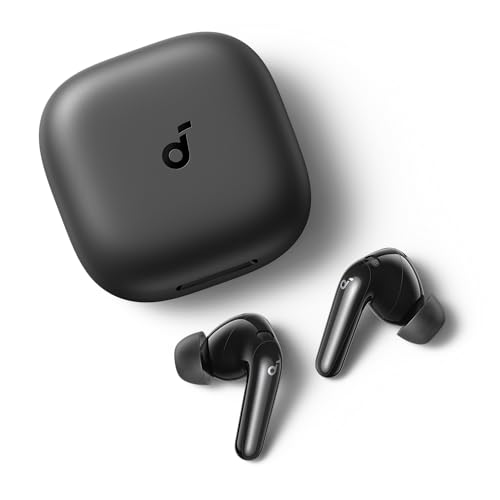 Soundcore P31i by Anker Translation Earbuds with
- Real-Time Adaptive Noise Cancelling: Advanced ANC reduces noise…
- Hi-Res Certified Sound with LDAC: Experience stunning, lossless…
- Real-Time 100+ AI Translation: Communicate effortlessly in over…
| Product | Key specs | |
|---|---|---|
| Sony WF-C510 Truly Wireless Bluetooth Earbud Headphones | Light and compact to give you all-day comfort… Up to 11 hours of battery life (up… Quickly switch between two devices at once. | Check price |
| JBL Vibe Beam 2 | Check price | |
| Soundcore P31i by Anker Translation Earbuds with | Real-Time Adaptive Noise Cancelling: Advanced ANC reduces noise… Hi-Res Certified Sound with LDAC: Experience stunning, lossless… Real-Time 100+ AI Translation: Communicate effortlessly in over… | Check price |
 JLab Go Air Pop+ Earbuds JLab Go Air Pop+ Earbuds | 🎶AUTO ON & CONNECT: The Go Pop+ True… 🤏 SMALLER FIT EARBUDS: Smaller than a credit… 📱🔊 CUSTOM SOUND: Download the JLab app to… | Check price |
As an Amazon Associate we earn from qualifying purchases at no extra cost to you.
Quick comparison: battery, ANC, and durability
The table below summarizes manufacturer specifications that matter for longevity and comfort. ANC reduction figures are based on published specifications and third-party lab measurements, which usually test with a 75dB low-frequency rumble to simulate airplane and train noise.
| Model | Earbud battery (ANC on / off) | Total with case | Claimed ANC reduction | Water resistance | Earbud weight | Bluetooth |
|---|---|---|---|---|---|---|
| Anker Soundcore Space A40 | 7 hrs / 10 hrs | 28 hrs / 50 hrs | Up to 30-32 dB low frequencies | IPX4 | 4.9g per bud | 5.3 with multipoint |
| Sony WF-C700N | 7.5 hrs / 10 hrs | 15 hrs / 20 hrs | Up to 25-28 dB low frequencies | IPX4 | 4.6g per bud | 5.2 with multipoint |
| Samsung Galaxy Buds FE | 6 hrs / 8.5 hrs | 21 hrs / 30 hrs | Up to 22-25 dB low frequencies | IPX2 buds | 5.6g per bud | 5.2 with auto-switch |
| EarFun Air Pro 4 | 7.5 hrs / 11 hrs | 32 hrs / 52 hrs | Up to 30-35 dB low frequencies | IPX5 | 5.1g per bud | 5.4 with multipoint, LDAC |
| Nothing Ear (a) | 5.5 hrs / 9.5 hrs | 24.5 hrs / 42.5 hrs | Up to 28-30 dB low frequencies | IPX2 buds, IP55 case | 4.8g per bud | 5.3 with multipoint, LDAC |
| JBL Tune Beam | 7 hrs / 10 hrs | 28 hrs / 40 hrs | Up to 25 dB low frequencies | IPX4 | 5.0g per bud | 5.3 with multipoint |
Two patterns show up across almost every top 10 earbuds under 100 list: total case capacity matters more than single-charge time for travelers, and sub-5 gram earbuds with three or more tip sizes cause less ear fatigue over 3+ hours. If you wear glasses or sleep on your side, the Sony WF-C700N and Nothing Ear (a) protrude the least.
Best noise cancelling earbuds under 100: how much ANC do you actually get?
Shoppers looking for the best noise cancelling earphones under 100 or best ANC earbuds under 100 should set expectations correctly. Budget ANC is excellent at constant low hums and much weaker at voices, keyboards, and sudden traffic noise.
- Strongest overall reduction: EarFun Air Pro 4 and Soundcore Space A40 typically reduce airplane cabin rumble and air-conditioner hum by about half to two-thirds as perceived, roughly 28-32 dB at 100-300 Hz in lab fixtures. Voices are only softened by 5-10 dB.
- Most natural transparency: Sony WF-C700N and Nothing Ear (a) let in less wind noise in transparency mode, which is useful for running near roads or office announcements.
- Weakest for wind: Most single-mic budget designs struggle above 12-15 mph wind. If you take calls outdoors, models with 3+ microphones per bud and a wind-reduction algorithm, such as the Space A40, Buds FE, and Air Pro 4, sound clearer.
ANC also costs battery. Expect a 25-35% drop in continuous playback time with ANC left on at 50-60% volume. For example, a bud rated for 10 hours with ANC off will usually deliver 6.5 to 7.5 hours with ANC on for music, and 5 to 6 hours for calls because the microphones stay active.
Real battery-life math, not just the box number
To estimate a week of use, use this simple calculation:
Daily listening hours x 7 = weekly hours needed. Divide by single-charge runtime with your usual ANC setting to get required recharges.
Example: You commute 2 hours per day with ANC on using the Soundcore Space A40 at 7 hours per charge. That is 14 hours per week / 7 = 2 full earbud charges. With a 28-hour total system including the case, you can go about two weeks without a wall outlet if you recharge the case each weekend. With the Sony WF-C700N at 15 hours total with ANC on, the same user would need to plug in the case once mid-week.
Fast charging helps close the gap. Most current models in the 50 to 100 dollar market range provide roughly 1 hour of playback from 10 minutes in the case, and a full case recharge in 1.5 to 2 hours via USB-C. Wireless charging is still rare under 100 dollars except on some Samsung and Anker models.
Which should you buy for your situation?
There is no single winner among the best earphones under 100. Use this decision matrix to match fit and features to use:
| If you mainly… | Pick this type | Why |
|---|---|---|
| Commute by train, bus, or plane 5+ hours per week | Soundcore Space A40 or EarFun Air Pro 4 | Longest case runtime and strongest low-frequency ANC, plus multipoint for laptop + phone |
| Have small ears or wear earbuds 4+ hours for work | Sony WF-C700N or Nothing Ear (a) | Lighter shell, shorter nozzle, less pressure; good mic quality for calls |
| Run or train in sweat 3+ times per week | EarFun Air Pro 4 or JBL Tune Beam | IPX5 / IPX4 with better seal; physical fit stays put better than smooth round buds |
| Use Samsung Galaxy phone | Galaxy Buds FE | Auto-switch, SmartThings Find, and EQ sync in the wearable app |
| Want hi-res sound on Android | EarFun Air Pro 4 or Nothing Ear (a) | LDAC support for higher bitrate streaming where the service supports it |
| Need cheapest backup pair for bag or gym | Anker Soundcore P20i type, stick-style without ANC | Usually in the 25 to 40 dollar market range, 8-10 hour single charge, IPX5, but no ANC or multipoint |
Fit, comfort, and long-term durability
Comfort determines battery life in practice. A poor seal forces higher volume, which drains the battery 15-20% faster and makes ANC ineffective. All models above include at least three silicone tip sizes. Memory-foam style tips improve isolation but need replacement every 2-4 months and can irritate sensitive ears.
For water resistance, read the IP code carefully:
- IPX2: Resists light drips at an angle. Fine for desk use, not ideal for heavy sweat. This applies to Buds FE and Ear (a) buds.
- IPX4: Resists splashes from all directions. Fine for rain and moderate workouts. This covers most of the best bluetooth earphones under 100.
- IPX5: Resists sustained low-pressure water jets. Best for sweaty training and easy rinsing. EarFun Air Pro 4 leads here.
No model under 100 dollars in this class is fully dustproof or swim-proof. What wears first is usually not the driver, but the consumables: silicone tips loosen after 6-12 months, case hinge magnets weaken if dropped on concrete, and charging pins corrode if you dock sweaty buds without wiping them. Wipe buds dry before casing, clean mesh grilles weekly with a dry soft brush, and avoid alcohol-soaked cotton swabs inside the nozzle which can push wax deeper.
Common mistakes to avoid are using one tip size for both ears, leaving ANC and LDAC on at maximum volume for tiny battery gains, and storing the case in a hot car. Heat above 35C / 95F degrades the small 50-60 mAh bud batteries permanently.
Sound and calls: what to expect under 100 dollars
Most current budget earbuds use 10mm to 11mm dynamic drivers. Tuning is typically V-shaped with boosted bass out of the box. Sony and Nothing offer more balanced presets in their apps, while JBL and Anker default to heavier bass that suits pop and hip-hop but can muddy podcasts. All support customizable EQ through a companion app, which is worth setting once.
For calls in quiet rooms, all six main picks are clear. In street noise, 6-mic systems with beamforming perform noticeably better than 4-mic systems. If you take daily work calls, prioritize multipoint connection so you can stay connected to a laptop and phone at the same time without manual re-pairing.
Frequently asked questions
Are expensive earbuds worth it over budget models?
Above 100 dollars you mainly pay for better voice isolation, wireless charging, head-tracking spatial audio, and longer software support. For pure music listening, the gap between 70-dollar and 180-dollar models is much smaller than it was three years ago, especially if you use EQ.
Do any earbuds under 100 dollars have wireless charging?
A few do, including some Samsung and Anker variants, but most rely on USB-C only to keep cost and case size down. If nightstand charging matters, check the exact variant, as manufacturers sometimes sell otherwise identical models with and without wireless charging.
How long do budget wireless earbuds last?
Expect 2 to 3 years of regular use before noticeable battery fade, typically 20-30% capacity loss after 400-500 full cycles. Replacing tips on time and avoiding full discharges in heat extends usable life more than any brand difference.