Key takeaways
- Compare the loudest speakers for car doors by RMS power and sensitivity: four high-output pro midrange picks from DS18, Skar Audio and Timpano.
The real decision behind a loud car speaker is not which one prints the biggest watt number on the box. It is whether the speaker turns the power you actually have into volume. A driver with high sensitivity gets loud on modest amplifier power, while a power-hungry driver stays quiet until you feed it properly. Picking the wrong side of that trade is why so many “loud” builds end up sounding strained at the volume their owners wanted.


This roundup is for drivers replacing weak factory door speakers, owners of sub-heavy systems whose vocals get buried, and anyone building a pro-audio style front stage. Every pick below was chosen from its Amazon listing by two numbers that predict real output: RMS power handling and sensitivity. All four are 6.5-inch midrange loudspeakers built for volume first.
Quick Picks
As an Amazon Associate we earn from qualifying purchases
| Product | Best for | Key spec from title |
|---|---|---|
| DS18 PRO-X6.4BM (Pair) | High-power door builds with a dedicated amplifier | 250W RMS per speaker, 96 dB sensitivity |
| Timpano TPT-MR6-4 PRO (Pair) | Shallow doors with tight window clearance | 2.2-inch mounting depth, 94 dB sensitivity |
| Skar Audio FSX65-4 | Staged builds and single-driver replacements | 150W RMS, sold individually |
| DS18 PRO-GM6.4B (Pair) | A matched pair for a second set of doors or rear deck | 140W RMS per speaker, 480W max |
How to Choose
Sensitivity decides how loud each watt sounds
Sensitivity is the specification that separates genuinely loud speakers from ordinary ones wearing loud packaging. It states how much output a speaker produces from one watt measured at one meter, and the scale is not linear: a driver rated 96 dB needs roughly half the amplifier power of one rated 93 dB to reach the same volume, and about a quarter of what an 90 dB factory speaker needs. When you compare listings, put sensitivity first and wattage second. A modest amplifier paired with a sensitive midrange will outplay a big amplifier straining against an inefficient one, and it will do so with less heat and less distortion at cruising volume.
RMS power sets the real ceiling, max power does not
Once sensitivity tells you how efficiently a speaker works, RMS power tells you how far you can push it before heat becomes the limit. RMS is the continuous power a voice coil can shed safely; the max or peak figure describes a momentary burst and should never drive an amplifier purchase. Match the amplifier channel to the speaker’s RMS rating as closely as you can. An amplifier rated well below the speaker invites clipping, which sounds harsh and damages coils, while one rated far above it tempts you to push past what the cone and surround can physically do. The four speakers here span 140 to 250 watts RMS, which maps neatly onto common four-channel amplifier sizes.
Loud midranges are one piece of a system, not the whole system
Every speaker in this roundup is a dedicated midrange, which means it is engineered to shout through the vocal and instrument band rather than cover the full range alone. Listings for this type typically start response around 100 Hz and roll off before the highest treble, so they need partners: a high-pass crossover to keep bass out, tweeters for the top octave, and a subwoofer for everything underneath. That is not a flaw; it is how pro-audio style builds get so loud without distortion. Budget and plan for the supporting pieces, because a midrange asked to play full range will sound thin and will not survive the attempt for long.
Check fit, depth and how the speakers are sold
A 6.5-inch rating describes the frame class, not a guaranteed drop-in fit. Cutout diameter, mounting depth and magnet size vary enough between these models that a speaker can foul a window track or door card even in a car that officially takes 6.5-inch speakers. Measure the depth behind your mounting location before ordering, especially with the larger ferrite magnets on high-output models. Also read whether the listing sells a pair or a single driver: two of the picks below are pairs, one is priced per speaker, and mixing that up leaves a build one door short. Finally, confirm your amplifier is stable at the 4-ohm load all four speakers present.
The 4 Best Options
DS18 PRO-X6.4BM (Pair)
This is the heavyweight of the group and the natural first look for anyone who already owns a serious four-channel amplifier. Each speaker is rated at 250 watts RMS with a 96 dB sensitivity figure, a combination that promises strong output without demanding absurd power to get there. The red aluminum bullet is the signature of the PRO-X line, and its 1.5-inch CCAW voice coil on a Kapton former sheds the heat that sustained high volume creates. Sold as a pair, it suits front doors in a build where the midrange has to keep pace with a powerful subwoofer stage rather than whisper underneath it.
Specs
- Size: 6.5 inches
- RMS power: 250 watts per speaker
- Max power: 500 watts per speaker
- Impedance: 4 ohms
- Sensitivity: 96 dB (1W/1m)
- Frequency response: 100 Hz to 12 kHz
- Voice coil: 1.5-inch CCAW on a Kapton former
- Magnet: ferrite, 30 oz
- Cone: paper with cloth surround and red aluminum bullet
- Sold as a pair of 2 speakers
Best for: Amplified front-door builds that need midrange output to match a strong subwoofer.
Watch out for: The deep ferrite magnet and protruding bullet need generous door depth, and the pair wants a real amplifier rather than head-unit power.
ASIN: B078ZN91ZH
Timpano TPT-MR6-4 PRO (Pair)
Plenty of loud builds stall on a simple problem: the high-output speaker will not physically fit behind the door card. Timpano answers that with a shallow-mount chassis only 2.2 inches deep, so this pair goes into doors where the DS18 above would foul the window mechanism. Output credentials stay respectable at 150 watts RMS per speaker and a listed 94 dB sensitivity, which is still far more efficient than the factory speakers it replaces. For trucks and compact cars with notoriously tight doors, this is the pick that makes a pro-audio midrange possible at all, and it is sold as a matched pair for front-stage duty.
Specs
- Size: 6.5 inches
- RMS power: 150 watts per speaker
- Max power: 500 watts per speaker
- Impedance: 4 ohms
- Sensitivity: 94 dB
- Mounting depth: 2.2 inches (shallow mount)
- Overall diameter: 6.56 inches
- Sold as a pair of 2 speakers
Best for: Shallow doors and trucks where mounting depth rules out full-size pro-audio drivers.
Watch out for: The actual driver is smaller than a full-frame 6.5-inch unit, so output per speaker trails the biggest models here.
ASIN: B0DK65QXMQ
Skar Audio FSX65-4
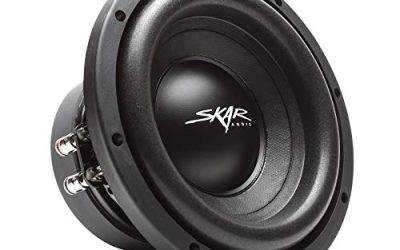
Skar sells this driver individually, and that single detail shapes who should buy it. Replacing one blown midrange, adding a third driver to a custom pod, or building a system in stages over several months all get easier when you are not forced into pairs. The specifications are honest mid-tier numbers for this class: 150 watts RMS, 300 watts max, and 92.5 dB sensitivity from a 1.5-inch voice coil and ferrite magnet. It will not match the DS18 pair for outright output per door, but as a building block for custom layouts — multiple drivers per door, rear fill, or a budget front stage — it earns its place.
Specs
- Size: 6.5 inches
- RMS power: 150 watts
- Max power: 300 watts
- Impedance: 4 ohms
- Sensitivity: 92.5 dB (1W/1m)
- Voice coil: 1.5 inches
- Magnet: ferrite
- Sold individually (1 speaker)
Best for: Custom multi-driver layouts, staged builds and replacing a single damaged midrange.
Watch out for: The price is per speaker, so a stereo pair costs two units; sensitivity is the lowest of this group.
ASIN: B00K3QC42I
DS18 PRO-GM6.4B (Pair)
The second DS18 in this roundup trades some of the PRO-X model’s muscle for an easier ownership path. At 140 watts RMS per speaker it matches the output of mid-size four-channel amplifiers that many owners already have installed, so it can join an existing system without an amplifier upgrade. It keeps the family hardware that matters for loud duty: a 1.5-inch high-temperature Kapton voice coil and the red aluminum bullet that protects the coil and shapes dispersion. As a pair, it works well as rear-door or rear-deck support behind a stronger front stage, or as the main midrange set in a moderate build that values headroom over extremes.
Specs
- Size: 6.5 inches
- RMS power: 140 watts per speaker
- Max power: 480 watts per speaker
- Impedance: 4 ohms
- Voice coil: 1.5-inch high-temperature Kapton
- Bullet: red aluminum
- Sold as a pair of 2 speakers
Best for: Owners with a mid-size amplifier who want a matched pair without upgrading power.
Watch out for: It gives up output headroom to the PRO-X6.4BM, so very bass-heavy systems can still outrun it at full volume.
ASIN: B08TRRCNQ9
Which One Fits Your Situation
Your subwoofer stage drowns out the vocals
When the bass is already handled and the problem is lyrics disappearing at volume, the DS18 PRO-X6.4BM pair is the answer. Its 250-watt RMS rating and 96 dB sensitivity give it the headroom to sit on top of a powerful subwoofer setup instead of underneath it. Feed it from a proper amplifier channel and cross it over above the bass region, and the front stage stops being the weak link in the system.
Your doors are too shallow for most loudspeakers
Some vehicles simply refuse deep speakers: window tracks sit close behind the mounting hole and the door card leaves no spare room. That is the exact case the Timpano TPT-MR6-4 PRO pair was shaped for, with its 2.2-inch mounting depth. You give up a little output compared with the full-size drivers here, but a loud speaker that fits beats a louder one that has to go back in the box.
You are building the system in stages
Not every build happens in one weekend or one purchase. The Skar Audio FSX65-4, sold one driver at a time, lets you start with the front doors now and add matching drivers to pods or rear locations later without hunting for a second pair at a different specification. It is also the sensible spare: when one midrange in a multi-driver door eventually fails, you can replace exactly that unit and keep the rest of the stage matched.
You already own a mid-size amplifier
If your four-channel amplifier is already installed and rated in the range these speakers sip rather than gulp, the DS18 PRO-GM6.4B pair fits that reality. Its 140-watt RMS rating lines up with common amplifier channels, so the upgrade becomes a speaker swap instead of a full system rethink. It is a good second set of doors behind a stronger front stage, or the main event in a build that plays loud daily without chasing competition volume.
Common Mistakes
- Judging loudness by the max watt figure on the box instead of sensitivity and RMS, which are the numbers that predict real output.
- Running pro-audio midranges full range without a high-pass crossover, letting bass frequencies overdrive a cone that was never built to reproduce them.
- Powering high-output midranges from a factory head unit and concluding the speakers are disappointing, when they are simply starved of power.
- Ordering before measuring mounting depth, then discovering the magnet hits the window track after the door is already apart.
- Assuming every listing is a pair, and ending up with one speaker for two doors because the driver was sold individually.
Frequently Asked Questions
Can I run these speakers from a factory head unit?
You can connect them, but you will not get the loudness they were bought for. Factory head units deliver a fraction of the RMS power these midranges are rated for, so volume stays limited and pushing the volume knob invites distortion from the source itself. A compact four-channel amplifier is the upgrade that unlocks what the sensitivity ratings promise, even at moderate listening levels.
Do loud midrange speakers still need a subwoofer and tweeters?
Yes, in almost every build. These drivers concentrate on the midrange band where voices and most instruments live, and their listings show response starting around 100 Hz rather than deep bass territory. A subwoofer covers the low end they skip, and tweeters restore the top octave. Treating a midrange as a full-range replacement leaves gaps at both ends of the music.
How much amplifier power should I match to these speakers?
Aim for an amplifier channel rated close to the speaker’s RMS figure: around 140 to 150 watts per channel suits the Timpano, Skar and PRO-GM6.4B picks, while the PRO-X6.4BM pair can use channels rated up to its 250-watt RMS. Slightly under the rating with clean, unclipped signal is safer than a smaller amplifier driven into distortion, which is what actually destroys voice coils.
Why do sensitivity figures vary so much between brands?
Partly design, partly measurement method. Sensitivity is quoted at one watt at one meter, but some brands measure with 2.83 volts instead, which flatters the number on a 4-ohm speaker. Cone weight, magnet strength and surround stiffness also change efficiency for real. Compare figures within a shortlist, treat small differences cautiously, and remember that a gap of 3 dB or more represents a genuine, audible difference in output per watt.
FAQ
Can I run these speakers from a factory head unit?
Do loud midrange speakers still need a subwoofer and tweeters?
How much amplifier power should I match to these speakers?
Why do sensitivity figures vary so much between brands?
More from Amazon
Programs that pair well with the guide above. Offers and eligibility are set by Amazon and may change.
Free shipping on eligible items, Prime Video and more. Eligible new members can start with a free trial.
Start a Prime free trialAudiobooks and podcasts to listen to on the go. Eligible new members can start with a free trial.
Try Audible freeAd-free music streaming. Eligible new subscribers can start with a free trial.
Try Music Unlimited freeA free business account with business pricing and bulk-buying tools for work, shop or home office.
Create a business accountAs an Amazon Associate we earn from qualifying purchases.