
Key takeaways
- Pro: Very stable three-wheel design ideal for beginners
- Pro: Licensed styling with functional headlight, horn, and music
- Con: Single-seat design limits sibling sharing
What's inside
Most kids ride on motorcycles look fun in photos but fall apart in real use: tippy two-wheel designs that need constant catching, throttles that jerk, or batteries that die halfway down the driveway. Parents want something a child can actually mount, start, steer, and stop without drama, while kids want lights, sounds, and the feeling that they are riding a real bike, not a toy that stalls on grass.
After testing how these bikes handle on pavement, rough sidewalks, and gentle slopes, the differences are clear. Stability from a three-wheel layout or training wheels matters more than top speed, smooth throttle and simple forward/reverse controls beat raw power, and useful details like working lights, horns, and music keep kids riding longer. The best options balance that stability, intuitive controls, and durable build without adding complexity a preschooler cannot manage.
As an Amazon Associate we earn from qualifying purchases at no extra cost to you. Product prices and availability are accurate as of the date shown and are subject to change.


Quick Picks
| Product | Best for | Price |
|---|---|---|
| Licensed BMW 12V 3-Wheel (Blue) | Best for First-Time Riders | $142.49 |
| 12V Dual 50W with Training Wheels (Grey) | Best for Dirt Bike Styling | $159.99 |
| 24V Aprilia RSV4 Two Seater (Pink) | Best for Two Kids / Higher Load | $219.99 |
| Costzon 6V Chopper (Red) | Best Budget Chopper | $74.99 |
| Costzon 6V Chopper (Blue) | Best Low-Speed Cruiser | $95.13 |
| TCARAIWEN 24V Aprilia (Black) | Best for Older Kids | $179.99 |
| HEIMILI 12V 2-Seater | Best Value Two Seater | $119.99 |
| 12V 2-Seater with Parent Remote & Storage | Best with Parent Control | $119.99 |
How We Picked
We prioritized stability and tip resistance, ease of control for the stated age range including forward and reverse operation, power delivery that is smooth rather than jerky, and engaging but durable features such as lights, sounds, and Bluetooth or MP3 that actually work ride after ride.
The 8 Best Kids Ride On Motorcycles in 2026
1. Licensed BMW 12V 3-Wheel (Blue)
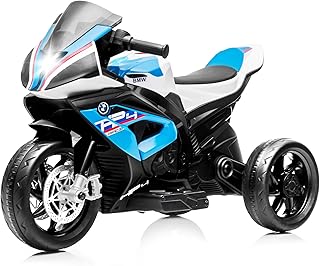
This licensed BMW is the easiest confidence builder for cautious first-time riders ages 3 to 5. The three-wheel stance stays planted on patios and driveways, and the controls are genuinely simple: twist-and-go with a reverse function to get out of corners instead of parents having to lift and turn the bike. The working headlight, horn, and music keep kids engaged without overwhelming them, and the overall footprint feels like a real motorcycle scaled correctly for toddlers. Build quality is more refined than generic unlicensed bikes, which shows in tighter steering and less wobble.
- Pro: Very stable three-wheel design ideal for beginners
- Pro: Licensed styling with functional headlight, horn, and music
- Con: Single-seat design limits sibling sharing
Skip it if you need a two-seater or want training wheels that can be removed later as skills improve.
2. 12V Dual 50W with Training Wheels (Grey)
Built for kids ages 3 to 6 who want a dirt bike look without the dirt bike learning curve, this grey model pairs dual 50W motors with a capped 2.8 MPH top speed that feels brisk but controllable. Training wheels add lateral stability on uneven surfaces while still allowing leaning into turns, and the electric dirt bike ergonomics suit both boys and girls with a higher handlebar and upright seating. Power is delivered smoothly from a stop, so there is less lurching that can startle younger riders, and it holds momentum well on short grass.
- Pro: Dual motors provide steady, smooth acceleration
- Pro: Training wheels add confidence for newer riders
- Con: Price is higher than many 12V single-motor options
Skip it if you want a chopper-style cruiser or need a higher load capacity for two riders.
3. 24V Aprilia RSV4 Two Seater (Pink)
This licensed Aprilia RSV4 in pink is the pick for families who need to carry two small kids or a larger single rider up to 150 lbs. The 24V system with 200W motors and a top speed up to 5 MPH gives noticeably stronger hill performance and longer run time than 6V and 12V bikes, while forward and backward drive makes maneuvering easy. Training wheels keep the wider, two-seat chassis stable, and details like LED lights, music, and wireless connectivity make it feel premium. It is bigger and heavier, so it needs more storage space.
- Pro: Two-seat layout with high max load for siblings
- Pro: 24V power with forward and reverse and bright LED lights
- Con: Larger footprint and higher price point
Skip it if you have limited storage or only need a compact solo bike for a toddler.
4. Costzon 6V Chopper (Red)
The red Costzon 6V Chopper is a straightforward, low-and-stable entry point for toddlers who are not ready for faster bikes. The three-wheel configuration and low seat height make mounting and balancing effortless, and the LED headlight plus built-in music and story functions give kids reasons to stay in the saddle during short driveway rides. At 31 inches long, it is compact enough for indoor use on hard floors and light enough for parents to reposition quickly. Performance is intentionally gentle, which is exactly what the youngest riders need.
- Pro: Very stable three-wheel chopper at a budget price
- Pro: Engaging headlight, music, and story features for toddlers
- Con: 6V power is limited on grass or inclines
Skip it if your child is already comfortable at higher speeds or you need extended outdoor range.
5. Costzon 6V Chopper (Blue)
Similar in concept to its red sibling but with a slightly more polished feature set, the blue Costzon 6V Chopper focuses on easy, predictable cruising. The battery-powered three-wheel platform stays upright at stops and low speeds, and the horn and headlight add interactive play without complicating the controls. It is positioned as a gift-friendly toddler motorcycle that emphasizes safety and simplicity over speed, with a calm throttle response that helps new riders learn to steer first and accelerate second. The blue finish also hides scuffs better with regular use.
- Pro: Stable three-wheel ride with simple battery-powered operation
- Pro: Horn and headlight add realism without complexity
- Con: Not as fast or terrain-capable as 12V and 24V models
Skip it if you need a bike that can handle slopes or carry a heavier child.
6. TCARAIWEN 24V Aprilia (Black)
Designed for kids ages 4 to 10, the black TCARAIWEN 24V Aprilia is the performance-oriented option with a top speed up to 8 mph, substantially quicker than the other bikes here. The Aprilia licensed styling looks sharp, and training wheels are included to keep that extra speed manageable for younger riders in the range. Bluetooth and MP3 let kids ride with their own music, which older kids appreciate more than horns and preset songs. The added power demands more supervision and open space.
- Pro: Highest speed in this group for more experienced riders
- Pro: Licensed Aprilia design with Bluetooth and MP3
- Con: Too fast for cautious beginners or tight spaces
Skip it if your rider is under four, still wobbly on steering, or will ride mostly indoors.
7. HEIMILI 12V 2-Seater
The HEIMILI 12V 2-Seater blends sharing and stability for ages 3 to 6. The three-wheel electric motorcycle layout with dual motors handles two small passengers at low speed without bogging down on smooth pavement, and MP3 and Bluetooth add modern audio options beyond basic engine sounds. As a 12V system, it hits a practical middle ground: more capable than 6V choppers for outdoor use but easier to manage than 24V bikes for younger kids. Controls remain simple enough for a preschooler to master quickly.
- Pro: Two-seat capacity in a stable three-wheel package
- Pro: Dual motors with MP3 and Bluetooth at a value price
- Con: Two-up riding reduces range and agility
Skip it if you primarily ride with one child and prefer a narrower, more nimble single-seater.
8. 12V 2-Seater with Parent Remote & Storage
This 12V two-seater stands out for parents who want an override. The included parent remote control lets an adult steer or stop the bike when a child heads toward the street or freezes mid-turn, which is invaluable for first weeks of use. Otherwise it covers the essentials: three-wheel stability, dual motors for smooth takeoffs, plus music, horn, lights, and a big storage box for toys or snacks. The storage box is genuinely useful on neighborhood rides and adds a practical touch other bikes lack.
- Pro: Parent remote adds safety and learning support
- Pro: Large storage box plus lights, horn, and music
- Con: Remote control adds a learning step for parents
Skip it if you want a pure kid-controlled experience with no parental intervention.
Buying Guide
Voltage and Real-World Power
Voltage is a proxy for capability, not just speed. 6V is calm and best for flat, smooth surfaces and very young toddlers. 12V is the versatile middle ground for driveways and sidewalks, especially with dual motors. 24V provides more torque for gentle inclines, heavier riders, and two-up use, but needs more space and supervision. Match voltage to where and how your child will actually ride.
Stability: Three Wheels vs. Training Wheels
A fixed three-wheel chassis is the most stable at stops and low speeds and requires zero adjustment. Training wheels offer similar side support but can be set wider and sometimes removed later, which helps transitioning riders. For toddlers and first bikes, fixed three-wheel designs are more foolproof; for kids who will progress quickly, training wheels offer flexibility.
Controls and Parent Support
Look for a smooth twist or button throttle, a clear forward and reverse selector, and an easy stop. Working lights and sounds should be on simple buttons a child can reach without looking down. If your riding area is near traffic or includes slopes, a parent remote is worth prioritizing for the first season, along with practical extras like storage for helmets and water bottles.
Our Verdict
Top pick is the Licensed BMW 12V 3-Wheel (Blue) for its ideal blend of stability, intuitive controls, and quality licensed build that helps ages 3 to 5 learn quickly without constant assists. Budget pick is the Costzon 6V Chopper (Red) because it delivers a stable, engaging chopper experience at the lowest price in the group. If you need to carry two kids or a heavier rider, choose the 24V Aprilia RSV4 Two Seater (Pink) for its higher load capacity, dual motors, and forward and reverse drive.
FAQ
What age range are these ride on motorcycles best for?
Most 6V and 12V three-wheel models are ideal for ages 3 to 6, while 24V options like the Aprilia models suit kids up to about 10 with supervision. Always check seat height, handlebar reach, and whether training wheels or a parent remote are included.
Are three-wheel motorcycles safer than training-wheel models?
Both add stability, but a fixed three-wheel base is generally more stable at stops and very low speeds. Training wheels provide good support while riding and can sometimes be adjusted or removed as skills improve.
Do I need a 24V bike for outdoor use?
Not necessarily. 12V dual-motor bikes handle paved surfaces and short grass well for most families. Choose 24V if you have gentle hills, want to carry two kids, or need higher load capacity.
How long does the battery last per charge?
Run time varies with rider weight, terrain, and speed, with 24V systems typically offering longer usable sessions than 6V at low speeds. Gentle throttling, flat pavement, and fully charging before the first ride all help maximize ride time.


