
Key takeaways
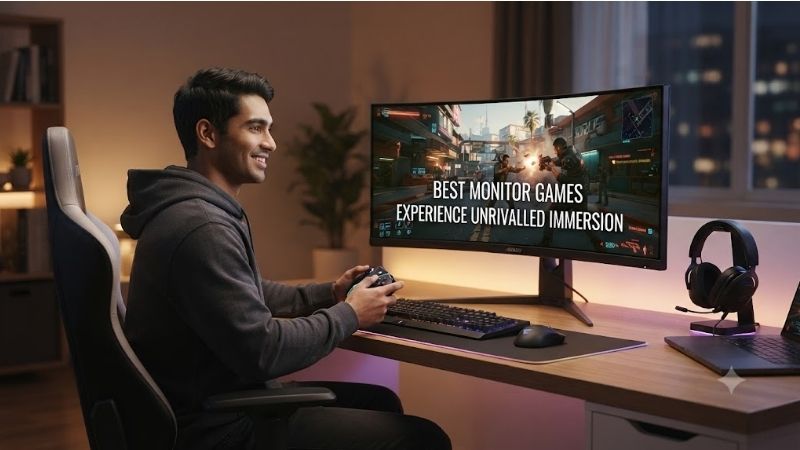
Best monitor games selection requires finding the sweet spot between resolution, frame rate, and input response. Whether you play fast-paced multiplayer shooters or immersive open-world RPGs, the right display brings out every visual detail while keeping motion silky smooth without annoying tearing or lag.
Our top picks


As an Amazon Associate we earn from qualifying purchases at no extra cost to you. Ratings are shown as listed on Amazon.
By: Daniel Foster
🛒 Best Price Today on Amazon
Prime members get fast, free shipping on everything above, plus member-only deals. New members get a 30-day free trial — cancel anytime.
How to Choose the Right best monitor games
Finding the ideal gaming display involves looking beyond mere screen size to evaluate core panel characteristics carefully. Identifying your target resolution, refresh rate, and adaptive sync compatibility ensures that your graphics card works in harmony with your display for maximum clarity.
Screen Resolution and Pixel Density
When evaluating display clarity, screen resolution dictates how sharp in-game textures and text appear on screen. High pixel density delivers crisp visual details, making 1440p the current sweet spot for balancing performance with fidelity without putting excessive strain on your GPU system.
Choosing between 1080p, 1440p, or 4K depends heavily on your computer specs and gaming preferences. While competitive FPS players often prefer 1080p for ultra-fast frame rates, cinematic story enthusiasts benefit greatly from 4K panels that bring vibrant virtual worlds to life seamlessly.
Refresh Rate and Response Time
Smooth motion handling relies directly on a display’s refresh rate and pixel response time during intense play. A higher hertz rating ensures fluid animation, while a rapid response time prevents annoying motion blur and ghosting trails behind fast-moving objects across competitive matches.
A fast panel significantly lowers input lag, giving players a crucial competitive edge in twitch-reflex shooters. Aiming for at least 144Hz provides a noticeable leap over standard screens, while 180Hz or 240Hz models deliver the ultra-responsive feel required by dedicated esports pros today.
Panel Technology and Color Accuracy
Different panel types offer distinct trade-offs between color accuracy, viewing angles, and contrast levels. Fast IPS panels offer vibrant colors and wide viewing angles, while modern OLED technology delivers infinite contrast with true blacks that make HDR content look extraordinarily realistic.
Evaluating color gamut coverage ensures your games look rich and true to the developers’ artistic vision. Gamers who also edit video or photos should prioritize panels with high DCI-P3 coverage, ensuring that rich hues remain consistent and accurate across both creative work and gaming.
Adaptive Sync and HDR Support
Screen tearing occurs when your graphics card frame rate mismatches your display’s hardware refresh cycle. Variable refresh rate technologies like NVIDIA G-Sync and AMD FreeSync synchronize these hardware signals, eliminating stuttering and screen tearing without introducing heavy latency.
HDR support enhances dynamic range by boosting peak brightness and expanding shadowy details in dark scenes. Look for displays certified with VESA DisplayHDR standards to ensure realistic highlight pops, deeper contrast depth, and more immersive visuals during nighttime exploration in games.
| Model | Screen Size & Resolution | Refresh Rate & Panel | Target Gamer | Key Feature |
|---|---|---|---|---|
| ASUS TUF Gaming VG27AQ3A | 27″ 1440p QHD | 180Hz Fast IPS | Budget competitive gamers | High refresh rate & low cost |
| Samsung Odyssey OLED G5 (G50SF) | 27″ 1440p QHD | 180Hz QD-OLED | Immersion & dark room play | Instant 0.03ms response & infinite contrast |
| Alienware AW2725DM | 27″ 1440p QHD | 180Hz Fast IPS | Esports & all-around PC play | Premium build & accurate factory colors |
| ASUS ROG Strix XG27UCG | 27″ 4K UHD / 1080p | 160Hz 4K / 320Hz 1080p | Hybrid single & multiplayer | Dual-mode high resolution and high frame rate |
| LG UltraGear 27GP850-B | 27″ 1440p QHD | 180Hz Nano IPS | Fast-paced FPS enthusiasts | Vibrant Nano IPS color & 1ms GTG speed |
Top Picks for best monitor games
Selecting top displays for competitive and casual play requires testing motion handling, contrast, and real value. We reviewed top-rated models available on major retail platforms to highlight displays that offer outstanding image quality, low latency, and lasting hardware reliability.
ASUS TUF Gaming VG27AQ3A
The ASUS TUF VG27AQ3A is built for main-stream PC gamers looking for fast 1440p gaming performance without breaking the bank. Featuring a 27-inch Fast IPS panel, 180Hz refresh rate, and 1ms response time, this display delivers crisp motion and fluid gameplay across fast-paced multiplayer titles.
However, the overall HDR performance feels underwhelming due to limited peak brightness levels in bright rooms. Additionally, the monitor stand lacks full height adjustment options, restricting ergonomics slightly. Overall, it remains a fantastic budget 1440p display for competitive gamers.
Samsung Odyssey OLED G5 (G50SF)
The Samsung Odyssey OLED G5 caters to enthusiasts who demand deep contrast and lightning-fast response times. Powered by cutting-edge OLED technology, its 27-inch QHD panel offers a silky 180Hz refresh rate with virtually instant 0.03ms pixel transitions that eliminate ghosting completely.
On the downside, OLED panels carry a slight risk of static image burn-in over long multi-year periods. Furthermore, SDR brightness levels are somewhat conservative compared to traditional LED backlights. Despite these factors, its unmatched contrast makes it a top pick for cinematic immersion.
Alienware AW2725DM
The Alienware AW2725DM targets serious esports players wanting elite build quality and color fidelity. Its 27-inch QHD Fast IPS screen delivers a 180Hz refresh rate alongside excellent color accuracy, robust ergonomic adjustment options, and full G-Sync and FreeSync adaptive sync support.
Regrettably, black levels appear somewhat grayish when playing dark games in completely unlit rooms. The bold gamer-centric rear chassis design might also feel slightly bulky for minimal desk setups. Nevertheless, its exceptional motion clarity and build reliability make it a premium choice.
ASUS ROG Strix XG27UCG
The ASUS ROG Strix XG27UCG is designed for versatile gamers who alternate between 4K single-player adventures and fast esports. Featuring innovative dual-mode capability, it switches effortlessly from 4K at 160Hz for cinematic fidelity to 1080p at 320Hz for ultra-competitive shooting matches.
Unfortunately, switching resolution modes requires navigating the OSD menu, which can feel tedious during quick sessions. The built-in USB hub selection is also fairly basic for its premium price tag. Still, its unique dual-mode flexibility delivers unmatched versatility for hybrid gamers.
LG UltraGear 27GP850-B
The LG UltraGear 27GP850-B caters to competitive enthusiasts who prioritize raw panel speed and broad color coverage. Its 27-inch Nano IPS display features a 180Hz overclocked refresh rate, 1ms response time, and stunning DCI-P3 color reproduction that brings vivid fantasy game environments to life.
However, the native contrast ratio is relatively modest, causing dark shadowy scenes to lack deep impact. The included power brick is also somewhat bulky to cable-manage cleanly behind desks. Ultimately, its stellar motion handling and rich hues make it a benchmark choice for fast titles.
Frequently Asked Questions
Navigating display specifications like refresh rates, resolutions, and panel types can feel overwhelming when upgrading your gaming rig. To help you choose confidently, we answered four of the most common questions regarding display performance, system requirements, and hardware settings.
Is 1440p Resolution Better Than 4K for Gaming Displays?
For most PC gamers, 1440p offers the ideal balance between sharp visual detail and achievable frame rates. Running games at 1440p demands significantly less processing power from your graphics card than native 4K, allowing you to maintain high refresh rates for noticeably smoother action.
While 4K displays offer higher pixel density and breathtaking clarity in slow-paced titles, achieving high frame rates requires top-tier GPU hardware. If you prioritize fluid motion in fast competitive games, a high-refresh 1440p monitor provides a superior overall playing experience.
What Is the Difference Between IPS and OLED Panels?
IPS panels utilize LED backlights to deliver bright screen output, excellent color accuracy, and wide viewing angles at accessible price points. They are highly durable and immune to burn-in, making them a dependable choice for long daily gaming sessions and productivity tasks combined.
In contrast, OLED technology uses self-illuminating pixels that turn off completely to achieve infinite contrast and true black levels. OLEDs also provide near-instant pixel response times, though they come at a higher cost and require gentle care to prevent long-term image retention.
Does High Refresh Rate Matter for Console Gaming?
Modern consoles like the PlayStation 5 and Xbox Series X support up to 120Hz output at 1440p or 4K resolutions via HDMI 2.1 connections. Upgrading from a standard 60Hz television to a high-refresh display results in smoother camera motion, reduced input lag, and faster reaction times.
To take full advantage of console performance, ensure your chosen monitor features HDMI 2.1 bandwidth and variable refresh rate support. This hardware combination prevents screen tearing and maintains fluid visual performance during demanding action sequences in modern console games.
How Does Response Time Affect Motion Blur in Fast Games?
Response time measures how quickly individual pixels transition from one color to another, typically measured in milliseconds. A slow response time causes noticeable trailing, ghosting, and motion blur behind fast-moving objects, making it difficult to track targets in competitive shooters.
Selecting a panel with a 1ms response time or faster ensures sharp object outlines during rapid camera rotations. Pair low response times with variable refresh rate technologies to eliminate ghosting and screen tearing, creating a clean visual feed during intense multiplayer matches.
Final Thoughts
Selecting the top best monitor games depends on balancing your preferred genres, hardware budget, and target frame rates. By prioritizing screen resolution, refresh rate, and adaptive sync support, you can secure a responsive display. Upgrade your setup today to enjoy immersive visuals and silky motion.




Write Your Review
No reviews yet. Be the first to share your experience!