
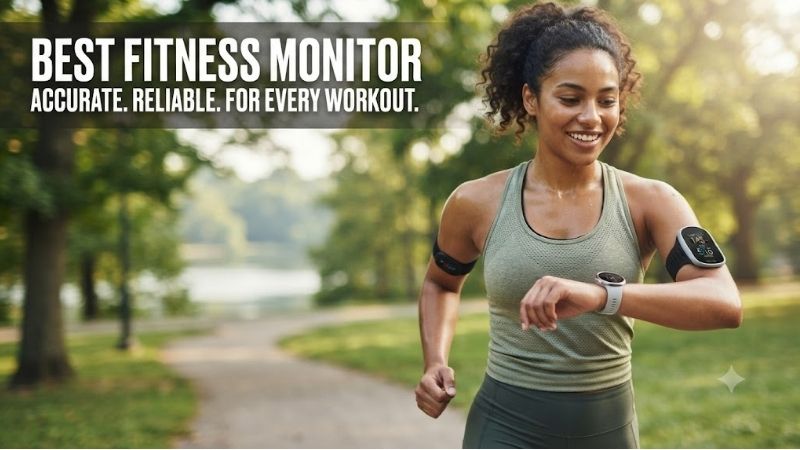
Best fitness monitor selection requires evaluating sensor precision, battery life, and software ecosystem compatibility for active lifestyles. Whether you are training for a triathlon or monitoring daily sleep cycles, reliable biometric feedback helps you optimize exercise habits and achieve health goals.
Our top picks


As an Amazon Associate we earn from qualifying purchases at no extra cost to you.
By: Daniel Foster
🛒 Best Price Today on Amazon
Prime members get fast, free shipping on everything above, plus member-only deals. New members get a 30-day free trial — cancel anytime.
How to Choose the Right best fitness monitor
Navigating best fitness monitor options requires matching key hardware specs with your personal physical conditioning routines. Assessing optical sensors, sync speed, and app ecosystems ensures you purchase a dependable wearable that tracks activity tracking seamlessly without unexpected connectivity drops during workouts.
Sensor Precision and Heart Metrics
Choosing a wearable with high heart rate accuracy directly affects overall workout tracking reliability. Advanced optical sensors project light through skin layers to measure blood volume changes continuously during high-intensity workouts. High precision prevents data lag during rapid heart rate spikes.
Evaluating chest strap compatibility ensures seamless data streaming for competitive athletes needing lab-grade telemetry. While optical wrist sensors offer convenient daily wear, dual-band Bluetooth pairing allows pairing with external sensors during cycling or running interval training sessions.
GPS Telemetry and Location Tracking
Built-in GPS telemetry provides accurate distance, speed, and spatial mapping without requiring a smartphone nearby. Multi-band satellite systems lock onto signals quickly, ensuring exact route logs across dense urban streets, shaded forest trails, and open terrain during long outdoor running workouts.
Relying on connected GPS requires carrying mobile phones during workouts, which can feel bulky during competitive events. Integrated navigation chips save route files onboard, automatically syncing detailed elevation profiles and split paces once reconnected to your primary mobile workout application.
Health Analytics and Sleep Monitoring
Comprehensive health suites transform raw sensor data into practical daily wellness insights. Advanced sleep analysis tracks light, deep, and REM sleep stages alongside nocturnal temperature fluctuations. Understanding nocturnal recovery helps athletes adjust workout intensity to prevent overtraining fatigue.
Stress tracking monitors heart rate variability to highlight emotional and physical tension throughout long workdays. Guided breathing prompts assist in lowering heart rates during stressful moments, while continuous oxygen saturation monitoring provides valuable health trends during high-altitude travel.
Battery Endurance and Hardware Build
Battery endurance dictates whether your wearable operates through extended multi-day trips without needing power outlets. Efficient AMOLED screens paired with smart power modes deliver up to two weeks of continuous operation, eliminating daily charging hassles for users tracking around-the-clock habits.
Durable housing materials like titanium and reinforced polymer protect internal circuitry against accidental impacts. High water resistance ratings ensure your device withstands heavy sweat accumulation, torrential rainstorms, and lap swimming sessions without risking liquid damage to sensitive components.
| Model | Sensor & Placement | Wireless Specs | Target User | Standout Feature |
|---|---|---|---|---|
| Garmin Forerunner 265 | Optical Wrist Sensor | Multi-band GPS & BLE | Dedicated runners & triathletes | Vibrant AMOLED & training readiness |
| WHOOP 4.0 | Screenless Pod | Bluetooth Smart | Recovery & strain optimization | Continuous biometric tracking |
| Fitbit Charge 6 | Compact Wristband | Built-in GPS & BLE | Budget health enthusiasts | Google app sync & sleek design |
| Apple Watch Series 9 | Smartwatch Wrist Array | Wi-Fi, BLE & Cellular | iPhone power users | S9 chip & accurate ECG metrics |
| Oura Ring Gen3 | Titanium Finger Ring | Low-energy Bluetooth | Sleep & wellness tracking | Discreet wear & temperature sensors |
Top Picks for best fitness monitor
Selecting top picks for best fitness monitor requires testing real-world accuracy, strap comfort, and software utility. We evaluated highly rated wearables available on major retail platforms to highlight models that deliver precise biometric telemetry, long battery life, and overall daily value.
Garmin Forerunner 265
The Garmin Forerunner 265 caters to dedicated runners wanting vivid displays and advanced workout metrics. Featuring a stunning AMOLED touchscreen, multi-band GPS tracking, and personalized training readiness scores, this sport watch delivers precise athletic telemetry with zero operational lag.
However, the plastic chassis feels less luxurious than premium metal smartwatches in corporate settings. Additionally, advanced menu settings can feel overwhelming for casual walkers needing basic step counts. Still, its stellar GPS accuracy and detailed training metrics make it a top runner choice.
WHOOP 4.0
The WHOOP 4.0 targets serious athletes focused on strain optimization and recovery tracking. Featuring a screenless sensor pod, continuous physiological monitoring, and an vibrant AMOLED display accessory band, it provides deep biometric feedback without distraction from constant wrist notifications.
Unfortunately, the required monthly subscription model increases long-term ownership costs significantly. The lack of a digital watch screen also requires checking mobile apps to view real-time workout stats. Nevertheless, its unmatched recovery analytics deliver elite value for dedicated pros.
Fitbit Charge 6
The Fitbit Charge 6 caters to budget-conscious users seeking compact health tracking for daily step count goals. Equipped with built-in GPS, Google Wallet integration, and precise pulse sensors, this slim band seamlessly logs daily activity while displaying incoming smartphone notifications clearly.
On the downside, unlocking detailed historical sleep trends requires subscribing to Fitbit Premium. Small screen dimensions also make reading detailed text alerts challenging during workouts. Overall, its sleek design and reliable step logging provide fantastic everyday utility for casual users.
Apple Watch Series 9
The Apple Watch Series 9 targets iPhone owners wanting seamless smartwatch integration and reliable recovery score tracking. Featuring a bright Always-On display, powerful S9 chip, and precise ECG sensors, this sleek wearable handles health monitoring and daily communication with effortless speed.
Regrettably, 18-hour battery endurance requires nightly charging, making continuous sleep tracking inconvenient. Exclusive iOS ecosystem compatibility also excludes Android smartphone owners completely. Despite battery limits, its smooth performance and safety features make it an elite smartwatch.
Oura Ring Gen3
The Oura Ring Gen3 is designed for wellness enthusiasts who prefer subtle finger placement over wristbands. Boasting a robust waterproof rating, titanium build, and accurate temperature sensors, this lightweight smart ring monitors sleep quality and daily readiness with exceptional comfort.
However, the lack of a real-time screen display means you cannot view live pace metrics while running outdoor routes. Accessing comprehensive wellness trends also requires paying a recurring monthly subscription fee. Nonetheless, its discreet form factor and sleep tracking offer unmatched comfort.
Frequently Asked Questions
Evaluating sensors and connectivity raises common questions when selecting a best fitness monitor device. To help you choose confidently, we answered four common questions regarding wrist placement, heart rate accuracy, water resistance ratings, and recurring subscription fees for workout hardware.
Are Fitness Monitors More Accurate Than Smartwatches?
Dedicated fitness bands and sports watches often deliver superior heart rate accuracy compared to general smartwatches. Specialized optical sensor arrays combined with optimized sport algorithms reduce motion artifacts, delivering precise pulse tracking during explosive high-intensity interval workouts.
Conversely, lifestyle smartwatches prioritize productivity apps and display brightness, which can occasionally impact continuous sensor sampling rates during intense exercise. Choosing a purpose-built fitness wearable guarantees consistent biometric tracking during rigorous physical training sessions.
Do I Need a Paid Subscription to Use My Device?
Most fitness wearables provide full access to core features like step counting, heart metrics, and basic sleep tracking without requiring extra monthly fees. Purchasing hardware grants access to primary companion apps, allowing users to log workouts and view daily health summaries completely freely.
However, certain brands lock advanced recovery score analysis, personalized coaching tips, and historical health trends behind recurring monthly subscription paywalls. Reviewing software requirements before buying ensures you select a device that aligns with your long-term budget preferences.
Can I Track Swimming and Water Sports Safely?
Yes, most modern wearables feature water resistance ratings of 5 ATM or higher, allowing safe use during pool swimming, snorkeling, and ocean sports. Sealed casing designs prevent water ingress, while specialized swimming algorithms record lap counts, stroke types, and overall distance accurately.
However, high-velocity water activities like waterskiing or deep scuba diving require specialized dive computers to withstand extreme pressure changes. Rinsing your wearable with fresh water after ocean swimming removes salt residue, preserving button responsiveness and electronic charging contacts over time.
How Long Do Fitness Monitor Batteries Last?
Battery longevity varies significantly based on display technology, continuous GPS usage, and sensor polling frequencies. Basic fitness bands with power-efficient screens last between 7 and 14 days on a single charge, while feature-rich smartwatches typically require charging every 1 to 2 days.
Enabling continuous GPS telemetry or maximum screen brightness accelerates power consumption, reducing battery runtime to a few hours during active tracking. Choosing power-saving operational modes allows extended outdoor tracking, ensuring your device remains powered through long endurance events.
Final Thoughts
Selecting the top best fitness monitor comes down to balancing sensor precision, battery life, and software ecosystem needs. By prioritizing heart rate accuracy, activity tracking capabilities, and comfortable wear, you can optimize your conditioning routines. Upgrade your setup today to track health with total confidence.


Write Your Review
No reviews yet. Be the first to share your experience!