
Best bp monitor for home use selection requires checking cuff fit, clinical accuracy, and easy digital tracking. Finding a reliable health device helps you manage hypertension effectively at home. Selecting models with multi-user memory ensures accurate records for your whole family routine without hassle every day.
Our top picks


As an Amazon Associate we earn from qualifying purchases at no extra cost to you.
By: Daniel Foster
🛒 Best Price Today on Amazon
Prime members get fast, free shipping on everything above, plus member-only deals. New members get a 30-day free trial — cancel anytime.
How to Choose the Right best bp monitor for home use
Selecting a reliable monitor for daily tracking requires evaluating cuff size, display clarity, and data connectivity. Modern devices pair medical-grade sensors with simple digital interfaces to deliver consistent vascular readings. Investing in accurate equipment helps you track long-term cardiovascular health smoothly.
Cuff Ergonomics and Size Compatibility
Choosing a proper home blood pressure cuff prevents improper inflation and inaccurate pressure measurement. Most adult arms require adjustable sleeves designed to fit comfortably without pinching sensitive skin tissues. Proper cuff placement ensures standard arterial alignment during every automated inflation cycle.
Flexible contoured cuffs wrap smoothly around upper arm shapes to deliver uniform pressure distribution. Soft fabric linings protect delicate skin during rapid pumping cycles, ensuring comfortable daily usage. Selecting the correct sleeve dimensions prevents skewed systolic metrics caused by restrictive arm fit.
Measurement Precision and Clinical Validation
Securing a validated device ensures every clinical accuracy reading reflects true arterial pressure levels. Recognized medical testing standards confirm that advanced digital sensors detect subtle heartbeat oscillations reliably. Trustworthy monitoring equipment provides peace of mind when sharing trends with doctors.
Built-in averaging technology takes multiple consecutive readings to minimize temporary physical stress variations. Filtering out ambient noise and arm movement ensures stable diagnostic output across daily morning checks. Reliable sensor calibration maintains precise vascular measurement over years of continuous use.
Data Storage and App Connectivity
Integrating a multi-user memory unit allows couples to record personal health histories separately on one machine. Digital memory banks store hundreds of dated entries for effortless long-term trend analysis. Automated storage eliminates manual paper logging, saving valuable time during busy morning routines.
Bluetooth wireless syncing transfers daily vascular metrics directly to smartphone applications for seamless review. Exporting PDF summary sheets enables instant communication with healthcare providers during routine checkups. Smart data tracking transforms raw pressure numbers into actionable cardiovascular insights.
Top Picks for best bp monitor for home use
Finding the ideal monitor on Amazon requires comparing real-world comfort, software syncing, and sensor reliability. The top recommendations below serve diverse health needs, from simple multi-user home setups to travel-friendly wireless designs. Reviewing these choices ensures you select the perfect health unit.
Omron 10 Series Wireless Upper Arm Monitor
Ideal for multi-user households needing medical precision, Omron 10 features TruRead averaging and AFib screening tech. The contoured ComFit cuff fits comfortably around arm sizes from nine to seventeen inches. It represents a flagship best bp monitor for home use option for tracking hypertension trends reliably.
The dual display screen makes the physical unit somewhat bulky on smaller nightstands or travel desks. Bluetooth syncing occasionally requires manual app reconnects if smartphone software updates unexpectedly. Nevertheless, its clinical accuracy and multi-user memory make it an outstanding daily medical choice.
Withings BPM Connect Smart Blood Pressure Monitor
Designed for tech-savvy users wanting sleek integration, Withings BPM Connect syncs readings via Wi-Fi and Bluetooth. The compact one-piece cuff operates without external tubes, making daily measurements effortless. It acts as a premium wireless health monitor for effortlessly sharing logs with cardiology experts.
The minimalistic LED screen only displays basic systolic and diastolic values without detailed historical graphs. Its premium pricing may also feel steep for buyers needing basic standalone home functionality. However, its seamless cloud syncing and six-month battery life offer unmatched modern convenience.
iHealth Track Smart Upper Arm Monitor
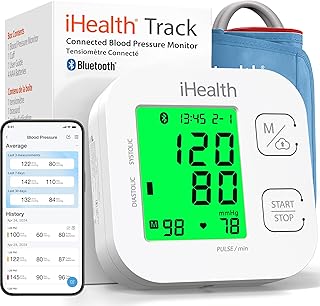
Suited for budget-minded individuals, iHealth Track offers a color-coded backlit display for instant reading clarity. Green, yellow, and red screen backlights indicate normal or elevated pressure levels instantly. This compact bluetooth pulse monitor simplifies home tracking through its intuitive one-touch operational design.
The included arm sleeve can feel snug on larger muscular arms during full inflation cycles. On-device memory stores ninety-nine readings, requiring frequent app syncs to clear space for continuous use. Regardless, its clear color visual alerts deliver exceptional value for everyday cardiovascular monitoring.
Greater Goods Smart Blood Pressure Monitor
Perfect for families seeking simple dual-user tracking, Greater Goods combines a backlit screen with a soft cuff. It stores up to sixty entries per user profile while providing smooth automated inflation. This reliable upper arm pressure monitor provides accurate home performance with clean physical button controls.
The companion smartphone application offers basic graphing features compared to advanced health ecosystem apps. The machine relies on four AAA batteries, which may require replacement after several months of heavy use. Despite minor software limits, its durable hardware delivers dependable everyday service.
Omron Evolv Wireless Upper Arm Monitor
Targeted at frequent travelers wanting tubeless operation, Omron Evolv incorporates the sensor directly onto the arm cuff. Its single-unit design eliminates dangling hoses, allowing rapid one-button operation anywhere. The built-in arrhythmia detection device alerts users to irregular heart rhythms during our research.
The lack of a table screen requires users to position their arm carefully to read results directly on the cuff. It also commands a higher retail price than traditional wired desktop monitors in the Omron lineup. Nevertheless, its ultra-portable form factor provides unparalleled travel health convenience.
Comparison: Omron 10 Series vs. Withings BPM Connect
Determining which health unit suits your routine involves comparing Omron desktop functionality with Withings wireless styling. Omron emphasizes deep physical display metrics and dual-user buttons, while Withings focuses on Wi-Fi cloud convenience. The table below compares key features for informed decision-making.
| Feature / Criteria | Omron 10 Series | Withings BPM Connect |
|---|---|---|
| Display Type | Dual-Read Backlit LCD | LED Matrix Color-Coded Display |
| Connectivity | Bluetooth to Omron App | Wi-Fi & Bluetooth to Withings App |
| Cuff Architecture | Pre-Formed ComFit Hose Cuff | Integrated Wireless One-Piece Fabric |
| User Memory | 2 Users (100 Readings Each) | 8 Users (Unlimited Cloud Syncing) |
| Key Advantage | AFib Detection & TruRead Tech | Compact Wireless Design & Wi-Fi Sync |
Display Clarity and On-Device Interface
Omron 10 features a spacious dual LCD screen that compares your current reading against historical health averages side by side. Large physical buttons allow effortless navigation between user profiles without touching smartphone apps. It serves as a clear best bp monitor for home use option for traditional desktop checkups.
Withings BPM Connect uses a minimalist LED dot display that shows core systolic numbers alongside color-coded indicators. While modern, the small matrix screen requires scrolling text to show full user names after testing. Users wanting immediate large text on the unit will prefer the broad Omron desktop display screen.
Data Transmission and Ecosystem Syncing
Withings utilizes automatic Wi-Fi transmission to send test results straight to cloud servers without opening phone apps. This seamless setup allows instant sharing across multiple family member smartphones anywhere globally. Tech enthusiasts benefit from zero-click background data syncing after every arm measurement.
Omron relies on Bluetooth syncing that requires opening the companion app nearby to transfer stored readings smoothly. While reliable, users must ensure their phone remains in wireless range during routine checks. Both ecosystems support Apple Health and Google Fit, but Withings offers simpler automated cloud uploads.
Cuff Construction and Daily Portability
Omron 10 includes a pre-formed Easy-Wrap ComFit cuff that guides proper positioning around upper arm muscles effortlessly. The stiff pre-curved sleeve reduces placement errors, ensuring consistent pressure cuff placement. However, the external air hose and bulky base unit occupy considerable space inside travel luggage.
Withings integrates the pump and sensor into a single flexible fabric band, eliminating external air tubes completely. The entire monitor rolls up tightly into a compact cylinder for effortless storage in purses or backpacks. Travelers needing space-saving convenience will favor the sleek, hose-free Withings architecture.
Frequently Asked Questions
Understanding home blood pressure technology helps you select and operate medical equipment with confidence. Below are detailed answers to common questions regarding measurement accuracy, cuff sizing, and daily testing habits. These insights ensure reliable tracking results across your home wellness routine.
How do digital blood pressure monitors ensure accuracy at home?
A modern digital sphygmomanometer detects vascular pressure oscillations within brachial arteries during automatic deflation cycles. Advanced digital algorithms convert these micro-vibrations into precise systolic and diastolic values. Clinical validation protocols confirm that modern home sensors match clinical desk units.
Ensuring accurate readings requires sitting quietly with back support and resting your feet flat on the floor before starting. Rest your arm on a table at heart level to prevent gravitational pressure distortion. Following proper clinical prep protocols guarantees consistent tracking numbers during daily testing routines.
Why is upper arm cuff placement better than wrist monitoring?
Positioning an upper arm pressure monitor aligns the inflatable cuff directly with heart level naturally. Brachial arteries in the upper arm are larger and deeper, providing stronger arterial pulse signals during our research. Medical guidelines recommend upper arm cuffs for diagnosing hypertension accurately at home.
Wrist monitors are highly sensitive to arm position and can deliver skewed results if held below heart height. While wrist units offer portability, upper arm sleeves remain the clinical standard for routine home diagnostic checks. Choosing an upper arm device provides superior consistency for long-term health logs.
How often should I calibrate my home blood pressure monitor?
Medical experts recommend bringing your home blood pressure cuff to annual doctor appointments for side-by-side comparison. Comparing your digital device against clinical manual sphygmomanometers verifies sensor accuracy over time. Most quality monitors maintain factory calibration performance for several years.
Replacing worn batteries or charging wireless units regularly prevents low-power sensor inaccuracies during inflation. Inspecting rubber tubing and fabric sleeves for micro-cracks ensures proper pneumatic seal integrity. Routine equipment checks preserve measurement precision across thousands of diagnostic tests.
What feature defines the best bp monitor for home use?
Selecting the best bp monitor for home use depends on combining clinical accuracy, multi-user memory, and comfortable cuff design. Devices featuring irregular heartbeat detection provide vital early warnings regarding potential cardiac arrhythmias. Clear digital screens ensure effortless reading for users of all ages.
Automatic averaging modes enhance baseline reliability by calculating mean values across consecutive measurements. Seamless smartphone syncing simplifies trend analysis, allowing users to share comprehensive digital logs with physicians. Prioritizing validated sensors ensures long-term confidence in your home health readings.
Final Thoughts
Selecting the best bp monitor for home use involves balancing sensor precision, cuff ergonomics, and digital app connectivity. Whether you choose Omron clinical desktop power or Withings wireless simplicity, quality health tracking empowers your life. Investing in validated health equipment ensures reliable heart wellness monitoring.

Write Your Review
No reviews yet. Be the first to share your experience!