Our Top Picks
 PT520A Natural Gas DetectorPT520A Battery-operated11.22 x 2.36 x 5.31 Inches1.1 PoundsCheck on Amazon
 Klein Tools ET120 Gas Leak Detector1.79 x 2.71 x 28.3 Inch28.3 x 1.79 x 2.71 inches0.8 PoundsCheck on Amazon
 UEi Test Instruments CD100A Combustible Gas Leak DetectorOne Size1.5 x 4 x 8 Inches0.1 poundsCheck on Amazon
 Rechargeable Gas Leak DetectorPT520B+ Type-C Rechargeable1.1 x 2.28 x 6.1 Inches1.1 PoundsCheck on Amazon
Short answer: for most homes and RVs, a handheld gooseneck sniffer with an audible and visual alarm, such as one of the TopTes models, is the practical way to pinpoint a suspected leak. Choose the Klein Tools ET120 if you want a stated range and a longer probe, or the PT-990 if you want a wide range with data logging. One caution comes first: a handheld sniffer helps you locate a leak, it does not replace a fixed alarm, and it does not replace calling your gas utility.
Top picks at a glance
PT520A Natural Gas Detector, Gas Leak Detector with 17-Inch Gooseneck, Locating The Source Like Propane, Methane, and Butane for Home and RV (Includes Battery x3) - Orange


As an Amazon Associate we earn from qualifying purchases. Product prices and availability are accurate as of the date/time indicated.
Klein Tools ET120 Gas Leak Detector | Combustible Gas Leak Tester with 18-Inch Gooseneck Has Range 50 - 10,000 ppm, Includes Pouch and Batteries


As an Amazon Associate we earn from qualifying purchases. Product prices and availability are accurate as of the date/time indicated.
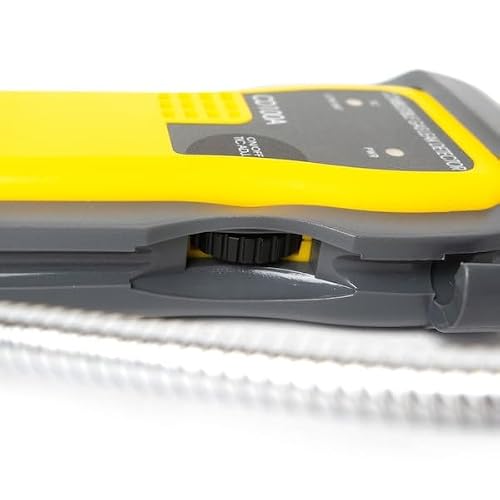
UEi Test Instruments CD100A Combustible Gas Leak Detector



As an Amazon Associate we earn from qualifying purchases. Product prices and availability are accurate as of the date/time indicated.
Rechargeable Gas Leak Detector, PT520B+ Natural Gas Leak Detector with a 17-inch Probe to Situate Gas Leaks for Propane, Natural Gas, Methane, LPG in RV or Home, Measuring PPM or%LEL - Orange




As an Amazon Associate we earn from qualifying purchases. Product prices and availability are accurate as of the date/time indicated.

Natural Gas Detector, TopTes PT177 Gas Leak Detector with Audible & Visual Alarm, Portable Gas Sniffer to Locate Combustible Leak Sources Like Methane, Propane for Home (Includes Battery x2)-Orange


As an Amazon Associate we earn from qualifying purchases. Product prices and availability are accurate as of the date/time indicated.
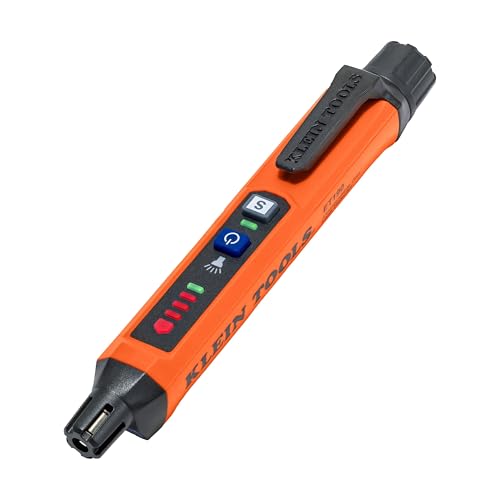
Klein Tools ET190 Compact Gas Leak Detector | Wide Detection Range, Audible and LED Alerts, Slim and Lightweight, Batteries Included


As an Amazon Associate we earn from qualifying purchases. Product prices and availability are accurate as of the date/time indicated.

Inficon-718-202-G1 Combustible Gas Detector


As an Amazon Associate we earn from qualifying purchases. Product prices and availability are accurate as of the date/time indicated.

TopTes PT-356 Rechargeable Natural Gas Detector with 10 inch Goose Neck, Detection Range 0-20% LEL, 3 Alarm System Gas Leak Detector with 2 Display Modes for Methane, Butane at Home or Industry


As an Amazon Associate we earn from qualifying purchases. Product prices and availability are accurate as of the date/time indicated.

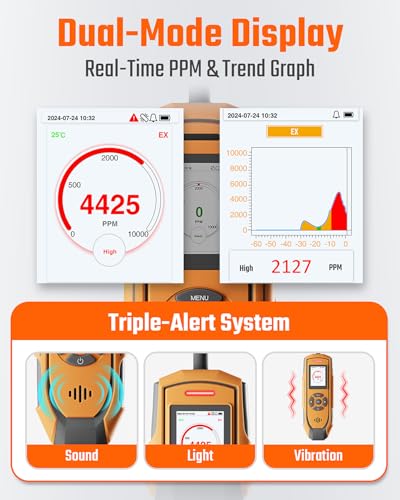
TopTes PT-990 Rechargeable Gas Leak Detector with 11 inch Probe, Detection Range 0-10000 ppm, Data Logging & 3 Types Alarm, Natural Gas Detector for Propane, Methane for Industrial & Home - Orange




As an Amazon Associate we earn from qualifying purchases. Product prices and availability are accurate as of the date/time indicated.
| Model | Key point from the title | Price tier | Best for |
|---|---|---|---|
| TopTes PT520A | 17-inch gooseneck, 3 batteries | Budget | Home and RV pinpointing |
| Klein Tools ET120 | 18-inch gooseneck, 50-10,000 ppm | Mid-range | Tradespeople, stated range |
| TopTes PT199 | Audible and visual alarm | Budget | Occasional checks |
| UEi CD100A | Combustible gas leak detector | Premium | Professional kits |
| TopTes PT520B+ | Rechargeable, ppm or %LEL | Mid-range | Frequent use, RVs |
| TopTes PT177 | Audible and visual alarm | Budget | Lowest-cost sniffer |
| Klein Tools ET190 | Compact, audible and LED alerts | Budget | Tool-bag backup |
| Inficon 718-202-G1 | Combustible gas detector | Premium | Service professionals |
| TopTes PT-356 | Rechargeable, 0-20% LEL, 10-inch neck | Mid-range | Short-reach checks |
| TopTes PT-990 | 0-10000 ppm, data logging | Mid-range | Wide range, records |
What is changing with gas leak detectors
Handheld gas detectors used to be a trade-only purchase, priced for heating and plumbing contractors. That is shifting, and the listings in this set show how. Low-cost gooseneck sniffers aimed at homeowners and RV owners now sit next to professional instruments, often with similar-sounding names and overlapping claims.
Several trends stand out, though details differ by manufacturer. Rechargeable models are more common, which suits people who use a detector rarely and dislike finding dead batteries. Display options are expanding, with some titles mentioning ppm and %LEL readings, and a few mention data logging. Alarm styles are also more varied, with audible, visual and vibration-style cues described in different titles.
At the same time, the budget end is crowded with near-duplicate listings, and the claims are the seller’s own. A “detection range” in a title is a manufacturer statement, not independent verification. It is also worth remembering that different gases behave differently, and a detector’s response to methane may differ from its response to propane or butane. Always read the manual for what the unit is designed to sense, how long it needs to warm up, and what to do when the display shows an over-range reading, and treat any handheld as one part of a safety routine, not the whole routine.
How we picked these
We compared the ten listings on what each product title states: probe length, detection range, gases named, alarm style, power source and included accessories. We then weighed that against common buyer-review themes and published manufacturer documentation. Nobody on the team used or measured these units. Anything the title leaves out is flagged as a “check the listing” item, and price tiers compare products within this set only.
Another development is the blurring of home and industrial positioning. Several titles say “home or industry” in the same breath. That can be honest marketing for a flexible tool, but it can also mean the product is not tuned for either. Where a title promises both, look for the details that back it up, such as a stated range, an alarm threshold or a logging feature.
The ten listings, one by one
TopTes PT520A Natural Gas Detector
The title describes a gas leak detector with a 17-inch gooseneck for locating the source of leaks involving propane, methane and butane, for home and RV use. It includes three batteries and comes in orange. The long, bendable neck lets you reach behind a stove or along a pipe run without crawling in. It suits a homeowner or RV owner who wants a simple way to trace a suspected leak after a smell or alarm.
A typical use: you suspect a fitting on an RV’s propane line, so you switch it on in fresh air, bring it near the joint, and watch for the alarm to change. The title does not state a detection range, so look up the manual.
Pros
- Long 17-inch gooseneck for tight spaces
- Batteries included per the title
Cons
- No detection range or alarm threshold in the title
- Not a fixed alarm for unattended spaces
Check the listing: sensitivity range, warm-up time, sensor life and warranty. Ask before buying: does the manual say how often the unit should be checked against a known source?
Klein Tools ET120 Gas Leak Detector
Klein describes a combustible gas leak tester with an 18-inch gooseneck and a range of 50 to 10,000 ppm, supplied with a pouch and batteries. This is the only title in the set that pairs a named trade brand with a published numeric range and a carrying pouch. The longest gooseneck in the set helps reach behind appliances. It suits an HVAC technician, plumber or serious DIYer who wants a documented range.
The pouch matters more than it sounds: sensors can be damaged by dust, moisture and drops, and a tool tossed loose into a truck bed tends to suffer. The mid-range price tier reflects the trade branding and the fuller spec line.
Pros
- Stated 50-10,000 ppm range
- Pouch and batteries included
Cons
- Higher price than the entry TopTes models
- Title does not name specific gases
Check the listing: which gases are covered, the alarm types and any calibration guidance. Ask before buying: do you need a trade-grade tool, or only a basic leak finder?
TopTes PT199 Natural Gas Leak Detector
This listing promises an audible and visual alarm, a portable “gas sniffer” format, and detection of combustible sources such as methane and propane for home use. Two batteries are included, and it is orange. It is almost interchangeable with the PT177 in title wording, so the two are effectively close cousins. It suits an occasional user who wants an inexpensive tool to confirm or rule out a suspected leak near an appliance.
Because the title says little about the probe, check whether it has a flexible neck. The price tier is among the lowest here, which is an advantage for a tool you may use only a few times a year.
Pros
- Audible and visual alerts together
- Budget price tier
Cons
- No probe length or range in the title
- Near-duplicate of other budget listings
Check the listing: probe design, sensitivity adjustment and how the alarm behaves. Ask before buying: how does it differ from the PT177 listed alongside it, and is there any warranty difference?
UEi Test Instruments CD100A Combustible Gas Leak Detector
The title is short: UEi Test Instruments CD100A, a combustible gas leak detector. There is no range, probe length or gas list to quote, and that is itself information. It sits in the premium price tier here, and a professional-instrument brand name suggests it is aimed at service technicians. It suits someone who already buys from instrument suppliers and values a documented product line.
For a homeowner, the lack of detail makes it a hard purchase to justify from the page alone. You would be paying for brand and, presumably, build, but only the full listing and manual will say.
Pros
- Professional instrument brand
- Straightforward single-purpose tool
Cons
- Premium price tier
- Title gives no specs to compare
Check the listing: range, response time, sensor type, battery type and warranty. Ask before buying: what concrete feature justifies the price over a mid-range model?
TopTes PT520B+ Rechargeable Gas Leak Detector
The title says rechargeable, 17-inch probe, suitable for propane, natural gas, methane and LPG, with measuring in PPM or %LEL, for RV or home. The dual readout stands out, since many budget units give only alarm tones. The “B+” label suggests an update on the PT520A, but the title does not say what changed. It suits someone who will use it often, such as an RV owner checking connections each season.
Rechargeable power reduces battery waste and the chance of a dead tool when you need it. The trade-off is that you have to remember to charge it, and the title does not give battery life.
Pros
- Rechargeable with a 17-inch probe
- Reads in PPM or %LEL per the title
Cons
- Mid-range price tier for a family of similar models
- Battery life not stated
Check the listing: charge time, display layout, range and the charging cable. Ask before buying: how does it differ from the PT520A besides rechargeability?
TopTes PT177 Natural Gas Detector
The cheapest listing here: a gas leak detector with an audible and visual alarm, a portable sniffer format, for methane and propane in the home, with two batteries and an orange body. The wording is nearly identical to the PT199, so the main difference is probably price. It suits a renter or occasional user who wants a basic leak finder in a drawer, and who understands its limits.
Think of it as a screening tool, not a measurement tool, and keep your expectations modest for its price. If it alarms, treat it seriously and follow the safety steps; if it stays silent, do not assume the area is safe, particularly if you smell gas.
Pros
- Lowest price tier in the set
- Two batteries included
Cons
- Almost no stated specifications
- Near-duplicate of the PT199
Check the listing: probe flexibility, sensitivity, alarm volume and the return window. Ask before buying: is the saving over the PT199 worth losing any documented extras?
Klein Tools ET190 Compact Gas Leak Detector
Klein describes a compact detector with a wide detection range, audible and LED alerts, a slim and lightweight body, and batteries included. The title does not give a numeric range or probe length, which sets it apart from the ET120. At the budget tier it brings a tradesperson’s brand to a pocketable package. It suits someone who wants a small backup tool in a service bag.
Without a gooseneck mentioned, assume reach is limited, and compare that against your layout. Slim bodies are handy but can feel awkward when you need to hold a detector near a joint for several seconds.
Pros
- Slim and lightweight format
- Audible and LED alerts
Cons
- No numeric range in the title
- Probe reach unclear
Check the listing: detection range, gases covered, probe design and warranty. Ask before buying: does the compact form give enough reach for your appliances?
Inficon 718-202-G1 Combustible Gas Detector
The title is a model number and a description, with no specs to quote. It is the most expensive listing in the set, aimed, by brand, at service and refrigeration professionals. It suits a technician who already knows the model and wants it for work. The price tier is premium, and the page gives you little to evaluate beyond the name.
For a typical homeowner, the cost is hard to defend unless you have a reason to need an instrument-grade tool, such as a documented maintenance routine. Ask about calibration and service options before buying, and whether replacement sensors are sold separately.
Pros
- Established instrument brand
- Single-purpose combustible gas detector
Cons
- Highest price tier here
- No specs in the title
Check the listing: sensitivity, response time, sensor replacement and calibration services. Ask before buying: what does the maker recommend for routine calibration?
TopTes PT-356 Rechargeable Natural Gas Detector
The title lists a rechargeable unit with a 10-inch gooseneck, a 0-20% LEL detection range, a three-stage alarm system, and two display modes, for methane and butane at home or in industry. The 10-inch neck is the shortest in the set, so reach is limited. The %LEL scale is useful for judging how close a reading is to the lower explosive limit. It suits short-reach checks near accessible appliances.
A three-stage alarm can help you tell a faint trace from a strong concentration. The mid-range price tier puts it between the bargain sniffers and the premium instruments, so ask whether the extra stages justify the step up from a basic alarm.
Pros
- Rechargeable with a stated 0-20% LEL range
- Three-stage alarm and two display modes
Cons
- Short 10-inch neck
- Propane is not named in the title
Check the listing: gases covered, charge time and how the alarm stages are defined. Ask before buying: do you need propane coverage?
TopTes PT-990 Rechargeable Gas Leak Detector
The most feature-rich TopTes model here: rechargeable, 11-inch probe, 0-10000 ppm detection range, data logging and three alarm types, for propane and methane at industrial and home sites. Data logging is rare in this price band. It suits a user who wants records, for example a landlord documenting inspection rounds. The mid-range price tier places it near the Klein ET120.
The wide range could be useful on a leak check where concentrations vary, though the title gives no accuracy figure. Ask how logs are retrieved and whether a computer or app is needed, because a logging feature you cannot easily read has little value.
Pros
- Data logging and a wide stated range
- Three alarm types, rechargeable
Cons
- Probe is shorter than the 17-inch models
- Logging method not explained in the title
Check the listing: how data is exported, accuracy claims and battery life. Ask before buying: will you actually use the logging feature?
Buying guide: types, ranges, alarms and safe use
Handheld sniffer versus fixed alarm
Every listing in this set is a portable instrument, as far as the titles say. A handheld finds where a leak is; a fixed, plugged-in or hard-wired alarm watches a room all day. They do different jobs. A handheld will not warn you while you sleep, and a fixed alarm will not tell you which fitting is leaking. Carbon monoxide alarms are different again, since they sense combustion byproducts rather than fuel gas. Follow the manufacturer’s instructions and local codes for any fixed alarm.
Where leaks usually start
Most household leaks begin at connections rather than in the middle of a pipe: appliance shutoff valves, flexible connectors, threaded fittings, regulators and the hose on a portable propane appliance. Vibration, age, corrosion and disturbance during moving or remodeling can all loosen a joint. RVs add road vibration and temperature swings to that list. Knowing this helps you plan a search path, starting at the appliance and working back toward the supply, instead of waving the probe randomly through a room.
Soapy-water bubble checks are a common low-tech complement to an electronic sniffer for exposed outdoor fittings. Use them as the manufacturer or your gas supplier recommends, and never use an open flame to look for a leak.
Which gas are you checking?
Natural gas is mostly methane and, as a general rule, is lighter than air, so it tends to rise. Propane and butane are heavier than air and tend to settle low. That is why a sniffer’s probe position matters: for propane you may check low points, for natural gas higher ones. Check the detector’s documentation for the gases it is designed to sense. Several titles here name methane, propane or butane, while others name none.
Reading ppm and %LEL
Two scales appear in these titles. PPM counts parts per million, while %LEL expresses concentration as a share of the lower explosive limit. For methane, 100% LEL is commonly cited as around 5% by volume, so 10,000 ppm would be roughly 20% LEL; other gases differ. The Klein ET120 lists 50-10,000 ppm and the PT-990 lists 0-10000 ppm, while the PT-356 lists 0-20% LEL. Those ranges look similar, but check how each manufacturer defines its scale.
Probe length and alarm style
Probe lengths here run from 10 inches up to 18 inches. Longer necks help behind appliances and inside cabinets, while shorter ones are easier to stow. Audible alarms help when your eyes are on the work, and visual alerts help in noisy rooms. Three-stage and multi-type alarms add nuance. Choose based on where you will use the tool, and remember that the sensor tip should be kept clean and dry.
Power and upkeep
Battery-powered units are simple, but dead batteries are the commonest failure. Rechargeable models avoid that, though you need to keep them charged. Sensors in general age, and can be affected by dust, humidity and certain chemicals. Check the manual for sensor life, bump-test advice and any calibration guidance, and replace or service the unit as the maker recommends.
Using a detector safely
Turn on and warm up the unit in fresh air, away from the area you suspect. Move the probe slowly along pipes, valves and fittings, and give it time to respond. If you smell gas, do not rely on a handheld: leave the building, avoid switches, flames and phones inside, and call your gas utility or emergency number from outside. Do not try to repair gas lines yourself. Installation and repair of gas appliances and piping should be done by a qualified professional, in line with local codes. For related background, see our guides on how to choose gas pool heaters and condensing tankless gas water heaters.
A sensible search routine
Before you start, ventilate the area and make sure there are no open flames or sparks. Power the detector on in fresh air and let it settle. Begin at the appliance connection, since that is the usual suspect, then move slowly along the supply line, pausing at each valve and fitting. Hold the probe near, not touching, each joint and wait for the response. If the unit alarms, back away, note the location and follow the safety steps below instead of tightening fittings yourself. When the search ends, switch the unit off, clean the tip and store it as the manual advises.
Worked example with stated assumptions
Assume a small home with a gas range, a water heater and a furnace, plus an RV with a propane line. Assume you will check connections after any work and once a season. A budget gooseneck sniffer is probably adequate for locating a suspected leak at those points, and a rechargeable model saves hunting for batteries. If you run a rental or maintain many properties, a model with a documented range or data logging becomes more useful. These are illustrations, not measured results.
| Spec concept | What to look for | Why it matters |
|---|---|---|
| Gas coverage | Methane, propane, butane named | Sets what it can sense |
| Range and scale | ppm or %LEL stated | Shows how readings are expressed |
| Probe length | 10 to 18 inches in this set | Reach behind appliances |
| Alarm style | Audible, visual, multi-stage | Clarity in noisy spaces |
| Power | Batteries or rechargeable | Readiness when needed |
Mistakes buyers make
The biggest mistake is treating a handheld as a replacement for professional help. If you smell gas, leave and call the gas utility. A second is assuming a silent detector means safe; sensors have limits, and probe position matters. Another is ignoring the gas type: the same tool may respond differently to methane and propane.
People also skip reading the manual, so they miss warm-up steps and sensor care. Others buy on the lowest price without noting that many cheap titles list no range at all. Some buyers also assume a longer probe is always better, when a stiff, very long gooseneck can be awkward in a cramped cabinet. And many forget that sensors respond to other vapors, so solvents, cleaners or aerosol sprays used nearby can cause confusing readings; ventilate the area and keep the sensor tip clean. A final mistake is using an unfamiliar detector for the first time during an emergency. Practice in a safe, ventilated space, so you know how it sounds and behaves, and keep the manual with the tool.
Verdict by use case
There is no single winner, because the right choice depends on how often you will use the tool and who will use it.
Home and RV pinpointing on a budget: TopTes PT520A. Documented range for trade work: Klein Tools ET120. Frequent use with rechargeable power: TopTes PT520B+. Records and wide range: TopTes PT-990. Lowest cost, occasional use: PT177 or PT199, understanding the limits. Tool-bag backup: Klein ET190. Rental or multi-property upkeep: the PT-990, if logging fits your routine. Professional service work: UEi CD100A or Inficon 718-202-G1, if a supplier recommends them.
Related guides
- Rechargeable Electric Toothbrush With Travel Case
- Countertop Water Filters Without Installation
- Skin Lifting And Tightening Devices
Frequently asked questions
Can a handheld gas leak detector replace a fixed gas alarm?
No. A handheld finds the location of a leak while you are actively using it, but it does not monitor a room continuously. A fixed alarm watches all day and night. Many households benefit from both, used according to the manufacturer’s instructions and local codes. If you smell gas, leave and call the gas utility instead of relying on any device.
What gases do these detectors sense?
Titles in this set mention methane, propane, butane, natural gas or LPG, but not every listing names every gas. Natural gas is mostly methane. Propane and butane behave differently from methane. Check the manual and the listing for the exact gases a detector is designed to sense before relying on it, and contact the seller if the listing is vague.
What do ppm and %LEL mean?
PPM means parts per million, a simple concentration. %LEL means the percentage of the lower explosive limit, which is the lowest concentration at which a gas can ignite. For methane, 100% LEL is commonly cited at around 5% by volume, though other gases differ. Read each manufacturer’s definition of its scale.
Where should I hold the probe to check for a leak?
Start in fresh air to warm up the unit, then move the probe slowly along pipes, valves and fittings. Natural gas tends to rise and propane tends to sink, so consider checking higher or lower spots accordingly. Give the sensor time to respond. Do not use it near open flames, and follow the manufacturer’s instructions.
What should I do if the detector alarms?
Treat it as real. Leave the area, avoid flames, switches and anything that could spark, and call your gas utility or emergency number from outside. Do not try to repair gas piping yourself. A qualified professional should inspect and fix gas appliances and lines, following local codes.
How long do gas detectors last, and do they need calibration?
Sensor life and calibration needs vary by model, and the titles here do not state them. Dust, humidity and age can affect sensors. Read the manual for sensor life, bump-test or calibration advice, and replace or service the unit as the maker recommends. Professional models typically offer clearer service options than budget ones, so factor in the cost of service or replacement when comparing price tiers over several years.