Our Top Picks
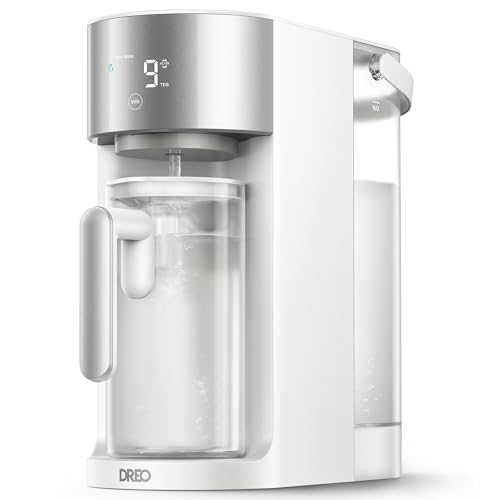 DREO Reverse Osmosis Water Filter System Countertop3L14.51 x 6.73 x 13.35 inches9.46 poundsCheck on Amazon
 DREO Reverse Osmosis Water Filter Countertop5L15.67 x 6.73 x 13.35 inches10.78 poundsCheck on Amazon
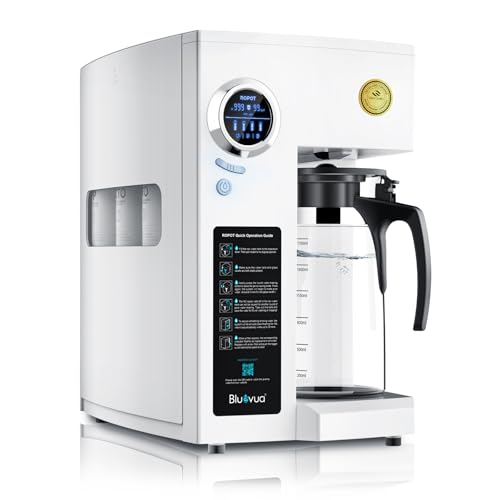 Bluevua RO100ROPOT Countertop Reverse Osmosis Water Filter SystemROPOT-UV10.9 x 15.4 x 14.3 inches17.8 PoundsCheck on Amazon
The best countertop water filter without installation for most renters is a plug-in reverse osmosis (RO) unit that holds its own tank, because it gives you filtered drinking water without touching your faucet, your pipes or your lease. Of the eight listings below, seven are RO systems and one, the Waterdrop CT01, is explicitly labeled “NOT RO.” If one name has to stand out, our shortlist leans toward the Philips countertop RO for shoppers who value an NSF-certified claim in the title, the Waterdrop C2S for a one-or-two-person kitchen, and the Bluevua for people who want remineralization and a WQA and NSF certification claim in the title and accept the cost.
Renters get a different buying problem than homeowners. Under-sink systems can outperform countertop units on convenience, yet they require a cold line tee, a drain saddle, and often a hole in a countertop or sink. That is a lease conversation. Countertop machines trade that work for counter space, an outlet and some manual refilling. The right choice then depends on three things you can measure at home with a tape measure and a calendar: the footprint you can spare, the outlet distance, and how much drinking and cooking water your household really uses.
One note before we start. Nobody here has run any of these machines in a kitchen, so what follows is built from listing titles, manufacturer documentation and buyer reviews. Wherever a detail is missing from a title, we say so and send you to the listing.
The eight units side by side
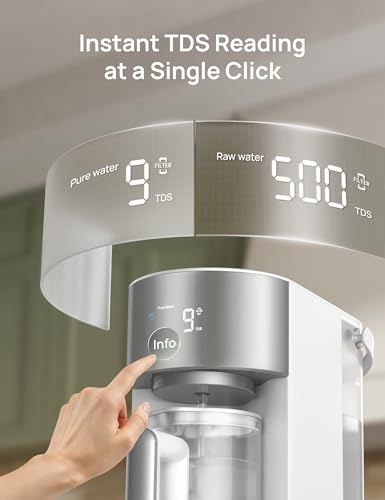
DREO Reverse Osmosis Water Filter System Countertop, RO Water Filter 112 3L | RO Water Filtration filters 99.9% contaminants, Installation-Free Water Purifier with TDS & Filter Life Monitor, BPA-free




As an Amazon Associate we earn from qualifying purchases. Product prices and availability are accurate as of the date/time indicated.
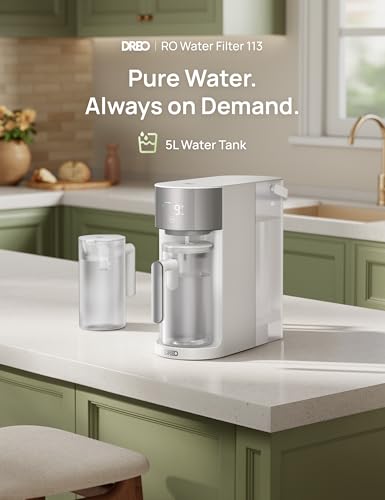
DREO Reverse Osmosis Water Filter Countertop, RO Filtration System, 3:1 Pure to Drain, TDS & Filter Life & 2 Autofill Pitchers, Install-Free, Self-Cleaning Water Purifier, RO Water Filter


As an Amazon Associate we earn from qualifying purchases. Product prices and availability are accurate as of the date/time indicated.
Bluevua RO100ROPOT Countertop Reverse Osmosis Water Filter System | Portable RO Filtration with Remineralization, No Installation, WQA & NSF Certified - ROPOT-UV, 6-Stage RO


As an Amazon Associate we earn from qualifying purchases. Product prices and availability are accurate as of the date/time indicated.

Amwater Countertop Water Filter, Amwater 5-Stage Countertop Water Filter Washable Filter Element, 8000 Gallons


As an Amazon Associate we earn from qualifying purchases. Product prices and availability are accurate as of the date/time indicated.

UV Reverse Osmosis Water Filter Countertop, 5:1 Pure to Drain, 5-Stage RO Water Filtration System, Full Sized appliances, No Installation Required, Portable Water Purifier for Home, Office & RV

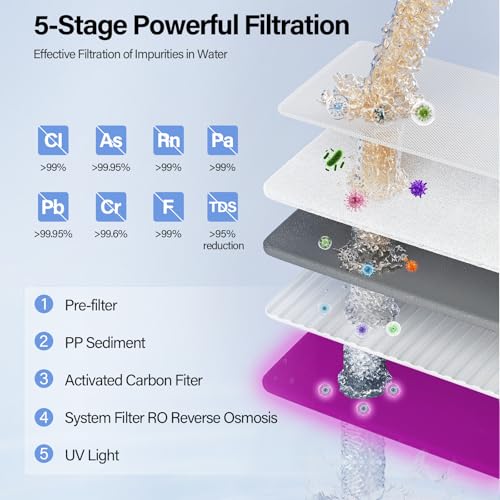
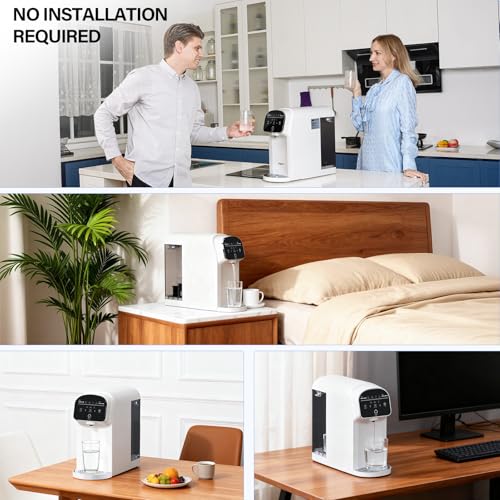
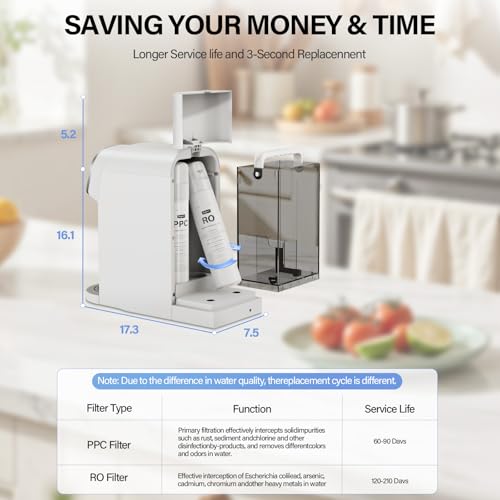


As an Amazon Associate we earn from qualifying purchases. Product prices and availability are accurate as of the date/time indicated.

Waterdrop CT01 Countertop Water Filter System, Hot and Cold Water Dispenser | [𝐍𝐎𝐓 𝐑𝐎]6-Stage Filtration, Zero Wastewater, 5 Temperature, Instant Hot and Cold Water, Touchscreen, No Plumbing Needed
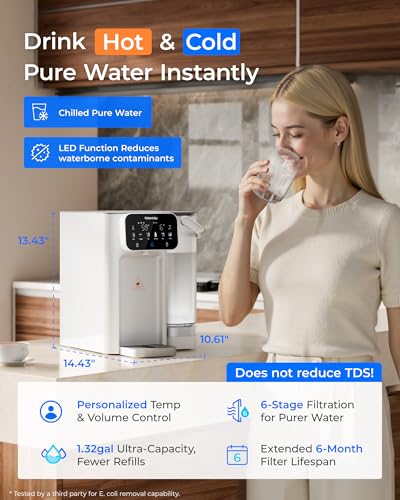


As an Amazon Associate we earn from qualifying purchases. Product prices and availability are accurate as of the date/time indicated.

PHILIPS Countertop Reverse Osmosis Water Filter, Installation-Free | NSF-certified 5-stage RO countertop system with Aquaporin Tech. Removes lead & TDS. Compact, plug-and-play


As an Amazon Associate we earn from qualifying purchases. Product prices and availability are accurate as of the date/time indicated.
The table sorts the same eight listings by what each title promises. “Price tier” is relative within this set only, based on the price field of each listing at the time we assembled the roundup, so “Budget” means cheaper than the others here, not cheap in general.
| Model | Type and key claims from the title | Price tier | Best for |
|---|---|---|---|
| DREO RO 112 3L | Countertop RO, TDS and filter life monitor, BPA-free, installation-free | Budget | First RO purchase on a tight budget |
| DREO RO with 2 autofill pitchers | 3:1 pure to drain, TDS and filter life, self-cleaning, install-free | Mid-range | Households that want less refilling |
| Bluevua RO100ROPOT | Portable RO, remineralization, WQA and NSF certified (per title), 6-stage, UV model | Premium | Buyers who prioritize certification and taste |
| Amwater 5-Stage | Washable filter element, 8000 gallons; title does not say RO | Budget | Lowest entry cost, lighter filtration needs |
| UV RO 5:1 (Aigerri) | 5-stage RO, 5:1 pure to drain, office and RV mention | Mid-range | Water-conscious shoppers, small shared spaces |
| Waterdrop C2S | 6-stage RO, 40oz glass pitcher, PFAS and TDS reduction claim, 3:1, 1-2 people | Budget | Singles and couples |
| Waterdrop CT01 | NOT RO, 6-stage, zero wastewater, hot and cold, 5 temperatures | Mid-range | Hot-water users who want zero drain water |
| PHILIPS Countertop RO | NSF-certified 5-stage RO, Aquaporin technology, lead and TDS claim | Mid-range | Certification-minded buyers |
Two of the eight sit at opposite ends. The Amwater is the lowest-priced entry and, judging by its title, is a different kind of product than the RO machines. The Bluevua is the highest-priced listing by a wide margin. Everything else clusters in the middle.
The eight listings, one at a time
DREO Reverse Osmosis Water Filter System Countertop (112 3L)
This DREO listing describes a countertop RO system that “filters 99.9% contaminants,” carries a TDS and filter life monitor, and is BPA-free and installation-free. The “112 3L” in the name most likely points to a model code and a tank size, but the title does not spell it out, so check the listing for the actual reservoir volume and how often you would be refilling it.
The monitor matters more than it seems. A TDS readout lets you watch the dissolved-solids number of the output water, and a filter life indicator turns replacement into a prompt rather than a guess. What the monitor cannot tell you is whether a contaminant such as lead or PFAS is being reduced, because TDS is a general conductivity measure, not a safety score. Treat it as a trend line for membrane condition.
The “99.9%” claim is broad. Ask which contaminants that figure covers, under what test conditions, and whether a third-party certificate stands behind it. The title does not mention a pure-to-drain ratio, so you cannot estimate wastewater from the title alone. The related DREO listing below is the one that states 3:1.
As a renter pick, the appeal is price relative to the rest of the set and a familiar set of plug-in features. The trade-off is that you carry the details yourself: tank size, noise during a fill cycle, filter stages and replacement cost are all off the title.
Pros
- Among the lowest-priced RO units in this set by the price field
- TDS display and filter life monitor named in the title
- BPA-free and installation-free per the title
Cons
- No drain ratio in the title, so wastewater is unknown until you read the listing
- No certification named in the title for the 99.9% claim
- Reservoir size and refill routine are not stated; confirm before buying
Who it’s for: a renter who wants to try countertop RO without paying for a premium-priced unit and is willing to read the fine print on tank size.
DREO Reverse Osmosis Water Filter Countertop with 2 Autofill Pitchers
The second DREO listing adds a stated 3:1 pure-to-drain ratio, the TDS and filter life monitor, “2 Autofill Pitchers,” install-free design and a self-cleaning function. It is the same brand and a similar idea, but the autofill pitchers change daily use. Instead of lifting a tank to the sink, you place a pitcher in position and the unit fills it, which makes the countertop routine closer to using a pitcher filter.
The 3:1 ratio is easy to turn into numbers. If the ratio holds in your kitchen, then for every 3 gallons of filtered water you would send about 1 gallon down the drain or into a tray. A household drinking and cooking with 2 gallons of filtered water a day would be rejecting around two thirds of a gallon daily, or about 20 gallons a month. We run the full example further down the page, with the assumptions listed.
“Self-cleaning” is a feature title; the details of what it flushes, how often and how loudly are in the manual, not in the title. Ask whether the cleaning cycle runs on a schedule and whether it adds to the wastewater total, because a ratio quoted for filtering alone may not include cleaning flushes.
Two pitchers are practical if you keep one in the fridge. Check the pitcher material and capacity in the listing, since a glass pitcher near a busy counter edge raises a different safety consideration than a plastic one.
Pros
- 3:1 pure-to-drain ratio stated in the title
- Two autofill pitchers named, which reduces handling of heavy tanks
- Self-cleaning feature and monitors listed
Cons
- Mid-range cost within this set; roughly a third higher than the other DREO listing by the price field
- Pitcher capacity and material not in the title
- Self-cleaning may use extra water; check the manual
Who it’s for: a household of two or three that wants the pitcher-in-the-fridge routine and a published drain ratio.
Bluevua RO100ROPOT Countertop Reverse Osmosis System
The Bluevua is the highest-priced listing here by a clear margin, and its title packs in the most specific claims: portable RO filtration, remineralization, no installation, “WQA and NSF Certified,” and a 6-stage design with a “ROPOT-UV” model name. If you want one product in this set whose title leans on certification and taste, this is it.
Remineralization matters because RO strips minerals along with contaminants. Water from a pure RO output can taste flat to some people, and a remineralization stage adds minerals back to improve taste. Whether the minerals are added in a way that suits your preference is a listing question. The title also does not tell you which contaminants the WQA and NSF marks cover, so open the certification details before you assume lead or PFAS are included.
“UV” in the model name suggests an ultraviolet stage. A UV stage is typically aimed at microorganisms, but the title does not explain what it does here. Do not treat any home UV stage as a reason to use it with water that a health authority has declared unsafe; follow the local notice and the manufacturer instructions.
The premium is the practical trade-off. You are paying more than two and a half times the price of the cheapest RO listings in the set. If your tap water is already decent and you only want better taste, that gap is hard to justify. If you have specific concerns and want documented certification, it can be reasonable.
Pros
- WQA and NSF certification claim appears in the title
- Remineralization named, which addresses flat taste from RO
- Portable design with no installation per the title
Cons
- Priciest listing in the set by a wide margin
- Certified contaminant list is not in the title
- Drain ratio and tank volume not stated; check the listing
Who it’s for: a renter who wants documented certification and better-tasting RO water and is comfortable paying for it.
Amwater 5-Stage Countertop Water Filter (Washable Element, 8000 Gallons)
This one is a different animal. The title says “5-Stage Countertop Water Filter,” “Washable Filter Element” and “8000 Gallons.” It does not say reverse osmosis, TDS reduction, PFAS, lead or any certification. Reading that honestly, it is a general-purpose countertop filter, and the listing is where you learn what the stages remove, whether it connects to a faucet, and whether it holds water or filters on demand.
The price field makes it the lowest-priced item in the set, which is the reason to include it. The “8000 Gallons” figure is a lifespan claim; the title does not specify the test or flow rate behind it, and washable elements still need cleaning on a schedule. A washable element lowers cartridge spend, but you take on the maintenance, and neglected filters can foul.
It is worth saying plainly that this product is not a like-for-like substitute for the RO units. If your main worry is chlorine taste, sediment or odor, a non-RO filter may be enough, and you save on wastewater and electricity. If your worry is dissolved contaminants, lead or PFAS, the title gives you no basis to assume it addresses them. Check the listing for any NSF or other third-party standard it claims.
Before purchase, confirm how it is meant to be used in a rental kitchen: whether it sits freestanding, how you fill it, and what footprint it needs.
Pros
- Lowest price in the set by the price field
- Washable element can reduce cartridge spending
- No RO drain water if it is not an RO design (confirm in the listing)
Cons
- Title names no RO, no certification and no specific contaminant claims
- Washable element needs routine cleaning
- “8000 Gallons” is a lifespan claim without stated conditions
Who it’s for: a renter with a taste-and-odor concern and a very small budget, who will read the listing carefully before relying on it for anything beyond that.
UV Reverse Osmosis Water Filter Countertop, 5:1 Pure to Drain (Aigerri)
The brand field lists Aigerri, though the title leads with its features: UV, reverse osmosis, countertop, 5:1 pure to drain, 5-stage RO, “Full Sized appliances,” no installation required, and a suggestion of use at home, in an office or in an RV. The 5:1 ratio is the best drain figure of the RO machines in the set, which is the reason to look at it.
At 5:1, a household filtering 2 gallons per day would reject about 0.4 gallon per day, roughly 12 gallons a month. Compare that with 3:1, which rejects about 20 gallons a month at the same volume. Those are arithmetic estimates based on the ratios in the titles and an assumed daily volume, not measurements; real ratios can shift with feed water pressure, temperature and membrane condition.
The “RV” mention is a reminder to check power and water supply. Campgrounds can have limited or variable water pressure, and RO membranes are sensitive to feed conditions. If you intend to use this in a rental and an RV, read the manual for supply requirements. “Full Sized appliances” is vague; take dimensions from the listing and compare them with your counter, including the clearance above for a cabinet.
The title does not state a certification, and the brand name is less recognizable than others here. That makes the manufacturer’s warranty, parts support and documentation worth checking before you buy.
Pros
- 5:1 pure-to-drain ratio is the most water-efficient among the RO titles
- UV stage and 5-stage RO named
- Marketed for home, office and RV use
Cons
- No certification named in the title
- Dimensions and tank size not in the title
- Support and warranty terms need checking on a less familiar brand
Who it’s for: a renter who cares about wastewater volume, perhaps because of metered water, and will verify the documentation.
Waterdrop C2S Countertop RO Filtration System
The Waterdrop C2S is positioned in its title for small households: “Compact Design for 1-2 People,” with a 40oz autofill glass pitcher, 6-stage RO, a PFAS and TDS reduction claim, 3:1 pure to drain, room-temperature water and no installation. The price field puts it at the budget end of the RO group, which makes this one of the more approachable options on paper.
“1-2 People” is the design intent in the title, and it is worth taking seriously. A 40oz pitcher is a little over a liter, so a two-person home that drinks several glasses each and cooks with filtered water will refill it multiple times a day. Count how many pitchers you would actually fill. If it is more than four or five a day, a bigger tank or a two-pitcher setup may fit better.
“Room-Temp Water” is a useful clue for the hot and cold comparison later: this machine does not heat or chill. The PFAS reduction claim is attractive to people reading about forever chemicals, but the title does not name a test standard. Ask whether a third-party document supports it, and consider your utility’s report as the baseline.
The glass pitcher is a positive for people who dislike plastic contact with their water, but glass is breakable. Keep it away from the counter edge, and check whether replacements are sold.
Setup is the other small question. A glass pitcher that autofills needs to sit level and centered under the outlet, so confirm in the manual how the unit senses that the pitcher is in place and what happens if it overfills. Also ask the listing about the first-use flush: how many fill cycles to discard, since a 40oz pitcher means that flush could take several rounds before the first glass you actually drink.
Pros
- Compact and sized for 1-2 people per the title
- Glass pitcher with autofill
- 3:1 ratio stated and PFAS/TDS claim in the title
Cons
- 40oz pitcher means frequent refills for heavier users
- No hot or chilled option
- PFAS claim has no named standard in the title
Who it’s for: a single renter or a couple in a studio or one-bedroom apartment with limited counter space.
Waterdrop CT01 Countertop Water Filter System with Hot and Cold Dispenser
The title of this listing marks it “NOT RO” in brackets, then lists a 6-stage filtration system, zero wastewater, five temperatures, instant hot and cold water, a touchscreen and “No Plumbing Needed.” It belongs in this roundup because the keyword is about no-installation countertop filtration, not strictly RO. It is also the only entry here with no drain water.
The trade-off, if you read the title literally, is the filtration method. A non-RO design usually does not reduce dissolved solids the way RO does, and the title makes no TDS claim. That does not make it worse for everyone, though. If your tap water is already low in TDS and you want filtered, instantly hot water for tea or oatmeal, a dispenser with no wastewater is appealing. Ask the listing for contaminant reduction data and certifications instead of assuming.
Hot water brings its own safety considerations. An instant-hot dispenser delivers water at temperatures that can scald, and a household with young children needs to look for a child-lock feature and read the manual. If the listing mentions a lock, test its behavior against the way your household actually uses the appliance. Position the unit away from the counter’s edge, and keep the cord away from where it can be pulled.
It will also draw power for heating and chilling. Look at the wattage in the specifications, and make sure it fits the circuit rating in your kitchen without sharing an outlet with a toaster or kettle.
Pros
- Zero wastewater according to the title
- Hot, cold and five temperature settings in one unit
- No plumbing needed
Cons
- Not RO; title makes no dissolved-solids reduction claim
- Hot water is a scald risk around children
- Larger power draw and footprint likely; check the specs
Who it’s for: a household that wants instant hot water and filtered cold water in one machine and does not need RO-level reduction.
PHILIPS Countertop Reverse Osmosis Water Filter
Philips presents this model as installation-free, “NSF-certified 5-stage RO,” with “Aquaporin Tech.,” a lead and TDS removal claim, and a compact plug-and-play design. For the shopper who wants a name they recognize and a certification claim in the title, it sits in the middle of the pack.
“NSF-certified” is only as useful as the exact standard. NSF has several standards covering different contaminant categories, and a unit certified for one does not automatically cover another. Open the listing’s documentation and look for the standard numbers and the list of reduced contaminants. If lead is a concern in an older building, that line item matters more than any marketing phrase.
“Aquaporin Tech.” refers to the membrane technology the brand highlights. The title offers no performance figures, so treat it as a feature name until you see data on the listing. Likewise the title is silent on drain ratio, tank size and noise level, so you cannot estimate wastewater or fit from the title alone.
If the listing has a dimensions chart, compare the height with your cabinet clearance and note whether the front-fill or top-fill design needs extra room. Likewise ask how the unit handles power loss and whether it restarts a cycle on its own, because a countertop appliance that is unplugged in a rental while you travel is a common use case.
“Compact” and “plug-and-play” are sensible for a rental: fewer parts to lose, quicker setup, an easier move-out. Measure your counter and the underside of any wall cabinet before you order, because compact is relative to other RO machines, not to a pitcher.
Pros
- NSF-certified claim in the title with a lead and TDS reduction statement
- Compact, plug-and-play per the title
- Known consumer-electronics brand name
Cons
- Certification standard and drain ratio are not in the title
- No tank size or dimensions in the title
- Mid-range price relative to the budget RO listings
Who it’s for: a renter in an older building who cares about a lead-reduction claim backed by a certification mark.
How we picked these
This roundup was assembled by the Editorial team from published specifications, manufacturer documentation and buyer reviews. Nobody on the team used or measured these units. That means we cannot tell you how loud a fill cycle is, how a pitcher feels in the hand, or whether a membrane lasts the stated period. What we can do is read each listing closely, separate what the title states from what it implies, and mark the gaps.
The shortlist is the set of listings that matched the same shopper intent: a water filter that sits on a counter, needs no plumbing work and is described as installation-free, no installation or no plumbing. We kept one non-RO dispenser and one non-RO filter because renters often search this phrase without knowing whether they need RO. We labeled them so you can decide for yourself.
Price tiers are relative. The cheapest, the middle band and the highest-priced listing define Budget, Mid-range and Premium within this set. We left out exact dollar figures because prices change; check the current number on the listing page. Where we give numbers beyond the titles, such as the water you would send to a drain, they are estimates built on assumptions we state next to the number.
Before you buy, check for the things a title cannot settle: the exact list of certified contaminants, the replacement-filter schedule and cost, the warranty, and the return policy for a heavy appliance. Those four items decide whether a purchase is a good one far more than the headline claims.
Wastewater math for a two-person home
RO machines trade rejected water for purified water, and the pure-to-drain ratio in the title is how you estimate that trade. Here is a worked example with assumptions you can change.
Assumptions: two adults, each drinking 3 liters of filtered water a day, plus about 2 liters a day for cooking and coffee. That totals 8 liters a day, about 2.1 gallons. Over a 30-day month, the household filters about 63 gallons of water.
- At a 3:1 ratio (DREO with pitchers, Waterdrop C2S): for each gallon rejected you get 3 gallons filtered, so about 21 gallons rejected per month.
- At a 5:1 ratio (the Aigerri-brand unit): about 12.6 gallons rejected per month.
- At zero wastewater (Waterdrop CT01, non-RO): none rejected, though the filtration method is different.
Those totals are small next to a typical household’s overall water use, and a few extra gallons of rejected water matter more in a drought-restricted region or on a metered bill. Even so, a 12-gallon difference per month is not a reason to choose a unit if the other specs do not fit.
The ratios in the titles are manufacturer claims, and they can change with water pressure, water temperature and membrane condition. If your tap water has high TDS, expect rejection to increase. Treat our figures as a planning range and check the manual for how the machine handles concentrate.
Use the same arithmetic for your own home: take the gallons you will filter, divide by the ratio’s first number to get the gallons rejected. If you plan to fill a large stock pot daily, or run a coffee maker twice, adjust upward.
A renter’s checklist before you order
Work through these in order. If any answer is no, move on to a different model.
- Counter footprint. Measure the width and depth of the space, then the height up to the bottom of the nearest wall cabinet. Compare with the dimensions in the listing, including room to lift a tank or slide out a pitcher.
- Outlet and cord. Is there an outlet within the cord length, away from the sink splash zone? Use a grounded outlet and avoid extension cords, following the manual’s guidance. If the unit has a heater, ask an electrician if the circuit is shared with other high-draw appliances.
- Where concentrate goes. RO units reject water. Find out whether it flows to a tray, a tank or a hose, and where you will pour it.
- Weight when full. A full tank is heavy. Confirm that your counter and your back can handle it.
- Lease check. The units here do not attach to plumbing, but read your lease for rules on appliances and water damage. If the lease covers damage from spills, a tray under the unit is cheap insurance.
- Move-out plan. Save the box and foam, and plan to drain and dry the unit per the manufacturer before you transport it.
RO, non-RO and what the labels do and don’t tell you
What reverse osmosis does
Reverse osmosis pushes water through a semipermeable membrane that rejects most dissolved solids and a wide range of contaminants, and sends the rejected portion to drain. It is the reason RO systems have a drain ratio. The membrane is usually protected by pre-filters and finished by post-filters, which is why titles count “stages.”
What non-RO filtration does
Carbon, ion-exchange and mechanical stages can reduce chlorine taste, sediment and some metals, depending on the media and certification. They generally do not produce a wastewater stream, and they leave minerals in. The Waterdrop CT01 and the Amwater listing fall into this camp by their titles, but the specific reduction claims need to come from the listing and any certificates.
How to read certification claims
A badge on a product page is a starting point. Find the standard number, the date, the exact model covered and the list of contaminants. A certificate for a filter cartridge does not automatically cover every other part of the machine. If a seller cannot point to the document, treat the claim as unverified.
What TDS readouts mean
Total dissolved solids is a conductivity-based figure. A lower number after RO indicates the membrane is rejecting dissolved solids, which is useful as a trend. It says nothing about whether a specific contaminant such as lead, nitrate or PFAS was reduced, and it can also be low in water with unwanted contaminants that do not conduct well.
Why your own water matters
Request your water utility’s annual quality report and look for the contaminants it lists. If you rent in an older building with older service lines, lead can come from the building’s plumbing rather than the utility, and a lab test is the only way to know. A lab or your health department can advise. This guide is general information, not medical advice; consult a doctor or local health authority for health-related water concerns, especially for infants or immune-compromised people.
If you use a kettle or coffee maker and want to cut mineral scale, filtered water can help, and our guide to electric kettles for boiling water covers the appliances on the other end of that decision.
Seven missteps that waste money on a countertop filter
- Buying on the “99.9%” line. Percentages without a named contaminant or test standard are marketing. Look for the list of what is reduced and the document behind it.
- Ignoring running costs. A cheap unit with expensive filters costs more over two years than a pricier one with long-life stages. Write down the replacement set price and interval for each model.
- Forgetting the drain tray. RO concentrate has to go somewhere. If you will not dump a tray daily, choose a model that handles it automatically or consider a non-RO design.
- Assuming “compact” means small. Compact RO units are still much larger than pitcher filters. Measure.
- Skipping the first-use flush. Most systems tell you to discard the first batches of water. Follow the manual; do not drink from the first run.
- Leaving it unused. Water left in an idle tank or pitcher can go stale. If you travel for weeks, empty and dry the unit as instructed.
- Treating a filter as a purifier of unsafe supply. During a boil-water notice or contamination event, follow your local authority’s directions; a home filter is not a substitute unless it is certified for that exact hazard.
Verdict by household type
For a single renter in a small kitchen who mainly wants better-tasting water, the Waterdrop C2S is the straightforward match, since the title is built around 1-2 people. For a couple or a family of three who would rather not lift tanks, the DREO unit with two autofill pitchers and a stated 3:1 ratio fits better. If lead is the reason you are shopping, begin with the Philips listing and the Bluevua listing, since their titles name NSF or WQA certification, then read the documents to confirm what exactly is covered.
For the lowest entry cost with modest expectations, the Amwater is the cheapest listing, but its title does not claim RO or contaminant reduction, so read the listing first. For hot water on demand and no drain, the Waterdrop CT01 is the only option here, with the caveat that it is not RO. And if wastewater matters to you, the 5:1 unit is the most efficient on paper.
In every case, match the claims to your water report, confirm replacement costs, and follow the manufacturer’s setup instructions.
Frequently asked questions
Do countertop water filters really need no installation?
Every unit in this roundup is described in its listing title as install-free, no-installation or no-plumbing. In practice that means you fill a tank or pitcher by hand or let it autofill, plug the unit into a wall outlet, and flush the first batches of water before drinking. Nothing connects to your faucet or drain line. Still, read the setup instructions that ship with your unit, because some models need a rinse cycle, a power adapter placed near a counter outlet, and clearance around the unit for ventilation and tank access.
Does a countertop reverse osmosis filter waste water?
Yes, reverse osmosis units send a share of the incoming water down the drain as concentrate. Several titles state a pure-to-drain ratio, such as 3:1 or 5:1, which means 3 or 5 parts of filtered water for each 1 part of rejected water. One listed model is labeled not RO and zero wastewater. A countertop unit usually collects the rejected water in a tray or tank you empty yourself, so plan a spot to dump it, and check each listing for how that is handled.
Will a countertop filter make unsafe tap water safe to drink?
Do not assume so. A filter’s job depends on which contaminants it is certified to reduce, and certification claims differ from model to model. If you have a boil-water notice, a known lead problem, or a private well, follow your local health department’s guidance first. Request your utility’s annual water quality report, or consider a lab test, then match the filter’s documented claims to what is actually in your water. Anyone with a medical condition or an infant at home should ask a doctor or the utility before relying on any filter.
How often do the filters need to be replaced?
The listings for several models mention a filter life monitor, which suggests a counter or indicator, but replacement intervals and cartridge prices are not in the titles. Check each listing and the manufacturer’s documentation for how long each stage lasts and what a full replacement set costs. Replacement cost over a year is often a bigger number than the purchase price gap between two models, so add it to your comparison before you decide.
Can a renter take one of these when moving out?
Yes, that is the main benefit of a no-installation design. There is no drilled hole, no saddle valve and no landlord approval to request, since nothing is attached to plumbing. Before you move it, empty the tanks, dry the unit, and follow the manufacturer’s storage instructions so stagnant water does not sit inside for weeks. Keep the original box if you can, because countertop RO units are heavy and awkward to transport without their packing.