Key takeaways
- LiDAR navigation with saved multi-room maps and no-go zones.
- Self-emptying docks on several models, usually during sales.
- Basic mopping with a drag pad or a vibrating pad – useful for dust films, not dried spills.
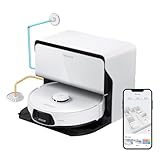
The best robot vacuum under $300 in 2026 is the Roborock Q10 S5+, which brings LiDAR mapping, mopping and a self-emptying dock into a price bracket that used to buy only a bump-and-turn robot; if you are happy to empty the bin yourself, the Ecovacs Deebot N20 delivers LiDAR navigation and very long runtime for around $200, and the TP-Link Tapo RV30 Max Plus is the cheapest way to get mapping plus auto-empty. The key to shopping this price range is knowing which features are real at $300 and which are marketing.
What $300 actually buys in 2026
Three years ago, $300 bought a robot with a gyroscope that cleaned in rows and forgot your house every run. Today the same money reliably buys:
- LiDAR navigation with saved multi-room maps and no-go zones.
- Self-emptying docks on several models, usually during sales.
- Basic mopping with a drag pad or a vibrating pad – useful for dust films, not dried spills.
What it still does not buy: camera-based obstacle avoidance that reliably dodges cords and pet waste, mop-lifting on carpet with mop washing, or hot-air drying docks. If those matter, budget $450 or more.
Top picks compared
| Model | Navigation | Claimed suction | Self-empty | Mopping | Typical price range |
|---|---|---|---|---|---|
| Roborock Q10 S5+ | LiDAR | Up to 10,000 Pa | Yes (bagged dock) | Vibrating pad | $270-$350 |
| Ecovacs Deebot N20 | LiDAR | Up to 8,000 Pa | No (Plus version adds dock) | Drag pad | $180-$250 |
| TP-Link Tapo RV30 Max Plus | LiDAR | Up to 5,300 Pa | Yes | Drag pad | $180-$280 |
| Eufy Clean L60 | LiDAR | Up to 5,000 Pa | No (SES version adds dock) | No | $200-$280 |
| Roborock Q5 Pro | LiDAR | Up to 5,500 Pa | No (Pro+ adds dock) | Optional pad | $170-$280 |
| Eufy RoboVac 11S Max | Random-pattern (no map) | Up to 2,000 Pa | No | No | $120-$180 |
Pascal (Pa) figures are manufacturer peak claims measured at the motor, not at the floor. They are useful to compare models from the same brand, but a well-sealed 5,000 Pa robot with a good brushroll can outperform a poorly designed one claiming double that.
Best by situation
Best overall: Roborock Q10 S5+
It is the most complete package in this bracket: precise LiDAR maps, a rubber anti-tangle brushroll, a vibrating mop and a dock with a 2.7-liter bag that holds weeks of debris. It reaches the $300 mark mostly through regular discounts, so watch for them.
Best value without a dock: Ecovacs Deebot N20
Very strong claimed suction, a hair-resistant brush and a runtime long enough to clean a large single-story home on one charge. You empty the onboard bin yourself every one to three runs.
Cheapest mapping with auto-empty: Tapo RV30 Max Plus
TP-Link’s robot gets you the convenience features for the lowest price. Its app is simpler than Roborock’s and suction is lower, so it suits hard floors and low-pile rugs best.
Best for carpet on a budget: Eufy Clean L60
Eufy tuned this one for pickup over mopping, which makes sense in homes with more rugs than tile.
Simplest and slimmest: Eufy RoboVac 11S Max
Good for one-room apartments where mapping adds little. At about 2.85 inches tall it slides under sofas and beds that block LiDAR robots, which carry a turret on top and stand closer to 3.8-4 inches.
Decision matrix
| Home | Floors | Pets | Pick |
|---|---|---|---|
| Studio or 1-bed, under 700 sq ft | Hard floors | No | Eufy RoboVac 11S Max or Roborock Q5 Pro |
| 2-3 bed, 1,000-1,500 sq ft | Mixed | No | Ecovacs Deebot N20 |
| 2-3 bed, 1,000-1,500 sq ft | Mixed | Yes | Roborock Q10 S5+ |
| Mostly rugs and carpet | Carpet | Either | Eufy Clean L60 |
| Want auto-empty, lowest cost | Hard floors | Either | Tapo RV30 Max Plus |
Running costs over three years
The purchase price is only part of the cost. Consumables on budget robots typically look like this:
| Part | Replace every | Approx. cost each | 3-year cost |
|---|---|---|---|
| Dock bags (self-empty models) | 4-8 weeks | $3-$5 | $60-$120 |
| HEPA filter | 3-6 months | $4-$8 | $25-$70 |
| Side brush | 3-6 months | $3-$6 | $20-$60 |
| Main brushroll | 6-12 months | $10-$20 | $30-$90 |
| Mop pads | 3-6 months | $3-$6 | $20-$60 |
A docked robot therefore costs roughly $50-$130 per year to run, while a bin-only robot sits closer to $30-$90. Third-party parts are cheaper but vary in fit.
Setup tips that make a budget robot behave like an expensive one
- Do a mapping run with doors open and lights on, then split rooms and name them in the app.
- Clear cords and socks before each run – budget models use LiDAR and bump sensors, not cameras, so they will try to eat a phone charger.
- Add no-go zones around pet bowls and fringed rugs.
- Check thresholds. Most budget robots climb about 0.6-0.8 inches; thicker transitions need a ramp.
- Clean the brushroll ends weekly if you have long hair or pets; tangles at the bearings cause most suction loss.
Bottom line
For under $300, prioritize LiDAR mapping first, a hair-resistant brush second and a self-emptying dock third. The Roborock Q10 S5+ covers all three; the Deebot N20 covers the first two for less money.