
Best above-ground pool robot vacuum choices differ from in-ground ones in a way most listings gloss over: above-ground pools have flat or dished floors and vinyl liners, so wall climbing matters less than floor coverage, liner safety and how easily the unit lifts out.
As an Amazon Associate we earn from qualifying purchases.
By Daniel Foster
Why Above-Ground Pools Need Different Machines
The best above-ground pool robot vacuum is a different machine from an in-ground one. An in-ground pool has a sloped floor, a deep end and hard walls a robot can climb. An above-ground pool typically has a uniform depth of 4-5 ft (1.2-1.5 m), a soft liner and a rounded wall junction, which changes what a cleaner needs to do and what it can safely grip.
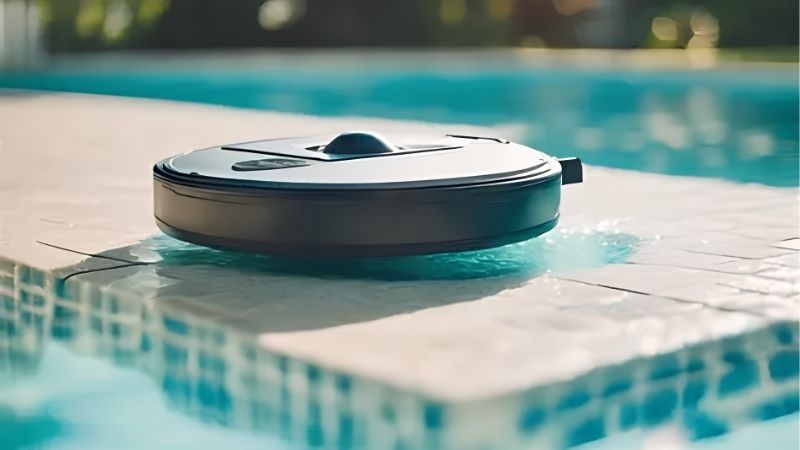
The Decisive Numbers: Pool Size, Runtime and Basket Volume
Maximum pool size is the specification to check first, usually quoted as a diameter or a length. Most cordless robots are rated to pools up to about 30-40 ft (9-12 m) in the longest dimension, and exceeding that means the cleaner runs out of charge before finishing a pass.
Runtime governs whether one cycle covers the floor. Cordless models typically deliver 60-120 minutes per charge with a 3-5 hour recharge, while corded units run as long as they are plugged in. For a 24 ft (7.3 m) round pool, 90 minutes is generally comfortable.
Filter basket volume decides how often you intervene. Baskets range from roughly 100 to 250 cubic inches, and a pool under trees fills the smaller ones within a single cycle. The best above-ground pool robot vacuum for a leafy garden is often the one with the largest basket rather than the strongest suction.
Space and Fit: Getting It In and Out of the Water
The best above-ground pool robot vacuum is one you can actually lift, because these pools are entered from a ladder and weight is the practical constraint. Units run 8-20 lb (3.6-9 kg) dry and considerably heavier when lifted out full of water, so a model with a fast-drain design or a retrieval hook is worth prioritising.
Storage matters too. A robot needs a dry, shaded spot of roughly 18 x 18 in (46 x 46 cm) plus room for a charging dock or power supply, and it should not be left in the pool between cycles. Measure the shed or deck box space before buying a larger corded unit with a caddy.
Liner Safety, Maintenance and Failure Points
For the best above-ground pool robot vacuum, liner safety comes before suction figures, and vinyl is the reason to avoid aggressive brushes and metal parts. Rubber or PVA brushes clean without scoring, and any cleaner marketed for concrete or tile should be checked for liner compatibility before use.
Brushes wear, filter baskets clog, and the seals around the motor housing are the most common failure point, allowing water into the electronics after a season or two. Rinse the unit with fresh water after each use, since chlorinated water and sunlight together degrade plastics and seals faster than either alone.
7 Cleaners Suited to Above-Ground Pools
This mix covers cordless and corded designs across price tiers, weighted towards floor coverage and liner-safe brushes. Amazon prices move constantly, so the tiers are indicative.
| Model | Power | Runtime (listed) | Price tier |
|---|---|---|---|
| Dolphin Escape | Corded | Continuous, 1.5 hr cycle | Premium |
| Dolphin E10 | Corded | Continuous, 1.5 hr cycle | Mid |
| Aiper Scuba SE | Cordless | Up to 90 min | Mid |
| Aiper Seagull SE | Cordless | Up to 90 min | Budget-mid |
| Aiper Scuba S1 | Cordless | Up to 150 min | Premium |
| WYBOT Osprey 200 | Cordless | Up to 110 min | Mid |
| Betta SE Plus | Solar, surface | Continuous daylight | Mid |
Dolphin Escape: Designed for This Pool Type
If budget allows, this is the closest thing to a purpose-built best above-ground pool robot vacuum. Maytronics built the Escape specifically for above-ground pools, with an active brush that turns faster than the drive wheels to lift debris from a flat liner floor. The cycle runs roughly 90 minutes and it covers a large round pool reliably.
It is corded, which means managing a floating cable and keeping the power supply clear of splashing. It is also among the most expensive options, and it does not climb walls, which is by design rather than a shortcoming here.
Dolphin E10: The Value Corded Option
A simpler unit built for pools up to about 30 ft (9 m), with a top-load filter basket that is straightforward to rinse. Continuous power means no runtime anxiety and no battery to degrade over seasons.
The cable is the drawback, tangling on longer cycles and needing untwisting between uses. Filtration is coarser than the premium models, so very fine debris such as pollen passes through.
Aiper Scuba SE: Cordless Convenience
No cable at all, a 90-minute runtime and a magnetic charging contact make this the least fussy option for a mid-size pool. Dropping it in and lifting it out is genuinely a two-minute job.
It cleans the floor only, so waterline and wall scum still needs a manual brush. Battery capacity declines over seasons, and Aiper does not widely sell replacement packs, which effectively sets a lifespan.
Aiper Seagull SE: The Budget Cordless
The entry point into cordless cleaning, suited to pools up to roughly 30 ft (9 m) with a similar runtime to the Scuba SE at a lower price. For a seasonal pool used a few months a year, the value is strong.
Suction is modest, so heavy leaf loads need two passes or manual skimming first. The filter basket is smaller than the mid-tier units, filling quickly under trees.
Aiper Scuba S1: Longer Runtime, More Coverage
A longer runtime and stronger drive make this suitable for larger above-ground pools and for those with more debris, and it handles the wall junction better than the entry models. Basket volume is at the higher end.
It is heavier to lift out of the water, which matters over a pool ladder, and it costs close to the corded premium units. The app features add little for a simple round pool.
WYBOT Osprey 200: Mid-Range Cordless
A competitive runtime with a reasonably large basket and a retrieval hook that makes lifting easier than reaching in by hand. Coverage patterns are more systematic than random-bounce cheaper units.
Brand support and parts availability are thinner than the established pool brands. Suction is adequate for typical debris but not for a pool that has been left uncovered for weeks.
Betta SE Plus: Surface Skimming, Not Vacuuming
This solar skimmer works the surface rather than the floor, removing leaves and pollen before they sink. Used alongside a floor robot it cuts how often the floor cleaner runs, and it needs no charging beyond daylight.
It is not a vacuum and does not replace one, which is the important caveat. Wind pushes it into corners, and the collection basket needs emptying every day or two in autumn.
Getting a Full Season Out of a Pool Robot
The best above-ground pool robot vacuum still lives in chlorinated water and sunlight, which is a harsh combination for plastics and seals.
Maintenance Routine That Extends Life
Rinse the unit and the filter basket with fresh water after every cycle rather than leaving chlorinated water to dry inside it. Store it out of direct sun, since UV degrades the housing faster than the water does.
Check brushes for wear each month and replace them when the edges round off, as a worn brush pushes debris rather than lifting it. Never leave the robot in the pool between cycles, which is the single most common cause of premature seal failure.
Water Chemistry and Cleaning Order
A robot removes debris, not cloudy water. Balanced chemistry and a working filter system are what keep water clear, and running a cleaner in poorly balanced water simply clogs the basket with precipitate.
Skim the surface first if leaves have collected, since floating debris sinks during the cycle and lands on floor the robot has already covered. Running the cleaner after the pool has settled overnight gives the most complete result.
Seasonal Demand and When to Buy
Pool equipment demand peaks from late spring through midsummer, which is also when prices hold firmest. The most reliable discounts arrive at the end of the swimming season and again during the general electronics events, with Prime Big Deal Days in early October and Black Friday and Cyber Monday in late November.
Buying at the end of a season for the following year is the pattern experienced pool owners follow. Before ordering, measure your pool’s longest dimension and depth and check them against the model’s stated limits, since a cleaner rated for a smaller pool will not finish a cycle.
Frequently Asked Questions
These come up whenever a best above-ground pool robot vacuum search runs into a market designed around in-ground pools.
Do I need a cleaner that climbs walls?
Rarely. Above-ground pools have a soft liner wall and a rounded floor junction, and most dirt settles on the floor. A floor-only cleaner plus an occasional manual brush at the waterline covers the job for most owners.
Cordless or corded?
Cordless for convenience and no cable tangling; corded for unlimited runtime and no battery to degrade. For a pool under about 30 ft (9 m), cordless is usually the easier ownership experience.
Will it damage a vinyl liner?
Not if the cleaner is rated for vinyl and uses rubber or PVA brushes. Avoid units designed primarily for concrete or tile surfaces, and check the brushes for embedded grit periodically, since trapped debris is what actually scores a liner.
See More:
- Best noise cancelling headphones Bose
- Best deal on air fryer
- Best buy Bella air fryer
- Best deals air fryer
- Best blender bottle
Final Thoughts on Cleaning an Above-Ground Pool
The best above-ground pool robot vacuum is the one rated for your pool’s longest dimension, with a basket large enough for your debris load and a weight you can lift over a ladder. Measure the pool before ordering, rinse the unit after every cycle, store it out of the sun, and pair it with balanced water chemistry rather than expecting it to fix clarity.
Our top picks


As an Amazon Associate we earn from qualifying purchases at no extra cost to you.

Write Your Review
No reviews yet. Be the first to share your experience!