Key takeaways
- Compare the best bath oils by base oils, scent, size and dispersing style as listed, for dry skin, evening soaks and a calmer bath routine at home.
Choosing a bath oil is mostly a decision about what you want the water to do. A bath oil is poured into the tub to leave skin feeling soft after soaking, but formulas split into camps: rich mineral-oil blends that seal in moisture, plant-oil blends built around scent, and plain fragrance-free oils for reactive skin. Bottle size and how well the oil disperses in water matter just as much, because a floating layer behaves differently from an emulsified one.
This guide is for dry-skinned bathers, evening-soak people chasing a calmer wind-down, and sensitive-skinned readers who need fragrance-free options. The five picks come from Amazon listings for oils sold to add to bath water, chosen by their listed base oils, scent, size and dispersing style. They range from a melatonin sleep blend and a pharmacy-style dry-skin oil to a concentrated aromatherapy oil and a two-ingredient unscented classic.
Quick Picks
As an Amazon Associate we earn from qualifying purchases
| Product | Best for | Key spec from title |
|---|---|---|
| Dr Teal’s Moisturizing Bath & Body Oil, Sleep Blend | An evening soak before bed | Melatonin with lavender & chamomile, 8.8 fl oz |
| Keri Moisturizing Shower and Bath Oil | Daily soaks for dry skin | Emollient-rich and lightly scented, 16 fl oz |
| Aromatherapy Associates Deep Relax Bath & Shower Oil | A scent-led wind-down bath | Vetiver, chamomile & sandalwood, 1.86 fl oz |
| RoBathol Bath Oil | Fragrance-free soaks for sensitive skin | Cottonseed oil, fragrance-free, 16 fl oz |
| SheaMoisture Coconut & Hibiscus Bath Oil | An affordable everyday soak | Coconut oil with vitamin E, 8 oz |
How to Choose
Start with the base oil
The base oil is most of the formula, so it decides how skin feels after the soak. Mineral oil and lanolin oil, the pair behind the Keri oil below, sit on the skin and seal in water, which is why listings aim them at dry skin. Plant bases feel lighter: cottonseed in RoBathol, safflower and coconut in the SheaMoisture oil, and caprylic/capric triglyceride in the Aromatherapy Associates blend. Check the first two or three ingredients on the listing rather than the front label, because the headline oil is not always the main one.
Check how the oil disperses
A bath oil either floats on the water or is built to spread through it. Emulsified formulas include a dispersing ingredient — PEG-4 dilaurate in the Keri oil, alkyl aryl polyether alcohol in RoBathol — so the oil mixes through the bath instead of pooling on top. Straight oil blends coat the skin as you get in and out, which some bathers prefer, but they leave more residue on the tub. The listing’s directions tell you which type you have: emulsified oils usually say to add them to running water and mix, while plain blends are poured in and left to spread.
Treat scent as a real choice
Scent decides whether a bath oil suits a morning shower-bath or a lights-down evening soak, and how much choice you have if fragrance bothers you. The Aromatherapy Associates and Dr Teal’s oils below are built around essential-oil scents — vetiver and sandalwood in one, lavender and chamomile in the other — and their listings present that scent as the point of the product. Keri sits in the middle as lightly scented. If scent itself is the problem, choose a listing that states fragrance-free, like RoBathol, rather than one that merely sounds mild, and check the ingredient list for parfum.
Match the bottle to how often you bathe
Bottle size only makes sense next to dose. Concentrated aromatherapy oils are sold in small bottles — the Aromatherapy Associates oil is 1.86 fl oz — because a capful is the listed dose, while everyday oils like Keri and RoBathol come in 16 fl oz bottles meant for capfuls several times a week. If you bathe daily, the big unscented or dry-skin bottles are the practical shape; if the oil is a once-a-week ritual, a small concentrated bottle is easier to store and finish. And if what you want is foam rather than oil, that is a different shelf: see our guide to the best bubble baths instead.
The 5 Best Options
Dr Teal’s Moisturizing Bath & Body Oil, Sleep Blend

This is the pick for people whose bath is the last step before bed. The listing builds the Sleep Blend around melatonin with lavender and chamomile essential oils, and presents it as a bedtime product: add it to the bath to moisturize while soaking. The base is a soybean and sesame oil blend with jojoba, sweet almond oil, cocoa butter and aloe vera further down the list, so it reads as a mainstream moisturizing oil rather than a pure aromatherapy concentrate. It is also the most flexible format here, since the same listing directs massage use after a shower or bath.
Specs
- Size as listed: 8.8 fl oz
- Scent as listed: Sleep Blend — lavender & chamomile essential oils with melatonin
- Base oils as listed: soybean oil and sesame seed oil, with jojoba oil, sweet almond oil and grape seed oil
- Added ingredients as listed: cocoa butter, shea butter and aloe vera leaf extract
- Free-from as listed: paraben-free, phthalate-free, cruelty-free and vegan
- Use as listed: add to bath water, or massage onto skin after a shower or bath
Best for: Bathers who take an evening soak as part of a bedtime routine and want scent and moisture in one bottle.
Watch out for: The formula contains added fragrance (parfum) alongside the essential oils, so it is not the pick for fragrance-free bathing; the melatonin positioning is a listing claim, not a measured effect.
ASIN: B08R8YQ2D7
Keri Moisturizing Shower and Bath Oil
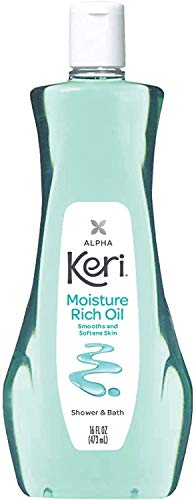
Keri is the dry-skin workhorse of this list, a pharmacy-shelf oil that has been sold for bath use for decades under the Alpha Keri name. The listing promises continuous hydration and says the emollient-rich oil replenishes and seals in moisture while softening and smoothing skin, and it is positioned for daily use rather than occasional pampering. The formula is a mineral oil and lanolin oil base with a PEG-4 dilaurate dispersant, so it is made to mix through bath water instead of floating on it. The scent is listed as light, which suits people who find aromatherapy oils too strong.
Specs
- Size as listed: 16 fl oz
- Base oils as listed: mineral oil (paraffinum liquidum) and lanolin oil
- Dispersing style as listed: PEG-4 dilaurate emulsifier; directions say add 1–2 capfuls to running bath water and mix well
- Scent as listed: lightly scented
- Skin types as listed: suitable for all skin types; positioned for dry skin and daily use
- Material type free as listed: alcohol free
- Manufacturer as listed: Crown Laboratories
Best for: Dry-skinned bathers who soak often and want an emulsified oil that spreads through the water.
Watch out for: It contains lanolin oil and added fragrance, so it is not suitable for lanolin-sensitive or fragrance-free routines; the listing also warns the tub can become slippery.
ASIN: B0927427PM
Aromatherapy Associates Deep Relax Bath & Shower Oil

Deep Relax is the scent-first pick, a concentrated bath and shower oil from a specialist aromatherapy brand. The listing’s scent is built on three essential oils — vetiver, chamomile and sandalwood — with patchouli and ylang ylang also in the formula, all carried in a caprylic/capric triglyceride base. The brand positions it for the end of the day, to relax the mind and body before sleep. At 1.86 fl oz the bottle is by far the smallest here, which matches the format: this is a measured-dose ritual oil, not a daily soak staple, and it sits at the premium end of the shelf.
Specs
- Size as listed: 1.86 fl oz (55 mL)
- Scent as listed: Deep Relax
- Essential oils as listed: vetiver root oil, chamomile flower oil and sandalwood wood oil, with patchouli leaf oil and ylang ylang flower oil
- Base as listed: caprylic/capric triglyceride
- Use as listed: bath and shower oil
Best for: A slow evening soak where the scent is the main event, a few times a week rather than daily.
Watch out for: The small bottle runs out quickly if you soak daily, and the scent is strong by design — it is the wrong pick for anyone reducing fragrance.
ASIN: B000GX56RI
RoBathol Bath Oil

RoBathol is the plain, clinical option: a fragrance-free bath oil built for sensitive skin. The formula as listed has just two ingredients — cottonseed oil and alkyl aryl polyether alcohol, the dispersant that lets the oil spread through bath water instead of sitting on the surface. Listings describe it as free of dyes, lanolin, mineral oil, parabens, sulfates and formaldehyde, and as dermatologist-tested. There is no scent story and no aromatherapy positioning here, which is exactly the point: it is the pick for bathers who react to fragrance and want an oil that does one job quietly.
Specs
- Size as listed: 16 fl oz
- Base oil as listed: cottonseed oil
- Dispersing style as listed: alkyl aryl polyether alcohol dispersant in a two-ingredient formula
- Scent as listed: fragrance-free
- Free-from as listed: no dyes, lanolin, mineral oil, parabens, sulfates or formaldehyde
- Skin types as listed: made for sensitive skin; dermatologist-tested as listed
Best for: Sensitive-skinned bathers who need a fragrance-free oil that still disperses through the water.
Watch out for: It offers no scent at all, so it will disappoint anyone buying for aromatherapy; the two-ingredient list also means no added butters or botanical extras.
ASIN: B0006FMKB6
SheaMoisture Coconut & Hibiscus Bath Oil

The budget slot goes to SheaMoisture’s Coconut & Hibiscus oil, an 8 oz drugstore bottle whose Amazon title lists it as a bath oil as well as a massage and body oil. The base is a plant-oil blend — safflower, borage, jojoba, coconut and olive oils — with vitamin E and hibiscus flower extract, and the listing aims it at dry skin. It is the most multi-purpose product here, which cuts both ways: handy if one bottle has to cover bath and post-shower use, less specialised if you want a formula built only for the tub.
Specs
- Size as listed: 8 oz
- Base oils as listed: safflower oil, borage oil, jojoba oil, coconut oil and olive oil
- Added ingredients as listed: vitamin E (tocopherol) and hibiscus flower extract
- Scent as listed: coconut & hibiscus
- Skin type as listed: for dry skin
- Use as listed: bath oil, massage oil and body oil
Best for: Bathers who want one affordable plant-oil bottle that covers the bath and post-shower moisturising.
Watch out for: It is a multi-use oil rather than a bath-only formula, and the listing does not describe an emulsifying system, so expect it to sit on the water more than the dispersing picks.
ASIN: B07Q7HRC7R
Which One Fits Your Situation
Your skin feels tight after every bath
If dry, tight-feeling skin is the reason you are shopping, start with the Keri oil: its mineral oil and lanolin oil base is listed to seal in moisture, and the emulsifier spreads it through the water so the whole soak counts. The SheaMoisture oil is the plant-based alternative in this list, with coconut and olive oils aimed at dry skin, though it coats more than it disperses.
You bathe at night to switch off
For an evening wind-down, two picks compete. Dr Teal’s Sleep Blend is the everyday option, with melatonin and lavender and chamomile essential oils in an 8.8 fl oz bottle. Aromatherapy Associates Deep Relax is the concentrated treat: vetiver, sandalwood and chamomile in a small bottle dosed by the capful. Choose by how often you soak — nightly points to Dr Teal’s, occasional points to Deep Relax.
Fragrance sets your skin off
If scented products are the problem, RoBathol is the clear fit in this list: fragrance-free as listed, a two-ingredient cottonseed oil formula with a dispersant, and a free-from list that skips dyes, lanolin, mineral oil and parabens. It still behaves like a proper bath oil in the water, which many plain carrier oils do not, because the dispersant is built into the formula.
You want one bottle that earns its shelf space
If the bathroom shelf is crowded, the SheaMoisture Coconut & Hibiscus oil covers the most jobs per bottle: the listing covers bath, massage and body use, in an 8 oz size that suits smaller bathrooms and trial runs. The trade-off is specialisation — it is a generalist plant-oil blend, not a dispersing bath formula — so heavy bathers may still end up adding the Keri oil later.
Common Mistakes
- Pouring the oil in before the tub fills, then judging it by the floating layer: dispersing formulas like the Keri and RoBathol oils are listed for running water, so add them as directed and mix before deciding the dose is wrong.
- Buying a scented aromatherapy oil for sensitive skin because the scent sounds gentle: check for a stated fragrance-free listing instead, and scan the ingredients for parfum.
- Treating a body oil as a bath oil: oils sold only for skin application often have no dispersant, so they pool on the water and coat the tub instead of spreading through the soak.
- Using a full capful of a concentrated oil like the 1.86 fl oz Deep Relax as if it were an everyday oil: small bottles are dosed small, and more oil mostly means more residue.
- Skipping the slippery-tub rinse afterwards: bath oils coat porcelain as well as skin, so rinse and wipe the tub before the next person steps in.
Frequently Asked Questions
How much bath oil should you add to one bath?
Follow the dose on your bottle, because formats differ. Dispersing oils are listed in capfuls — the Keri directions say one to two capfuls added to running bath water, mixed well. Concentrated aromatherapy oils are also dosed by the capful despite their small bottles. Straight plant-oil blends usually need only a small pour; adding more mostly leaves more oil on the tub.
What is the difference between a bath oil and a body oil?
A bath oil is sold to be added to bath water, and dispersing formulas include an emulsifier so the oil spreads through the tub. A body oil is sold for application to skin and usually has no dispersant, so in a bath it floats and coats. Some listings, like the SheaMoisture and Dr Teal’s oils here, cover both jobs; check the directions to see which uses are stated.
Can you use bath oil if you have sensitive skin?
Yes, if you choose by the listing rather than the marketing. The RoBathol oil in this guide is listed as fragrance-free, with a two-ingredient cottonseed oil formula and a free-from list covering dyes, lanolin, mineral oil and parabens. Scented oils, even essential-oil ones, are the riskier route. Whatever you pick, try a small amount in one bath first and stop if your skin reacts.
Do bath oils make the bathtub slippery?
They can. Oil that coats skin also coats porcelain, and at least one listing in this guide, the Keri oil, carries an explicit caution that the tub may become slippery. Dispersing formulas leave less residue than straight oils, but no bath oil leaves the tub completely clean. Rinse the tub with hot water after draining, and wipe it down before anyone showers in it.
FAQ
How much bath oil should you add to one bath?
What is the difference between a bath oil and a body oil?
Can you use bath oil if you have sensitive skin?
Do bath oils make the bathtub slippery?
More from Amazon
Programs that pair well with the guide above. Offers and eligibility are set by Amazon and may change.
Free shipping on eligible items, Prime Video and more. Eligible new members can start with a free trial.
Start a Prime free trialAudiobooks and podcasts to listen to on the go. Eligible new members can start with a free trial.
Try Audible freeAd-free music streaming. Eligible new subscribers can start with a free trial.
Try Music Unlimited freeA free business account with business pricing and bulk-buying tools for work, shop or home office.
Create a business accountAs an Amazon Associate we earn from qualifying purchases.