Key takeaways
- Compare the best clay masks by clay type, added ingredients, skin type and size as listed, for oily, combination and blemish-prone skin routines.
Choosing a clay mask is mostly a decision about strength. Kaolin-based formulas clean gently enough for reactive skin, while bentonite-heavy masks pull harder on oil and can leave normal skin feeling tight for an hour. Format matters too: a ready-made jar is grab-and-go, but a dry powder lets you control thickness and intensity each time. The right pick depends on your skin type, your tolerance for tingle, and how much mixing you will actually do.
This roundup suits oily and combination skin that clogs easily, sensitive skin that still needs oil control, and anyone curious about the classic mix-it-yourself powder. Each product below was chosen from its Amazon listing — the clay types, added ingredients, skin types, sizes and wear times in the specs are the ones the listings themselves state, so you can compare like for like before deciding which jar, tube or tub belongs in your bathroom cabinet.
Quick Picks
As an Amazon Associate we earn from qualifying purchases
| Product | Best for | Key spec from title |
|---|---|---|
| innisfree Super Volcanic Pore Clay Mask | Weekly pore care with light exfoliation | AHA and natural volcanic clusters, 3.38 fl oz |
| L’Oreal Paris Pure Clay Face Mask with Charcoal | Oily skin that also looks dull | Charcoal to detox and brighten, 1.7 oz |
| Cetaphil DermaControl Purifying Clay Mask | Oily skin that is also sensitive | Bentonite clay for oily, sensitive skin, 3 oz |
| Aztec Secret Indian Healing Clay | Mixing a strong mask from powder | 100% natural calcium bentonite clay, 2 lb |
| Queen Helene Mint Julep Masque | A large, low-cost tube for oily zones | Mint masque for oily and acne-prone skin, 8 oz |
How to Choose
Start with the clay type
Clay is not one ingredient. Kaolin is the gentlest of the common mask clays and shows up in formulas aimed at sensitive or drier skin. Bentonite swells with water and grips oil more aggressively, which is why the Aztec Secret powder, made only from calcium bentonite, feels so much stronger than a kaolin cream mask. Blends sit between the two: Cetaphil pairs bentonite with Amazonian kaolin to soften the pull, and innisfree builds on volcanic ash with bentonite and kaolin in the same jar. Match the clay first, and most other choices get easier.
Match strength to your skin type
Oily skin usually tolerates the stronger end of the shelf: bentonite, charcoal blends and longer wear times, used two or three times a week as several listings direct. Sensitive skin needs the opposite signals — a fragrance-free formula, a wear time closer to five or ten minutes, and a creamy base that never fully dries down, which is exactly how the Cetaphil mask is built. Also check for extras that raise the strength on paper: the innisfree mask adds glycolic and lactic acid, so it doubles as an exfoliating step and should not be stacked with other acid products the same evening.
Decide between ready-made and powder
Ready-made masks trade a little control for a lot of convenience: you spread, wait and rinse, and the texture is identical every time. Powders ask more of you — the Aztec Secret clay has to be mixed fresh with water or apple cider vinegar, in a non-metal bowl, and the thickness is your call — but a single tub covers months of weekly masks and doubles for body use. If even that small amount of mixing will stop you masking altogether, the best sheet masks are the no-prep alternative, though they clean far more gently than any clay here.
Respect wear time and frequency
Every listing here prints its own ceiling, and the range is wide: five to ten minutes for the Cetaphil mask, ten for innisfree, ten to fifteen for the L’Oreal charcoal mask, and up to twenty for the Aztec powder on normal skin. Longer is not stronger in a useful way — once a clay mask dries hard and cracks, it mostly just pulls moisture and leaves skin flushed. Rinse when the edges lighten and the center still feels slightly tacky, keep to the listed frequency of one to three sessions a week, and patch test first.
The 5 Best Options
innisfree Super Volcanic Pore Clay Mask

The innisfree mask is the easiest recommendation for combination and oily skin that wants one jar to do several jobs. Its base is Jeju volcanic ash blended with bentonite and kaolin, and the formula adds glycolic and lactic acid plus fine walnut shell powder, so a ten-minute session covers oil absorption and surface exfoliation together. The listing describes a creamy, non-drying texture and an unscented formula, and it is sized at 3.38 fluid ounces — enough for a weekly routine without committing to a bulk tub.
Specs
- Clay types: Volcanic ash with bentonite and kaolin
- Added ingredients: Glycolic acid and lactic acid (AHA), walnut shell powder
- Skin types: All, combination, dry, normal and oily, as listed
- Size: 3.38 fl oz
- Use time: Leave on 10 minutes; use 1 to 2 times a week, as listed
- Formula notes: Unscented; free from parabens and mineral oil, as listed
Best for: Weekly pore care for combination and oily skin that also wants gentle exfoliation in the same step.
Watch out for: The AHA acids and walnut shell powder make this an exfoliating mask as well as a clay one, so patch test first and avoid pairing it with other acid products on the same night.
L’Oreal Paris Pure Clay Face Mask with Charcoal
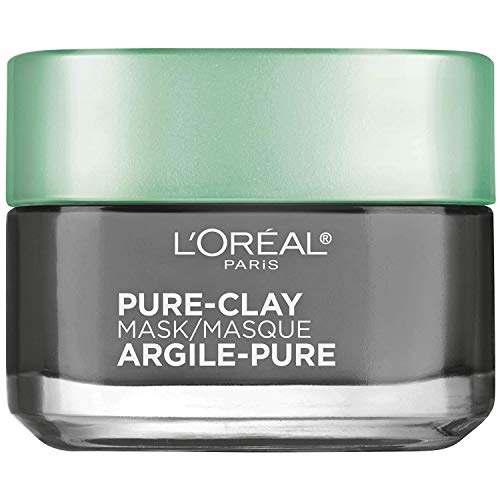
L’Oreal’s charcoal mask is built for skin that looks dull and feels congested by the end of the day. Three clays — kaolin, montmorillonite and Moroccan lava clay — do the oil absorbing, and charcoal powder is added for the detox positioning in its name. L’Oreal files this mask under dull or oily skin, and the creamy jar formula spreads thin, so the small 1.7-ounce size stretches further than it first appears. It is the most traditional deep-clean option here: no acids, no mixing, just a ten-to-fifteen-minute rinse-off.
Specs
- Clay types: Kaolin, montmorillonite and Moroccan lava clay
- Added ingredient: Charcoal powder
- Skin type: Dull skin, as listed; L’Oreal also positions it for oily skin
- Size: 1.7 oz
- Use time: Leave on 10 to 15 minutes; use 3 times a week, per brand directions
Best for: Oily skin that also looks dull and wants a stronger weekly deep clean without any mixing.
Watch out for: The jar is only 1.7 ounces, and the Amazon page’s scent field is garbled, so do not rely on it — the formula itself is fragranced, which scent-sensitive buyers should note before ordering.
Cetaphil DermaControl Purifying Clay Mask

Cetaphil takes the opposite approach to most clay masks: the goal is oil control that sensitive skin can actually repeat. Bentonite does the absorbing while Amazonian kaolin gently exfoliates, and the creamy base includes apple fruit extract to keep skin from feeling stripped. The listing states it is fragrance free, hypoallergenic and non-comedogenic, and it is designed for oily, sensitive skin rather than adapted to it afterwards. Wear time is short — five to ten minutes — and a spatula is included for the 3-ounce jar.
Specs
- Clay types: Bentonite clay and Amazonian kaolin clay
- Added ingredients: Apple fruit extract, cucumber seed oil and shea butter
- Skin types: Oily and sensitive, as listed
- Size: 3 oz
- Use time: Leave on 5 to 10 minutes; use up to 3 times a week, as listed
- Formula notes: Fragrance free, hypoallergenic and non-comedogenic, as listed; spatula included
Best for: Oily skin that flushes or stings with stronger masks and needs a gentler option it can repeat weekly.
Watch out for: The creamy formula is designed not to dry down hard, so do not wait for the cracking stage — rinse at the listed time even if the mask still looks wet.
Aztec Secret Indian Healing Clay

Aztec Secret is the strongest and the most demanding mask in this roundup. The tub holds nothing but calcium bentonite clay powder, which you mix in equal parts with water or raw apple cider vinegar before each use. That single-ingredient recipe is the appeal: no fragrance, no preservatives, and the thickness is yours to set. The label is blunt about the intensity — expect a pulling, tightening feel while it dries — and the 2-pound tub covers face, hair and body masks long after a jar would run out.
Specs
- Clay type: 100% natural calcium bentonite clay
- Added ingredients: None — single-ingredient powder with no additives, as listed
- Skin types: All, as listed
- Size: 32 oz (2 lb)
- Use time: Dry 5 to 10 minutes for delicate skin, 15 to 20 minutes for normal skin, as listed
- Mixing: Equal parts clay and raw apple cider vinegar or water; non-metal bowl and utensil, as listed
Best for: A strong once-a-week reset for normal to oily skin, and for buyers who want one tub for face and body use.
Watch out for: It must be mixed fresh every time, and the label itself warns the pulling sensation is intense and that temporary redness afterwards is normal — delicate skin should start at the short end of the listed time.
Queen Helene Mint Julep Masque

Queen Helene’s Mint Julep Masque is the old-school drugstore option: a big 8-ounce tube of kaolin and bentonite with sulfur, zinc oxide and spearmint oil, sold for oily and blemish-prone skin. It has been on shelves for decades, and the formula still reads like a classic — no acids, no powder mixing, just a green cream that dries down with a mint tingle. For anyone who masks a T-zone several times a month and burns through small jars quickly, the tube format and size are the practical draw.
Specs
- Clay types: Kaolin and bentonite
- Added ingredients: Sulfur, zinc oxide and spearmint leaf oil
- Skin type: Oily and acne-prone, as listed
- Size: 8 oz
- Scent: Mint Julep, as listed
Best for: Frequent T-zone masking on a budget, where a large tube matters more than a prestige formula.
Watch out for: The Amazon page prints no leave-on time and simply says to follow the label instructions, so check the tube before your first use; the formula also contains fragrance and methylparaben, per its ingredient list.
Which One Fits Your Situation
Your T-zone is shiny by midday
Reach for the L’Oreal charcoal mask two or three evenings a week; its three-clay blend plus charcoal is the strongest ready-made oil absorber here. If you mask that zone often and cost per tube matters, Queen Helene’s 8-ounce Mint Julep covers the same ground in a much bigger tube. Keep either one off dry cheeks — zone the application instead of covering your whole face.
Your skin is oily but reacts easily
The Cetaphil mask was designed for exactly this overlap. Its bentonite and Amazonian kaolin sit in a creamy, fragrance-free base, the wear time is only five to ten minutes, and it is not meant to dry down hard. Start once a week, moisturize right after rinsing, and only build toward the listed three sessions if your skin stays calm.
You want the deepest once-a-week reset
Mix the Aztec Secret powder. Nothing else here matches straight calcium bentonite for pull, and mixing it with apple cider vinegar gives the most intense session in the roundup. Book it for a quiet evening: the label warns the tightening feel is strong and that temporary redness afterwards is normal, so give your skin the short end of the listed time on your first try.
You want one jar for a mixed routine
The innisfree mask is the generalist. Its volcanic ash base handles oil, the AHA content covers dull surface texture, and the listing rates it for every skin type, so combination skin can use it across the whole face. Because it exfoliates as well as absorbs, treat it as your only active step that evening and keep the rest of the routine plain.
Common Mistakes
- Letting the mask dry until it cracks all over — most listings here cap wear at 10 to 20 minutes, and a fully hardened mask mostly pulls moisture, not extra oil.
- Mixing bentonite powder with a metal spoon or in a metal bowl; the Aztec Secret directions specify non-metal tools, and the paste should be mixed fresh each time.
- Masking daily to chase oil — every product here lists a ceiling of one to three sessions a week, and overuse leaves skin tight and reactive.
- Stacking an acid-containing clay mask with other exfoliants the same evening; the innisfree formula already includes glycolic and lactic acid.
- Skipping the patch test with a strong new mask, especially a powder mixed with apple cider vinegar — start with the shortest listed wear time instead.
Frequently Asked Questions
How often should you use a clay mask?
The listings here cap out between one and three sessions a week: innisfree suggests one to two, Cetaphil and L’Oreal allow up to three, and Aztec Secret’s own guidance is once a week for most users. Oily skin usually sits at the higher end, sensitive skin at the lower. More frequent use rarely adds cleaning power; it mostly adds dryness and tightness.
Do clay masks clear blackheads?
Clays absorb surface oil and loosen the buildup that makes pores look dark and enlarged, which is why these listings are written around pore cleansing. That is a cosmetic effect on appearance, not a medical treatment, and no mask here is listed as one. Consistent weekly use plus gentle cleansing does more for how pores look than one very long, very strong session.
Should you let a clay mask dry completely?
Usually not. Most of the benefit happens while the mask is still slightly damp and in contact with the skin; once it is bone dry and cracking, it is mostly drawing water out of the surface. Follow the printed time for your product, and rinse when the edges have lightened but the center still feels a little tacky to the touch.
Can sensitive skin use bentonite clay?
Yes, with the strength turned down. Bentonite is the strongest common mask clay, so sensitive skin should choose a blended, fragrance-free formula like the Cetaphil mask, keep wear to the shortest listed time, and patch test first. Straight bentonite powder mixed with vinegar is the harshest format here; if your skin flushes easily, that is the one to approach last and most carefully.
FAQ
How often should you use a clay mask?
Do clay masks clear blackheads?
Should you let a clay mask dry completely?
Can sensitive skin use bentonite clay?
More from Amazon
Programs that pair well with the guide above. Offers and eligibility are set by Amazon and may change.
Free shipping on eligible items, Prime Video and more. Eligible new members can start with a free trial.
Start a Prime free trialAudiobooks and podcasts to listen to on the go. Eligible new members can start with a free trial.
Try Audible freeAd-free music streaming. Eligible new subscribers can start with a free trial.
Try Music Unlimited freeA free business account with business pricing and bulk-buying tools for work, shop or home office.
Create a business accountAs an Amazon Associate we earn from qualifying purchases.