
Key takeaways
- Release the string tension only as your bow’s manual states. Do not dry fire a bow or leave it under heavy load in the case.
- Check airline and local rules before travel. Rules on locks, arrows and broadheads vary by carrier and country.
- Store broadheads in a protective container, never loose in the case.
- Do not store a bow in a hot car or a damp space for long periods. Heat and moisture can affect strings, limbs and finishes.
- Wipe the case clean, dry it fully before closing, and replace foam that has crumbled.
- Consider having a bow technician inspect your bow after any hard impact.
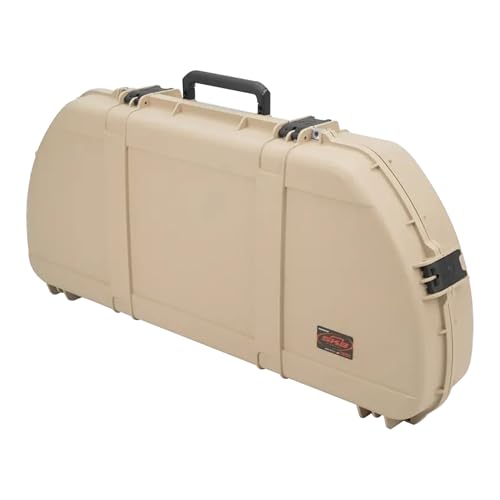
Archers who fly or ship their bows should choose a hard case such as those from SKB or Plano, while hunters who drive to the field and want something lighter and quicker to access are usually better served by a padded soft case from brands like Easton, Allen or Plano. Which one is right depends on how far the bow travels, how fragile your setup is, and whether you carry a compound, a recurve or a crossbow.
Our top picks



As an Amazon Associate we earn from qualifying purchases at no extra cost to you.
Bow Cases at a Glance
| Case type | Best for | Key traits (as described by makers) | Limits |
|---|---|---|---|
| SKB hard bow cases | Air travel and rough transport | Molded shell, latches, foam interior, many models carry an airline-travel orientation | Heavier and bulkier than soft cases |
| Plano hard bow cases (Protector line) | Truck and car transport with strong protection | Molded polymer shell, pressure-relief valve on some models, lockable latches | Size varies; confirm your bow fits |
| Easton soft or hybrid bow cases | Competition archers and local travel | Padded exterior, pockets for arrows and accessories | Less impact protection than a hard shell |
| Allen soft bow cases | Budget-minded hunters | Padded nylon, simple zip closure, pockets | Basic padding, not for flying |
| Bear Archery soft cases | General use with matching gear | Soft case tied to the brand’s bow lineup | Check dimensions for non-Bear bows |
| Recurve takedown cases | Recurve and takedown bow owners | Narrower, designed around split limbs | Not suited to compounds |
| Crossbow cases | Crossbow hunters | Wide and short profile | Different shape than a compound bow case |
Hard Case or Soft Case?
When a Hard Case Makes Sense
A hard case protects against crushing, drops and baggage handling. It is the usual choice for airline travel, long trips by road with other gear stacked on top, and storage in a garage or vehicle. Most hard cases use a molded shell with a foam interior, which holds the bow in place and protects the cams, limbs and sight. Look for sturdy latches, reliable hinges, a handle that does not wobble, and compatibility with airline rules on locks and size, which differ between carriers.
When a Soft Case Works Better
A soft case is lighter, easier to carry in the field and cheaper than a hard shell. It suits hunters who walk to a stand, archers who drive a short distance to a range, and anyone who wants quick access to arrows and accessories. It offers less protection from impact, so avoid placing heavy items on top and avoid it for flying.
What to Look For
Size and Bow Fit
Compound bows vary in axle-to-axle length, brace height and stabilizer length. Check the case’s interior dimensions against your bow with the stabilizer, quiver and rest installed, or remove them as the maker advises. A bow that is forced into a case that is too small can have its limbs or cams stressed, and a case that is too large allows movement. Makers list inside dimensions, and this is the number to compare.
Interior Foam and Retention
Egg-crate foam, pluck foam and molded foam all work. Pluck foam can be customized; molded foam is more fixed. Look for a design that supports the riser and limbs without pressing on strings or cables.
Latches, Locks and Hinges
For air travel, you need a case that can be locked with an approved lock. Check whether the case has lockable latches or lock holes. Metal hinges and reinforced latches are more durable than plastic.
Weather Resistance
Hard cases with gaskets resist water better than soft cases. Some models have a pressure-relief valve to equalize air pressure during flight. Soft cases are usually water-resistant at best, so keep them dry.
Arrow and Accessory Storage
Some hard cases include an arrow compartment or a space for a release aid. Soft cases often have external pockets. Arrows should be stored in a way that protects the tips; follow the maker’s guidance and local travel rules regarding broadheads.
Weight and Carry
Wheeled hard cases make airports easier but add bulk. Backpack-style soft cases work well for hikers. Consider how you will carry the case before you buy.
Budget Tiers
Budget Tier
Basic soft cases with simple padding and a zippered main compartment. They suit short trips and storage.
Mid-Range Tier
Better padded soft cases, entry-level hard cases from Plano and other makers, and cases with solid latches and foam. This is the sensible range for most archers who drive and occasionally fly.
Premium Tier
Heavy-duty molded hard cases from SKB and similar brands, often with reinforced corners, wheels and custom foam. These suit frequent flyers, tournament archers and anyone with a costly setup.
Pick X If… Decision Table
| If you… | Pick | Why |
|---|---|---|
| Fly with your bow | SKB or Plano hard case | Shell protection and lockable latches |
| Drive to the range or hunt locally | Easton or Allen soft case | Light and convenient |
| Shoot a recurve with takedown limbs | Recurve takedown case | Built for split limbs and shorter lengths |
| Own a crossbow | Crossbow-specific case | Fits the wide profile |
| Carry many accessories | Case with pockets or an arrow tube | Keeps gear together |
| Want a lighter pack for hiking | Backpack-style soft case | Hands-free carry |
Care and Safety Notes
- Release the string tension only as your bow’s manual states. Do not dry fire a bow or leave it under heavy load in the case.
- Check airline and local rules before travel. Rules on locks, arrows and broadheads vary by carrier and country.
- Store broadheads in a protective container, never loose in the case.
- Do not store a bow in a hot car or a damp space for long periods. Heat and moisture can affect strings, limbs and finishes.
- Wipe the case clean, dry it fully before closing, and replace foam that has crumbled.
- Consider having a bow technician inspect your bow after any hard impact.
Alternatives to Consider
Rolling Hard Gun Case
Some archers use a hard rifle or multi-purpose case that fits their bow. This can work if the interior dimensions suit, but check that the case is rated for your bow and use cut foam to prevent movement.
Bow Sleeves
A simple padded sleeve covers the bow for short moves between the car and the stand. It provides minimal protection and suits only local use.
Bow Rack or Wall Mount
If your goal is storage rather than transport, a bow rack protects limbs and keeps tension off the string. Pair it with a case for trips.
Frequently Asked Questions
Can I fly with a bow in a hard case?
Many archers do, using a hard case that can be locked and that meets the airline’s checked-baggage size and weight rules. Rules differ between carriers and countries, so review the airline’s policy and the transportation authority’s guidance before traveling.
How do I know if a bow case will fit my bow?
Compare the case’s interior dimensions with your bow’s axle-to-axle length and the height with the sight and stabilizer attached. Makers publish these dimensions. If the bow is borderline, remove accessories as your bow manual allows.
Is a soft case enough for hunting?
For short trips by vehicle and walking into the field, a padded soft case is usually sufficient. For air travel or long, rough transport, a hard case provides better protection.
Can I store my bow long-term in its case?
You can for short periods, but long-term storage in a closed case can trap moisture. Many archers store the bow on a rack in a cool, dry space and use the case for transport only.
Do I need a separate case for arrows?
Some bow cases include arrow storage, while others do not. A dedicated arrow case or tube protects fletching and points and is helpful if your bow case has no room for arrows.
How do I clean and maintain a bow case?
Wipe the shell with a damp cloth and mild soap, dry it fully, check the latches and hinges, and replace foam that has compressed or degraded. For soft cases, follow the care label and air-dry completely before storage.
FAQ
Can I fly with a bow in a hard case?
How do I know if a bow case will fit my bow?
Is a soft case enough for hunting?
Can I store my bow long-term in its case?
Do I need a separate case for arrows?
How do I clean and maintain a bow case?
More from Amazon
Programs that pair well with the guide above. Offers and eligibility are set by Amazon and may change.
Free shipping on eligible items, Prime Video and more. Eligible new members can start with a free trial.
Start a Prime free trialAudiobooks and podcasts to listen to on the go. Eligible new members can start with a free trial.
Try Audible freeAd-free music streaming. Eligible new subscribers can start with a free trial.
Try Music Unlimited freeA free business account with business pricing and bulk-buying tools for work, shop or home office.
Create a business accountAs an Amazon Associate we earn from qualifying purchases.







