
Key takeaways
- Pin count and diameter: Thinner pins offer better precision, while thicker pins are easier to see in low light. Common diameters are listed by the maker as .010, .019 and so on.
- Illumination: Fiber-optic pins gather ambient light, and some sights add a battery light. Check local rules for lighted sights.
- Micro-adjust: A micro-adjustable windage and elevation allows fine tuning. Look for locking screws that hold zero.
- Sight light and level: A built-in bubble level helps keep the bow upright, which affects accuracy.
Choose a fixed-pin sight if you hunt from a tree stand at modest distances and want the simplest, lightest setup; choose a multi-pin sight with a micro-adjust windage and elevation if you shoot varied distances; choose a single-pin movable sight if you shoot long range and want a clean sight picture; and consider a digital rangefinding sight only if you accept the added weight, battery and rules that govern electronics. This guide compares those sight types, well-known makers, fit and setup checks, and trade-offs by budget tier. Always check local hunting regulations, since some areas restrict illuminated or electronic sights.
Our top picks
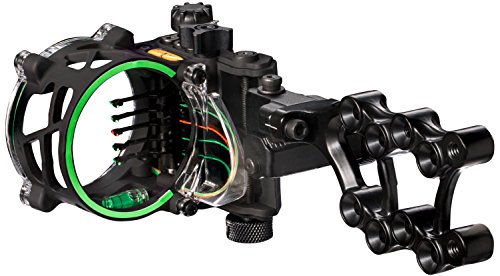


As an Amazon Associate we earn from qualifying purchases at no extra cost to you.
Bow Sights at a Glance
| Sight type | Best for | Typical stated features | Limits |
|---|---|---|---|
| Fixed multi-pin (Trophy Ridge React, Black Gold Ascent Verdict style) | Bowhunters who shoot a few set distances | Three to seven pins, fiber-optic or illuminated, micro-adjust windage and elevation | More pins can clutter the view; each pin needs sighting-in |
| Single-pin slider (Spot-Hogg Fast Eddie, Black Gold Ascent Verdict, HHA Tetra style) | Long-range shooting, target archers, precise hunters | One pin that moves via a dial or scale; tape or scale marks for each yardage | You must adjust the dial; slower in fast hunting scenarios |
| Fixed single-pin | Simple hunting at one close distance | One pin, simple adjustments | Limited to one range |
| Target sight (Axcel, Shibuya style) | Competition and indoor or outdoor target archery | Large aperture, long extension bar, fine micro-adjust | Not designed for hunting; often costly |
| Digital rangefinding sight (Garmin Xero A1i Pro) | Archers wanting automatic range readings | Laser rangefinder in the sight, illuminated pin that updates for distance, per the maker | Needs a battery; adds weight; regulations may restrict use |
Choosing a Sight by Shooting Style
Match the sight to the way you shoot. A tree-stand bowhunter typically shoots at 20 to 40 yards and may prefer three to five fixed pins for speed. A western hunter or a 3D archer shooting unknown distances may prefer a single movable pin or a rangefinder. Target archers often choose a sight with a large scope and a long extension. If you shoot all of these, choose the sight that matches the shot you take most often and learn it well.
Fixed Multi-Pin Sights
Multi-pin sights show a set of pins, each aligned for a distance. Trophy Ridge makes several models in this family, including the React line, which the maker describes as using a pin that adjusts based on speed or bow settings. Black Gold, Sword and Garmin partner brands such as Apex Gear and Mathews also sell multi-pin sights. Reviewers praise how fast they are for a quick hunting shot. The trade-offs are visual clutter, since multiple pins can crowd your aperture, and the need to sight in each pin carefully.
Look for these details when comparing models:
- Pin count and diameter: Thinner pins offer better precision, while thicker pins are easier to see in low light. Common diameters are listed by the maker as .010, .019 and so on.
- Illumination: Fiber-optic pins gather ambient light, and some sights add a battery light. Check local rules for lighted sights.
- Micro-adjust: A micro-adjustable windage and elevation allows fine tuning. Look for locking screws that hold zero.
- Sight light and level: A built-in bubble level helps keep the bow upright, which affects accuracy.
Single-Pin Slider Sights
Single-pin sights use one pin that moves up and down on a track. Spot-Hogg is known for its Fast Eddie series, Black Gold for the Ascent Verdict and HHA for the Tetra line. These sights are popular among hunters in open terrain and among competitive archers. Advantages include a clean sight picture and the ability to dial an exact yardage, while the disadvantage is that you must set the dial before each shot. This takes practice and is less suited to fast-moving game.
Makers sell scale tapes, dial sets and bow-specific kits to calibrate the sight. Take time to sight in at several distances and record the settings.
Digital and Rangefinding Sights
Garmin’s Xero A1i Pro is a digital sight that, according to the maker, ranges the target and sets a pin automatically. Reviewers note that it can simplify long shots, but it adds weight and requires a charged battery. It also may not be legal for use in all hunting seasons or jurisdictions. Check local regulations. Digital sights tend to cost more, and the added electronics may be a reliability concern for some hunters.
Setup and Compatibility Checks
- Confirm the sight’s mounting pattern fits your bow. Most modern bows use a standard dovetail mount, but some require adapters.
- Check the axis, such as left-handed or right-handed configuration, for your dominant eye.
- Check the aperture size relative to your peep sight. A large aperture with a small peep can reduce clarity.
- Check the sight’s extension options so the sight does not interfere with the string or limbs.
- Confirm the maker’s stated weight, because added weight changes the balance of the bow.
- Sight in at multiple distances and re-check after bow changes or transport.
Safety and Care Notes
Follow archery range safety rules and local hunting laws. Inspect your sight and mounting screws before each hunt, and tighten hardware only to the maker’s torque specifications. Keep the sight clean and dry, and store the bow safely. Never dry-fire a bow. If you are new to archery, seek instruction from a certified archery coach or a reputable archery shop to set up your equipment.
Budget Tiers
| Tier | What you typically get | What you give up |
|---|---|---|
| Budget | Entry-level multi-pin sight with fiber optics | Less precise micro-adjust; fewer alignment aids |
| Mid-range | Quality multi-pin or single-pin slider with locking adjustments | Fewer high-end materials and fine tuning features |
| Premium | Precision single-pin or digital sight | Higher cost, setup effort or battery dependence |
Pick X If You Need…
| Pick this | If you need |
|---|---|
| Trophy Ridge React or similar multi-pin | A quick, easy hunting sight |
| Black Gold Ascent Verdict | A pin-based hunting sight with a clean view |
| Spot-Hogg Fast Eddie | A single-pin slider for precise distances |
| HHA Tetra | A premium single-pin sight with fine adjustments |
| Axcel target sight | Competition archery |
| Garmin Xero A1i Pro | Automatic ranging for archers who can use electronics |
Alternatives to Consider
- Instinctive shooting: Some archers shoot without a sight; this is a skill that takes time to learn.
- Bow-mounted rangefinder: A standalone rangefinder can complement a pin sight.
- Used or refurbished sights: Check for wear and compatibility, and inspect the pins and screws.
Common Mistakes When Choosing a Sight
New buyers often choose a sight with too many features. Extra pins, lights and accessories can distract more than help, especially at full draw. Another common error is buying a sight without checking whether it fits the bow’s riser. Mounting holes differ among makers, and an adapter may be needed. Archers also sometimes skip a proper tune before sighting in: the bow, rest and arrows should be set up and shooting consistently, or the sight will be adjusted to hide form problems. Finally, many forget to lock down every screw after sighting in. Vibration can loosen hardware, and a sight that drifts mid-season is frustrating.
Practice matters as much as hardware. Shoot from the positions you will hunt from, in the clothing you will wear, and at uneven angles if you hunt from elevation. Many shops and clubs offer coaching and can help you set up peep height, sight position and anchor point. Record your sight tape or dial marks in a notebook, and re-check them after any change to arrows, broadheads or string. A modest sight that you know well usually serves better than an expensive one you have not practiced with.
Final Checklist Before You Order
Confirm the hand orientation, the mounting pattern, the aperture size, the pin count or dial range, the stated weight and whether the sight needs batteries. Check the return terms and warranty, since sights are precision parts that can arrive misaligned. Plan time to sight in before the season rather than the week it opens, and keep a small set of hex keys and thread-locking compound in your bow case so adjustments in the field stay secure.
Frequently Asked Questions
How many pins do I need?
Hunters often use three to five pins to cover common ranges. Target archers may use one movable pin. Choose the number that fits your shooting distances and your ability to keep the sight picture clear.
Are single-pin sights better than multi-pin sights?
Not universally. Single-pin sights offer a clean view and precise yardages, but they require adjustment. Multi-pin sights are faster for quick shots.
Can I use a lighted sight for hunting?
It depends on local regulations. Some jurisdictions restrict battery-powered lights or electronic sights, so check the rules before you buy.
How often should I sight in?
Sight in when you set up a new bow, change arrows or broadheads, or after any significant adjustment. Check again before the season starts.
Do I need a bubble level on my sight?
A level helps you keep the bow upright, which can improve accuracy. Many sights include one, and it is a useful aid for both hunting and target practice.
Are digital sights allowed in competitions?
Rules vary among organizations. Check the specific tournament rules before using a digital sight.
FAQ
How many pins do I need?
Are single-pin sights better than multi-pin sights?
Can I use a lighted sight for hunting?
How often should I sight in?
Do I need a bubble level on my sight?
Are digital sights allowed in competitions?
More from Amazon
Programs that pair well with the guide above. Offers and eligibility are set by Amazon and may change.
Free shipping on eligible items, Prime Video and more. Eligible new members can start with a free trial.
Start a Prime free trialAudiobooks and podcasts to listen to on the go. Eligible new members can start with a free trial.
Try Audible freeAd-free music streaming. Eligible new subscribers can start with a free trial.
Try Music Unlimited freeA free business account with business pricing and bulk-buying tools for work, shop or home office.
Create a business accountAs an Amazon Associate we earn from qualifying purchases.







