
Key takeaways
- Wash by hand with a soft sponge and mild soap unless the maker states the pan is dishwasher safe. Dishwasher detergent can dull and discolor aluminum.
- Do not use metal utensils on nonstick surfaces. Run a plastic or silicone spatula around the edge instead.
- Avoid sudden temperature shocks, especially with glass and ceramic. Do not move a hot glass dish to a cold or wet surface.
- Grease the pan and line the bottom with parchment for the cleanest release.
- Check oven temperature with an oven thermometer, since many home ovens run hotter or cooler than the dial indicates.
- Replace pans with peeling coatings or warped bases.
- Follow the maker’s maximum temperature rating, particularly for silicone and coated pans.
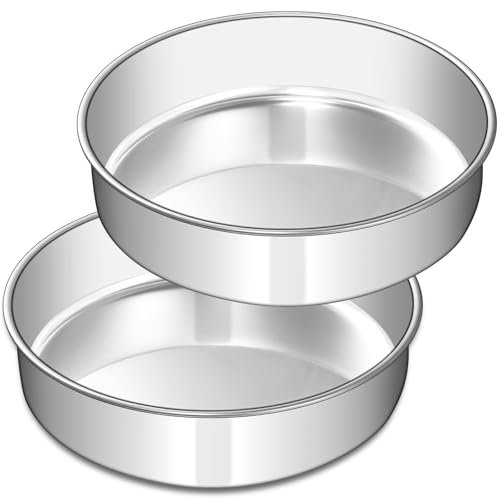
For most home bakers, a light-colored aluminum pan from a brand such as USA Pan, Nordic Ware or Fat Daddio’s is the safest all-round choice, because aluminum heats evenly and the pale finish resists over-browning. Dark nonstick pans suit bakers who want an easy release and do not mind watching the edges, while glass and ceramic suit bakers who value looks and oven-to-table use.
Our top picks


As an Amazon Associate we earn from qualifying purchases at no extra cost to you.
Cake Pans at a Glance
| Pan type | Best for | Key traits (as described by makers) | Limits |
|---|---|---|---|
| USA Pan round and rectangular pans | Layer cakes and sheet cakes | Aluminized steel with a ridged, silicone-coated surface; made in the United States according to the maker | Hand washing is advised; not for harsh scouring |
| Fat Daddio’s anodized aluminum pans | Bakery-style layers with straight sides | Anodized aluminum, available in many sizes and depths | Do not use dishwashers on anodized aluminum per many makers |
| Nordic Ware Naturals aluminum pans | Everyday baking and sheet cakes | Natural aluminum, durable and widely sold | Needs greasing; can discolor with dishwasher use |
| Wilton nonstick pans | Budget baking and beginners | Dark nonstick coating in many sizes | Dark finish can brown quickly |
| Springform pans | Cheesecakes and delicate cakes | Removable sides and a locking latch | Can leak thin batters |
| Bundt pans (Nordic Ware) | Decorative cakes | Cast or heavy aluminum with detailed patterns | Needs thorough greasing in grooves |
| Glass and ceramic bakers | Casual cakes and oven-to-table serving | Retain heat well | Cakes can overbake at the edges; follow adjustment guidance |
| Silicone molds | Novelty shapes and easy release | Flexible, easy to unmold | Floppy, needs a baking sheet underneath |
What Makes a Good Cake Pan
Material
Aluminum conducts heat quickly and evenly, which is why professionals favor it. Light-colored or natural aluminum reflects some heat and produces gentle browning, while dark nonstick coatings absorb heat and can brown the outside faster. Glass and ceramic heat slowly but hold heat for longer, which may overbake the edges if the recipe is not adjusted. Stainless steel is durable but does not conduct heat as well. Silicone is flexible but gives less browning and structure.
Color and Finish
Many baking authorities, including cooking magazines and test kitchens, suggest that light finishes give a more even bake for layer cakes. If you use a dark pan, many bakers lower the oven temperature slightly or check the cake earlier. Follow the pan maker’s instructions.
Size and Depth
Standard layer pans are 8 or 9 inches across. Depth ranges from about 1.5 inches to 3 inches. Deeper pans, such as those from Fat Daddio’s in 3-inch depth, suit tall bakery cakes and give room for rising without spilling. Make sure the pan size matches the recipe, because a different size changes baking time and thickness.
Wall Straightness and Corners
Straight, vertical walls give neat edges for stacking and frosting. Rounded or sloped sides produce a softer shape. For sheet cakes, square corners help the cake fit into tiers or trays.
Release and Coating
Nonstick coatings release easily, but scratches shorten their life. Uncoated aluminum needs greasing and flouring or parchment lining. Many bakers line the bottom of pans with parchment circles, which makes release reliable regardless of coating.
Handles and Rims
A rolled rim adds strength and helps prevent warping. Wire-reinforced edges, as in some USA Pan models, add rigidity. Handles on sheet pans help with lifting.
Budget Tiers
Budget Tier
Basic nonstick or thin aluminum pans in standard sizes. They work for occasional bakers, but thin metal can warp over time, and nonstick coatings wear faster with heavy use.
Mid-Range Tier
Heavier aluminum or aluminized steel pans, such as the Nordic Ware Naturals line and USA Pan range. These last for years with hand washing and give consistent results, which makes them the usual pick for regular bakers.
Premium Tier
Professional-style anodized aluminum from Fat Daddio’s and similar makers, heavy gauge, available in many sizes and depths. These suit frequent bakers, cake decorators and anyone who stacks tiers.
Pick X If… Decision Table
| If you… | Pick | Why |
|---|---|---|
| Bake layer cakes regularly | USA Pan or Fat Daddio’s round pans | Even heating and straight sides |
| Want a single reliable sheet cake pan | Nordic Ware Naturals half sheet or quarter sheet | Sturdy and versatile |
| Make tall tiered cakes | 3-inch deep anodized aluminum pans | Room for batter and height |
| Bake cheesecake | Springform pan | Removable sides |
| Want decorative cakes | Nordic Ware Bundt pan | Patterned shape |
| Prefer easy cleanup and are a beginner | Nonstick pan with parchment | Forgiving release |
| Serve from the oven to the table | Ceramic or glass baker | Presentation |
Care and Use Notes
- Wash by hand with a soft sponge and mild soap unless the maker states the pan is dishwasher safe. Dishwasher detergent can dull and discolor aluminum.
- Do not use metal utensils on nonstick surfaces. Run a plastic or silicone spatula around the edge instead.
- Avoid sudden temperature shocks, especially with glass and ceramic. Do not move a hot glass dish to a cold or wet surface.
- Grease the pan and line the bottom with parchment for the cleanest release.
- Check oven temperature with an oven thermometer, since many home ovens run hotter or cooler than the dial indicates.
- Replace pans with peeling coatings or warped bases.
- Follow the maker’s maximum temperature rating, particularly for silicone and coated pans.
Alternatives to Consider
Disposable Foil Pans
Handy for gifting and transporting cakes. They are thin and can warp, so place them on a baking sheet for support.
Cake Strips and Bake-Even Strips
Dampened fabric strips wrap around the pan to slow edge heating and produce flatter cake tops. They are an add-on rather than a replacement for a good pan.
Cake Rings
Used by professional bakers on a lined baking sheet, rings can create neat shapes and are useful for mousse cakes as well as sponges.
Frequently Asked Questions
Is aluminum or nonstick better for cakes?
Light-colored aluminum is usually preferred by bakers for even heating and gentle browning. Nonstick pans release easily but their dark surface can brown the edges faster, so you may need to adjust time or temperature.
Should I grease and line my cake pans?
Yes, for the most reliable release. Many bakers grease the pan, add a parchment circle at the bottom and lightly dust with flour or use a baking spray. Nonstick pans still benefit from parchment.
How many pans do I need for layer cakes?
Two matching round pans cover most two-layer cakes, and three suit taller cakes. Having matching pans helps the layers bake at the same rate.
Can I use a different size pan than the recipe says?
You can, but the batter depth, baking time and temperature may need adjustment. A smaller pan makes a thicker cake that may need longer, and a larger pan makes a thinner cake that bakes faster. Use a size close to the recipe when possible.
Are glass cake pans safe?
Glass bakeware is made for oven use, but it can break with sudden temperature changes. Follow the maker’s instructions, avoid placing hot glass on wet or cold surfaces and do not use it on the stovetop or under a broiler unless the maker states it is suitable.
How do I stop my cake from sticking?
Grease the pan, line the base with parchment, let the cake cool for the time the recipe states and then run a thin knife or spatula around the edge. If the pan has a worn coating, replace it.
FAQ
Is aluminum or nonstick better for cakes?
Should I grease and line my cake pans?
How many pans do I need for layer cakes?
Can I use a different size pan than the recipe says?
Are glass cake pans safe?
How do I stop my cake from sticking?
More from Amazon
Programs that pair well with the guide above. Offers and eligibility are set by Amazon and may change.
Free shipping on eligible items, Prime Video and more. Eligible new members can start with a free trial.
Start a Prime free trialAudiobooks and podcasts to listen to on the go. Eligible new members can start with a free trial.
Try Audible freeAd-free music streaming. Eligible new subscribers can start with a free trial.
Try Music Unlimited freeA free business account with business pricing and bulk-buying tools for work, shop or home office.
Create a business accountAs an Amazon Associate we earn from qualifying purchases.







