Key takeaways
- Drum material: Steel drums are durable and easy to clean. Poly drums are lighter and resist rust, though thick buildup can be harder to chip.
- Drive system: Direct-drive and gear drive each have advocates. Reviewers often prefer well-sealed gear systems for longevity.
- Stand and wheels: Sturdy stands with pneumatic or solid wheels improve portability on rough ground.
- Tilt mechanism: A lockable handwheel or lever gives you control while dumping.
- Motor rating: Listed in horsepower or amps. Check that your circuit can support it.
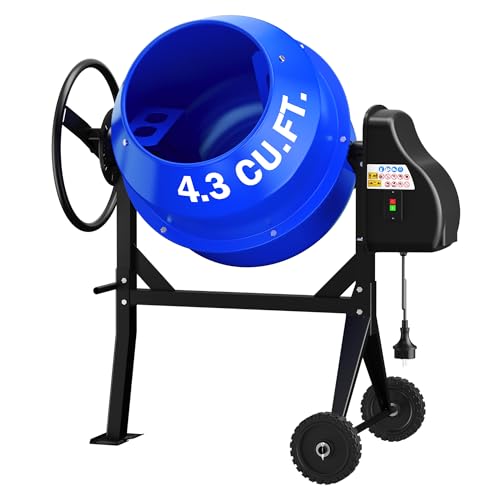
For small DIY jobs such as setting fence posts, pouring a few slabs or patching a walkway, a portable electric drum mixer in the 3 to 4 cubic foot range from Kushlan, Yardmax or Goplus is usually enough, while contractors and anyone pouring larger pads should step up to a 6 cubic foot or bigger Kushlan or a gas-powered mixer, and plasterers or tilers mixing mortar and thin-set are better served by a paddle mixer. Choose by batch size, power source and how often you will mix, because an undersized mixer is slow and an oversized one is hard to move.
Our top picks


As an Amazon Associate we earn from qualifying purchases at no extra cost to you.
Cement Mixers at a Glance
| Type or brand | Best for | Key stated traits | Limits |
|---|---|---|---|
| Kushlan 3.5 cu ft electric (350 series) | Homeowners, small slabs and posts | Steel drum, direct-drive electric motor, portable stand | Smaller batches |
| Kushlan 6 cu ft and larger (600 series) | Frequent DIY and small contractors | Larger drum, heavier-duty motor and gearing | Heavier to move |
| Yardmax portable mixers | Occasional projects | Poly or steel drums in small to mid sizes | Lighter build than contractor units |
| Goplus portable mixers | Budget buyers | Electric motor, tilting drum, compact stand | Shorter expected service life with heavy use |
| Gas-powered towable mixers | Remote sites, big pours | Engine-driven, mid to large drum | Noise, fuel, maintenance |
| Paddle (mortar) mixers | Mortar, plaster, thin-set | Fixed tub with rotating paddles | Not for coarse aggregate concrete |
How to Size a Cement Mixer
Drum capacity is listed in cubic feet, but the usable mix is smaller than the drum. Makers and contractors commonly say you should fill a drum to roughly half to two thirds so the mix tumbles properly. A mixer with a 3.5 cubic foot drum therefore produces something closer to a 1.5 to 2.5 cubic foot batch, depending on the mix and angle. A cubic yard of concrete is 27 cubic feet, so a 3.5 cubic foot mixer needs many batches to fill a large slab. Use a concrete calculator to find your project’s total volume, and decide whether the batch count is acceptable.
Electric, Gas or Manual
Electric
Electric drum mixers are quieter and need no fuel, which makes them suitable for backyard work. They need a nearby outlet or a properly rated extension cord, and reviewers advise a heavy-gauge cord and ground-fault protection. Use an outdoor-rated cord and follow the manual, because moisture, power tools and concrete are a risky mix. Ask a qualified electrician if you are unsure about circuit capacity.
Gas
Gas-powered mixers can go anywhere, which is useful on rural lots and farm projects. They add noise, exhaust and routine engine maintenance. Operate engines only outdoors with good ventilation, and follow the maker’s guidance on fueling and storage.
Manual and hand-crank
Hand-cranked drums exist for tiny jobs but are slow and tiring. They are rarely worth it unless power is absent and the job is very small.
Top Picks by Need
Kushlan 3.5 Cubic Foot Electric: Best for Most Homeowners
Kushlan is a long-standing maker of contractor-grade mixers. The smaller 350 series uses a steel drum and a direct-drive electric motor, and the maker markets it for homeowners and small contractors. Reviewers frequently pick it for fence posts, steps and small slabs because it balances capacity with portability.
Kushlan 600 Series and Up: For Frequent Use
The larger Kushlan models offer bigger drums and sturdier frames. They suit people who pour regularly, such as landscapers and small builders. Expect more weight and the need for a flat work area or a hand truck.
Yardmax: Casual DIY
Yardmax offers portable mixers that appeal to homeowners with occasional projects. They are generally lighter than contractor lines. Reviewers advise matching expectations to the intended use, because heavy daily mixing may be hard on lighter frames.
Goplus: Budget Entry
Goplus mixers have low entry costs and ready-to-assemble designs. They fit one-off projects, but reviewers often note simpler build quality and recommend regular cleaning and inspection of the gear drive.
Paddle Mixers: When You Are Mixing Mortar
Paddle mixers rotate blades inside a tub, which suits mortar, plaster and thin-set. They are not designed for the large aggregate in typical concrete. Handheld mixing paddles driven by a corded drill are a cheaper option for small mortar or thin-set batches, although the drill must be rated for the torque.
Pick X If…
| If you… | Choose |
|---|---|
| Pour posts and small slabs a few times a year | 3.5 cubic foot electric Kushlan or similar |
| Pour weekly or run a small business | 6 cubic foot or larger contractor mixer |
| Have no power on site | Gas-powered towable |
| Need to save money for a one-off | Goplus or Yardmax |
| Mix mortar, plaster or thin-set | Paddle mixer or drill with mixing paddle |
| Need a mixer with no assembly work | Check which models ship pre-assembled |
Features Worth Comparing
- Drum material: Steel drums are durable and easy to clean. Poly drums are lighter and resist rust, though thick buildup can be harder to chip.
- Drive system: Direct-drive and gear drive each have advocates. Reviewers often prefer well-sealed gear systems for longevity.
- Stand and wheels: Sturdy stands with pneumatic or solid wheels improve portability on rough ground.
- Tilt mechanism: A lockable handwheel or lever gives you control while dumping.
- Motor rating: Listed in horsepower or amps. Check that your circuit can support it.
Safety and Operating Notes
- Wear gloves, eye protection, long sleeves and a dust mask or respirator when handling dry cement. Wet cement is alkaline and can burn skin, so rinse promptly with clean water and seek medical advice if irritation persists.
- Keep hands, tools and clothing away from the rotating drum.
- Place the mixer on stable, level ground and keep the cord away from water.
- Use a ground-fault protected circuit and heavy-duty outdoor cord as the manual advises.
- Never reach into the drum while it is plugged in or running.
- Clean the drum right after use. Tumbling gravel and water in the drum for a few minutes helps remove residue, and dried concrete is much harder to remove later.
Maintenance Tips
Rinse the drum and the exterior before the mix hardens. Lubricate the gear and bearings as the manual instructs. Inspect cords and plugs for damage. Store the mixer dry and covered. If you have a gas engine, follow the maker’s schedule for oil and air filter changes and drain or stabilize fuel before storage.
Alternatives to Consider
- Renting: If you will pour only once or twice, renting a mixer can be more practical than buying.
- Bagged premixed concrete in a wheelbarrow: For a handful of fence posts, mixing by hand in a tub or wheelbarrow can be enough.
- Ready-mix delivery: For large slabs and driveways, a truck delivers a full load and saves effort, though you must have forms and finishers ready.
Planning a Pour
A mixer is only one part of a successful pour. Before you start, build and brace the forms, prepare a compacted base, and have tools such as a wheelbarrow, screed board, float and edging tool ready. Concrete begins to set quickly, so a mixer that produces batches faster than you can place and finish them is wasted effort. Most DIYers work with a helper, one loading the drum and one placing the mix.
Mix consistency also matters. Follow the bag directions for water, add water gradually, and aim for a workable consistency that holds its shape without slumping. Adding too much water weakens the finished concrete. In hot weather, concrete sets faster and may need shade and curing care, while in cold weather it can freeze and be damaged, so follow the bag guidance for temperature limits. For structural pours such as footings or anything supporting a load, consult a qualified contractor or your local building authority about code requirements.
Frequently Asked Questions
What size cement mixer do I need for a driveway?
For a full driveway most people order ready-mix delivery, since the volume is many cubic yards. A portable mixer can handle small sections or repairs, but pouring an entire driveway batch by batch is slow and risks cold joints between batches.
How much concrete does a 3.5 cubic foot mixer make?
The drum rating is capacity when full, but a good working batch is roughly half to two thirds of that. Check the maker’s guidance on mix volume, and test with a small batch first.
Can I mix mortar in a concrete mixer?
Many drum mixers can mix mortar, though paddle mixers do the job more consistently. If you use a drum, clean it thoroughly after use because mortar sticks.
Do I need a special extension cord?
Yes, an outdoor-rated, heavy-gauge cord that meets the motor’s amperage rating, as stated in the manual. A thin cord can overheat. Plug into a ground-fault protected outlet.
How do I clean a cement mixer?
Rinse immediately after use. Add water and gravel, run the drum for a few minutes to scour it, then empty and hose off. For hardened residue, many owners use a rubber mallet or chipper gently, but check the manual to avoid damaging the drum.
Is it worth buying or should I rent?
If you have several projects planned, a mid-range electric mixer pays for itself over time. For a single small pour, renting or hand-mixing is usually more economical.
FAQ
What size cement mixer do I need for a driveway?
How much concrete does a 3.5 cubic foot mixer make?
Can I mix mortar in a concrete mixer?
Do I need a special extension cord?
How do I clean a cement mixer?
Is it worth buying or should I rent?
More from Amazon
Programs that pair well with the guide above. Offers and eligibility are set by Amazon and may change.
Free shipping on eligible items, Prime Video and more. Eligible new members can start with a free trial.
Start a Prime free trialAudiobooks and podcasts to listen to on the go. Eligible new members can start with a free trial.
Try Audible freeAd-free music streaming. Eligible new subscribers can start with a free trial.
Try Music Unlimited freeA free business account with business pricing and bulk-buying tools for work, shop or home office.
Create a business accountAs an Amazon Associate we earn from qualifying purchases.