Key takeaways
- Read the manual and use the fryer only as directed.
- Keep children and pets away from the cooking area.
- Place the unit on a stable, heat-safe, level surface.
- Lower food slowly into hot oil to limit splatter.
- Keep a lid nearby to smother a flame; never use water on an oil fire.
- Let oil cool completely before moving, filtering or storing it.
- If the unit shows damage to the cord or housing, stop using it and contact the maker.
For most households, a mid-sized electric deep fryer with an adjustable thermostat, a removable oil container and a lid with a viewing window suits weekly cooking best, a compact fryer suits one or two people who fry occasionally, and an outdoor propane turkey fryer suits anyone cooking large birds for a crowd. The main differences are oil capacity, how easy the unit is to clean, and how much safety design is built in. Hot oil is a real hazard, so the safer, better-controlled designs are worth a closer look.
Our top picks


As an Amazon Associate we earn from qualifying purchases at no extra cost to you.
At a Glance
| Type | Example makers | Best for | Key traits | Limits |
|---|---|---|---|---|
| Compact basket fryer | Presto (FryDaddy, CoolDaddy lines) | Singles, couples, small kitchens | Small oil volume, simple controls, light weight | Small batches, limited temperature control on basic models |
| Family-size electric fryer with thermostat | Cuisinart, T-fal, Hamilton Beach | Households that fry weekly | Adjustable temperature, lid, removable parts on many models | Takes counter space, oil storage needed |
| Dual-basket electric fryer | Hamilton Beach, others | Cooking two foods at once, entertaining | Two baskets, often separate timers or temperatures | Larger footprint, more oil |
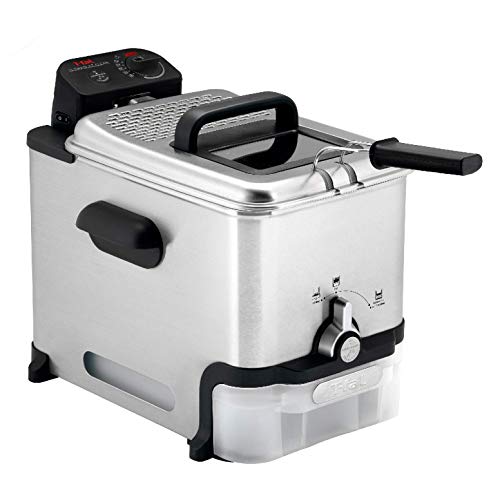
| Filtration or oil-drain fryer | T-fal and similar makers | People who reuse oil and want easier cleanup | Built-in oil storage and filtering on some models | More parts to wash, higher budget tier |
| Outdoor propane turkey fryer | Masterbuilt, King Kooker, others | Whole turkeys, large gatherings | Big pot, burner, outdoor use | Fire risk, needs careful setup and outdoor space |
| Air fryer (alternative) | Many makers | Reduced oil, quick cleanup | Hot air circulation instead of an oil bath | Texture differs from true deep frying |
Specific model names and ranges change from year to year. The makers above are examples of established lines, so read the current manual and specification on each maker’s own page before choosing.
What to Look For
Oil capacity and basket size
Capacity governs batch size. A small unit that holds only a modest amount of oil is fine for a handful of fries, but cooking for four means frying in batches, which keeps earlier batches warm in an oven. Larger family models hold more oil and a bigger basket, with a corresponding rise in oil cost and storage. Compare the maker’s stated oil capacity and basket capacity rather than the headline food weight alone.
Temperature control
An adjustable thermostat helps because different foods fry at different temperatures. Fries, chicken, doughnuts and tempura each have their own ideal range, and holding a steady temperature prevents greasy, soggy food. Basic fixed-temperature units are cheaper but less flexible. Many cooks also keep a separate probe thermometer to check the oil, and recipes usually give a target temperature range.
Safety features
Look for a cool-touch exterior, a magnetic or breakaway power cord, a lid that closes while frying, an indicator light, and an overheat cut-out. These are features that manufacturers list when they are present, so only count on a feature if the maker states it. Always follow the manual: never overfill with oil past the maximum line, make sure food is dry before it goes in the oil, and never leave hot oil unattended. Never put water on an oil fire; smother it with a lid or use a Class K or suitable kitchen extinguisher if you keep one, and call emergency services if a fire spreads.
Cleaning and oil handling
Cleanup is where fryers earn or lose their keep. Models with a removable oil container, dishwasher-safe parts, or an integrated drain make life easier. Filtration models let you strain and store oil in the unit, though you still need to replace oil once it darkens, smells off or smokes at lower temperatures. Dispose of used oil properly: let it cool, pour it into a sealed container, and put it in household waste or take it to a local recycling facility. Do not pour it down the drain.
Ventilation and odor
Fryers produce odors and some vapor. A lid with a charcoal filter can reduce smell on some models, and running a kitchen hood or opening a window helps. Make sure the fryer sits on a stable, heat-safe, level surface away from the edge of the counter and from water.
Power rating
Electric fryers draw significant power, and the stated wattage affects heating speed and how quickly oil recovers when cold food goes in. Plug directly into a wall outlet if the manual says so; avoid extension cords unless the manual permits their use. If you are unsure about your circuit, ask a qualified electrician.
Picks by Need
Best for small kitchens: compact fryers such as Presto’s FryDaddy-style units
These have long been a go-to for light use. They are simple, small and generally inexpensive, and reviewers describe them as easy to store. The trade-offs are limited capacity and fewer controls. They suit occasional fries, tempura or fried fish rather than family dinners.
Best all-rounder: thermostat-controlled family fryers
Cuisinart, T-fal and Hamilton Beach all sell electric fryers with adjustable temperature, lids and removable baskets. Reviewers at outlets that test kitchen gear usually look at heat recovery, evenness and cleanup. These mid-range units are the pick for most buyers who fry about once a week.
Best for entertaining: dual-basket models
Two baskets let you fry chicken and fries side by side, and some allow different settings per basket. They need more counter space and more oil, so make sure you have the room and a plan for storing used oil.
Best for easy oil management: filtration or drain models
If you fry often and reuse oil, a unit with an oil container and filtering reduces mess. The trade-off is additional parts and often a higher price tier. Follow the maker’s guidance on how many times to reuse oil.
Best for whole turkeys: outdoor propane fryers
Outdoor turkey fryers from makers such as Masterbuilt and King Kooker use a large pot over a burner. They also carry the highest risk: overfilled oil or a partially frozen bird can cause dangerous flare-ups. Use only outdoors, away from structures, on level ground, and never leave one unattended. Fire safety organizations repeatedly advise that the turkey be fully thawed and dry, and that oil volume be measured by water displacement before heating. Some makers offer electric outdoor turkey fryers that avoid an open flame, which some buyers prefer.
Decision Table: Pick X If …
| Pick this | If you … | Watch for |
|---|---|---|
| Compact basket fryer | cook for one or two and fry rarely | Small batches, basic controls |
| Thermostat-controlled family fryer | fry weekly for three to five people | Counter space, oil cost |
| Dual-basket fryer | cook mixed foods or host guests | Footprint, oil volume |
| Filtration or drain fryer | want simpler oil storage and cleanup | Extra parts, higher budget tier |
| Outdoor turkey fryer | cook large birds outside | Fire risk, thawing, oil measurement |
| Air fryer instead | want less oil and easier cleaning | Different texture from true frying |
Oil Choices and Care
Neutral oils with a high smoke point, such as peanut, canola, sunflower or refined vegetable oils, are common choices; check the maker’s manual and any allergy considerations before choosing, especially peanut oil. Keep the oil level between the minimum and maximum marks. Strain used oil through a fine filter after it cools, store it in a sealed container in a cool, dark place, and discard it when it turns dark, thick, foamy or smells rancid. Fry in small batches so the temperature does not drop, and pat food dry to minimize splatter.
Safety Checklist
- Read the manual and use the fryer only as directed.
- Keep children and pets away from the cooking area.
- Place the unit on a stable, heat-safe, level surface.
- Lower food slowly into hot oil to limit splatter.
- Keep a lid nearby to smother a flame; never use water on an oil fire.
- Let oil cool completely before moving, filtering or storing it.
- If the unit shows damage to the cord or housing, stop using it and contact the maker.
Alternatives to a Dedicated Deep Fryer
- Air fryer: Uses circulating hot air and minimal oil. Easier to clean, with a different crispness.
- Heavy pot on the stove: A Dutch oven and a thermometer can fry in a pinch, but requires careful monitoring.
- Countertop oven with convection: Suitable for oven-fried recipes with less oil.
Frequently Asked Questions
How big a deep fryer do I need?
For one or two people, a small fryer with a modest oil capacity is enough. For a family of four or more, look at a larger model with a bigger basket so you do not have to fry many batches. Compare the stated oil and basket capacities from the maker.
Is an electric deep fryer safer than frying in a pot?
Electric fryers usually offer thermostat control, a cut-out and a closing lid, which reduce the chance of overheating. They are not risk-free, so follow the manual and never leave hot oil unattended. Frying in an open pot has no built-in temperature limit.
How often should I change the oil?
It depends on what you fry and how you care for the oil. Strain it after each use and discard it when it darkens, smells rancid, foams or smokes at lower temperatures. Strongly flavored foods such as fish shorten the usable life.
Can I fry a frozen turkey?
No. Safety organizations warn that frozen or partially frozen birds can cause violent oil overflow and fires. Thaw the turkey fully, pat it dry, and follow the fryer maker’s instructions for oil level and setup.
What should I do with used cooking oil?
Let it cool, pour it into a sealed container, and put it in the household waste or take it to a recycling drop-off if your area offers one. Pouring it down the drain can cause blockages and plumbing problems.
Is an air fryer a good substitute?
An air fryer uses much less oil and is easier to clean, and it is a good fit for frozen fries, wings and vegetables. It does not replicate batter-coated foods such as tempura or doughnuts. If those matter to you, a true deep fryer is the better choice.
FAQ
How big a deep fryer do I need?
Is an electric deep fryer safer than frying in a pot?
How often should I change the oil?
Can I fry a frozen turkey?
What should I do with used cooking oil?
Is an air fryer a good substitute?
More from Amazon
Programs that pair well with the guide above. Offers and eligibility are set by Amazon and may change.
Free shipping on eligible items, Prime Video and more. Eligible new members can start with a free trial.
Start a Prime free trialAudiobooks and podcasts to listen to on the go. Eligible new members can start with a free trial.
Try Audible freeAd-free music streaming. Eligible new subscribers can start with a free trial.
Try Music Unlimited freeA free business account with business pricing and bulk-buying tools for work, shop or home office.
Create a business accountAs an Amazon Associate we earn from qualifying purchases.