Key takeaways
- 19 to 22 strings: very small, portable, with a limited range; good for children and casual play.
- 26 to 27 strings: a popular beginner size, balancing portability and range.
- 34 to 36 strings: larger, with a fuller bass and wider repertoire.
- 38 or more strings: large lever harps approaching pedal-harp range, usually for advanced players.
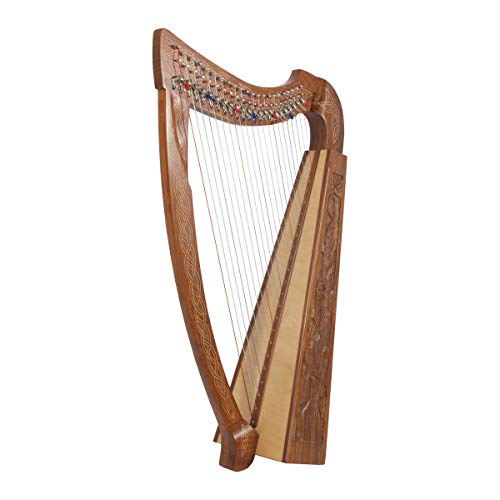
For most beginners, a 26-to-34-string lever harp from an established maker such as Dusty Strings, Salvi, or Camac is the best long-term choice; the Harpsicle and Roosebeck lines suit those who want a lower-cost entry point; and Lyon and Healy’s lever models suit buyers who want a step toward pedal-harp-style tone. The right harp depends on your budget, your living space, how many strings you need, and your teacher’s guidance.
Our top picks


As an Amazon Associate we earn from qualifying purchases at no extra cost to you.
Lever Harps at a Glance
| Model or line | Typical size class | Best for | Stated features | Limits |
|---|---|---|---|---|
| Dusty Strings Ravenna 26 | Smaller lever harp | Beginners, travel, small spaces | Maker lists a lightweight build and levers on strings | Fewer strings; limited bass range |
| Dusty Strings FH34 | Mid-size lever harp | Serious beginners and intermediate players | Maker lists levers and a larger range | Premium tier; heavier than small harps |
| Salvi lever harps | Range from small to large | Players seeking Italian-made harps | Maker lists a variety of models and sizes | Premium tier; prices and models vary |
| Camac lever harps | Range from small to large | Players seeking French-made harps | Maker lists several lever models and finishes | Premium tier |
| Harpsicle Harps | Small, portable | Casual players, travel | Maker describes a lightweight, compact harp | Smaller range than larger harps |
| Roosebeck lever harps | Small to mid-size | Budget-conscious beginners | Maker lists several string counts and wood finishes | Quality and tuning stability vary by reviewer |
String counts, ranges, weights, and lever systems differ among models and years, so read the maker’s specification page for the model you choose. Harp teachers and players often advise buying from a specialty harp seller or maker that can offer setup help.
What Is a Lever Harp?
A lever harp has a small lever on each string that raises its pitch by a half step, allowing you to change key without retuning. This differs from a pedal harp, which uses foot pedals and is larger and costlier. Lever harps are usually lighter and easier to transport, which makes them popular with beginners, folk players, and therapy musicians.
String Count and Range
- 19 to 22 strings: very small, portable, with a limited range; good for children and casual play.
- 26 to 27 strings: a popular beginner size, balancing portability and range.
- 34 to 36 strings: larger, with a fuller bass and wider repertoire.
- 38 or more strings: large lever harps approaching pedal-harp range, usually for advanced players.
More strings mean a bigger range and heavier harp. Many teachers suggest starting with enough strings to play the music you want to learn. Check what your teacher’s repertoire needs before buying.
Tone, Wood, and Build
Harp tone depends on the soundboard, the strings, and the string tension. Most lever harps use spruce or similar soundboards with hardwood bodies such as maple, walnut, or mahogany. Stringing may be nylon, gut, or fluorocarbon. Gut gives a warm tone but is sensitive to humidity; nylon is more stable and cheaper. Reviewers note that makers with good soundboard design produce more resonant instruments, and that cheaper harps may need more frequent tuning.
Budget Tiers
Budget
Roosebeck and other entry-level lines provide an accessible way to try a harp. Expect simpler construction and potentially less stable tuning. Used harps from established makers can also be an alternative.
Mid-range
Harpsicle, Dusty Strings smaller models, and several other brands fill this tier. They offer good tone for learning and are easier to carry.
Premium
Dusty Strings larger models, Salvi, Camac, and Lyon and Healy occupy the premium tier. They offer finer craftsmanship, richer tone, and resale value.
Fit and Practical Notes
- Playing position: larger harps rest on the floor or on a stand; smaller ones may sit on the lap or a bench. Make sure you can reach the strings and the levers comfortably.
- Weight: check the maker’s stated weight if you travel often.
- Tuning: you will need a tuner and a tuning key. New strings stretch and require frequent retuning.
- Humidity and temperature: wood and strings react to changes; keep the harp away from heaters, direct sunlight, and damp rooms.
- Cases and stands: a padded case is a worthwhile addition for transport.
- Lever regulation: levers occasionally need adjustment; a harp technician or maker can help.
Care and Safety
Follow the maker’s care instructions. Wipe strings after playing, store in a case or cover, and avoid sudden temperature changes. Harp strings carry tension and can break; keep your face away when tuning, and replace worn strings promptly. If the harp has damage to the soundboard or neck, seek a qualified technician rather than attempting repairs.
Pick X If… Decision Table
| Pick this | If you |
|---|---|
| Dusty Strings Ravenna 26 | want a compact, reputable beginner harp |
| Dusty Strings FH34 | want room to grow into intermediate repertoire |
| Salvi or Camac | want a premium European-made instrument |
| Harpsicle | need a very portable harp for travel or small spaces |
| Roosebeck | want an entry-level harp on a limited budget |
| Lyon and Healy lever models | want a path toward pedal-harp style from a long-established maker |
Alternatives
- Renting a harp: many harp shops and teachers offer rentals, a good way to test before buying.
- Used harps: buying from a reputable seller can reduce cost; ask a teacher to inspect the soundboard and levers.
- Lap harps and small folk harps: easy to carry, with limited range.
- Lyres and zithers: related plucked instruments that are cheaper but different in technique and range.
Buying Checklist
Begin by talking to a teacher or an experienced harpist about the music you want to play and the string count you need. Decide whether you want a harp you can carry easily or one that will stay in one room. Ask about the lever system and whether replacement levers and strings are available from the maker. Look at the warranty and ask whether the seller offers setup, tuning help, and a return policy. If possible, play several harps in person or try a rental. Consider accessories: a tuning key, tuner, bench, stand, and padded case.
Common Mistakes to Avoid
- Choosing by appearance only: a beautiful harp that does not hold tune frustrates beginners.
- Buying too few strings: a very small harp may limit the music you can learn.
- Neglecting humidity: large swings can cause strings to detune and wood to move.
- Using the wrong strings: the wrong gauge or material alters tension and can damage the instrument.
- Skipping lessons entirely: posture and hand technique habits formed early are hard to change.
Harp communities, local harp societies, and teachers are valuable resources for advice on specific models and sellers.
Practice Setup and Early Progress
Find a quiet spot with a stable chair of the right height, so that your arms can reach the strings naturally with relaxed shoulders. Many teachers advise short, regular practice sessions rather than occasional long ones, because finger strength and callus build gradually. Tune before each session, and keep a tuner nearby. Early repertoire often includes simple folk melodies, hymns, and exercises in a few keys; as you progress, you will learn to move levers during a piece. Record yourself occasionally to hear tone and rhythm. If your fingers hurt, rest and ask your teacher about technique, because pain can indicate tension or poor posture. A local harp society or online community can provide encouragement, sheet music, and opportunities to play with others.
Frequently Asked Questions
How many strings does a beginner need?
Many teachers suggest 26 to 34 strings, depending on the music. Small harps are fine for casual play, but a larger range will help you grow. Ask your teacher before buying.
Is a lever harp easier than a pedal harp?
Lever harps are lighter, less costly, and simpler to manage, but changing sharps and flats mid-song requires moving levers by hand. Pedal harps allow faster changes but are larger and costlier.
Do I need lessons to learn the harp?
Lessons are not required, but a teacher can help with posture, hand position, and tuning. Many beginners also learn from books and videos alongside lessons.
How often do I need to tune a lever harp?
New harps and new strings need frequent tuning, often before every practice. Once stable, tune regularly, especially after changes in humidity or temperature.
What strings should I use on a lever harp?
Use the strings the maker specifies for your model. Nylon, gut, and fluorocarbon differ in tone and sensitivity, so consult the maker’s string chart.
Can I travel with a lever harp?
Smaller harps are more practical for travel, especially with a padded case. Airlines have varying rules, so contact the carrier before flying and consider a flight case.
FAQ
What Is a Lever Harp?
How many strings does a beginner need?
Is a lever harp easier than a pedal harp?
Do I need lessons to learn the harp?
How often do I need to tune a lever harp?
What strings should I use on a lever harp?
Can I travel with a lever harp?
More from Amazon
Programs that pair well with the guide above. Offers and eligibility are set by Amazon and may change.
Free shipping on eligible items, Prime Video and more. Eligible new members can start with a free trial.
Start a Prime free trialAudiobooks and podcasts to listen to on the go. Eligible new members can start with a free trial.
Try Audible freeAd-free music streaming. Eligible new subscribers can start with a free trial.
Try Music Unlimited freeA free business account with business pricing and bulk-buying tools for work, shop or home office.
Create a business accountAs an Amazon Associate we earn from qualifying purchases.