Key takeaways
- Seat belts and harnesses: essential for any wagon carrying young children.
- Canopy: shades children in sun; check whether it is removable and whether it blocks the view of the child.
- Wheels: plastic wheels are quiet and light; air or rubberized all-terrain wheels cope better with grass and gravel.
- Brakes: a parking brake helps when loading or at a sports field.
- Push and pull handles: some wagons offer both, and adjustable handles help parents of different heights.
- Folding: compact fold makes it easier to fit in a trunk, but a folding frame has more joints and requires attention to locks.
- Storage and cup holders: practical extras for outings.
For most families, a folding wagon with seat belts, such as the Wonderfold or the Radio Flyer folding wagon, is the best everyday choice; the classic Radio Flyer steel wagon suits backyard play and hauling toys; and the Keenz or Veer Cruiser-style wagons suit parents who want a stroller-like ride for several children. The right pick depends on how many children it must carry, how it will be stored and transported, and whether it will be used on paved paths or rough ground.
Our top picks


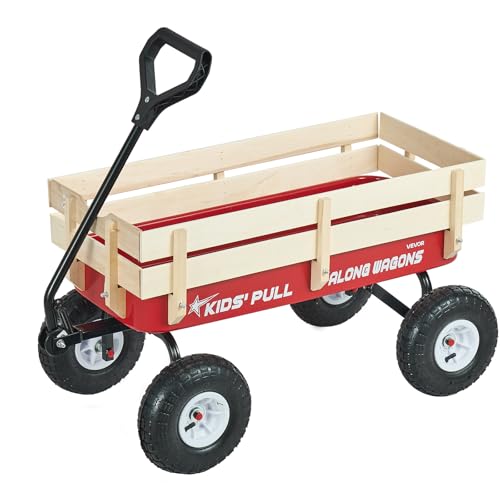

As an Amazon Associate we earn from qualifying purchases at no extra cost to you.
Kids Wagons at a Glance
| Model | Type | Best for | Stated features | Limits |
|---|---|---|---|---|
| Radio Flyer Classic Steel Wagon | Non-folding steel wagon | Backyard play, hauling toys | Steel body, pull handle, long-running design | No seat belts; not designed for infants |
| Radio Flyer folding wagon | Folding wagon | Families who want easy storage | Maker lists a foldable frame and canopy options | Features vary by model |
| Wonderfold W-series | Folding stroller wagon | Multiple toddlers, outings | Maker lists seat belts, a push handle, and a folding frame | Premium tier; heavier than basic wagons |
| Keenz 7S | Folding stroller wagon | Trips with several children | Maker lists a canopy, belts, and a push-pull handle | Fold size and weight vary by version |
| Veer Cruiser | Premium stroller wagon | Parents wanting a stroller-style ride | Maker describes a stroller-wagon with child seats and adjustable handles | Premium tier; bulky when folded |
| Step2 Whisper Ride II | Plastic wagon | Toddlers, moderate budget | Maker lists a plastic body and quiet wheels | Not for rough terrain |
Weight limits, seat counts, fold dimensions, and wheel types vary by model, so read the maker’s specification sheet and age guidance before buying.
Classic Wagon vs. Stroller Wagon
A classic wagon is a simple open bed on four wheels with a pull handle, ideal for play and for hauling. A stroller wagon adds seat belts, a canopy, a push handle, and often a folding frame so you can transport children on outings. Parents report that stroller wagons are the better fit for fairs, parks, and sports events, while classic wagons shine for backyard tasks and play.
Safety First
Wagons are not substitutes for car seats or approved strollers. Follow the maker’s age, weight, and passenger limits, and do not carry more children than the manual allows. Use the seat belts or harnesses provided, keep children seated, and never leave a child unattended in a wagon. Avoid steep slopes, roads, and water edges, and do not tow a wagon behind a bicycle or vehicle unless the maker explicitly allows it. If a manufacturer states that a wagon is not suitable for infants, follow that guidance. Check for recall notices through the Consumer Product Safety Commission, and look for seat belts, a stable base, and a brake or parking lock on stroller-style models.
Features That Matter
- Seat belts and harnesses: essential for any wagon carrying young children.
- Canopy: shades children in sun; check whether it is removable and whether it blocks the view of the child.
- Wheels: plastic wheels are quiet and light; air or rubberized all-terrain wheels cope better with grass and gravel.
- Brakes: a parking brake helps when loading or at a sports field.
- Push and pull handles: some wagons offer both, and adjustable handles help parents of different heights.
- Folding: compact fold makes it easier to fit in a trunk, but a folding frame has more joints and requires attention to locks.
- Storage and cup holders: practical extras for outings.
Budget Tiers
Budget
The Radio Flyer Classic and plastic models such as Step2 cover the basic need. They lack the safety features of stroller wagons, so they suit play more than transport.
Mid-range
Folding wagons from Radio Flyer, Keenz, and others offer belts, canopies, and fold-away frames at a middle tier.
Premium
Wonderfold and Veer target parents who want sturdy frames, more seating options, and stroller-like comfort.
Fit and Storage Notes
- Trunk size: measure your trunk against the folded dimensions on the maker’s sheet.
- Weight: some folding wagons are heavy; if you lift one often, consider the weight listed by the maker.
- Terrain: sand, gravel, and grass need wider or all-terrain wheels.
- Number of children: check the maker’s passenger limit and weight capacity, and how the seats are arranged.
- Age: many wagons target toddlers and preschoolers; consult the manual for the age range.
Care
Wipe the bed and fabric with mild soap and water, and dry fully to prevent mildew. Inspect folding hinges, locks, and wheels regularly. Tighten loose bolts, and replace worn wheels or damaged seat belts. Store in a dry place to prevent rust on steel parts and fading of fabric.
Pick X If… Decision Table
| Pick this | If you |
|---|---|
| Radio Flyer Classic Steel | want a simple, durable backyard wagon |
| Radio Flyer folding wagon | want easy storage with a mid-range feature set |
| Wonderfold W-series | carry several toddlers and want a premium stroller wagon |
| Keenz 7S | want a feature-rich folding stroller wagon |
| Veer Cruiser | want a premium, stroller-like ride |
| Step2 Whisper Ride II | want a lightweight plastic wagon for toddlers |
Alternatives
- Jogging or double strollers: better for infants and for faster travel.
- Wheelbarrow-style garden carts: for hauling yard goods, not children.
- Bike trailers: designed for towing behind a bicycle, with safety features that wagons do not have.
- Collapsible utility wagons: good for beach and sports gear, but they are not built for children unless the maker says so.
Buying Checklist
Begin with the maker’s age and weight guidance, then count the children who will ride. Measure your trunk or storage area and compare it with the folded size on the specification sheet. Look at the seat belt system: are the belts adjustable, and do they restrain each child securely? Consider the wheel type for the places you will go. Check whether the canopy is removable and whether the handle adjusts. Finally, look for a parking brake, cargo space, and a warranty. For classic wagons, look at the construction of the bed and the strength of the handle.
Common Mistakes to Avoid
- Treating a wagon as a car seat or stroller: wagons are for short outings, and manufacturers set specific limits.
- Overloading: exceeding weight capacity can cause tipping or frame failure.
- Parking on slopes without a brake: a loaded wagon can roll away.
- Letting kids stand or climb: standing children can cause a tip-over, particularly in lighter plastic wagons.
- Forgetting sun and weather: children in an open wagon are exposed; a canopy helps, though it does not replace sun protection and supervision.
Always inspect the wagon before use, especially folding models, to make sure all locks are engaged.
Using a Wagon on Everyday Outings
Many families use wagons for farmers markets, zoos, parks, beaches, and sports fields. Pack bags and gear in the cargo area rather than hanging heavy items from the handle, which can affect balance. Plan routes with smooth paths, and avoid steep grades and busy roads. In warm weather, bring water and sun protection for children and keep an eye on their comfort. At events with crowds, check whether the venue permits wagons, since rules differ. When loading, set the brake, seat each child, and fasten the belts before moving. When finished, wipe the wagon down, dry the fabric, and store it where it will not be crushed. Some parents pair a wagon with a stroller for babies and use the wagon once children are old enough to sit comfortably and the manual allows it.
Frequently Asked Questions
At what age can a child ride in a wagon?
Age guidance varies by maker, and many wagons are intended for toddlers who can sit unassisted. Infants generally need a stroller or car seat. Always follow the manual.
Do kids wagons need seat belts?
Seat belts are strongly advised for children who might stand or lean, and stroller-style wagons usually include them. Classic wagons often lack them, so use them for play only and supervise closely.
Can I pull a wagon behind a bike?
Only if the maker explicitly states that it is permitted. Most wagons are not designed for towing behind bicycles, and a purpose-built bike trailer is the safer choice.
Are folding wagons durable?
They can be, but folding frames add joints that need attention. Reviewers advise checking locks and hinges and following the maker’s guidance on weight limits.
Which wagon is best for rough terrain?
Wagons with wide, rubberized, or all-terrain wheels cope better with grass and gravel. Check the maker’s description of wheel type and suitability for off-road use.
How many children can a wagon carry?
It depends on the model and its weight limit. Many stroller wagons carry two to four small children, but you should follow the maker’s stated capacity and seating layout.
FAQ
At what age can a child ride in a wagon?
Do kids wagons need seat belts?
Can I pull a wagon behind a bike?
Are folding wagons durable?
Which wagon is best for rough terrain?
How many children can a wagon carry?
More from Amazon
Programs that pair well with the guide above. Offers and eligibility are set by Amazon and may change.
Free shipping on eligible items, Prime Video and more. Eligible new members can start with a free trial.
Start a Prime free trialAudiobooks and podcasts to listen to on the go. Eligible new members can start with a free trial.
Try Audible freeAd-free music streaming. Eligible new subscribers can start with a free trial.
Try Music Unlimited freeA free business account with business pricing and bulk-buying tools for work, shop or home office.
Create a business accountAs an Amazon Associate we earn from qualifying purchases.